疓

疓 U+7593, 疓
CJK UNIFIED IDEOGRAPH-7593
← 疒
[U+7592]
CJK Unified Ideographs 疔 →
[U+7594]

Translingual

Han character

疓 (Kangxi radical 104, 疒+2, 7 strokes, cangjie input 大弓竹尸 (KNHS), composition ⿸疒乃)

References

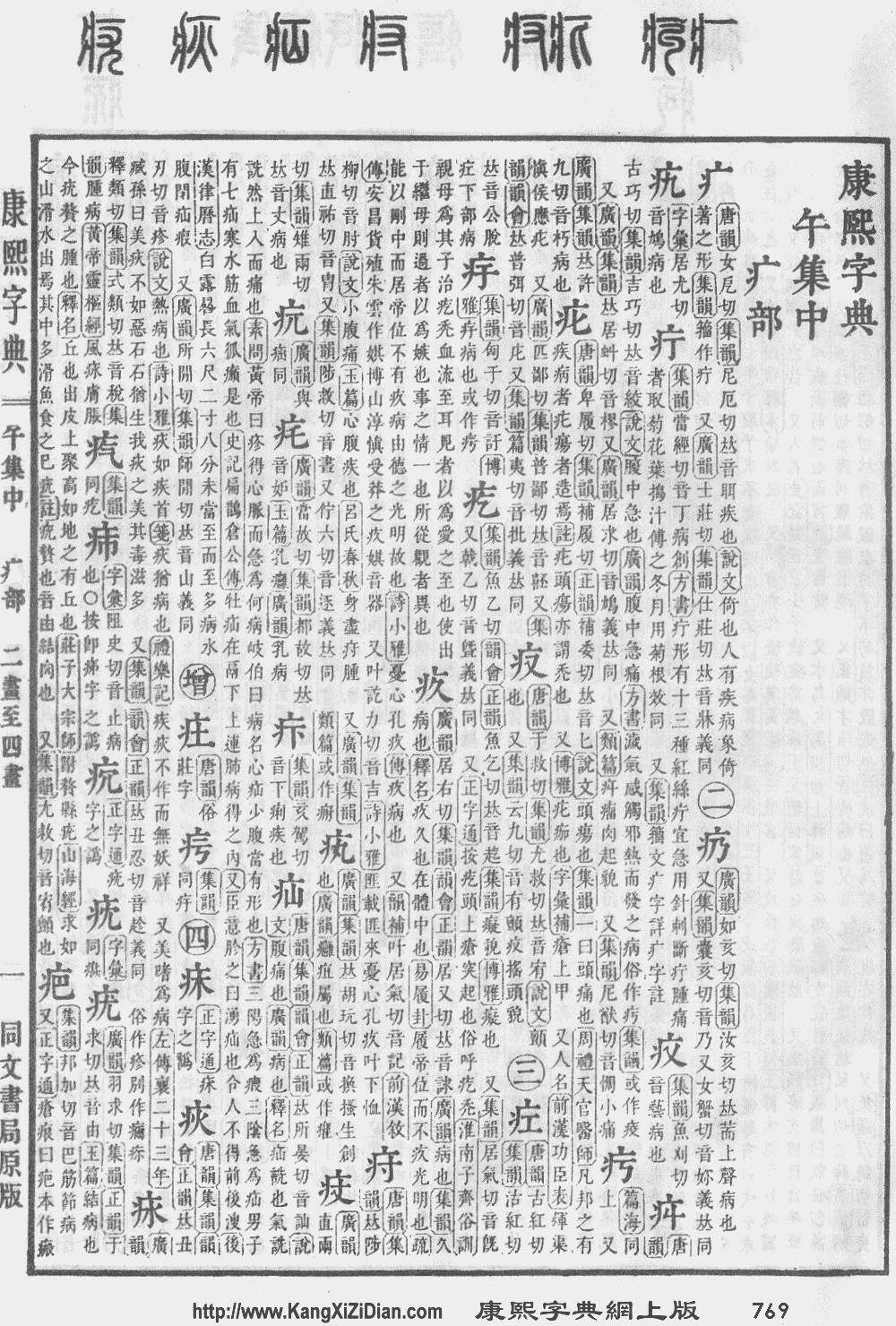
  • Kangxi Dictionary: page 769, character 2
  • Dai Kanwa Jiten: character 22017
  • Dae Jaweon: page 1179, character 5
  • Hanyu Da Zidian (first edition): volume 4, page 2659, character 14
  • Unihan data for U+7593

Chinese

Glyph origin

Etymology 1

simp. and trad.
疓

Pronunciation


Rime
Character 疓
Reading # 1/1
Initial (聲) 日 (38)
Final (韻) 咍 (41)
Tone (調) Rising (X)
Openness (開合) Open
Division (等) I
Fanqie 如亥切
Baxter nyojX
Reconstructions
Zhengzhang
Shangfang
/ȵʌiX/
Pan
Wuyun
/ȵəiX/
Shao
Rongfen
/ȵʑɒiX/
Edwin
Pulleyblank
/ȵəjX/
Li
Rong
/ȵᴀiX/
Wang
Li
/ȵʑɒiX/
Bernard
Karlgren
/ȵʑɑ̆iX/
Expected
Mandarin
Reflex
rǎi
Expected
Cantonese
Reflex
joi5
Zhengzhang system (2003)
Character 疓
Reading # 1/1
No. 9340
Phonetic
component
乃
Rime
group
之
Rime
subdivision
0
Corresponding
MC rime
疓
Old
Chinese
/*njɯːʔ/
Notes 見屍子

Definitions

疓

  1. (obsolete) sick

Etymology 2

simp. and trad.
疓
alternative forms 𤵜
儽
傫
累
苶

Compare Proto-Tai *ʰnɯəjᴮ (“tired; exhausted”), whence Zhuang naiq.

Pronunciation


Definitions

疓

  1. (Cantonese, dated in Standard Cantonese) tired
Synonyms

Japanese

Kanji

疓

(uncommon “Hyōgai” kanji)

  1. This term needs a translation to English. Please help out and add a translation, then remove the text {{rfdef}}.

Readings

Tày

Adjective

疓 (nái)

  1. Nôm form of nái (“tired”).

References

  • Lục Văn Pảo, Hoàng Tuấn Nam (2003) Hoàng Triều Ân, editor, Từ điển chữ Nôm Tày [A Dictionary of (chữ) Nôm Tày]‎ (in Vietnamese), Hanoi: Nhà xuất bản Khoa học Xã hội
This article is issued from Wiktionary. The text is licensed under Creative Commons - Attribution - Sharealike. Additional terms may apply for the media files.