亥
| ||||||||
Translingual
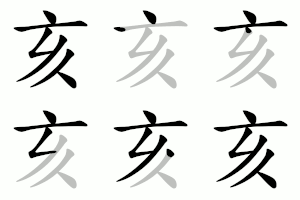
| Stroke order | |||
|---|---|---|---|
 | |||
Han character
亥 (Kangxi radical 8, 亠+4, 6 strokes, cangjie input 卜女竹人 (YVHO), four-corner 00802, composition ⿳亠𠂈人 or ⿱丶𠀔)
Derived characters
References
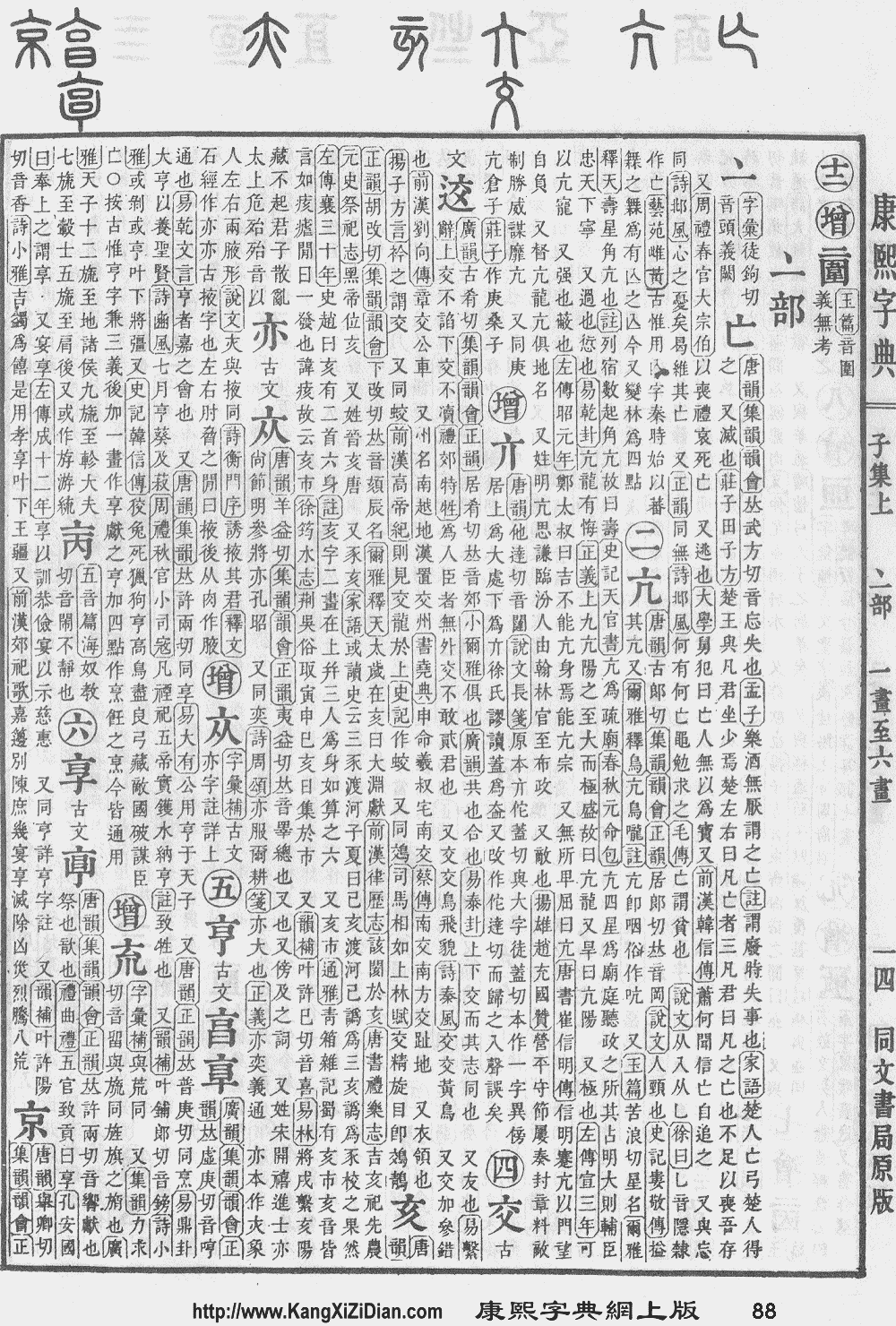
- Kangxi Dictionary: page 88, character 8
- Dai Kanwa Jiten: character 292
- Dae Jaweon: page 186, character 1
- Hanyu Da Zidian (first edition): volume 1, page 283, character 5
- Unihan data for U+4EA5
Chinese
| simp. and trad. |
亥 | |
|---|---|---|
| 2nd round simp. | ⿻⿻一𠃋人 | |
| alternative forms | 㐪 𠀅 𢁓 𢁳 𠦇 | |
Glyph origin
| Historical forms of the character 亥 | ||||||||||||||||||||||||||||||||||||||||||||||||||||||||||||||||||||||||||||||||||||||||||||||||||||||||||||||||||||||||||||||||||||
|---|---|---|---|---|---|---|---|---|---|---|---|---|---|---|---|---|---|---|---|---|---|---|---|---|---|---|---|---|---|---|---|---|---|---|---|---|---|---|---|---|---|---|---|---|---|---|---|---|---|---|---|---|---|---|---|---|---|---|---|---|---|---|---|---|---|---|---|---|---|---|---|---|---|---|---|---|---|---|---|---|---|---|---|---|---|---|---|---|---|---|---|---|---|---|---|---|---|---|---|---|---|---|---|---|---|---|---|---|---|---|---|---|---|---|---|---|---|---|---|---|---|---|---|---|---|---|---|---|---|---|---|---|
| Shang | Western Zhou | Shuowen Jiezi (compiled in Han) | Liushutong (compiled in Ming) | |||||||||||||||||||||||||||||||||||||||||||||||||||||||||||||||||||||||||||||||||||||||||||||||||||||||||||||||||||||||||||||||||
| Oracle bone script | Bronze inscriptions | Small seal script | Transcribed ancient scripts | |||||||||||||||||||||||||||||||||||||||||||||||||||||||||||||||||||||||||||||||||||||||||||||||||||||||||||||||||||||||||||||||||
 |
 |
 |
 | |||||||||||||||||||||||||||||||||||||||||||||||||||||||||||||||||||||||||||||||||||||||||||||||||||||||||||||||||||||||||||||||||
|||
|
References: Mostly from Richard Sears' Chinese Etymology site (authorisation),
| ||||||||||||||||||||||||||||||||||||||||||||||||||||||||||||||||||||||||||||||||||||||||||||||||||||||||||||||||||||||||||||||||||||


| Old Chinese | |
|---|---|
| 該 | *kɯː |
| 垓 | *kɯː |
| 賅 | *kɯː |
| 陔 | *kɯː |
| 豥 | *kɯː, *ɡɯː |
| 荄 | *kɯː, *krɯː |
| 郂 | *kɯː |
| 姟 | *kɯː |
| 絯 | *kɯː, *ɡrɯːʔ |
| 晐 | *kɯː |
| 峐 | *kɯː |
| 侅 | *kɯː, *kʰɯː, *ɡɯːʔ, *ɡrɯːʔ |
| 胲 | *kɯː |
| 頦 | *kɯːʔ, *ɡɯː |
| 奒 | *kʰɯː |
| 輆 | *kʰɯːʔ |
| 欬 | *kʰɯːɡs, *qraːds |
| 硋 | *ŋɡɯːɡs |
| 閡 | *ŋɡɯːɡs |
| 咳 | *qʰɯː, *ɡɯː |
| 孩 | *ɡɯː |
| 亥 | *ɡɯːʔ |
| 劾 | *ɡɯːɡs, *kʰrɯːɡs, *ɡɯːɡ |
| 痎 | *krɯː |
| 烗 | *kʰrɯːɡs |
| 骸 | *ɡrɯː |
| 駭 | *ɡrɯːʔ |
| 刻 | *kʰɯːɡ |
| 餩 | *qɯːɡ |
| 核 | *ɡuːd, *ɡrɯːɡ |
Pictogram (象形) – depiction uncertain. Some propose it depicts a plant's roots underground, possibly as the original form of 荄 (OC *kɯː, *krɯː). Others propose it is an animal, similar in origin to 豕.
Etymology
Smith (2011) groups 亥 (OC *ɡɯːʔ) in a word-family meaning "root, germ, generative core" along with 荄 (OC *kɯ:, “grassroot”) > 根 (OC *kɯːn, “root”), 核 (OC *ɡrɯːɡ, “germ, kernel”), 骸 (OC *ɡrɯː, “(human) bones”), and 孩 (OC *ɡɯː, “child”). He suggests the derivation 荄根 "germ, sprout, root (n.)" → 孩 "to sprout" → 亥 "sprouting stage", i.e. "the moon’s first appearance", recalling 月芽 lit. "moon sprout" > "crescent moon".
See 核 (hé) for further etymology.
Later 亥 (hài) and 豕 (shǐ, “pig”) graphically converged.
As for 亥 (OC *ɡɯːʔ)'s phonological association with the pig. Compare the following:
- Khmer កុរ (kol, “year of the pig”), from Angkorian Old Khmer kur.
- Proto-Vietic *guːrʔ (“pig; pork”) or *kuːrʔ (“pig; pork”):
- Thai กุน (gun, “year of the pig”), a loan from Old Khmer.
Ferlus (2013) notes 亥 (OC *ɡɯːʔ) is a possible match to the Austroasiatic root, but there should be a final sonorant in Old Chinese.
Pronunciation
Definitions
亥
- (obsolete) grass root
- twelfth of twelve earthly branches (十二支)
- pig (豬) of the Chinese zodiac
- a surname
Coordinate terms
See also
- 豕 (shǐ)
References
- “Entry #2051”, in 臺灣閩南語常用詞辭典 [Dictionary of Frequently-Used Taiwan Minnan] (overall work in Mandarin and Hokkien), Ministry of Education, R.O.C., 2023.
Japanese
Kanji
(“Jinmeiyō” kanji used for names)
- This term needs a translation to English. Please help out and add a translation, then remove the text
{{rfdef}}.
Pronunciation
Proper noun
Korean
Hanja
亥 (eum 해 (hae))
- This term needs a translation to English. Please help out and add a translation, then remove the text
{{rfdef}}.
Vietnamese
Han character
亥: Hán Nôm readings: hợi