磨
See also: 磿
| ||||||||
Translingual
Han character
磨 (Kangxi radical 112, 石+11, 16 strokes, cangjie input 戈金一口 (ICMR) or 戈木一口 (IDMR), four-corner 00261, composition ⿸麻石)
References
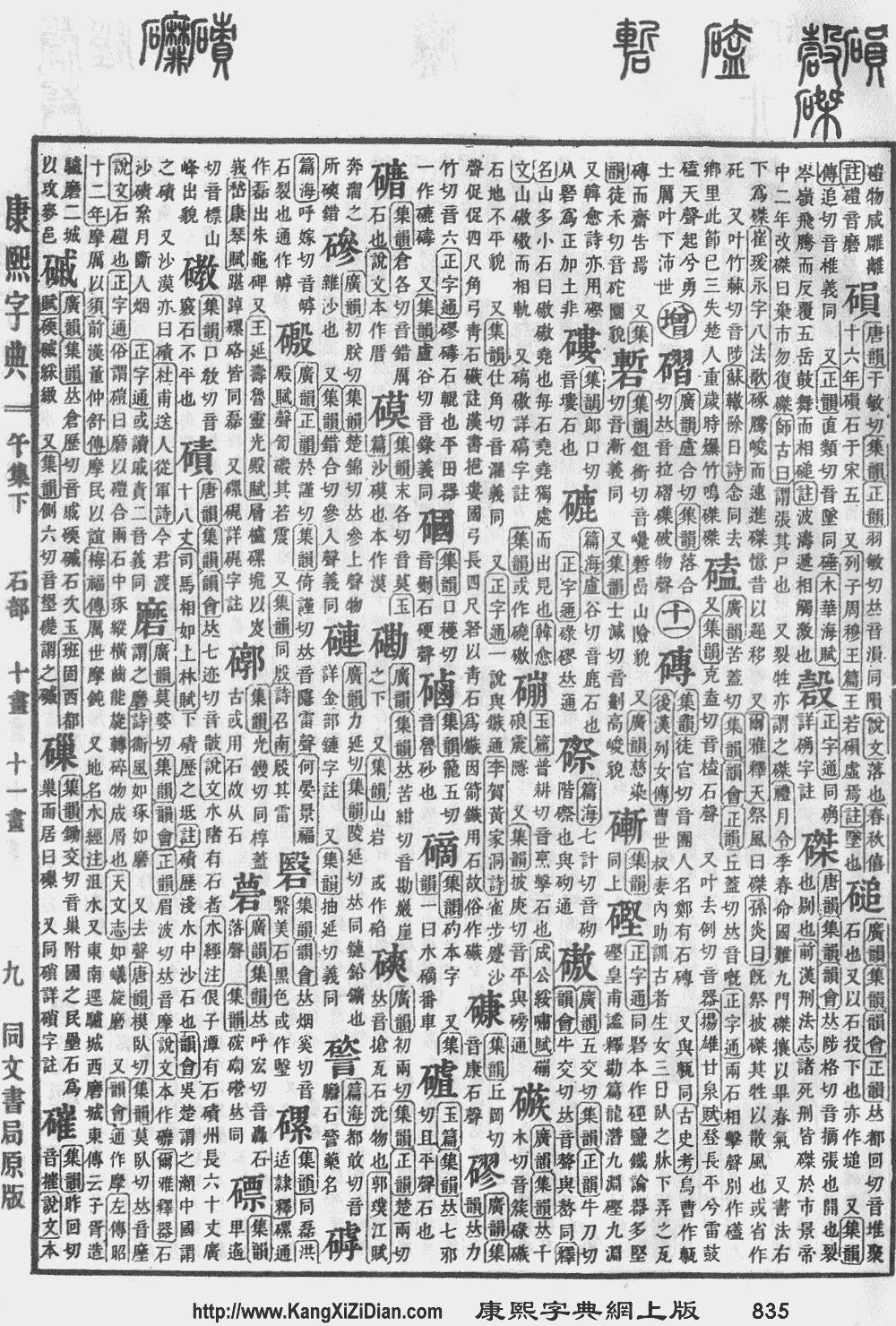
- Kangxi Dictionary: page 835, character 39
- Dai Kanwa Jiten: character 24449
- Dae Jaweon: page 1253, character 7
- Hanyu Da Zidian (first edition): volume 4, page 2453, character 13
- Unihan data for U+78E8
Chinese
Glyph origin
Characters in the same phonetic series (麻) (Zhengzhang, 2003)
Originally written as 䃺 (mó). Phono-semantic compound (形聲/形声, OC *maːl, *maːls) : semantic 石 (“rock”) + abbreviated phonetic 靡 (OC *mralʔ).
Etymology 1
| trad. | 磨 | |
|---|---|---|
| simp. # | 磨 | |
| 2nd round simp. | ⿸广石 | |
Pronunciation
Definitions
磨
Compounds
- 一折一磨
- 不可磨滅/不可磨灭 (bùkěmómiè)
- 切磋琢磨 (qiēcuōzhuómó)
- 刮垢磨光
- 博磨
- 好事多磨 (hǎoshìduōmó)
- 打磨 (dǎmó)
- 折磨 (zhémó)
- 拖磨 (tuōmó)
- 捱磨
- 擦拳磨掌
- 擦掌磨拳
- 昏鏡重磨/昏镜重磨
- 水磨工夫
- 水磨石
- 水磨調/水磨调
- 永不磨滅/永不磨灭 (yǒngbùmómiè)
- 泡磨菇
- 消磨 (xiāomó)
- 球磨機/球磨机
- 琢磨
- 百世不磨
- 砂磨
- 研磨 (yánmó)
- 研磨機/研磨机 (yánmójī)
- 砥行磨名
- 磋磨
- 磨不開臉/磨不开脸
- 磨人
- 磨佗子
- 磨光 (móguāng)
- 磨兌/磨兑
- 磨刀 (módāo)
- 磨刀石 (módāoshí)
- 磨刀霍霍
- 磨刻
- 磨削
- 磨功夫
- 磨勁兒/磨劲儿
- 磨勘
- 磨勒
- 磨博士
- 磨厲以須/磨厉以须
- 磨合羅/磨合罗
- 磨咕
- 磨喝樂/磨喝乐
- 磨嘴 (mózuǐ)
- 磨嘴皮
- 磨它子
- 磨官
- 磨對/磨对
- 磨平
- 磨床
- 磨成
- 磨折
- 磨拖
- 磨拳擦掌 (móquáncāzhǎng)
- 磨揉遷革/磨揉迁革
- 磨損/磨损 (mósǔn)
- 磨撐/磨撑
- 磨擔/磨担 (módàn)
- 磨擦 (mócā)
- 磨料
- 磨末器
- 磨杵成針/磨杵成针
- 磨治
- 磨洋工 (móyánggōng)
- 磨滅/磨灭 (mómiè)
- 磨漆畫/磨漆画
- 磨煩/磨烦
- 磨煉/磨炼 (móliàn)
- 磨爛蓆/磨烂席
- 磨牙 (móyá)
- 磨牙手機/磨牙手机
- 磨盾之暇
- 磨石 (móshí)
- 磨砂玻璃
- 磨碌 (bôa-le̍k) (Min Nan)
- 磨磨
- 磨磚/磨砖
- 磨磚成鏡/磨砖成镜
- 磨礪/磨砺 (mólì)
- 磨礪以須/磨砺以须
- 磨礱砥礪/磨砻砥砺
- 磨穿鐵硯/磨穿铁砚 (móchuāntiěyàn)
- 磨笄
- 磨練/磨练 (móliàn)
- 磨而不磷
- 磨耗 (móhào)
- 磨耗症
- 磨脊梁
- 磨舌頭/磨舌头
- 磨菇
- 磨蝕/磨蚀
- 磨蝎
- 磨變岩/磨变岩
- 磨賴/磨赖
- 磨趄子
- 磨跎
- 磨踵滅頂/磨踵灭顶
- 磨蹭 (mócèng)
- 磨轉/磨转
- 磨針溪/磨针溪
- 磨鍊/磨炼 (móliàn)
- 磨鐵成針/磨铁成针
- 磨陀
- 磨難/磨难 (mónàn)
- 磨電燈/磨电灯
- 磨頂至踵/磨顶至踵
- 磨頭/磨头
- 磨駝/磨驼
- 磨墨 (mómò)
- 礪吻磨距/砺吻磨距
- 突磨
- 結磨/结磨
- 羯磨 (jiémó)
- 耳鬢廝磨/耳鬓厮磨 (ěrbìnsīmó)
- 臨陣磨槍/临阵磨枪 (línzhènmóqiāng)
- 起磨
- 都都磨磨
- 銷磨/销磨
- 鐵杵磨針/铁杵磨针
- 鐵硯磨穿/铁砚磨穿
- 阿毗達磨/阿毗达磨
- 鬧磨擦/闹磨擦
Etymology 2
| trad. | 磨 | |
|---|---|---|
| simp. # | 磨 | |
| 2nd round simp. | ⿸广石 | |
Pronunciation
Compounds
- 卸磨殺驢/卸磨杀驴 (xièmòshālǘ)
- 打旋磨
- 打獨磨/打独磨
- 打磨盤/打磨盘
- 打磨磨轉/打磨磨转
- 打篤磨/打笃磨
- 打篤磨槎/打笃磨槎
- 打都磨子
- 指山說磨/指山说磨
- 指山賣磨/指山卖磨
- 挨磨 (Min Nan)
- 推磨 (tuīmò)
- 水磨
- 油回磨轉/油回磨转
- 牛回磨轉/牛回磨转
- 石磨 (shímò)
- 磨不開/磨不开
- 磨叨
- 磨坊 (mòfáng)
- 磨子 (mòzi)
- 磨官兒/磨官儿
- 磨心 (mo6 sam1) (Cantonese)
- 磨房 (mòfáng)
- 磨扇墜手/磨扇坠手
- 磨旗
- 磨盤/磨盘 (mòpán)
- 磨碌 (mo6 luk1) (Cantonese)
- 磨豆腐
- 礱磨/砻磨
- 篤磨/笃磨
- 轉磨/转磨
- 轉磨磨/转磨磨
- 風磨/风磨
- 鬼推磨
- 魯磨路/鲁磨路 (Lǔmòlù)
Etymology 3
| trad. | 磨 | |
|---|---|---|
| simp. # | 磨 | |
| alternative forms | 庅 | |
Possibly from 摩 (OC *maːl, “to approach; to touch; to draw near”); cognate with Cantonese 埋 (maai4, “to approach”) (Yan et al., 2016).
Pronunciation
Japanese
| Shinjitai | 磨 | |
| Kyūjitai [1][2] |
磨󠄁 磨+ 󠄁?(Adobe-Japan1) |
 |
| 磨󠄃 磨+ 󠄃?(Hanyo-Denshi) (Moji_Joho) | ||
| The displayed kanji may be different from the image due to your environment. See here for details. | ||
Readings
From Middle Chinese 磨 (MC ma); compare Mandarin 磨 (mó):
From Middle Chinese 磨 (MC maH); compare Mandarin 磨 (mò):
From native Japanese roots:
Compounds
Compounds
- 羯磨 (katsuma)
- 研磨 (kenma)
- 事上磨錬 (jijō maren)
- 消磨, 銷磨 (shōma)
- 磨臼 (suriusu)
- 磨硝子 (surigarasu)
- 切磋琢磨 (sessa takuma)
- 琢磨 (takuma)
- 達磨 (daruma)
- 凋零磨滅 (chōrei mametsu)
- 鈍磨 (donma)
- 播磨 (Harima)
- 毘首羯磨 (bishu katsuma)
- 百世不磨 (hyakusei fuma)
- 百戦錬磨 (hyakusen renma)
- 百古不磨 (hyakko fuma)
- 磨崖仏 (magaibutsu)
- 磨揉遷革 (majū senkaku)
- 磨滅 (mametsu)
- 磨耗 (mamō)
- 磨礪 (marei)
- 練磨 (renma)
References
Korean
Vietnamese
This article is issued from Wiktionary. The text is licensed under Creative Commons - Attribution - Sharealike. Additional terms may apply for the media files.