新
| ||||||||
Translingual
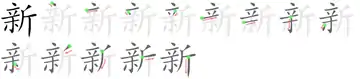
| Stroke order | |||
|---|---|---|---|
 | |||
| Traditional | 新 |
|---|---|
| Simplified | 新 |
| Japanese | 新 |
| Korean | 新 |
Alternative forms
Han character
新 (Kangxi radical 69, 斤+9, 13 strokes, cangjie input 卜木竹一中 (YDHML), four-corner 02921, composition ⿰亲斤)
References
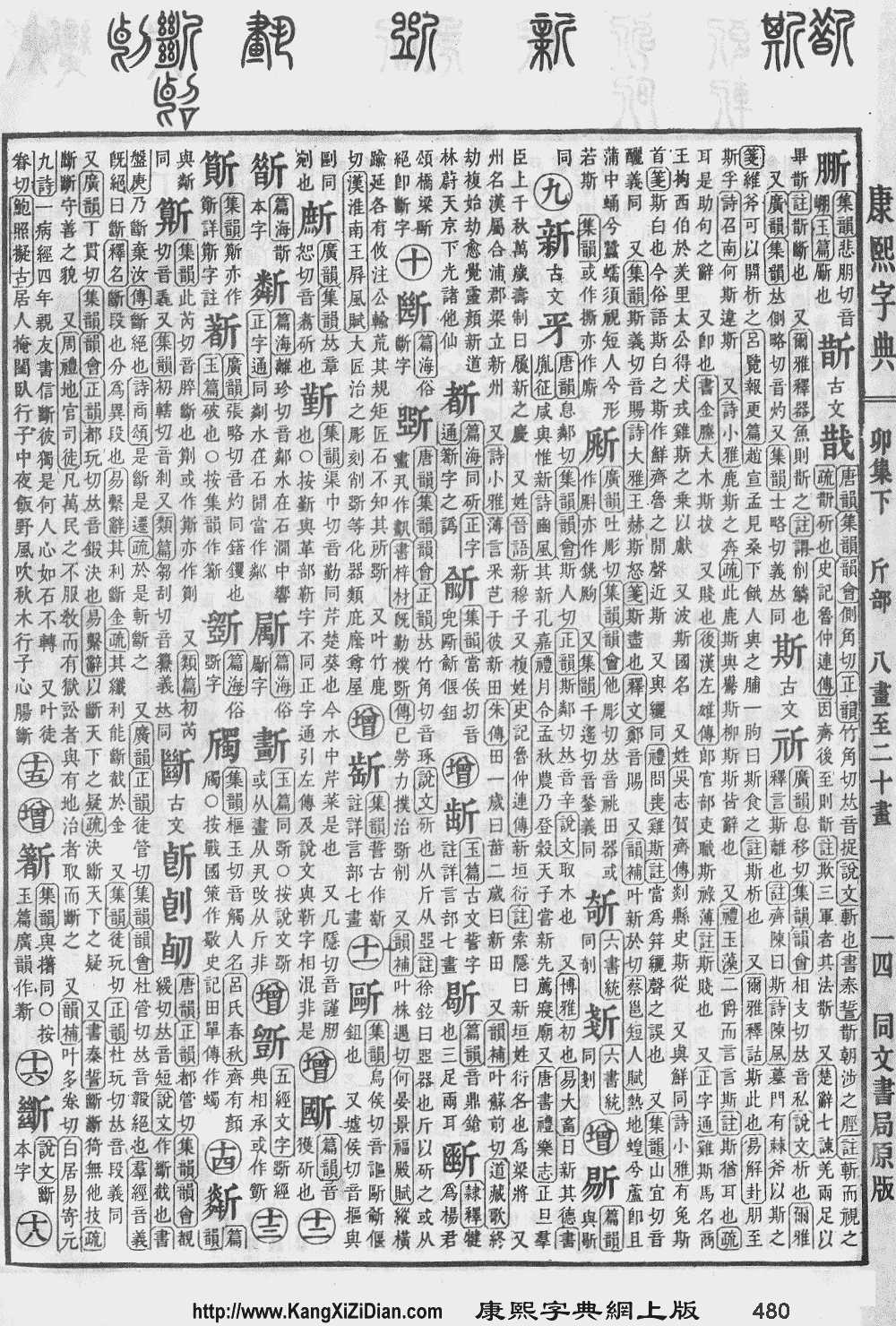
- Kangxi Dictionary: page 480, character 10
- Dai Kanwa Jiten: character 13572
- Dae Jaweon: page 839, character 10
- Hanyu Da Zidian (first edition): volume 3, page 2026, character 21
- Unihan data for U+65B0
Chinese
| trad. | 新 | |
|---|---|---|
| simp. # | 新 | |
| alternative forms | 𣂺 | |
Glyph origin
| Historical forms of the character 新 | |||
|---|---|---|---|
| Shang | Western Zhou | Warring States | Shuowen Jiezi (compiled in Han) |
| Oracle bone script | Bronze inscriptions | Chu slip and silk script | Small seal script |
 |
 |
 |
 |
Phono-semantic compound (形聲/形声, OC *siŋ) : phonetic 亲 (OC *siŋ, “hazelnut tree”) + semantic 斤 (“axe”) – to cut down a tree with an axe (hence starting something new). 亲 is a variant of 辛 (OC *siŋ)
Also ideogrammic compound (會意/会意) . Original form of 薪 (OC *siŋ, “firewood”).
Etymology
Sino-Tibetan; cognate with Burmese သစ် (sac, “new”). Compare the cognacy between 薪 (OC *siŋ, “firewood”) and Burmese သစ် (sac, “wood; timber”).
This word may belong to the Sino-Tibetan stem Proto-Sino-Tibetan *siŋ (“alive, fresh, green”) and may hence be related to 青 (OC *sʰleːŋ, “green”) as well as 薪 (OC *siŋ, “firewood”) (Schuessler, 2007).
Pronunciation
Definitions
新
- new; fresh
- new; unused
- recently or just married
- the new
- to make new
- 耳目一新 ― ěrmùyīxīn ― (please add an English translation of this usage example)
- 苟日新、日日新、又日新。 [Classical Chinese, trad. and simp.]
- From: The Book of Rites, c. 4th – 2nd century BCE
- Gǒu rì xīn, rìrì xīn, yòu rì xīn. [Pinyin]
- If you can one day renovate yourself, do so from day to day. Yea, let there be daily renovation.
- newly; freshly; recently
- (chemistry) meso-
- a surname. Xin
- (~朝) Xin dynasty
- Short for 新疆 (Xīnjiāng).
- Short for 新加坡 (Xīnjiāpō).
- Short for 新西蘭/新西兰 (Xīnxīlán).
See also
Compounds
- 一新耳目
- 上新世 (Shàngxīnshì)
- 下新店 (Xiàxīndiàn)
- 世新大學/世新大学
- 世說新語/世说新语 (Shìshuōxīnyǔ)
- 中新世
- 中興新村/中兴新村
- 中華新韻/中华新韵
- 了無新意/了无新意
- 全新 (quánxīn)
- 八成新
- 出陳布新/出陈布新
- 別出新裁/别出新裁
- 別創新格/别创新格
- 刷新 (shuāxīn)
- 剗新/刬新
- 剪燈新話/剪灯新话
- 創新/创新 (chuàngxīn)
- 劇秦美新/剧秦美新
- 北新 (Běixīn)
- 半新
- 半新不舊/半新不旧 (bànxīn bùjiù)
- 即時新聞/即时新闻 (jíshí xīnwén)
- 厭舊喜新/厌旧喜新
- 厭舊貪新/厌旧贪新 (yànjiùtānxīn)
- 古新世
- 另結新歡/另结新欢
- 另闢新徑/另辟新径
- 吐故納新/吐故纳新 (tǔgùnàxīn)
- 名特優新/名特优新
- 吐舊容新/吐旧容新
- 喜新厭故/喜新厌故
- 喜新厭舊/喜新厌旧 (xǐxīnyànjiù)
- 嘗新/尝新 (chángxīn)
- 國內新聞/国内新闻
- 國際新聞/国际新闻
- 地方新聞/地方新闻
- 堂構更新/堂构更新
- 塘沽新港
- 夏新莊/夏新庄 (Xiàxīnzhuāng)
- 大化革新
- 妝新/妆新
- 宴爾新婚/宴尔新婚
- 屢出新招/屡出新招
- 履新 (lǚxīn)
- 嶄新/崭新 (zhǎnxīn)
- 建新 (Jiànxīn)
- 從新/从新 (cóngxīn)
- 得新厭舊/得新厌旧
- 得新忘舊/得新忘旧
- 得新棄舊/得新弃旧
- 復新/复新
- 復舊如新/复旧如新
- 恭賀新禧/恭贺新禧 (gōnghèxīnxǐ)
- 悔罪自新
- 悔過自新/悔过自新 (huǐguòzìxīn)
- 愛新覺羅/爱新觉罗 (Àixīnjuéluó)
- 憐新棄舊/怜新弃旧
- 懷新思舊/怀新思旧
- 戀新忘舊/恋新忘旧
- 拔新領異/拔新领异
- 推陳出新/推陈出新 (tuīchénchūxīn)
- 換新/换新 (huànxīn)
- 改過從新/改过从新
- 改過自新/改过自新 (gǎiguòzìxīn)
- 政治革新
- 文君新寡
- 斬新/斩新 (zhǎnxīn)
- 新一 (Xīnyī)
- 新三大件
- 新不列顛/新不列颠
- 新世界 (xīnshìjiè)
- 新世紀/新世纪
- 新中橫/新中横
- 新五代史
- 新交 (xīnjiāo)
- 新亭
- 新亭對泣/新亭对泣
- 新亭淚/新亭泪
- 新人 (xīnrén)
- 新人物
- 新人類/新人类 (xīnrénlèi)
- 新仇舊恨/新仇旧恨 (xīnchóu-jiùhèn)
- 新任 (xīnrèn)
- 新作 (xīnzuò)
- 新余 (Xīnyú)
- 新來/新来 (xīnlái)
- 新來乍到/新来乍到 (xīnláizhàdào)
- 新儒學/新儒学
- 新元史
- 新光 (Xīnguāng)
- 新兵 (xīnbīng)
- 新出土兒/新出土儿
- 新出手兒/新出手儿
- 新制 (xīnzhì)
- 新創/新创 (xīnchuàng)
- 新劇/新剧 (xīnjù)
- 新加坡 (Xīnjiāpō)
- 新化 (Xīnhuà)
- 新北 (Xīnběi)
- 新北市
- 新區/新区 (xīnqū)
- 新句
- 新名詞/新名词 (xīnmíngcí)
- 新唐書/新唐书 (Xīntángshū)
- 新喻 (Xīnyú)
- 新喜
- 新喜劇/新喜剧
- 新四大件
- 新園/新园 (Xīnyuán)
- 新址 (xīnzhǐ)
- 新型 (xīnxíng)
- 新垣 (xīnyuán)
- 新城 (xīnchéng)
- 新城子 (Xīnchéngzi)
- 新城鄉/新城乡
- 新埔 (Xīnpǔ)
- 新埤 (Xīnpí)
- 新堰 (Xīnyàn)
- 新堤 (Xīndī)
- 新堤口 (Xīndīkǒu)
- 新塘 (Xīntáng)
- 新墳/新坟
- 新壠/新垅
- 新大陸/新大陆 (Xīndàlù)
- 新天地 (xīntiāndì)
- 新夷
- 新奇 (xīnqí)
- 新奧爾良/新奥尔良 (Xīn-Ào'ěrliáng)
- 新女性
- 新好女人
- 新好男人
- 新妝/新妆
- 新姑爺/新姑爷
- 新娘 (xīnniáng)
- 新娘子 (xīnniángzi)
- 新娘花
- 新娘車/新娘车
- 新婚 (xīnhūn)
- 新婦/新妇 (xīnfù)
- 新婚燕爾/新婚燕尔
- 新嫁娘
- 新媳婦兒/新媳妇儿
- 新學/新学
- 新學小生/新学小生
- 新安派
- 新官上任三把火 (xīn guān shàngrèn sān bǎ huǒ)
- 新家
- 新家娘
- 新富 (Xīnfù)
- 新寡
- 新實在論/新实在论
- 新寵/新宠 (xīnchǒng)
- 新局 (xīnjú)
- 新局面 (xīnjúmiàn)
- 新居 (xīnjū)
- 新屋 (xīnwū)
- 新嶄嶄/新崭崭
- 新巧
- 新市 (Xīnshì)
- 新市鎮/新市镇 (xīnshìzhèn)
- 新年 (xīnnián)
- 新序 (Xīnxù)
- 新店 (Xīndiàn)
- 新店溪
- 新廈/新厦
- 新廟/新庙 (Xīnmiào)
- 新廠/新厂 (Xīnchǎng)
- 新廣武/新广武 (Xīnguǎngwǔ)
- 新建 (xīnjiàn)
- 新式 (xīnshì)
- 新張/新张 (xīnzhāng)
- 新律
- 新德里 (Xīn Délǐ)
- 新恨
- 新愁
- 新意 (xīnyì)
- 新愁舊恨/新愁旧恨
- 新戲/新戏
- 新房 (xīnfáng)
- 新手 (xīnshǒu)
- 新招牌
- 新政 (xīnzhèng)
- 新教 (xīnjiào)
- 新敗/新败 (xīnbài)
- 新文
- 新文化
- 新文化運動/新文化运动 (Xīn Wénhuà Yùndòng)
- 新文學/新文学
- 新文藝/新文艺
- 新新人類/新新人类 (xīnxīnrénlèi)
- 新方言
- 新星 (xīnxīng)
- 新春 (xīnchūn)
- 新時代/新时代 (xīnshídài)
- 新晴
- 新曆/新历 (xīnlì)
- 新書/新书 (xīnshū)
- 新書看板/新书看板
- 新月 (xīnyuè)
- 新月形麵包/新月形面包 (xīnyuèxíng miànbāo)
- 新月派
- 新月藻
- 新朝 (Xīncháo)
- 新村 (xīncūn)
- 新東/新东 (Xīndōng)
- 新樣/新样
- 新款 (xīnkuǎn)
- 新歡/新欢 (xīnhuān)
- 新正 (xīnzhēng)
- 新歲/新岁
- 新民 (xīnmín)
- 新民主主義革命/新民主主义革命 (xīnmínzhǔzhǔyì gémìng)
- 新民叢報/新民丛报
- 新民縣/新民县
- 新民體/新民体
- 新氣象/新气象
- 新江口 (Xīnjiāngkǒu)
- 新法
- 新河 (Xīnhé)
- 新河口 (Xīnhékǒu)
- 新法算書/新法算书
- 新洲 (Xīnzhōu)
- 新派 (xīnpài)
- 新涼/新凉
- 新港 (Xīngǎng)
- 新港口 (Xīngǎngkǒu)
- 新港鄉/新港乡
- 新溝/新沟 (Xīngōu)
- 新潟 (Xīnxì)
- 新潮 (xīncháo)
- 新潮流
- 新澤西州/新泽西州
- 新灘/新滩 (Xīntān)
- 新火
- 新炊
- 新營/新营 (Xīnyíng)
- 新爵士樂/新爵士乐
- 新版 (xīnbǎn)
- 新玉
- 新瓶舊酒/新瓶旧酒 (xīnpíngjiùjiǔ)
- 新瓶裝舊酒/新瓶装旧酒 (xīnpíngzhuāngjiùjiǔ)
- 新生 (xīnshēng)
- 新生代
- 新生兒/新生儿 (xīnshēng'ér)
- 新生命
- 新生地
- 新生活
- 新生牙
- 新生界
- 新生訓練/新生训练
- 新田 (xīntián)
- 新界 (Xīnjiè)
- 新異/新异 (xīnyì)
- 新疆 (Xīnjiāng)
- 新疆回變/新疆回变
- 新疆省
- 新痊
- 新益 (Xīnyì)
- 新知 (xīnzhī)
- 新石器時代/新石器时代 (Xīnshíqì Shídài)
- 新硎初試/新硎初试
- 新社 (Xīnshè)
- 新社區/新社区
- 新福 (Xīnfú)
- 新禧 (xīnxǐ)
- 新秀 (xīnxiù)
- 新科
- 新秋
- 新穎/新颖 (xīnyǐng)
- 新竹 (Xīnzhú)
- 新竹市
- 新竹縣/新竹县
- 新篇章
- 新簇簇
- 新粧/新妆
- 新約/新约 (Xīnyuē)
- 新紀元/新纪元 (xīnjìyuán)
- 新約全書/新约全书 (Xīnyuē Quánshū)
- 新紀錄/新纪录
- 新綠/新绿 (xīnlǜ)
- 新編/新编 (xīnbiān)
- 新羅/新罗 (Xīnluó)
- 新義/新义 (Xīnyì)
- 新聚 (Xīnjù)
- 新聞/新闻 (xīnwén)
- 新聞人物/新闻人物
- 新聞來源/新闻来源
- 新聞價值/新闻价值 (xīnwén jiàzhí)
- 新聞公報/新闻公报
- 新聞分類/新闻分类
- 新聞剪影/新闻剪影
- 新聞周刊/新闻周刊
- 新聞報導/新闻报导
- 新聞媒介/新闻媒介
- 新聞學/新闻学 (xīnwénxué)
- 新聞標題/新闻标题
- 新聞界/新闻界 (xīnwénjiè)
- 新聞發佈會/新闻发布会 (xīnwén fābùhuì)
- 新聞紙/新闻纸 (xīnwénzhǐ)
- 新聞自由/新闻自由 (xīnwén zìyóu)
- 新聞雜誌/新闻杂志
- 新聞鼻/新闻鼻
- 新聲/新声
- 新能源 (xīnnéngyuán)
- 新腔
- 新臺/新台
- 新臺幣/新台币 (xīntáibì)
- 新興/新兴
- 新興國/新兴国
- 新舊/新旧 (xīnjiù)
- 新舊交替/新旧交替
- 新色
- 新芽 (xīnyá)
- 新花樣/新花样
- 新苗
- 新英格蘭/新英格兰 (Xīn Yīnggélán)
- 新茗 (xīnmíng)
- 新茶 (xīnchá)
- 新莊/新庄 (Xīnzhuāng)
- 新莽
- 新著
- 新華/新华 (Xīnhuá)
- 新華社/新华社 (Xīnhuáshè)
- 新葉/新叶 (Xīnyè)
- 新蔡 (Xīncài)
- 新蔡縣/新蔡县
- 新藥/新药 (xīnyào)
- 新藝拉瑪/新艺拉玛
- 新藝術/新艺术
- 新蘆/新芦 (Xīnlú)
- 新蟾
- 新血輪/新血轮
- 新街 (Xīnjiē)
- 新裝/新装
- 新西伯利亞/新西伯利亚 (Xīnxībólìyà)
- 新西蘭/新西兰 (Xīnxīlán)
- 新親/新亲
- 新解
- 新詞/新词 (xīncí)
- 新話/新话 (Xīnhuà)
- 新詩/新诗 (xīnshī)
- 新語/新语 (xīnyǔ)
- 新論/新论
- 新豐/新丰 (Xīnfēng)
- 新豐縣/新丰县
- 新豐酒/新丰酒
- 新貌 (xīnmào)
- 新貨/新货
- 新貴/新贵 (xīnguì)
- 新路 (xīnlù)
- 新軍/新军 (xīnjūn)
- 新近 (xīnjìn)
- 新逝
- 新造邦
- 新進/新进 (xīnjìn)
- 新邑
- 新郎 (xīnláng)
- 新郎君
- 新郎官 (xīnlángguān)
- 新鄉/新乡 (Xīnxiāng)
- 新鄭縣/新郑县
- 新醫/新医
- 新釀/新酿
- 新鋪/新铺 (Xīnpù)
- 新銳/新锐 (xīnruì)
- 新鎮縣/新镇县
- 新陳代謝/新陈代谢 (xīnchén dàixiè)
- 新集 (Xīnjí)
- 新雨
- 新霽/新霁
- 新靚/新靓
- 新風/新风 (xīnfēng)
- 新體詩/新体诗
- 新鬼
- 新鮮/新鲜 (xīnxiān)
- 新鮮事/新鲜事
- 新鮮人/新鲜人 (xīnxiānrén)
- 新鶯出谷/新莺出谷
- 新黴素/新霉素 (xīnméisù)
- 日久彌新/日久弥新
- 日新 (rìxīn)
- 日新又新
- 日新月異/日新月异 (rìxīnyuèyì)
- 明新
- 明治維新/明治维新 (Míngzhì Wéixīn)
- 時新/时新 (shíxīn)
- 更新 (gēngxīn)
- 更新換代/更新换代
- 朝日新聞/朝日新闻
- 東新/东新 (Dōngxīn)
- 桑新婦/桑新妇
- 桃色新聞/桃色新闻
- 棄舊圖新/弃旧图新 (qìjiùtúxīn)
- 棄舊憐新/弃旧怜新
- 棄舊換新/弃旧换新 (qìjiùhuànxīn)
- 棄過圖新/弃过图新
- 標新取異/标新取异
- 標新立異/标新立异 (biāoxīnlìyì)
- 標新領異/标新领异
- 歷久彌新/历久弥新 (lìjiǔmíxīn)
- 氣象一新/气象一新
- 求新求變/求新求变
- 求新立異/求新立异
- 汰舊換新/汰旧换新 (tàijiùhuànxīn)
- 泰國新娘/泰国新娘
- 法新
- 法新社 (Fǎxīnshè)
- 洗心自新
- 海新 (Hǎixīn)
- 清新 (qīngxīn)
- 清新俊逸
- 清新雋永/清新隽永
- 湛新
- 溫故知新/温故知新 (wēngùzhīxīn)
- 滌故更新/涤故更新
- 潘他唑新
- 煥然一新/焕然一新 (huànrányīxīn)
- 燕爾新婚/燕尔新婚
- 燦然一新/灿然一新
- 獨家新聞/独家新闻
- 獻新/献新
- 玉臺新詠/玉台新咏
- 產經新聞/产经新闻
- 發硎新試/发硎新试
- 白頭如新/白头如新
- 白首如新
- 白髮如新/白发如新
- 百日維新/百日维新 (Bǎirì Wéixīn)
- 破舊立新/破旧立新
- 社會新聞/社会新闻
- 萬象更新/万象更新 (wànxiànggēngxīn)
- 積衰新造/积衰新造
- 立新 (Lìxīn)
- 簇新 (cùxīn)
- 純淨新聞/纯净新闻
- 經濟新聞/经济新闻
- 維新/维新 (wéixīn)
- 維新圖強/维新图强
- 維新運動/维新运动 (Wéixīn Yùndòng)
- 線上新聞/线上新闻
- 編新/编新
- 翻新 (fānxīn)
- 耳目一新 (ěrmùyīxīn)
- 自創新意/自创新意
- 自新 (zìxīn)
- 與日俱新/与日俱新
- 舊恨新愁/旧恨新愁
- 舊愁新恨/旧愁新恨
- 舊瓶新酒/旧瓶新酒
- 舊識新交/旧识新交
- 舊雨新知/旧雨新知 (jiùyǔxīnzhī)
- 花樣翻新/花样翻新
- 花絮新聞/花絮新闻
- 花邊新聞/花边新闻
- 薦新祭/荐新祭
- 裝新/装新
- 西新 (Xīxīn)
- 見新/见新
- 記憶猶新/记忆犹新 (jìyìyóuxīn)
- 試新/试新
- 超新星 (chāoxīnxīng)
- 跑新聞/跑新闻
- 軟性新聞/软性新闻
- 迎新 (yíngxīn)
- 近新來/近新来
- 迎新送故
- 迎新送舊/迎新送旧
- 送故迎新
- 送新
- 送舊迎新/送旧迎新
- 重新 (chóngxīn)
- 重新做人 (chóngxīnzuòrén)
- 開新板/开新板
- 除舊布新/除旧布新 (chújiùbùxīn)
- 除舊更新/除旧更新
- 陽新/阳新 (Yángxīn)
- 電視新聞/电视新闻
- 面目一新
- 革故鼎新
- 革新 (géxīn)
- 革舊鼎新/革旧鼎新
- 頭條新聞/头条新闻
- 類新星/类新星
- 風月常新/风月常新
- 馬路新聞/马路新闻
- 鬧新房/闹新房 (nào xīnfáng)
- 黃色新聞/黄色新闻
- 鼎新 (dǐngxīn)
- 鼎新革故
Further reading
- “Entry #9526”, in 臺灣閩南語常用詞辭典 [Dictionary of Frequently-Used Taiwan Minnan] (overall work in Mandarin and Hokkien), Ministry of Education, R.O.C., 2023.
Japanese
Alternative forms
- 𣂺: see
 新の本字 on the Japanese Wikipedia.Wikipedia ja
Readings
- Go-on: しん (shin, Jōyō)
- Kan-on: しん (shin, Jōyō)
- Kun: あたらしい (atarashii, 新しい, Jōyō); あらた (arata, 新た, Jōyō); あら (ara, 新); にい (nii, 新, Jōyō)←にひ (nifi, 新, historical); さら (sara, 新)
- Nanori: あきら (akira); あせ (ase); あたらし (atarashi); し (shi); すすむ (susumu); ちか (chika); に (ni); につ (nitsu); はじめ (hajime); よし (yoshi); わか (waka)
Compounds
- 新案 (shin'an)
- 新鋭 (shin'ei)
- 新刊 (shinkan)
- 新規 (shinki)
- 新旧 (shinkyū)
- 新教 (shinkyō)
- 新月 (shingetsu)
- 新語 (shingo)
- 新興 (shinkō)
- 新参 (shinzan)
- 新種 (shinshu)
- 新酒 (shinshu)
- 新生 (shinsei)
- 新星 (shinsei)
- 新設 (shinsetsu)
- 新雪 (shinsetsu)
- 新鮮 (shinsen)
- 新築 (shinchiku)
- 新茶 (shincha, “new tea of the year”)
- 新着 (shinchaku, “new arrival”)
- 新任 (shinnin)
- 新品 (shinpin)
- 新茗 (shinmei, “newly-sprouted tea leaves; tea made from such leaves”)
- 新薬 (shin'yaku)
- 新約 (shin'yaku)
- 新暦 (shinreki)
- 新人 (shinjin)
- 新風 (shinpū)
- 一新 (isshin)
- 改新 (kaishin)
- 革新 (kakushin)
- 更新 (kōshin)
- 最新 (saishin)
- 刷新 (sasshin)
- 斬新 (zanshin)
- 生新 (seishin)
- 清新 (seishin)
- 新羅 (Shiragi)
- 新嘉坡 (Shingapōru)
- 新西蘭 (Nyū Jīrando)
- 新嘗 (niwanai)
Etymology 1
| Kanji in this term |
|---|
| 新 |
| しん Grade: 2 |
| on’yomi |
/sin/ → /ɕin/
From Middle Chinese 新 (MC sin).
Compare modern Mandarin 新 (xīn), Hakka 新 (sîn), Min Nan 新 (sin), and Wu 新 (1shin).
Noun
新 • (shin)
- a novelty
- Antonym: 旧 (kyū)
- Short for 新暦 (shinreki): the Gregorian calendar
- Short for 新株 (shinkabu) This term needs a translation to English. Please help out and add a translation, then remove the text
{{rfdef}}. - Short for 新銀 (shingin) This term needs a translation to English. Please help out and add a translation, then remove the text
{{rfdef}}. - Short for 新造 (shinzō) This term needs a translation to English. Please help out and add a translation, then remove the text
{{rfdef}}.
Prefix
新 • (shin-)
- neo-
- 新元号
- shin-gengō
- new era name
- 新世界
- Shinsekai
- the New World
- 新約聖書
- Shin'yaku Seisho
- the New Testament
- 新元号
- attached to the title of a fiction work to mean “new storyline”, to distinguish it from older works
- 新鉄拳チンミ
- Shin Tekken Chinmi
- New Ironfist Chinmi
- 新鉄拳チンミ
- attached to the title of a fiction adaptation to mean “remake”, to distinguish it from older adaptations
- Lois & Clark 新スーパーマン
- Lois & Clark Shin Sūpāman
- Lois & Clark: New Superman
- Lois & Clark 新スーパーマン
Derived terms
Proper noun
新 • (Shin)
- (historical) the Xin dynasty (8–23 CE)
- a placename
- a surname
- a male or female given name
Etymology 2
| Kanji in this term |
|---|
| 新 |
| にい Grade: 2 |
| kun’yomi |
⟨nipi1⟩ → /nipʲi/ → /nifi/ → /niwi/ → /niː/
From Old Japanese, from Proto-Japonic *nipi.
Derived terms
Derived terms
Etymology 5
| Kanji in this term |
|---|
| 新 |
| あら(た) Grade: 2 |
| kun’yomi |
References
- Matsumura, Akira, editor (2006), 大辞林 [Daijirin] (in Japanese), Third edition, Tōkyō: Sanseidō, →ISBN
Korean
Kunigami
Miyako
Okinawan
Vietnamese
Compounds
- 革新 (cách tân)
- 更新 (canh tân)
- 維新 (duy tân)
- 迎新 (nghênh tân)
- 溫故知新 (ôn cố tri tân)
- 新兵 (tân binh)
- 新家 (tân gia)
- 新學 (tân học)
- 新婚 (tân hôn)
- 新科 (tân khoa)
- 新奇 (tân kì)
- 新郎 (tân lang)
- 新曆 (tân lịch)
- 新人 (tân nhân)
- 新年 (tân niên)
- 新婦 (tân phụ)
- 新生 (tân sinh)
- 新造 (tân tạo)
- 新時 (tân thời)
- 新進 (tân tiến)
- 新裝 (tân trang)
- 新朝 (tân trào)
- 新聞 (tân văn)
- 新春 (tân xuân)
- 清新 (thanh tân)
- 最新 (tối tân)
References
- Génibrel (1898).
- Bonet (1899).
- Trần (1999).
- Nguyễn et al. (2009).