薨
| ||||||||
Translingual
Han character
薨 (Kangxi radical 140, 艸+13, 19 strokes, cangjie input 廿田中心 (TWLP), four-corner 44211, composition ⿱⿳卝罒冖死 or ⿳𦭝冖死)
References
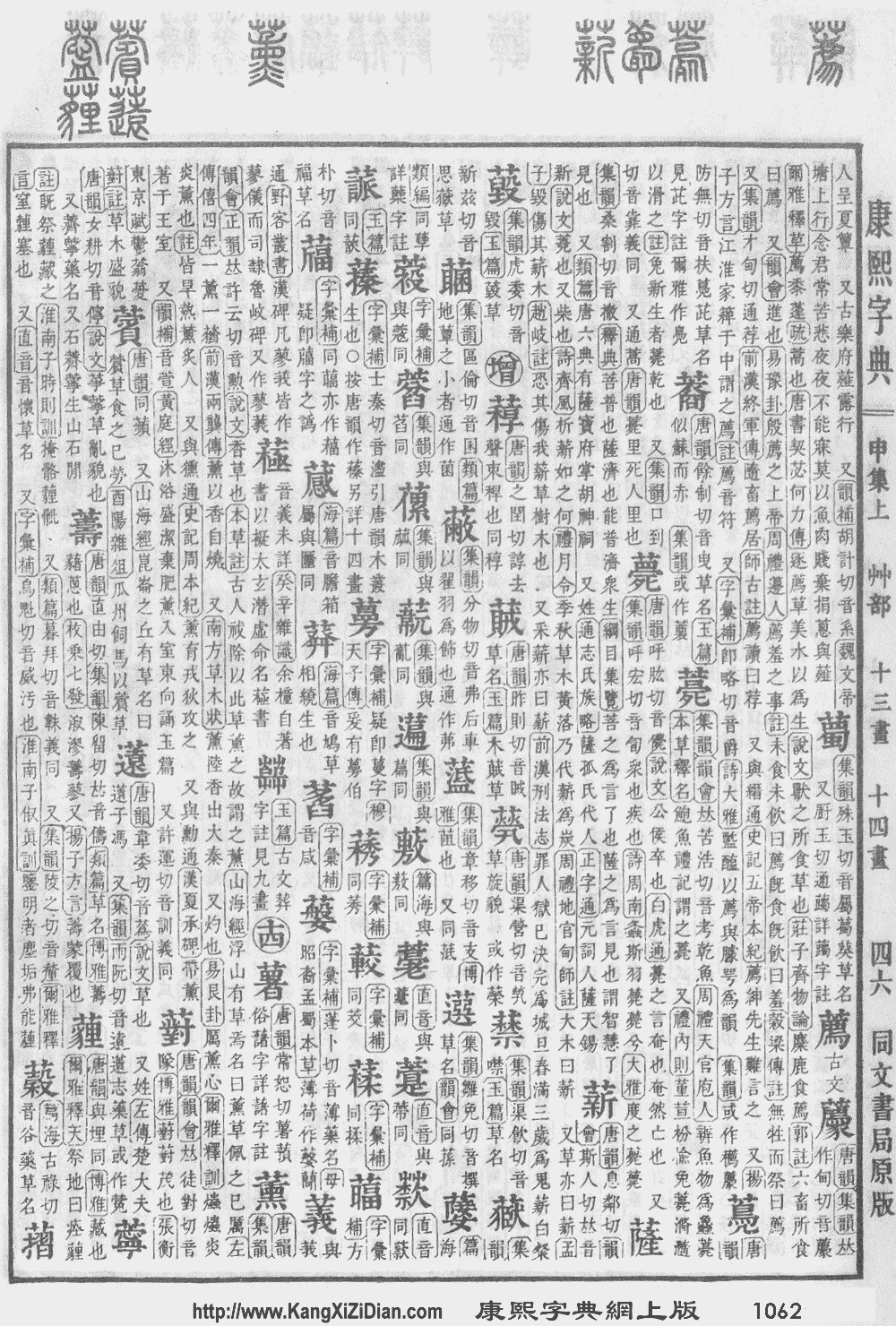
- Kangxi Dictionary: page 1062, character 7
- Dai Kanwa Jiten: character 32147
- Dae Jaweon: page 1526, character 12
- Hanyu Da Zidian (first edition): volume 5, page 3302, character 3
- Unihan data for U+85A8
Chinese
| trad. | 薨 | |
|---|---|---|
| simp. # | 薨 | |
Glyph origin
Pronunciation
Definitions
薨
- (archaic, of feudal lords or high officials) to pass away; to die
- 會延平王成功薨,長子經嗣立,臺灣初稱東都,改明京以候桂王之蹕。 [Classical Chinese, trad.]
- From: 查繼佐, 《東山國語》, 臺灣前語
- Huì Yánpíngwáng Chénggōng hōng, zhǎngzǐ Jīng sìlì, Táiwān chū chēng Dōngdū, gǎi Míngjīng yǐ hòu Guìwáng zhī bì. [Pinyin]
- When Koxinga (Zheng Chenggong) passed away, his eldest son Jing succeeded to the throne. Taiwan was initially named Dongdu [The Eastern Capital], then changed to Mingjing [Capital of the Ming Dynasty] to await the arrival of the Prince of Gui.
会延平王成功薨,长子经嗣立,台湾初称东都,改明京以候桂王之跸。 [Classical Chinese, simp.]
- (onomatopoeia) swarming; flocking; noisy
- 螽斯羽,薨薨兮!宜爾子孫,繩繩兮! [Classical Chinese, trad.]
- From: circa 11th century BCE — 7th century BCE, The Classic of Poetry. The translation here emphasises the onomatopoeic nature of the ideophonic reduplications.
- Zhōngsī yǔ, hōnghōng xī! Yí ěr zǐsūn, shéngshéng xī! [Pinyin]
- Grasshoppers on the wing —
Your racket goes hmoong-hmoong!
No wonder your children —
They are all like, bleng-bleng!
螽斯羽,薨薨兮!宜尔子孙,绳绳兮! [Classical Chinese, simp.]
Synonyms
- (to pass away):
- 下世 (xiàshì) (formal)
- 上天 (shàngtiān) (euphemistic)
- 上路 (shànglù) (euphemistic)
- 不在 (bùzài) (euphemistic)
- 不幸 (bùxìng) (Classical Chinese, euphemistic)
- 不祿/不禄 (bùlù) (archaic, euphemistic, of military officers)
- 亡
- 亡故 (wánggù) (literary)
- 仙逝 (xiānshì) (euphemistic)
- 仙遊/仙游 (xiānyóu) (euphemistic)
- 作古 (zuògǔ) (literary, euphemistic)
- 做鬼 (zuòguǐ) (colloquial)
- 傾世/倾世 (qīngshì) (literary)
- 傾亡/倾亡 (qīngwáng) (literary)
- 入寂 (rùjì) (Buddhism, of Buddhist monks)
- 凋謝/凋谢 (diāoxiè) (to die of old age)
- 化去 (huàqù) (euphemistic)
- 升天 (shēngtiān) (euphemistic)
- 即世 (jíshì) (literary)
- 去世 (qùshì)
- 合眼 (héyǎn) (euphemistic)
- 喪亡/丧亡 (sàngwáng) (literary)
- 喪命/丧命 (sàngmìng) (euphemistic)
- 喪生/丧生 (sàngshēng) (euphemistic)
- 嗚呼/呜呼 (wūhū) (euphemistic)
- 嗝屁 (gěpì) (Mandarin, vulgar, derogatory)
- 嚥氣/咽气 (yànqì) (colloquial)
- 回老家 (huí lǎojiā) (euphemistic, humorous)
- 圓寂/圆寂 (yuánjì) (of Buddhist monks or nuns)
- 壽終正寢/寿终正寝 (shòuzhōngzhèngqǐn) (euphemistic)
- 安息 (ānxī) (euphemistic)
- 安眠 (ānmián) (euphemistic)
- 小喇叭兒吹了/小喇叭儿吹了 (xiǎo lǎbār chuī le) (Beijing Mandarin)
- 就義/就义 (jiùyì) (to die a martyr)
- 崩 (bēng) (of a king, emperor, monarch, etc.)
- 崩殂 (bēngcú) (Classical, of a king, emperor, monarch, etc.)
- 彈老三/弹老三 (Northern Wu, informal, humorous)
- 往生 (wǎngshēng) (euphemistic)
- 忽然 (hūrán) (Classical Chinese, euphemistic)
- 掛/挂 (guà) (slang, humorous)
- 故 (gù)
- 故世 (gùshì) (euphemistic, chiefly of one's elders)
- 故去 (gùqù) (euphemistic, chiefly of one's elders)
- 斃命/毙命 (bìmìng) (pejorative)
- 早死 (zǎosǐ)
- 晏駕/晏驾 (yànjià) (of a king, emperor, monarch, etc.)
- 枯死 (kūsǐ) (literary, figurative)
- 棄世/弃世 (qìshì) (literary)
- 歸天/归天 (guītiān) (euphemistic)
- 歸西/归西 (guīxī) (euphemistic)
- 歸道山/归道山 (guī dàoshān) (literary, euphemistic)
- 死 (sǐ)
- 死亡 (sǐwáng) (formal)
- 死人 (sǐrén)
- 死去 (sǐqù) (informal)
- 死掉 (sǐdiào) (informal)
- 死翹翹/死翘翘 (sǐqiàoqiào) (informal, humorous)
- 死脫/死脱 (5shi-theq) (Wu)
- 殞/殒 (yǔn) (archaic)
- 氣絕/气绝 (qìjué) (literary)
- 永眠 (yǒngmián) (euphemistic, honorific)
- 沒世/没世 (mòshì) (literary)
- 沉眠 (chénmián) (euphemistic)
- 消忒 (Hakka, euphemistic)
- 物化 (wùhuà) (literary)
- 畢命/毕命 (bìmìng) (formal, euphemistic)
- 病亡 (bìngwáng) (to die of illness)
- 病故 (bìnggù) (to die of illness)
- 病死 (bìngsǐ) (to die of illness)
- 病逝 (bìngshì) (to die of illness)
- 百年歸老/百年归老 (bǎiniánguīlǎo) (euphemistic, of the elderly)
- 盡命/尽命 (jìnmìng) (literary, euphemistic)
- 終/终 (zhōng) (literary, or in compounds, euphemistic)
- 絕/绝 (jué) (literary, or in compounds)
- 翹辮子/翘辫子 (qiào biànzi) (informal, humorous)
- 老了 (lǎo le) (euphemistic, of the elderly)
- 蒙主寵召/蒙主宠召 (méngzhǔchǒngzhào) (euphemistic)
- 薨逝 (hōngshì) (of feudal lords)
- 被難/被难 (bèinàn) (to be killed in a disaster, political incident, etc.)
- 見背/见背 (jiànbèi) (literary, of one's parents or elders)
- 見閻王/见阎王 (jiàn Yánwáng) (figurative)
- 賓天/宾天 (bīntiān) (of a king, emperor, monarch, etc.)
- 走 (zǒu) (euphemistic)
- 走去踮 (Hokkien, euphemistic)
- 身亡 (shēnwáng) (formal, usually from unnatural causes)
- 辭世/辞世 (císhì) (literary)
- 逝世 (shìshì)
- 進棺材/进棺材 (jìn guāncái)
- 過世/过世 (guòshì)
- 過去/过去 (guòqù) (euphemistic)
- 過往/过往 (Hokkien, euphemistic, Teochew, euphemistic)
- 過身/过身 (guòshēn) (literary)
- 過面/过面 (Hokkien)
- 長山賣鴨卵/长山卖鸭卵 (Hakka, euphemistic)
- 長眠/长眠 (chángmián) (euphemistic, honorific)
- 閉眼/闭眼 (bìyǎn) (euphemistic)
- 隕落/陨落 (yǔnluò) (euphemistic)
- 離世/离世 (líshì) (euphemistic)
- 駕崩/驾崩 (jiàbēng) (of a king, emperor, monarch, etc.)
- 駕鶴西去/驾鹤西去 (jiàhèxīqù) (euphemistic)
- 駕鶴西遊/驾鹤西游 (jiàhèxīyóu) (euphemistic)
- 龍馭上賓/龙驭上宾 (lóngyùshàngbīn) (of an emperor)
Japanese
Kanji
薨
- This term needs a translation to English. Please help out and add a translation, then remove the text
{{rfdef}}.
Korean
Hanja
This article is issued from Wiktionary. The text is licensed under Creative Commons - Attribution - Sharealike. Additional terms may apply for the media files.