爾
| ||||||||
Translingual
| Stroke order (Sans-serif) | |||
|---|---|---|---|
 | |||
| Traditional | 爾 |
|---|---|
| Shinjitai (extended) |
尓 |
| Simplified | 尔 |
Han character
爾 (Kangxi radical 89, 爻+10, 14 strokes, cangjie input 一火月大 (MFBK), four-corner 10227, composition ⿱一⿱八⿻巾㸚)
Derived characters
Descendants
Further reading
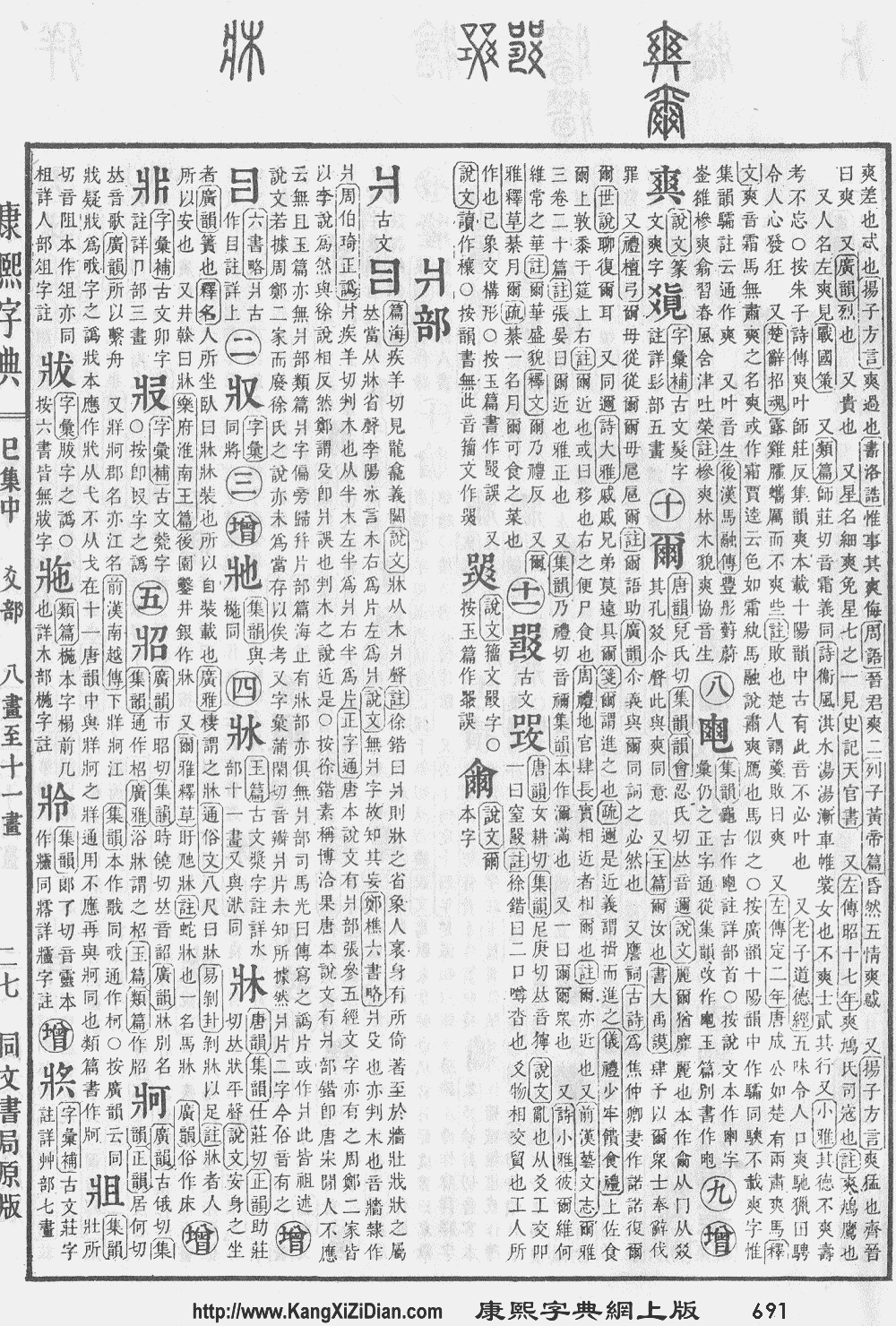
- Kangxi Dictionary: page 691, character 4
- Dai Kanwa Jiten: character 19750
- Dae Jaweon: page 1104, character 3
- Hanyu Da Zidian (first edition): volume 1, page 27, character 1
- Unihan data for U+723E
Chinese
Glyph origin
| Historical forms of the character 爾 | |||
|---|---|---|---|
| Shang | Western Zhou | Warring States | Shuowen Jiezi (compiled in Han) |
| Oracle bone script | Bronze inscriptions | Chu slip and silk script | Small seal script |
 |
 |
 |
 |
Pictogram (象形) – cloth on a loom, with threads crossing – original form of 檷 (OC *niːlʔ, “loom”). Used phonetically.
Etymology 1
| trad. | 爾 | |
|---|---|---|
| simp. | 尔 | |
| alternative forms | 尒 𡭗 尓 𠇍 | |
- “you; your”
- From Proto-Sino-Tibetan *na-ŋ (“you”).
- "that"
- Cognate with 那 (nà, “that”), 若 (OC *njaɡ, “that”) (Schuessler, 2007). See 那 (nà) for more.
Pronunciation
Definitions
爾
- (literary or dialectal) you; your
- 誰謂爾無羊,三百維群。 [Pre-Classical Chinese, trad.]
- From: The Classic of Poetry, c. 11th – 7th centuries BCE, translated based on James Legge's version
- Shéi wèi ěr wú yáng, sānbǎi wéi qún. [Pinyin]
- Who can say that you have no sheep? There are three hundred in [each] herd.
谁谓尔无羊,三百维群。 [Pre-Classical Chinese, simp.]
- (literary) so; this way
- (literary or dialectal) this; that
- (obsolete, of flowers) exuberant
- 彼爾維何,維常之華。 [Pre-Classical Chinese, trad.]
- From: The Classic of Poetry, c. 11th – 7th centuries BCE, translated based on James Legge's version
- Bǐ ěr wéi hé, wéi cháng zhī huā. [Pinyin]
- What is that so gorgeous? It is the flowers of the cherry tree.
彼尔维何,维常之华。 [Pre-Classical Chinese, simp.]
- (obsolete) a suffix or word-final particle indicating state, appearance, sound, or manner accompanying a verb
- Synonym: 然 (rán)
- 鼓瑟希,鏗爾。舍瑟而作,對曰… [Classical Chinese, trad.]
- From: The Analects of Confucius, c. 475 – 221 BCE, translated based on James Legge's version
- Gǔ sè xī, kēng ěr. Shě sè ér zuò, duì yuē... [Pinyin]
- (Zeng Dian), pausing as he was playing on his se, while it was yet twanging, laid the instrument aside, and said...
鼓瑟希,铿尔。舍瑟而作,对曰… [Classical Chinese, simp.]
- (literary) a sentence final particle; merely; only
- a surname
Synonyms
Compounds
- 不爾/不尔
- 不過爾爾/不过尔尔 (bùguò'ěr'ěr)
- 乃爾/乃尔 (nǎi'ěr)
- 侃爾/侃尔
- 俄爾/俄尔 (é'ěr)
- 俶爾/俶尔 (chù'ěr)
- 倏爾/倏尔
- 偶爾/偶尔 (ǒu'ěr)
- 公爾忘私/公尔忘私
- 具爾/具尔
- 出爾反爾/出尔反尔 (chū'ěrfǎn'ěr)
- 卓爾/卓尔
- 卓爾不群/卓尔不群 (zhuó'ěrbùqún)
- 卓爾出群/卓尔出群
- 嘑爾/呼尔 (hù'ěr)
- 國爾忘家/国尔忘家
- 宴爾新婚/宴尔新婚
- 果爾/果尔
- 溫文爾雅/温文尔雅 (wēnwén'ěryǎ)
- 焉爾/焉尔
- 燕爾/燕尔
- 燕爾新婚/燕尔新婚
- 爾來/尔来 (ěrlái)
- 爾後/尔后 (ěrhòu)
- 爾我/尔我
- 爾日/尔日
- 爾時/尔时 (ěrshí)
- 爾曹/尔曹 (ěrcáo)
- 爾朱/尔朱 (Ěrzhū)
- 爾汝/尔汝
- 爾汝之交/尔汝之交
- 爾爾/尔尔 (ěr'ěr)
- 爾當/尔当
- 爾等/尔等 (ěrděng)
- 爾虞我詐/尔虞我诈 (ěryúwǒzhà)
- 爾詐我虞/尔诈我虞
- 爾雅/尔雅 (Ěryǎ)
- 爾雅溫文/尔雅温文
- 爾雅翼/尔雅翼
- 率爾/率尔
- 率爾成章/率尔成章
- 率爾操觚/率尔操觚
- 瓶爾小草/瓶尔小草
- 聊復爾爾/聊复尔尔
- 聊復爾耳/聊复尔耳
- 莞爾/莞尔 (wǎn'ěr)
- 蕞爾/蕞尔 (zuì'ěr)
- 謖爾/谡尔
- 謐爾/谧尔
- 逌爾/逌尔
- 遽爾/遽尔 (jù'ěr)
- 鏗爾/铿尔
- 雍容爾雅
- 竟爾/竟尔
- 風流爾雅/风流尔雅
Pronunciation
Definitions
爾
- This term needs a translation to English. Please help out and add a translation, then remove the text
{{rfdef}}.
Etymology 3
(This etymology is missing or incomplete. Please add to it, or discuss it at the Etymology scriptorium. Particularly: “Contraction of 但定 (nā-tiāⁿ; only) ?”)
Pronunciation
Etymology
(This etymology is missing or incomplete. Please add to it, or discuss it at the Etymology scriptorium. Particularly: “Colliqual reading of 但 (but, only, literal reading: tān)?”)
Pronunciation
Pronunciation
Definitions
爾
- Used in transcription.
Usage notes
It is often used to transcribe the /l/ and /r/ sounds in words of foreign languages not immediately followed by a vowel, e.g. 尼泊爾/尼泊尔 (Níbó'ěr, “Nepal”), 斯德哥爾摩/斯德哥尔摩 (Sīdégē'ěrmó, “Stockholm”), 克什米爾/克什米尔 (Kèshímǐ'ěr, “Kashmir”), 塞爾維亞/塞尔维亚 (Sài'ěrwéiyà, “Serbia”), etc.
Compounds
- 丹珠爾/丹珠尔
- 乃則爾巴格/乃则尔巴格 (Nǎizé'ěr Bāgé)
- 亞爾薩斯/亚尔萨斯
- 依蓋爾其/依盖尔其 (Yīgài'ěrqí)
- 俾爾遐福/俾尔遐福
- 傑克遜維爾/杰克逊维尔 (Jiékèxùnwéi'ěr)
- 克孜爾/克孜尔 (Kèzī'ěr)
- 內茲佩爾塞/内兹佩尔塞
- 凡爾/凡尔 (fán'ěr)
- 凡爾賽/凡尔赛 (fán'ěrsài)
- 凡爾賽宮/凡尔赛宫 (Fán'ěrsài Gōng)
- 凱爾派/凯尔派 (kǎi'ěrpài)
- 切爾諾貝利/切尔诺贝利 (Qiè'ěrnuòbèilì)
- 加爾各答/加尔各答 (Jiā'ěrgèdá)
- 加爾達湖/加尔达湖
- 努爾哈赤/努尔哈赤 (Nǔ'ěrhāchì)
- 北愛爾蘭/北爱尔兰 (Běi-Ài'ěrlán)
- 卑爾根/卑尔根 (Bēi'ěrgēn)
- 南阿爾卑斯/南阿尔卑斯 (Nán-Ā'ěrbēisī)
- 博爾赤/博尔赤
- 卡塔爾/卡塔尔 (Kǎtǎ'ěr)
- 卡爾加里 (Kǎ'ěrjiālǐ)
- 卡爾斯魯厄/卡尔斯鲁厄 (Kǎ'ěrsīlǔ'è)
- 卡爾斯魯爾/卡尔斯鲁尔
- 厄爾巴島/厄尔巴岛
- 厄爾巴索/厄尔巴索 (È'ěrbāsuǒ)
- 厄瓜多爾/厄瓜多尔 (Èguāduō'ěr)
- 吉爾吉斯/吉尔吉斯 (Jí'ěrjísī)
- 吉爾吉斯斯坦/吉尔吉斯斯坦 (Jí'ěrjísīsītǎn)
- 吉爾庫克/吉尔库克
- 吉賽爾/吉赛尔
- 哈爾濱/哈尔滨 (Hā'ěrbīn)
- 喀什噶爾/喀什噶尔
- 喀什米爾/喀什米尔 (Kàshímǐ'ěr)
- 喀布爾/喀布尔
- 喀布爾河/喀布尔河
- 喀拉克爾/喀拉克尔 (Kālākè'ěr)
- 喀爾曲尕/喀尔曲尕 (Kā'ěrqūgǎ)
- 圖爾庫/图尔库 (Tú'ěrkù)
- 埃爾帕索/埃尔帕索 (Āi'ěrpàsuǒ)
- 埃菲爾鐵塔/埃菲尔铁塔 (Āifēi'ěr Tiětǎ)
- 基爾/基尔 (Jī'ěr)
- 基爾特/基尔特 (jī'ěrtè)
- 塔什庫爾干/塔什库尔干 (Tǎshíkù'ěrgān)
- 塞內加爾/塞内加尔
- 塔塔爾族/塔塔尔族 (Tǎtǎ'ěrzú)
- 塞席爾/塞席尔 (Sèxí'ěr)
- 塞爾維亞/塞尔维亚
- 塞繆爾/塞缪尔 (Sàimiù'ěr)
- 奧爾良/奥尔良 (Ào'ěrliáng)
- 奧維爾/奥维尔
- 奴爾/奴尔 (Nú'ěr)
- 威爾瑪/威尔玛
- 安迪爾/安迪尔 (Āndí'ěr)
- 安道爾/安道尔 (Āndào'ěr)
- 密爾/密尔 (mì'ěr)
- 尼泊爾/尼泊尔 (Níbó'ěr)
- 尼爾/尼尔
- 巴什吉爾/巴什吉尔
- 巴圖爾/巴图尔
- 巴塞爾/巴塞尔 (Bāsài'ěr)
- 巴爾/巴尔
- 巴爾幹/巴尔干 (Bā'ěrgàn)
- 巴爾幹半島/巴尔干半岛 (Bā'ěrgàn Bàndǎo)
- 巴爾沙/巴尔沙
- 巴爾的摩/巴尔的摩 (Bā'ěrdìmó)
- 布干維爾/布干维尔 (Bùgānwéi'ěr)
- 布爾哥尼/布尔哥尼
- 布爾喬亞/布尔乔亚 (bù'ěrqiáoyà)
- 布爾茲/布尔兹
- 布爾諾/布尔诺
- 布雷爾港/布雷尔港
- 布魯塞爾/布鲁塞尔
- 庫爾勒/库尔勒 (Kù'ěrlè)
- 庫爾河/库尔河
- 庫里爾臺/库里尔台
- 康克爾/康克尔 (Kāngkè'ěr)
- 廓爾喀人/廓尔喀人
- 彈布爾/弹布尔
- 德爾班/德尔班
- 性荷爾蒙/性荷尔蒙
- 恩格爾/恩格尔
- 恩格爾係數/恩格尔系数 (Ēngé'ěr xìshù)
- 恩格爾定律/恩格尔定律
- 恰爾巴格/恰尔巴格 (Qià'ěrbāgé)
- 恰爾隆/恰尔隆 (Qià'ěrlóng)
- 愛爾蘭/爱尔兰 (Ài'ěrlán)
- 愛爾蘭威士忌/爱尔兰威士忌
- 愛爾蘭海/爱尔兰海 (Ài'ěrlán hǎi)
- 愛爾蘭語/爱尔兰语 (ài'ěrlányǔ)
- 托爾斯泰/托尔斯泰 (Tuō'ěrsītài)
- 拉合爾/拉合尔 (Lāhé'ěr)
- 摩爾人/摩尔人 (mó'ěrrén)
- 斯德哥爾摩/斯德哥尔摩 (Sīdégē'ěrmó)
- 斯德哥爾摩症候群/斯德哥尔摩症候群 (sīdégē'ěrmó zhènghòuqún)
- 斯德哥爾摩綜合徵/斯德哥尔摩综合征 (sīdégē'ěrmózōnghézhēng)
- 斯德哥爾摩綜合症/斯德哥尔摩综合症 (sīdégē'ěrmó zōnghézhèng)
- 斯皮爾伯格/斯皮尔伯格 (Sīpí'ěrbógé)
- 新奧爾良/新奥尔良 (Xīn-Ào'ěrliáng)
- 新婚燕爾/新婚燕尔
- 新疆維吾爾自治區/新疆维吾尔自治区 (Xīnjiāng Wéiwú'ěr Zìzhìqū)
- 新罕布什爾/新罕布什尔 (Xīn Hǎnbùshí'ěr)
- 札賚諾爾/札赉诺尔
- 李爾王/李尔王
- 柯爾克孜/柯尔克孜 (kē'ěrkèzī)
- 格爾木/格尔木 (Gé'ěrmù)
- 桑給巴爾/桑给巴尔 (Sāngjǐbā'ěr)
- 楚瑪爾河/楚玛尔河 (Chǔmǎ'ěr Hé)
- 沃爾夫/沃尔夫
- 沃爾夫定律/沃尔夫定律
- 沃爾夫岡/沃尔夫冈 (Wò'ěrfūgāng)
- 波爾卡舞/波尔卡舞
- 波爾多/波尔多 (Bō'ěrduō)
- 波納爾/波纳尔
- 海拉爾/海拉尔 (Hǎilā'ěr)
- 海拉爾河/海拉尔河
- 溫特圖爾/温特图尔
- 烏爾其/乌尔其 (Wū'ěrqí)
- 爾格/尔格 (ěrgé)
- 玉爾其/玉尔其 (Yù'ěrqí)
- 瑞爾/瑞尔 (ruì'ěr)
- 甘珠爾/甘珠尔
- 畢拉爾/毕拉尔
- 福爾摩斯/福尔摩斯 (Fú'ěrmósī)
- 福爾摩沙/福尔摩沙 (Fú'ěrmóshā)
- 科爾沁/科尔沁 (Kē'ěrqìn)
- 索爾/索尔 (suǒ'ěr)
- 維吾爾/维吾尔 (Wéiwú'ěr)
- 維吾爾文/维吾尔文 (wéiwú'ěrwén)
- 維吾爾族/维吾尔族 (Wéiwú'ěrzú)
- 維吾爾語/维吾尔语 (wéiwú'ěryǔ)
- 羅亞爾河/罗亚尔河
- 羅布淖爾/罗布淖尔 (Luóbùnào'ěr)
- 聖皮埃爾/圣皮埃尔
- 聖皮埃爾和密克隆/圣皮埃尔和密克隆 (Shèngpí'āi'ěr hé Mìkèlóng)
- 膘爾托闊依/膘尔托阔依 (Biāo'ěrtuōkuòyī)
- 艾爾帕索/艾尔帕索 (Ài'ěrpàsuǒ)
- 艾菲爾鐵塔/艾菲尔铁塔 (Àifēi'ěr Tiětǎ)
- 英也爾/英也尔 (Yīngyě'ěr)
- 荷爾蒙/荷尔蒙
- 華爾滋/华尔滋
- 華爾街/华尔街 (Huá'ěrjiē)
- 葉爾羌/叶尔羌 (Yè'ěrqiāng)
- 葉爾羌河/叶尔羌河 (Yè'ěrqiāng Hé)
- 蒙特利爾/蒙特利尔 (Méngtèlì'ěr)
- 薩塔爾/萨塔尔 (sàtǎ'ěr)
- 薩爾/萨尔
- 薩爾河/萨尔河
- 薩爾溫江/萨尔温江 (Sà'ěrwēn Jiāng)
- 薩爾瓦多/萨尔瓦多 (Sà'ěrwǎduō)
- 蘇必利爾/苏必利尔
- 蘇必利爾湖/苏必利尔湖 (Sūbìlì'ěr Hú)
- 蘇爾奈/苏尔奈 (sū'ěrnài)
- 諾爾蘭/诺尔兰 (Nuò'ěrlán)
- 諾貝爾/诺贝尔 (Nuòbèi'ěr)
- 諾貝爾獎/诺贝尔奖 (Nuòbèi'ěr-jiǎng)
- 貝加爾湖/贝加尔湖 (Bèijiā'ěr Hú)
- 貝爾格勒/贝尔格勒 (Bèi'ěrgélè)
- 貝爾格萊德/贝尔格莱德 (Bèi'ěrgéláidé)
- 貝爾法斯特/贝尔法斯特 (Bèi'ěrfǎsītè)
- 貝爾湖/贝尔湖 (Bèi'ěr Hú)
- 貝爾維尤/贝尔维尤 (Bèi'ěrwéiyóu)
- 貝爾莫潘/贝尔莫潘 (Bèi'ěrmòpān)
- 貝爾蓋人/贝尔盖人
- 賀爾蒙/贺尔蒙 (hè'ěrméng)
- 赫爾辛基/赫尔辛基 (Hè'ěrxīnjī)
- 達喀爾/达喀尔 (Dákā'ěr)
- 達布達爾/达布达尔 (Dábùdá'ěr)
- 達斡爾族/达斡尔族 (Dáwò'ěrzú)
- 道爾頓制/道尔顿制
- 采爾馬特/采尔马特 (Cǎi'ěrmǎtè)
- 里爾 (Lǐ'ěr)
- 里爾克
- 阿拉爾/阿拉尔 (Ālā'ěr)
- 阿爾伯塔/阿尔伯塔 (Ā'ěrbótǎ)
- 阿爾卑斯/阿尔卑斯 (Ā'ěrbēisī)
- 阿爾及利亞/阿尔及利亚 (Ā'ěrjílìyà)
- 阿爾及爾/阿尔及尔 (Ā'ěrjí'ěr)
- 阿爾斯太/阿尔斯太
- 阿爾泰山/阿尔泰山 (Ā'ěrtài Shān)
- 阿爾金山/阿尔金山 (Ā'ěrjīn Shān)
- 陶格夫匹爾斯/陶格夫匹尔斯
- 隆美爾/隆美尔
- 露西爾/露西尔
- 額爾德尼/额尔德尼 (É'ěrdéní)
- 馬爾他/马尔他 (Mǎ'ěrtā)
- 馬爾地夫/马尔地夫 (Mǎ'ěrdìfū)
- 馬爾摩/马尔摩
- 馬爾默/马尔默 (Mǎ'ěrmò)
- 高爾夫/高尔夫 (gāo'ěrfū)
- 高爾夫球/高尔夫球 (gāo'ěrfūqiú)
- 鬼子敢爾/鬼子敢尔
- 魯爾河/鲁尔河
- 墨爾本/墨尔本 (Mò'ěrběn)
- 齊齊哈爾/齐齐哈尔 (Qíqíhā'ěr)
Japanese
| 尓 | |
| 爾 |
Readings
Compounds
Affix
爾 • (ji)
Derived terms
Etymology 2
| Kanji in this term |
|---|
| 爾 |
| おれ Jinmeiyō |
| irregular |
| Alternative spellings |
|---|
| 儞 尓 (extended shinjitai) 你 |
From Old Japanese, found in use mostly from ancient times until roughly the Heian period,[1] used to refer in the second person to social inferiors or to insult.[1][2][3]
The second person sense of you appears to be obsolete in modern Japanese.
Usage notes
- Often used to insult. Compare modern Japanese お前 (omae), English you son of a bitch.
- Not to be confused with the modern first person pronoun 俺 (ore).
Etymology 3
| Kanji in this term |
|---|
| 爾 |
| なんじ Jinmeiyō |
| kun’yomi |
| For pronunciation and definitions of 爾 – see the following entry. | ||
| ||
| (This term, 爾, is an alternative spelling of the above term.) |
Etymology 4
| Kanji in this term |
|---|
| 爾 |
| しか Jinmeiyō |
| kun’yomi |
| For pronunciation and definitions of 爾 – see the following entry: 然 |
(The following entry is uncreated: 然.)
References
- Shōgaku Tosho (1988) 国語大辞典(新装版) [Unabridged Dictionary of Japanese (Revised Edition)] (in Japanese), Tōkyō: Shogakukan, →ISBN
- Matsumura, Akira, editor (2006), 大辞林 [Daijirin] (in Japanese), Third edition, Tōkyō: Sanseidō, →ISBN
- Matsumura, Akira (1995) 大辞泉 [Daijisen] (in Japanese), First edition, Tōkyō: Shogakukan, →ISBN
Korean
Hanja
- This term needs a translation to English. Please help out and add a translation, then remove the text
{{rfdef}}.
References
Old Japanese
Etymology
(This etymology is missing or incomplete. Please add to it, or discuss it at the Etymology scriptorium.)
Pronoun
爾 (ore) (kana おれ)
- second person pronoun: you
- 711–712, Kojiki, Second scroll, Yamato Takeru no mikoto:
- 爾詔:「吾者坐纒向之日代宮所知大八嶋國。大帶日子淤斯呂和氣天皇之御子、名倭男具那王者也、意禮熊曾建二人不伏無禮聞看而、取殺意禮詔而遣。」
- (please add an English translation of this quotation)
Vietnamese
Han character
爾: Hán Việt readings: nhĩ
爾: Nôm readings: nhãi, nhĩ
- This term needs a translation to English. Please help out and add a translation, then remove the text
{{rfdef}}.