骸
| ||||||||
Translingual
Han character
骸 (Kangxi radical 188, 骨+6, 16 strokes, cangjie input 月月卜女人 (BBYVO), four-corner 70282, composition ⿰骨亥)
References
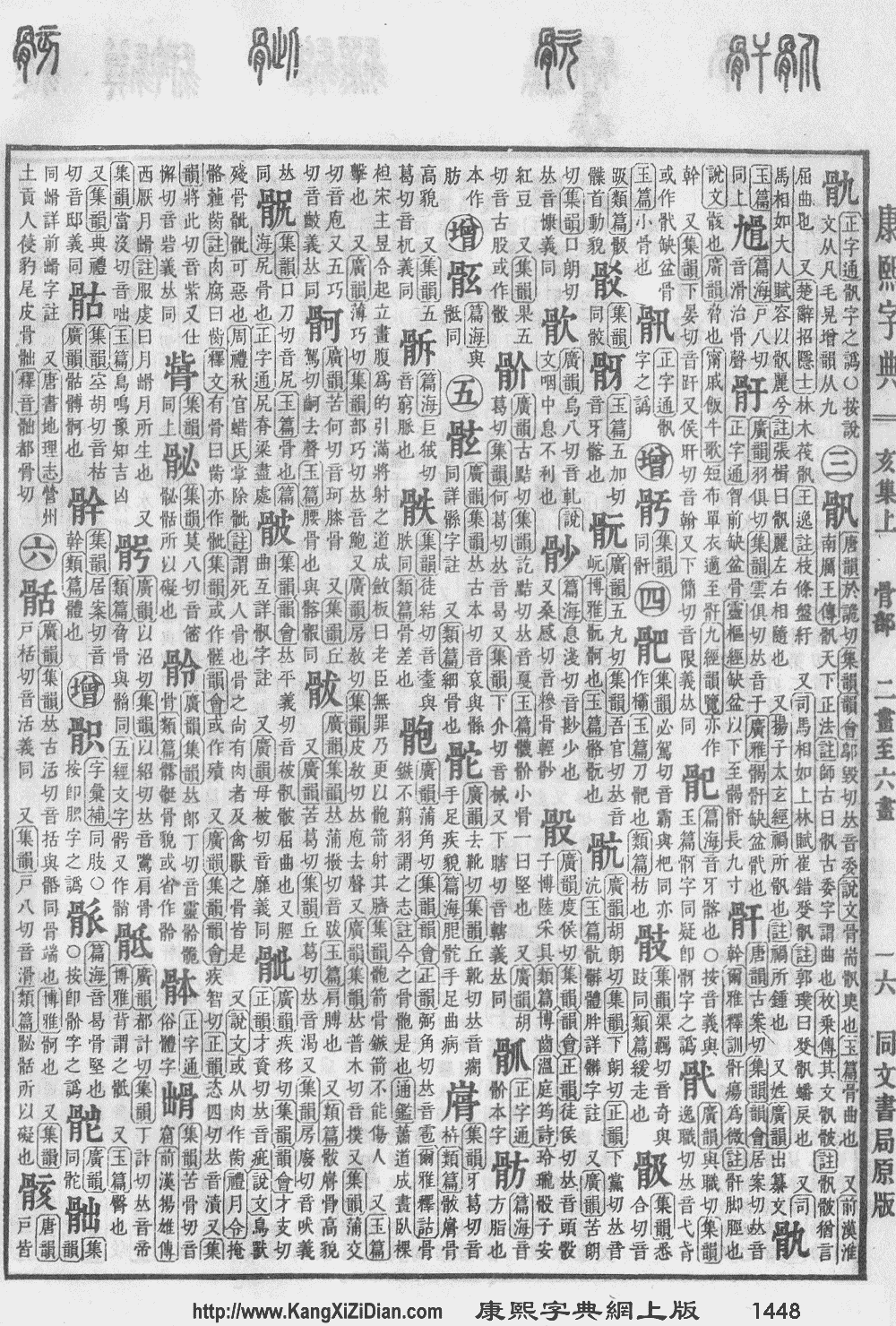
- Kangxi Dictionary: page 1448, character 50
- Dai Kanwa Jiten: character 45164
- Dae Jaweon: page 1975, character 8
- Hanyu Da Zidian (first edition): volume 7, page 4412, character 1
- Unihan data for U+9AB8
Chinese
| trad. | 骸 | |
|---|---|---|
| simp. # | 骸 | |
| alternative forms | 䯐 | |
Glyph origin
Characters in the same phonetic series (亥) (Zhengzhang, 2003)
| Old Chinese | |
|---|---|
| 該 | *kɯː |
| 垓 | *kɯː |
| 賅 | *kɯː |
| 陔 | *kɯː |
| 豥 | *kɯː, *ɡɯː |
| 荄 | *kɯː, *krɯː |
| 郂 | *kɯː |
| 姟 | *kɯː |
| 絯 | *kɯː, *ɡrɯːʔ |
| 晐 | *kɯː |
| 峐 | *kɯː |
| 侅 | *kɯː, *kʰɯː, *ɡɯːʔ, *ɡrɯːʔ |
| 胲 | *kɯː |
| 頦 | *kɯːʔ, *ɡɯː |
| 奒 | *kʰɯː |
| 輆 | *kʰɯːʔ |
| 欬 | *kʰɯːɡs, *qraːds |
| 硋 | *ŋɡɯːɡs |
| 閡 | *ŋɡɯːɡs |
| 咳 | *qʰɯː, *ɡɯː |
| 孩 | *ɡɯː |
| 亥 | *ɡɯːʔ |
| 劾 | *ɡɯːɡs, *kʰrɯːɡs, *ɡɯːɡ |
| 痎 | *krɯː |
| 烗 | *kʰrɯːɡs |
| 骸 | *ɡrɯː |
| 駭 | *ɡrɯːʔ |
| 刻 | *kʰɯːɡ |
| 餩 | *qɯːɡ |
| 核 | *ɡuːd, *ɡrɯːɡ |
Etymology
Possibly related to 核 (OC *ɡuːd, *ɡrɯːɡ, “kernel; seed”) (Schuessler, 2007; Smith, 2011). See there for further etymology.
Pronunciation
Japanese
Etymology
| Kanji in this term |
|---|
| 骸 |
| むくろ Grade: S |
| kun’yomi |
| Alternative spelling |
|---|
| 軀 |
From Old Japanese. Compound of 身 (mu, “body”, bound form of standalone mi) + くろ (kuro). The derivation of the kuro element is uncertain, but it might be an alteration or ancient form of 幹 (kara, “trunk, main part”).[1]
Synonyms
- See Thesaurus:屍
References
- Shōgaku Tosho (1988) 国語大辞典(新装版) [Unabridged Dictionary of Japanese (Revised Edition)] (in Japanese), Tōkyō: Shogakukan, →ISBN
Korean
Etymology
From Middle Chinese 骸 (MC heaj).
| Historical readings |
|---|
|
Pronunciation
- (SK Standard/Seoul) IPA(key): [hɛ] ~ [he̞]
- Phonetic hangul: [해/헤]
Compounds
Vietnamese
This article is issued from Wiktionary. The text is licensed under Creative Commons - Attribution - Sharealike. Additional terms may apply for the media files.