核
| ||||||||
Translingual
Han character
核 (Kangxi radical 75, 木+6, 10 strokes, cangjie input 木卜女人 (DYVO), four-corner 40982, composition ⿰木亥)
Derived characters
- 𫈺
Related characters
- 覈 (Variant form in mainland China)
References
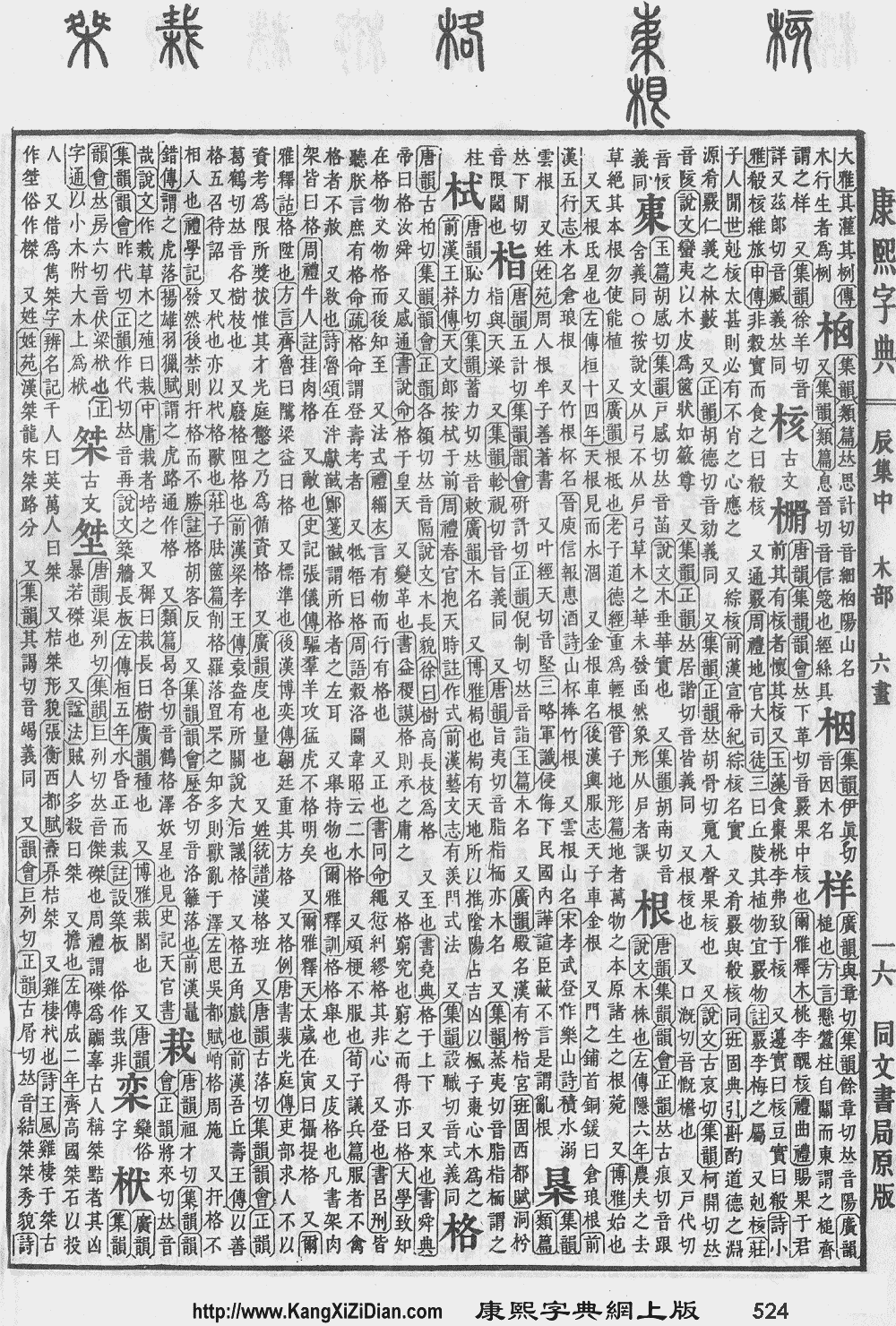
- Kangxi Dictionary: page 524, character 4
- Dai Kanwa Jiten: character 14743
- Dae Jaweon: page 912, character 7
- Hanyu Da Zidian (first edition): volume 2, page 1206, character 4
- Unihan data for U+6838
Chinese
Glyph origin
| Old Chinese | |
|---|---|
| 該 | *kɯː |
| 垓 | *kɯː |
| 賅 | *kɯː |
| 陔 | *kɯː |
| 豥 | *kɯː, *ɡɯː |
| 荄 | *kɯː, *krɯː |
| 郂 | *kɯː |
| 姟 | *kɯː |
| 絯 | *kɯː, *ɡrɯːʔ |
| 晐 | *kɯː |
| 峐 | *kɯː |
| 侅 | *kɯː, *kʰɯː, *ɡɯːʔ, *ɡrɯːʔ |
| 胲 | *kɯː |
| 頦 | *kɯːʔ, *ɡɯː |
| 奒 | *kʰɯː |
| 輆 | *kʰɯːʔ |
| 欬 | *kʰɯːɡs, *qraːds |
| 硋 | *ŋɡɯːɡs |
| 閡 | *ŋɡɯːɡs |
| 咳 | *qʰɯː, *ɡɯː |
| 孩 | *ɡɯː |
| 亥 | *ɡɯːʔ |
| 劾 | *ɡɯːɡs, *kʰrɯːɡs, *ɡɯːɡ |
| 痎 | *krɯː |
| 烗 | *kʰrɯːɡs |
| 骸 | *ɡrɯː |
| 駭 | *ɡrɯːʔ |
| 刻 | *kʰɯːɡ |
| 餩 | *qɯːɡ |
| 核 | *ɡuːd, *ɡrɯːɡ |
Phono-semantic compound (形聲/形声, OC *ɡuːd, *ɡrɯːɡ) : semantic 木 (“tree”) + phonetic 亥 (OC *ɡɯːʔ) – a kind of tree. Modern meanings are borrowed.
Etymology 1
The definitions related to “to examine” come from the “kernel” sense, i.e. “to go to the core” (Schuessler, 2007).
Generally thought to be of Sino-Tibetan origin. It has been compared to Tibetan རག་ཙེ (rag tse), Karbi rak (Gong, 2002; Schuessler, 2007). However, Hill (2012) rejects the connection to the Tibetan word because most words ending with ཙེ (tse) are loanwords from Chinese words ending with the 子 suffix.
Smith (2011) groups this word with the following terms into a word family meaning “root, germ, generative core”:
Definitions
核
Usage notes
- In mainland China, 覈 (hé) is considered a variant form (異體字/异体字) of 核 that is simplified to 核.
Compounds
- 內核/内核 (nèihé)
- 剋核/克核
- 卵核
- 原子核 (yuánzǐhé)
- 反核 (fǎnhé)
- 地下核爆
- 地下核試/地下核试
- 基底核 (jīdǐhé)
- 察核
- 審核/审核 (shěnhé)
- 山核桃
- 杏核兒/杏核儿
- 果核
- 查核 (cháhé)
- 核仁 (hérén)
- 核備/核备
- 核傘/核伞
- 核准 (hézhǔn)
- 核分裂 (héfēnliè)
- 核力 (hélì)
- 核化學/核化学 (héhuàxué)
- 核半徑/核半径
- 核反應/核反应 (héfǎnyìng)
- 核反應器/核反应器
- 核可
- 核四
- 核型 (héxíng)
- 核塵/核尘
- 核子 (hézǐ)
- 核子作用
- 核子分裂
- 核子力
- 核子反應/核子反应
- 核子戰爭/核子战争 (hézǐ zhànzhēng)
- 核子戰略/核子战略
- 核子武器 (hézǐ wǔqì)
- 核子燃料
- 核子能
- 核子試爆/核子试爆
- 核子試驗/核子试验
- 核子醫學/核子医学
- 核子防護/核子防护
- 核定 (hédìng)
- 核實/核实 (héshí)
- 核對/核对 (héduì)
- 核廢料/核废料 (héfèiliào)
- 核彈頭/核弹头 (hédàntóu)
- 核心 (héxīn)
- 核心分子
- 核心區/核心区
- 核心家庭 (héxīn jiātíng)
- 核批
- 核果 (héguǒ)
- 核查 (héchá)
- 核桃
- 桃核雕
- 核武器 (héwǔqì)
- 核汙染/核污染
- 核派
- 核減/核减 (héjiǎn)
- 核潛艇/核潜艇 (héqiántǐng)
- 核燃料 (héránliào)
- 核爆 (hébào)
- 核物理學/核物理学 (héwùlǐxué)
- 核發/核发
- 核磁共振 (hécí gòngzhèn)
- 核示
- 核算 (hésuàn)
- 核糖核酸 (hétánghésuān)
- 核糖體/核糖体 (hétángtǐ)
- 核能 (hénéng)
- 核能廢料/核能废料
- 核能潛艇/核能潜艇
- 核能發電/核能发电
- 核能電廠/核能电厂
- 核膜 (hémó)
- 核苷 (hégān)
- 核苷酸 (hégānsuān)
- 核蛋白 (hédànbái)
- 核融合 (hérónghé)
- 核裝置/核装置
- 核覆
- 核計/核计 (héjì)
- 核辦/核办
- 核酸 (hésuān)
- 核銷/核销
- 核閱/核阅
- 核電/核电 (hédiàn)
- 核電廠/核电厂 (hédiànchǎng)
- 核黃疸/核黄疸
- 核黃素/核黄素 (héhuángsù)
- 棗核臉/枣核脸
- 殽核/淆核
- 海核 (Hǎihé)
- 無核/无核
- 煤核
- 熱核反應/热核反应
- 痔核
- 稽核 (jīhé)
- 簡核/简核
- 精核 (jīnghé)
- 細胞核/细胞核 (xìbāohé)
- 統核/统核
- 結核/结核 (jiéhé)
- 結核病/结核病 (jiéhébìng)
- 結核菌/结核菌
- 經濟核算/经济核算 (jīngjì hésuàn)
- 綜核/综核
- 綜核名實/综核名实
- 考核 (kǎohé)
- 肺結核/肺结核 (fèijiéhé)
- 腎結核/肾结核
- 腸結核/肠结核
- 菌核
- 複核/复核 (fùhé)
- 覆核 (fùhé)
- 賣李鑽核/卖李钻核
- 鑒核/鉴核 (jiànhé)
- 鑒核備查/鉴核备查
- 陰核/阴核 (yīnhé)
- 雙核都市/双核都市
- 非核武區/非核武区
- 骨結核/骨结核
- 麻核桃
Pronunciation
Pronunciation
References
- Dictionary of Chinese Character Variants (教育部異體字字典), A01911
- “核”, in 漢語多功能字庫 (Multi-function Chinese Character Database), 香港中文大學 (the Chinese University of Hong Kong), 2014–
Japanese
Compounds
- 核心 (kakushin)
- 核開発 (kakukaihatsu): nuclear development
- 核拡散 (kakukakusan): nuclear proliferation
- 核家族 (kakukazoku): nuclear family
- 核攻撃 (kakukōgeki): nuclear attack
- 核実験 (kakujikken): nuclear test
- 核戦争 (kakusensō)
- 核燃料 (kakunenryō)
- 核分裂 (kakubunretsu)
- 核兵器 (kakuheiki): nuclear weapon
- 核エネルギー (kaku enerugī): nuclear energy
- 核シェルター (kaku sherutā): nuclear bomb shelter
- 外核 (gaikaku): (geology) outer core (of Earth)
- 中核 (chūkaku)
- 内核 (naikaku): (geology) inner core (of Earth)
- 反核 (hankaku): anti-nuclear
- 非核 (hikaku): non-nuclear
- 原子核 (genshikaku): (physics) atomic nucleus
- 細胞核 (saibōkaku): (biology) cell nucleus
- 尾状核 (bijōkaku): (neuroanatomy) caudate nucleus
- 扁桃核 (hentōkaku): (neuroanatomy) amygdala
Pronunciation
Synonyms
- (atomic nucleus): 原子核 (genshikaku)
- (cell nucleus): 細胞核 (saibōkaku)
Etymology 2
| Kanji in this term |
|---|
| 核 |
| さね Grade: S |
| kun’yomi |
| For pronunciation and definitions of 核 – see the following entry. | ||
| ||
| (This term, 核, is an alternative spelling of the above term.) |
References
- Matsumura, Akira, editor (2006), 大辞林 [Daijirin] (in Japanese), Third edition, Tōkyō: Sanseidō, →ISBN
Korean
Vietnamese
Han character
- This term needs a translation to English. Please help out and add a translation, then remove the text
{{rfdef}}.