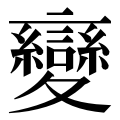
變
| ||||||||
 | ||||||||
| ||||||||
Translingual
| Traditional | 變 |
|---|---|
| Shinjitai | 変 |
| Simplified | 变 |
Han character
變 (Kangxi radical 149, 言+16, 23 strokes, cangjie input 女火人大 (VFOK) or 卜女火水 (YVFE) or 女火竹水 (VFHE), four-corner 22408, composition ⿱龻攵)
Related characters
- 変 (Japanese shinjitai)
- 变 (Simplified Chinese)
References
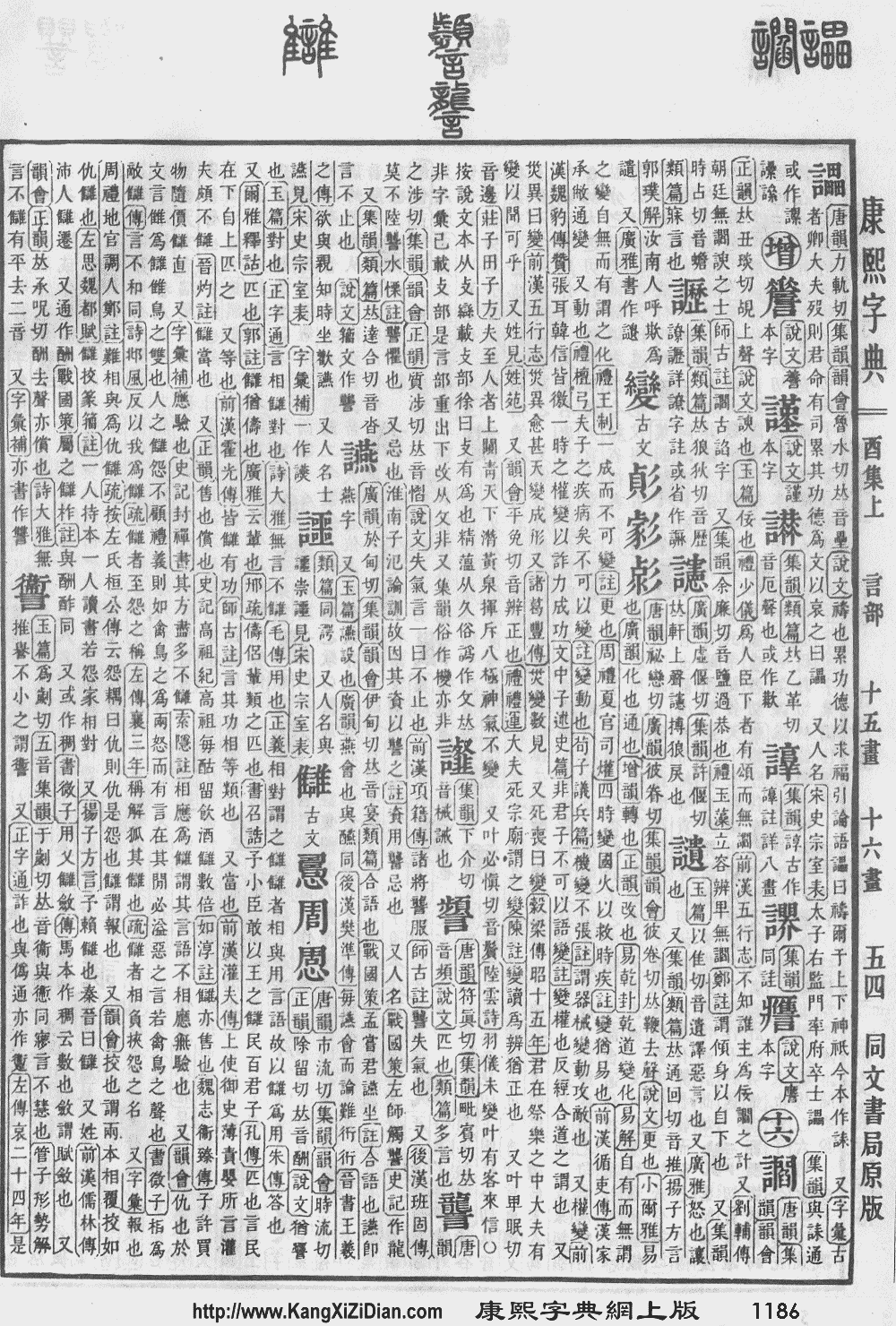
- Kangxi Dictionary: page 1186, character 12
- Dai Kanwa Jiten: character 36117
- Dae Jaweon: page 1650, character 2
- Hanyu Da Zidian (first edition): volume 2, page 1481, character 7
- Unihan data for U+8B8A
- Unihan data for U+FAC0
- Unihan data for U+2F9D1
Chinese
| trad. | 變 | |
|---|---|---|
| simp. | 变 | |
| alternative forms | 𢒛 | |
Glyph origin
| Historical forms of the character 變 | ||
|---|---|---|
| Western Zhou | Shuowen Jiezi (compiled in Han) | Liushutong (compiled in Ming) |
| Bronze inscriptions | Small seal script | Transcribed ancient scripts |
 |
 |
 |
Characters in the same phonetic series (䜌) (Zhengzhang, 2003)
Phono-semantic compound (形聲/形声, OC *prons) : phonetic 䜌 (OC *b·roːn, *b·ron, *b·rons) + semantic 攴.
Etymology
Likely related to 亂 (OC *roːns, “disorder”) (Baxter, 1992). Perhaps related to Tibetan སྤྲུལ་བ (sprul ba, “to transform”) (Shi, 2000)and Burmese ပြောင်း (praung:, “to change”).
Pronunciation
Definitions
變
- (intransitive) to change (by itself); to transform
- (transitive) to change (something in some way); to alter; to transform
- (intransitive) to become; to turn into; to change into
- (transitive) to sell off (one's property)
- (intransitive) to be flexible (when dealing with matters); to accommodate to circumstances
- to perform a magic trick
- sudden major change; unexpected change of events
- changeable; changing
- grotesque thing
- (Buddhism) bianwen (form of narrative literature from the Tang dynasty)
- (Hokkien) to do (bad things)
Synonyms
- (to change by itself):
- (to change something in some way):
- 修改 (xiūgǎi)
- 切換/切换 (qiēhuàn)
- 改動/改动 (gǎidòng)
- 改換/改换 (gǎihuàn)
- 改觀/改观 (gǎiguān) (to change appearance, to change one's view)
- 改變/改变 (gǎibiàn)
- 改造 (gǎizào)
- 更動/更动 (gēngdòng)
- 更換/更换 (gēnghuàn)
- 更改 (gēnggǎi)
- 游移 (yóuyí)
- 移 (yí)
- 移易 (yíyì) (literary)
- 竄/窜 (cuàn) (literary, or in compounds, to revise text)
- 竄亂/窜乱 (cuànluàn) (literary)
- 變換/变换 (biànhuàn)
- 變易/变易 (biànyì)
- 變更/变更 (biàngēng)
- 變變/变变 (Hokkien)
- 變革/变革 (biàngé) (chiefly social systems)
- 轉化/转化 (zhuǎnhuà)
- 轉換/转换 (zhuǎnhuàn)
- 轉變/转变 (zhuǎnbiàn)
- 遷/迁 (qiān)
- 革變/革变 (gébiàn) (literary)
- (to become):
Compounds
- 一成不變/一成不变 (yīchéngbùbiàn)
- 七七事變/七七事变 (Qīqī Shìbiàn)
- 七十二變/七十二变
- 三變/三变
- 不知通變/不知通变
- 不諱之變/不讳之变
- 不識時變/不识时变
- 不變/不变 (bùbiàn)
- 不變價格/不变价格 (bùbiàn jiàgé)
- 丕變/丕变 (pībiàn)
- 世變/世变 (shìbiàn)
- 乘機應變/乘机应变
- 事變/事变 (shìbiàn)
- 作變/作变
- 內變/内变
- 兵變/兵变 (bīngbiàn)
- 別變/别变
- 制變/制变
- 劇變/剧变 (jùbiàn)
- 勃然色變/勃然色变
- 勃然變色/勃然变色
- 化學變化/化学变化 (huàxué biànhuà)
- 區域變質/区域变质
- 十八變/十八变
- 千變萬化/千变万化 (qiānbiànwànhuà)
- 千變萬狀/千变万状
- 卦變/卦变
- 叛變/叛变 (pànbiàn)
- 可變性/可变性
- 可變資本/可变资本
- 合變/合变
- 君子豹變/君子豹变
- 善變/善变 (shànbiàn)
- 因變數/因变数 (yīnbiànshù)
- 國變/国变
- 土木之變/土木之变
- 地殼變動/地壳变动
- 地變/地变
- 基因突變/基因突变 (jīyīn tūbiàn)
- 多變/多变 (duōbiàn)
- 大人虎變/大人虎变
- 大變/大变 (dàbiàn)
- 大賢虎變/大贤虎变
- 天災地變/天灾地变
- 婚變/婚变 (hūnbiàn)
- 嬗變/嬗变 (shànbiàn)
- 完全變態/完全变态
- 屍變/尸变 (shībiàn)
- 巨變/巨变 (jùbiàn)
- 形變/形变 (xíngbiàn)
- 心理變態/心理变态
- 怫然變色/怫然变色
- 急變/急变 (jíbiàn)
- 性變態/性变态
- 恐變症/恐变症
- 情變/情变 (qíngbiàn)
- 惱羞變怒/恼羞变怒
- 慘變/惨变 (cǎnbiàn)
- 應機權變/应机权变
- 應權通變/应权通变
- 應變/应变 (yìngbiàn)
- 應變無方/应变无方
- 應變隨機/应变随机
- 戊戌政變/戊戌政变
- 戊戌變法/戊戌变法 (Wùxū Biànfǎ)
- 折變/折变
- 搖身一變/摇身一变 (yáoshēnyībiàn)
- 擅變/擅变
- 改變/改变 (gǎibiàn)
- 政變/政变 (zhèngbiàn)
- 文化變遷/文化变迁
- 新疆回變/新疆回变
- 春天後母面,欲變一時間/春天后母面,欲变一时间 (chhun-thiⁿ āu-bú bīn, beh piàn chi̍t sî-kan) (Min Nan)
- 時移世變/时移世变
- 時變/时变
- 景氣變動/景气变动
- 更變/更变
- 朝遷市變/朝迁市变
- 木變石/木变石
- 李陵變文/李陵变文
- 染絲之變/染丝之变
- 機伶變兒/机伶变儿
- 機變/机变 (jībiàn)
- 機變如神/机变如神
- 權變/权变 (quánbiàn)
- 權變鋒出/权变锋出
- 民變/民变 (mínbiàn)
- 求新求變/求新求变
- 流產政變/流产政变
- 活變/活变
- 流變/流变 (liúbiàn)
- 滄桑之變/沧桑之变
- 演變/演变 (yǎnbiàn)
- 激變/激变 (jībiàn)
- 災變/灾变 (zāibiàn)
- 物理變化/物理变化 (wùlǐ biànhuà)
- 甘露之變/甘露之变
- 生變/生变 (shēngbiàn)
- 用夏變夷/用夏变夷
- 異變/异变
- 畸變/畸变 (jībiàn)
- 病變/病变 (bìngbiàn)
- 發跡變泰/发迹变泰
- 白變種/白变种
- 相機觀變/相机观变
- 相變/相变
- 瞬息千變/瞬息千变
- 瞬息萬變/瞬息万变 (shùnxīwànbiàn)
- 知機識變/知机识变
- 矯世變俗/矫世变俗
- 磨變岩/磨变岩
- 社會變遷/社会变迁
- 神色不變/神色不变 (shénsèbùbiàn)
- 秋胡變文/秋胡变文
- 突變/突变 (tūbiàn)
- 窮則思變/穷则思变
- 窮極則變/穷极则变
- 窯變/窑变
- 節哀順變/节哀顺变 (jié'āishùnbiàn)
- 粒變岩/粒变岩
- 素絲變/素丝变
- 經達權變/经达权变
- 老羞變怒/老羞变怒
- 臨機制變/临机制变
- 臨機應變/临机应变
- 自變數/自变数 (zìbiànshù)
- 虎變/虎变
- 處變不驚/处变不惊 (chǔbiànbùjīng)
- 蛻變/蜕变
- 衍變/衍变 (yǎnbiàn)
- 衰變/衰变 (shuāibiàn)
- 褐變/褐变
- 西安事變/西安事变 (Xī'ān Shìbiàn)
- 詭譎多變/诡谲多变 (guǐjuéduōbiàn)
- 詭變多端/诡变多端
- 談虎色變/谈虎色变 (tánhǔsèbiàn)
- 調變/调变 (tiáobiàn)
- 調風變俗/调风变俗
- 識時通變/识时通变
- 識時達變/识时达变
- 譁變/哗变 (huábiàn)
- 變亂/变乱 (biànluàn)
- 變亂四起/变乱四起
- 變亂紛乘/变乱纷乘
- 變作/变作 (biànzuò)
- 變例/变例 (biànlì)
- 變價/变价 (biànjià)
- 變光星/变光星
- 變則/变则
- 變動/变动 (biàndòng)
- 變動不居/变动不居
- 變動匯率/变动汇率
- 變化/变化 (biànhuà)
- 變化不測/变化不测
- 變化多端/变化多端 (biànhuàduōduān)
- 變化無常/变化无常 (biànhuàwúcháng)
- 變化無方/变化无方
- 變化無窮/变化无穷
- 變化球/变化球
- 變化萬端/变化万端
- 變化莫測/变化莫测 (biànhuàmòcè)
- 變卦/变卦 (biànguà)
- 變危為安/变危为安
- 變古/变古
- 變古亂常/变古乱常
- 變名易姓/变名易姓
- 變啥魍/变啥魍 (pìⁿ-siáⁿ-báng) (Min Nan)
- 變嘴臉/变嘴脸
- 變因/变因
- 變壓器/变压器 (biànyāqì)
- 變壞/变坏 (biànhuài)
- 變天/变天 (biàntiān)
- 變奏曲/变奏曲 (biànzòuqǔ)
- 變宮/变宫
- 變容/变容
- 變局/变局 (biànjú)
- 變幻/变幻 (biànhuàn)
- 變幻不測/变幻不测
- 變幻無常/变幻无常
- 變幻莫測/变幻莫测 (biànhuànmòcè)
- 變弄/变弄 (biànnòng)
- 變形/变形 (biànxíng)
- 變形工時/变形工时
- 變形蟲/变形虫 (biànxíngchóng)
- 變形金剛/变形金刚 (biànxíng jīngāng)
- 變徵/变征
- 變徵之聲/变征之声
- 變徵之音/变征之音 (biànzhǐzhīyīn)
- 變心/变心 (biànxīn)
- 變性/变性 (biànxìng)
- 變性人/变性人 (biànxìngrén)
- 變性手術/变性手术
- 變性氣團/变性气团
- 變性酒精/变性酒精
- 變態/变态 (biàntài)
- 變態心理/变态心理
- 變成/变成 (biànchéng)
- 變戲法/变戏法 (biàn xìfǎ)
- 變把戲/变把戏
- 變換/变换 (biànhuàn)
- 變故/变故 (biàngù)
- 變故易常/变故易常
- 變數/变数 (biànshù)
- 變文/变文 (biànwén)
- 變易/变易 (biànyì)
- 變星/变星 (biànxīng)
- 變暴/变暴
- 變更/变更 (biàngēng)
- 變本加厲/变本加厉 (biànběnjiālì)
- 變樣/变样 (biànyàng)
- 變泰/变泰
- 變法/变法 (biànfǎ)
- 變法兒/变法儿 (biànfǎr)
- 變流器/变流器
- 變滅/变灭
- 變溫/变温
- 變溫動物/变温动物 (biànwēn dòngwù)
- 變溫層/变温层
- 變焦鏡頭/变焦镜头
- 變生肘腋/变生肘腋 (biànshēngzhǒuyè)
- 變產/变产 (biànchǎn)
- 變異/变异 (biànyì)
- 變盡方法/变尽方法
- 變相/变相 (biànxiàng)
- 變種/变种 (biànzhǒng)
- 變端/变端
- 變節/变节 (biànjié)
- 變約/变约
- 變置/变置
- 變聲/变声 (biànshēng)
- 變聲期/变声期 (biànshēngqī)
- 變臉/变脸 (biànliǎn)
- 變色/变色 (biànsè)
- 變色易容/变色易容
- 變色眼鏡/变色眼镜 (biànsè yǎnjìng)
- 變色筆/变色笔
- 變色鏡/变色镜 (biànsèjìng)
- 變色龍/变色龙 (biànsèlóng)
- 變計/变计 (biànjì)
- 變詐/变诈
- 變調/变调 (biàndiào)
- 變質/变质 (biànzhì)
- 變賣/变卖 (biànmài)
- 變起蕭牆/变起萧墙 (biànqǐxiāoqiáng)
- 變跡埋名/变迹埋名
- 變身/变身 (biànshēn)
- 變通/变通 (biàntōng)
- 變造/变造
- 變速/变速 (biànsù)
- 變速器/变速器 (biànsùqì)
- 變造文書/变造文书
- 變遷/变迁 (biànqiān)
- 變陰/变阴
- 變雅/变雅
- 變電器/变电器
- 變電所/变电所 (biàndiànsuǒ)
- 變面/变面 (pìⁿ-bīn) (Min Nan)
- 變革/变革 (biàngé)
- 變頻/变频 (biànpín)
- 變顏/变颜
- 變風/变风
- 變風改俗/变风改俗
- 變風易俗/变风易俗
- 變風變雅/变风变雅
- 變驢變馬/变驴变马
- 變體/变体 (biàntǐ)
- 變魍/变魍 (pìⁿ-báng) (Min Nan)
- 變魔術/变魔术
- 豹變/豹变 (bàobiàn)
- 貝他蛻變/贝他蜕变
- 質變/质变 (zhìbiàn)
- 躍變/跃变 (yuèbiàn)
- 軍事政變/军事政变
- 轉變/转变 (zhuǎnbiàn)
- 通時達變/通时达变
- 通權達變/通权达变 (tōngquándábiàn)
- 通變/通变 (tōngbiàn)
- 達權知變/达权知变
- 達權通變/达权通变
- 遞變/递变
- 遽變/遽变
- 量變/量变 (liàngbiàn)
- 鉅變/巨变
- 銜橛之變/衔橛之变
- 銳變/锐变
- 阿伐蛻變/阿伐蜕变
- 陳橋兵變/陈桥兵变
- 隨機應變/随机应变 (suíjīyìngbiàn)
- 隨機而變/随机而变
- 隨機變數/随机变数 (suíjī biànshù)
- 隸變/隶变 (lìbiàn)
- 雲南回變/云南回变
- 靈變/灵变
- 靖難之變/靖难之变
- 靜觀其變/静观其变 (jìngguānqíbiàn)
- 音變/音变 (yīnbiàn)
- 順時達變/顺时达变
- 風移俗變/风移俗变
- 風雲突變/风云突变
- 風雲變幻/风云变幻 (fēngyúnbiànhuàn)
- 風雲變態/风云变态
- 風雲變色/风云变色
- 飛變/飞变
- 驟變/骤变 (zhòubiàn)
- 魚龍變化/鱼龙变化
Korean
Vietnamese
This article is issued from Wiktionary. The text is licensed under Creative Commons - Attribution - Sharealike. Additional terms may apply for the media files.