緊
See also: 紧
| ||||||||
Translingual
Han character
緊 (Kangxi radical 120, 糸+8 in Chinese, 糸+9 in Japanese, 14 strokes in Chinese, 15 strokes in Japanese, cangjie input 尸水女戈火 (SEVIF), four-corner 77903, composition ⿱臤糸)
Derived characters
- 𡁵
References
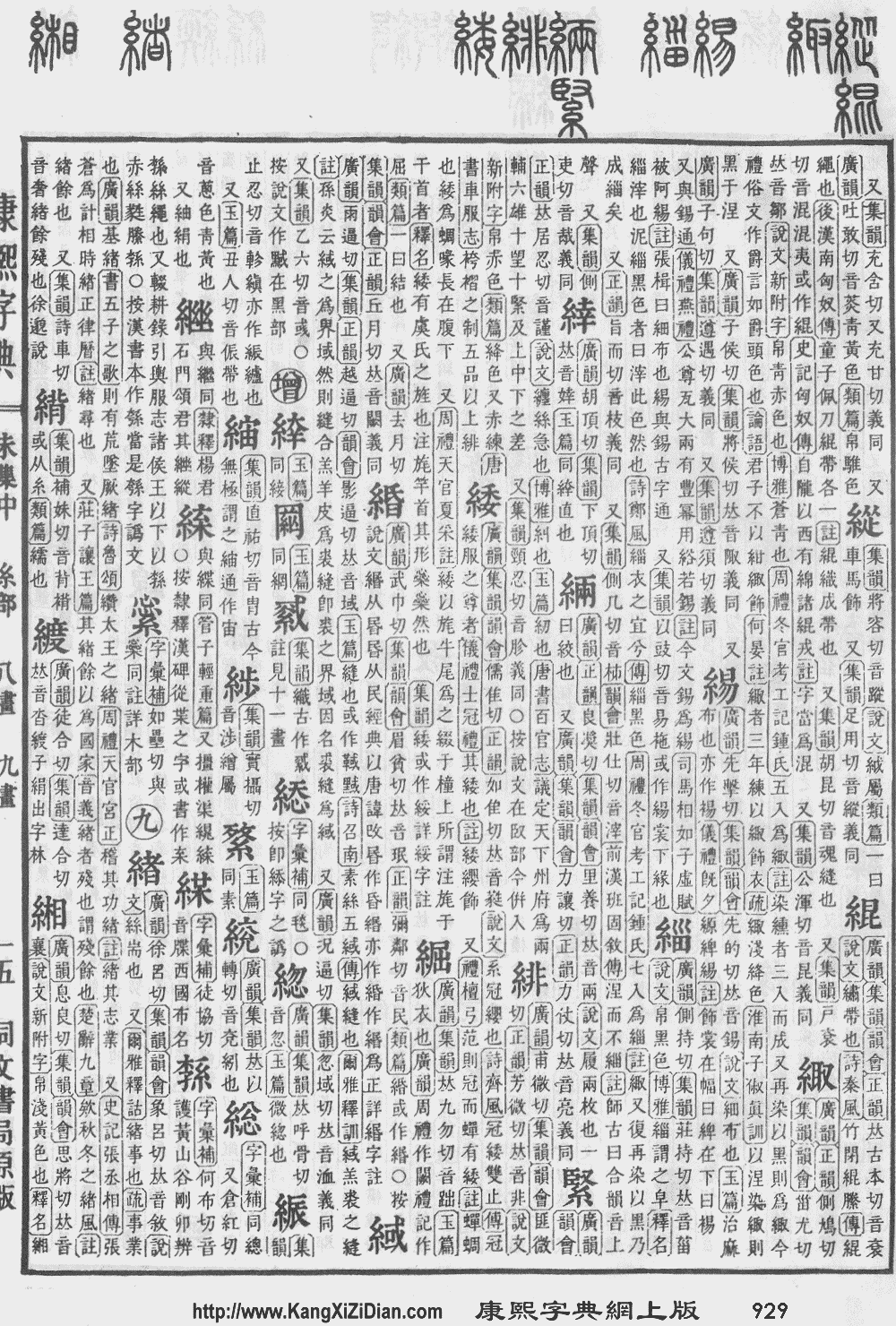
- Kangxi Dictionary: page 929, character 8
- Dai Kanwa Jiten: character 27603
- Dae Jaweon: page 1367, character 2
- Hanyu Da Zidian (first edition): volume 5, page 3410, character 8
- Unihan data for U+7DCA
Chinese
| trad. | 緊 | |
|---|---|---|
| simp. | 紧 | |
Glyph origin
Characters in the same phonetic series (臣) (Zhengzhang, 2003)
Phono-semantic compound (形聲/形声, OC *kinʔ) : phonetic 臤 (OC *kʰaːn, *kʰriːn, *ɡiːn, *kʰins) + semantic 糸.
Pronunciation
Definitions
緊
Synonyms
Dialectal synonyms of 緊 (“tight”) [map]
| Variety | Location | Words |
|---|---|---|
| Formal (Written Standard Chinese) | 緊 | |
| Mandarin | Taiwan | 緊 |
| Guilin | 緊 | |
| Singapore | 緊 | |
| Cantonese | Guangzhou | 緊, 衡 † |
| Hong Kong | 緊, 衡 † | |
| Singapore (Guangfu) | 緊 | |
| Hakka | Meixian | 緊, 絚 |
| Miaoli (N. Sixian) | 絚 | |
| Pingtung (Neipu; S. Sixian) | 絚 | |
| Hsinchu County (Zhudong; Hailu) | 絚 | |
| Taichung (Dongshi; Dabu) | 絚 | |
| Hsinchu County (Qionglin; Raoping) | 絚 | |
| Yunlin (Lunbei; Zhao'an) | 絚 | |
| Southern Min | Xiamen | 絚 |
| Quanzhou | 絚, 絚丹 | |
| Zhangzhou | 絚 | |
| Taipei | 絚 GT | |
| Penang (Hokkien) | 絚 | |
| Singapore (Hokkien) | 絚 | |
| Chaozhou | 絚 | |
| Shantou | 絚 | |
| Jieyang | 絚 | |
| Note | GT - General Taiwanese (no specific region identified); † - only used for pulled objects as a resultative | |
Dialectal synonyms of 快 (“fast; quick; speedy”) [map]
Compounds
- 上緊/上紧 (shàngjǐn)
- 不大緊/不大紧
- 不打緊/不打紧
- 不緊/不紧
- 不要緊/不要紧 (bùyàojǐn)
- 不關緊要/不关紧要
- 加緊/加紧 (jiājǐn)
- 勒緊/勒紧
- 勒緊褲帶/勒紧裤带 (lēi jǐn kùtóu)
- 口緊/口紧 (kǒujǐn)
- 吃緊/吃紧 (chījǐn)
- 咬緊/咬紧
- 咬緊牙關/咬紧牙关 (yǎojǐnyáguān)
- 嘴緊/嘴紧 (zuǐjǐn)
- 嚴緊/严紧 (yánjǐn)
- 夜緊/夜紧
- 夾緊/夹紧
- 密鑼緊鼓/密锣紧鼓 (mìluójǐngǔ)
- 手緊/手紧 (shǒujǐn)
- 打甚麼緊/打甚么紧
- 打緊/打紧 (dǎjǐn)
- 打緊板/打紧板
- 扣緊/扣紧
- 抓緊/抓紧 (zhuājǐn)
- 拘緊/拘紧
- 收緊/收紧 (shōujǐn)
- 敢緊/敢紧
- 月黑風緊/月黑风紧
- 有緊沒要/有紧没要
- 有要沒緊/有要没紧
- 束緊/束紧
- 沒緊要/没紧要
- 沒要緊/没要紧
- 淒緊/凄紧
- 無關緊要/无关紧要 (wúguānjǐnyào)
- 牙關緊閉/牙关紧闭
- 甚麼打緊/甚么打紧
- 當緊/当紧
- 皮鬆肉緊/皮松肉紧
- 瞅緊/瞅紧
- 第一要緊/第一要紧
- 箍緊/箍紧
- 緊七慢八/紧七慢八
- 緊不緊/紧不紧
- 緊仔/紧仔
- 緊俏/紧俏 (jǐnqiào)
- 緊促/紧促 (jǐncù)
- 緊切/紧切
- 緊包程/紧包程
- 緊嚴/紧严
- 緊壓茶/紧压茶
- 緊守/紧守
- 緊密/紧密 (jǐnmì)
- 緊差緊做/紧差紧做
- 緊巴巴/紧巴巴
- 緊張/紧张 (jǐnzhāng)
- 緊張不安/紧张不安
- 緊張大師/紧张大师
- 緊張理論/紧张理论
- 緊張病/紧张病
- 緊急/紧急 (jǐnjí)
- 緊急命令/紧急命令
- 緊急狀態/紧急状态 (jǐnjí zhuàngtài)
- 緊急處分/紧急处分
- 緊急警報/紧急警报
- 緊手/紧手
- 緊打慢敲/紧打慢敲
- 緊接/紧接 (jǐnjiē)
- 緊接著/紧接著
- 緊湊/紧凑 (jǐncòu)
- 緊溜/紧溜
- 緊溜兒的/紧溜儿的
- 緊溜子裡/紧溜子里
- 緊用項/紧用项
- 緊等/紧等
- 緊箍兒/紧箍儿
- 緊箍咒/紧箍咒 (jǐngūzhòu)
- 緊簇/紧簇
- 緊綁綁/紧绑绑
- 緊緊/紧紧 (jǐnjǐn)
- 緊縮/紧缩 (jǐnsuō)
- 緊繃/紧绷 (jǐnbēng)
- 緊繃繃/紧绷绷
- 緊缺/紧缺 (jǐnquē)
- 緊自/紧自
- 緊著/紧著
- 緊襯/紧衬
- 緊要/紧要 (jǐnyào)
- 緊要處/紧要处
- 緊要關頭/紧要关头 (jǐnyào guāntóu)
- 緊記/紧记 (jǐnjì)
- 緊話/紧话
- 緊跟/紧跟 (jǐngēn)
- 緊身兒/紧身儿 (jǐnshēnr)
- 緊身衣/紧身衣 (jǐnshēnyī)
- 緊身褡/紧身褡
- 緊迫/紧迫 (jǐnpò)
- 緊迫盯人/紧迫盯人
- 緊追/紧追
- 緊追不捨/紧追不舍
- 緊追權/紧追权
- 緊那羅/紧那罗 (jǐnnàluó)
- 緊鄰/紧邻 (jǐnlín)
- 緊鎖/紧锁
- 緊鑼密鼓/紧锣密鼓 (jǐnluómìgǔ)
- 緊閉/紧闭 (jǐnbì)
- 緊關裡/紧关里
- 緊防/紧防
- 縛緊/缚紧
- 繃緊/绷紧 (bēngjǐn)
- 縮緊/缩紧 (suōjǐn)
- 老緊/老紧
- 著緊/著紧
- 要緊/要紧 (yàojǐn)
- 貼緊/贴紧
- 赤緊的/赤紧的
- 趕緊/赶紧 (gǎnjǐn)
- 通貨緊縮/通货紧缩 (tōnghuò jǐnsuō)
- 遒緊/遒紧
- 逼緊/逼紧
- 關緊/关紧
- 雙眉緊鎖/双眉紧锁
- 風聲緊/风声紧
- 鬆緊帶/松紧带 (sōngjǐndài)
Etymology 2
Possibly from earlier 近處/近处 (gan6-2 cyu3, gan6-2 syu3, “future marker expressing the imminent aspect”) (Kataoka, 2018).
Pronunciation
Definitions
緊
- (Cantonese, dialectal Hakka, Nanning Pinghua) Grammatical particle used to express progressive aspect (an ongoing activity) which may undergo a change of state. Similar to the -ing form in English.
Synonyms
Dialectal synonyms of 著 (“(particle indicating the continuation of an action or a state)”) [map]
| Variety | Location | Words |
|---|---|---|
| Formal (Written Standard Chinese) | 著 | |
| Mandarin | Beijing | 著 |
| Taiwan | 著 | |
| Harbin | 著 | |
| Yantai (Muping) | 著 | |
| Jinan | 著 | |
| Wanrong | 著 | |
| Xi'an | 著 | |
| Wuhan | 倒 | |
| Guiyang | 倒 | |
| Guilin | 倒 | |
| Liuzhou | 倒, 穩 | |
| Xuzhou | 著 | |
| Nanjing | 著 | |
| Singapore | 著 | |
| Cantonese | Guangzhou | 緊 |
| Hong Kong | 緊 | |
| Singapore (Guangfu) | 緊 | |
| Gan | Nanchang | 倒 |
| Hakka | Meixian | 等 |
| Miaoli (N. Sixian) | 等 | |
| Pingtung (Neipu; S. Sixian) | 等 | |
| Hsinchu County (Zhudong; Hailu) | 等 | |
| Taichung (Dongshi; Dabu) | 緊 | |
| Hsinchu County (Qionglin; Raoping) | 等 | |
| Kuching (Hepo) | 緊 | |
| Jin | Taiyuan | 著 |
| Southern Pinghua | Nanning (Tingzi) | 緊 |
| Wu | Shanghai | 勒海, 勒該 |
| Ningbo | 的, 該, 當, 東, 仔, 勒眼 | |
| Zhoushan | 底, 的 rare, 該, 當, 仔, 勒眼 | |
See also
- (Cantonese) 住 (zyu6)
References
- “緊”, in 漢語多功能字庫 (Multi-function Chinese Character Database), 香港中文大學 (the Chinese University of Hong Kong), 2014–
- “Entry #10785”, in 臺灣閩南語常用詞辭典 [Dictionary of Frequently-Used Taiwan Minnan] (overall work in Mandarin and Hokkien), Ministry of Education, R.O.C., 2023.
Japanese
Kanji
緊
- This term needs a translation to English. Please help out and add a translation, then remove the text
{{rfdef}}.
Readings
Korean
Vietnamese
Han character
緊: Hán Nôm readings: khẩn, lẳm
- This term needs a translation to English. Please help out and add a translation, then remove the text
{{rfdef}}.
References
This article is issued from Wiktionary. The text is licensed under Creative Commons - Attribution - Sharealike. Additional terms may apply for the media files.