嘒
| ||||||||
Translingual
Han character
嘒 (Kangxi radical 30, 口+11, 14 strokes, cangjie input 口手十一 (RQJM) or 口手十尸 (RQJS), four-corner 65071, composition ⿰口彗)
References
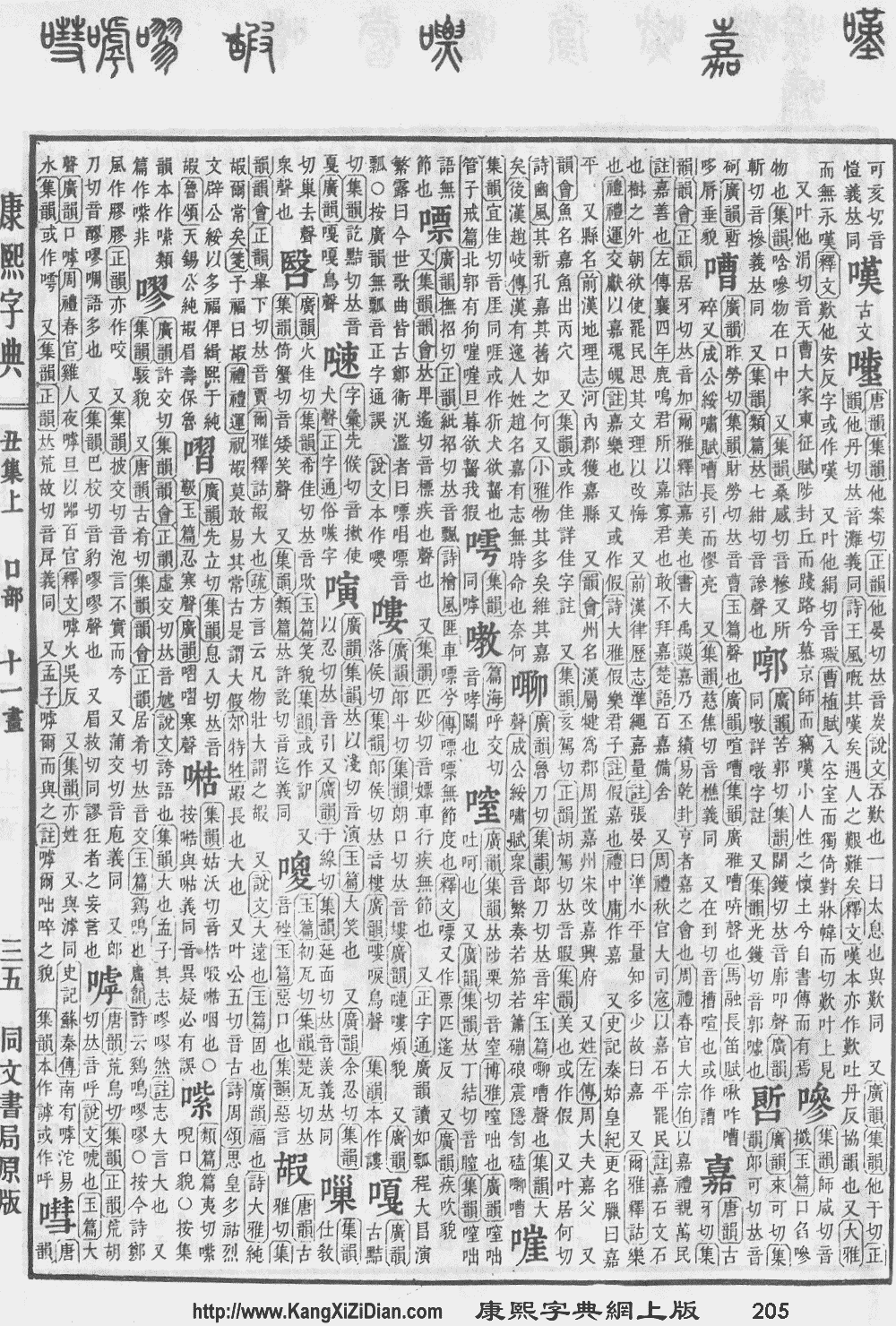
- Kangxi Dictionary: page 205, character 27
- Dai Kanwa Jiten: character 4196
- Dae Jaweon: page 428, character 20
- Hanyu Da Zidian (first edition): volume 1, page 672, character 8
- Unihan data for U+5612
Chinese
| trad. | 嘒 | |
|---|---|---|
| simp. # | 嘒 | |
| alternative forms | 嚖 | |
Glyph origin
Etymology
Pronunciation
Definitions
嘒
- † (onomatopoeia) chirp, shrill, whistle
- 菀彼柳斯、鳴蜩嘒嘒。 [Pre-Classical Chinese, trad.]
- From: The Classic of Poetry, c. 11th – 7th centuries BCE, translated based on James Legge's version
- Wǎn bǐ liǔ sī, míngtiáo huì huì. [Pinyin]
- Luxuriant grow those willows, and the cicadas [on them] go hui-hui.
菀彼柳斯、鸣蜩嘒嘒。 [Pre-Classical Chinese, simp.]- 鼓淵淵、嘒嘒管聲。 [Pre-Classical Chinese, trad.]
- From: The Classic of Poetry, c. 11th – 7th centuries BCE, translated based on James Legge's version
- Gǔ yuān yuān, huì huì guǎn shēng. [Pinyin]
- Deep is the sound of the hand-drums and drums; shrilly sound the flutes.
鼓渊渊、嘒嘒管声。 [Pre-Classical Chinese, simp.]
- † very small
- 嘒彼小星、三五在東。肅肅宵征、夙夜在公、寔命不同。 [Pre-Classical Chinese, trad.]
- From: The Classic of Poetry, c. 11th – 7th centuries BCE, translated based on James Legge's version
- Huì bǐ xiǎoxīng, sān wǔ zài dōng. Sùsù xiāo zhēng, sùyè zài gōng, shí mìng bùtóng. [Pinyin]
- Small are those starlets, three or five of them in the east, swiftly by night we go; in the early dawn we are with the prince. Our lot is not like hers.
嘒彼小星、三五在东。肃肃宵征、夙夜在公、寔命不同。 [Pre-Classical Chinese, simp.]
Compounds
- 嘒嘒
Korean
Etymology
From Middle Chinese 嘒 (MC xwejH).
Pronunciation
- (SK Standard/Seoul) IPA(key): [çe̞(ː)] ~ [he̞(ː)]
- Phonetic hangul: [혜(ː)/헤(ː)]
- Though still prescribed in Standard Korean, most speakers in both Koreas no longer distinguish vowel length.
Vietnamese
Han character
- This term needs a translation to English. Please help out and add a translation, then remove the text
{{rfdef}}.
References
This article is issued from Wiktionary. The text is licensed under Creative Commons - Attribution - Sharealike. Additional terms may apply for the media files.