彼
| ||||||||
Translingual
| Stroke order (Chinese) | |||
|---|---|---|---|
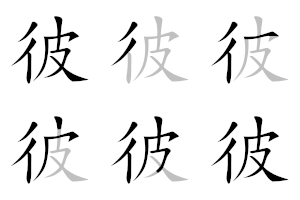 | |||
| Stroke order (Japan) | |||
|---|---|---|---|
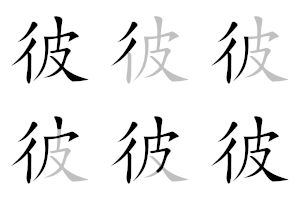 | |||
Han character
彼 (Kangxi radical 60, 彳+5, 8 strokes, cangjie input 竹人木竹水 (HODHE), four-corner 24247, composition ⿰彳皮)
Derived characters
- 𠶎, 𢜢, 𢯏, 𣷭, 𣔓, 𥓳, 𩏃, 𡮌, 𫖽, 𦋕, 𩜔, 𠥌, 𠪍, 𣤳, 𥨑, 𩕂
Further reading
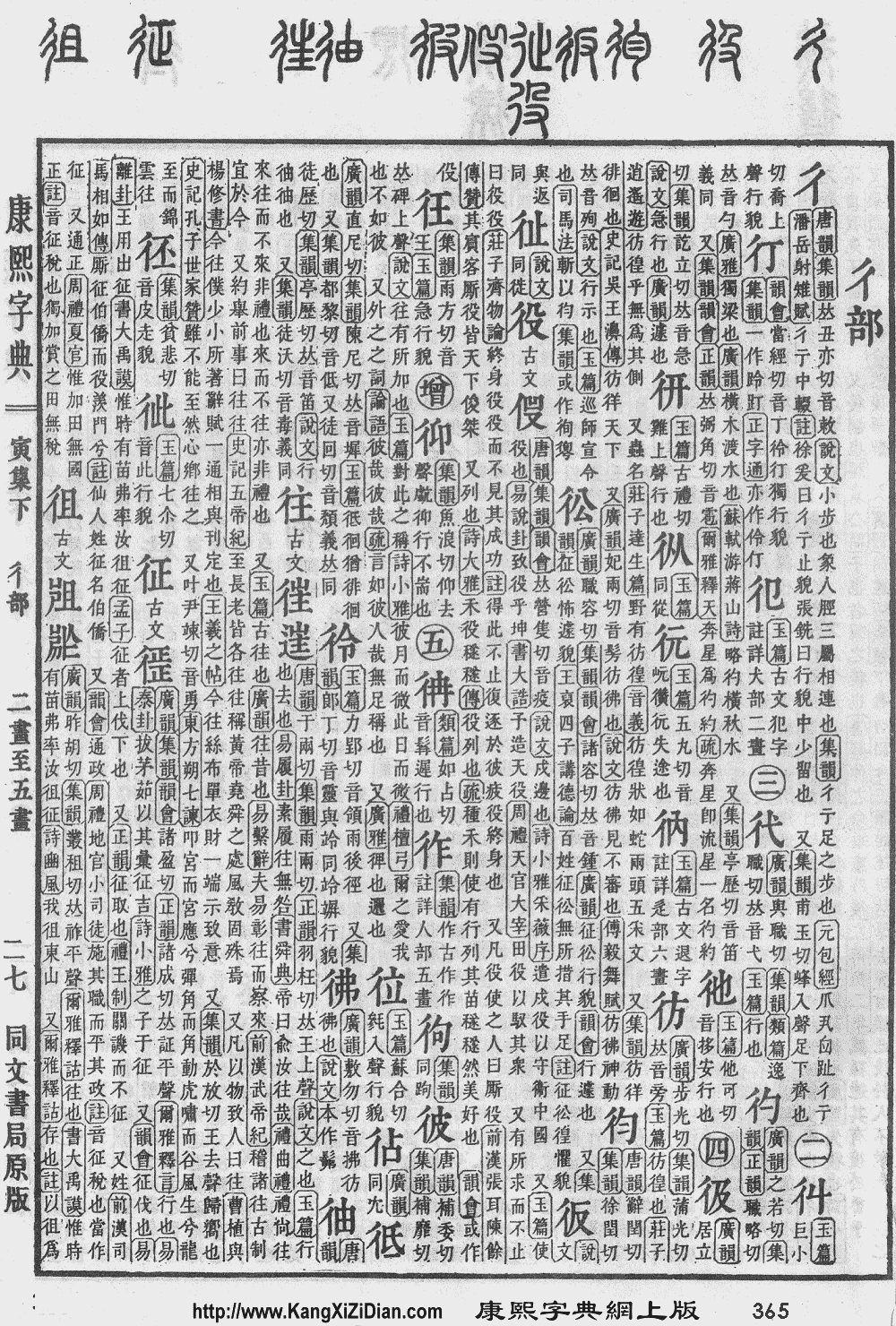
- Kangxi Dictionary: page 365, character 25
- Dai Kanwa Jiten: character 10066
- Dae Jaweon: page 685, character 18
- Hanyu Da Zidian (first edition): volume 2, page 817, character 10
- Unihan data for U+5F7C
Chinese
Glyph origin
| Old Chinese | |
|---|---|
| 陂 | *pral, *prals |
| 詖 | *pral, *prals |
| 彼 | *pralʔ |
| 柀 | *pralʔ |
| 佊 | *pralʔ, *prals |
| 貱 | *prals |
| 跛 | *prals, *paːlʔ |
| 披 | *pʰral, *pʰralʔ |
| 鈹 | *pʰral |
| 帔 | *pʰral, *pʰrals |
| 鮍 | *pʰral |
| 耚 | *pʰral |
| 狓 | *pʰral |
| 翍 | *pʰral |
| 旇 | *pʰral, *brals |
| 秛 | *pʰral, *pʰrals |
| 紴 | *pʰralʔ, *paːl |
| 皮 | *bral |
| 疲 | *bral |
| 被 | *bralʔ, *brals |
| 髲 | *brals |
| 鞁 | *brals |
| 骳 | *mbralʔ |
| 波 | *paːl |
| 碆 | *paːl, *baːl |
| 菠 | *paːl |
| 簸 | *paːlʔ, *paːls |
| 駊 | *paːlʔ, *pʰaːlʔ |
| 頗 | *pʰaːl, *pʰaːlʔ, *pʰaːls |
| 坡 | *pʰaːl |
| 玻 | *pʰaːl |
| 破 | *pʰaːls |
| 婆 | *baːl |
| 蔢 | *baːl |
Phono-semantic compound (形聲/形声, OC *pralʔ) : semantic 彳 + phonetic 皮 (OC *bral).
Etymology 1
| simp. and trad. |
彼 | |
|---|---|---|
| alternative forms | 佊 | |
Related to 夫 (OC *pa, *ba, “that”) (Schuessler, 2007).
Pronunciation
Definitions
彼
- (literary) that; those
- (literary) he; she; it
- 夫撫劍疾視曰,『彼惡敢當我哉』!此匹夫之勇,敵一人者也。 [Classical Chinese, trad.]
- From: Mencius, c. 4th century BCE
- Fū fǔjiàn jíshì yuē, ‘bǐ wū gǎn dāng wǒ zāi’! Cǐ pǐfūzhīyǒng, dí yīrén zhě yě. [Pinyin]
- If a man brandishes his sword, looks fiercely, and says, "How dare he withstand me?" - this is the valour of a common man, who can be the opponent only of a single individual.
夫抚剑疾视曰,『彼恶敢当我哉』!此匹夫之勇,敌一人者也。 [Classical Chinese, simp.]- 彼用無為有,故謂矯,若有而謂有,夫豈為矯哉! [Classical Chinese, trad.]
- From: Mozi, c. 4th century BCE
- Bǐ yòng wú wéi yǒu, gù wèi jiǎo, ruò yǒu ér wèi yǒu, fū qǐ wèi jiǎo zāi! [Pinyin]
- He made use of what did not exist as if it had existed, and therefore it was called pretension. If he declared to be existent what really existed, how would this be pretension?
彼用无为有,故谓矫,若有而谓有,夫岂为矫哉! [Classical Chinese, simp.]
Synonyms
- (that):
- (he):
Antonyms
- (antonym(s) of “that”): 此 (cǐ)
Compounds
- 不分彼此 (bùfēnbǐcǐ)
- 何彼襛矣/何彼𰳺矣
- 厚彼薄此
- 厚此薄彼 (hòucǐbóbǐ)
- 彼倡此和
- 彼唱此和
- 彼岸 (bǐ'àn)
- 彼得 (Bǐdé)
- 彼得大帝 (Bǐdé Dàdì)
- 彼此 (bǐcǐ)
- 彼眾我寡/彼众我寡 (bǐzhòngwǒguǎ)
- 彼竭我盈 (bǐjiéwǒyíng)
- 彼蒼/彼苍
- 彼長我消/彼长我消
- 挹彼注此
- 挹彼注茲 (yìbǐzhùzī)
- 此仆彼起
- 此唱彼和
- 此問彼難/此问彼难
- 此發彼應/此发彼应
- 此起彼伏 (cǐqǐbǐfú)
- 此起彼落 (cǐqǐbǐluò)
- 瞻彼洛矣
- 知己知彼 (zhījǐzhībǐ)
- 知彼知己 (zhībǐzhījǐ)
- 聖彼得堡/圣彼得堡 (Shèng Bǐdébǎo)
- 誓彼襟靈/誓彼襟灵
- 顧此失彼/顾此失彼 (gùcǐshībǐ)
Etymology 2
Related to 許/许 (hí, hír, “that”); see there for more.
Pronunciation 2 is a fusion word of 許/许 (hí, hír, “that”) + 一 (it, “one”); compare Mandarin 那 (nèi), from 那 (nà, “that”) + 一 (yī, “one”) (Mei and Yang, 1995).
Definitions
彼
Synonyms
Definitions
彼
- (Southern Min) that (demonstrative determiner)
- 彼本冊/彼本册 [Taiwanese Hokkien] ― hit pún chheh [Pe̍h-ōe-jī] ― that book
Further reading
- “Entry #3891”, in 臺灣閩南語常用詞辭典 [Dictionary of Frequently-Used Taiwan Minnan] (overall work in Mandarin and Hokkien), Ministry of Education, R.O.C., 2023.
Japanese
Readings
Compounds
Pronoun
彼 • (ka)
- distal demonstrative, something far off removed from both speaker and listener: that, yon
See also
| a-/wa- “I, we” (first person) |
na-/-ma- “you, ye, thou” (second person) |
k- “this” (close to speaker) |
s- “that” (close to listener) |
a-/ka- “that over there” (far from both) |
i-/ta-/nani- “who, what, where, how, when” (interrogative) |
ono- “oneself” (reflexive) | |
|---|---|---|---|---|---|---|---|
| Person | あ (a) あれ (are) わ (wa) われ (ware) まろ (maro) |
な (na) なれ (nare) なんぢ (nanji) まし (mashi) いまし (imashi) みまし (mimashi) きみ (kimi) |
こ (ko) これ (kore) |
そ (so) それ (sore) |
あ (a) あれ (are) か (ka) かれ (kare) |
た (ta) たれ (tare) なにがし (nanigashi) |
おの (ono) おのれ (onore) |
| Thing | こ (ko) これ (kore) |
そ (so) それ (sore) |
あ (a) あれ (are) か (ka) かれ (kare) |
いづれ (izure) なに (nani) |
|||
| Location | ここ (koko) | そこ (soko) | あしこ (ashiko) かしこ (kashiko) |
いづく (izuku) いづこ (izuko) いどこ (idoko) どこ (doko) |
|||
| Direction | こち (kochi) こなた (konata) |
そち (sochi) そなた (sonata) |
あち (achi) あなた (anata) かなた (kanata) |
いづち (izuchi) いづら (izura) いづかた (izukata) |
|||
| Manner | か (ka) かく (kaku) かくて (kakute) かう (kō) |
さ (sa) さて (sate) しか (shika) |
いか (ika) | ||||
| Time | いつ (itsu) |
Etymology 2
| Kanji in this term |
|---|
| 彼 |
| かれ Grade: S |
| kun’yomi |
| Alternative spelling |
|---|
| 儂 (rare) |
From Old Japanese. Compound of 彼 (ka, “that, yon”) + れ (-re, nominalizing suffix for demonstratives). Found in the Man'yōshū compiled around 759.
The sense development seems to have proceeded from "that thing over there" to "that person over there [of indeterminate gender]". The specifically male sense of "he" only arose later during the late Edo period and early Meiji period, influenced by translations of texts from European languages.[2][1]
Pronoun
彼 • (kare)
See also
| a-/wa- “I, we” (first person) |
na-/-ma- “you, ye, thou” (second person) |
k- “this” (close to speaker) |
s- “that” (close to listener) |
a-/ka- “that over there” (far from both) |
i-/ta-/nani- “who, what, where, how, when” (interrogative) |
ono- “oneself” (reflexive) | |
|---|---|---|---|---|---|---|---|
| Person | あ (a) あれ (are) わ (wa) われ (ware) まろ (maro) |
な (na) なれ (nare) なんぢ (nanji) まし (mashi) いまし (imashi) みまし (mimashi) きみ (kimi) |
こ (ko) これ (kore) |
そ (so) それ (sore) |
あ (a) あれ (are) か (ka) かれ (kare) |
た (ta) たれ (tare) なにがし (nanigashi) |
おの (ono) おのれ (onore) |
| Thing | こ (ko) これ (kore) |
そ (so) それ (sore) |
あ (a) あれ (are) か (ka) かれ (kare) |
いづれ (izure) なに (nani) |
|||
| Location | ここ (koko) | そこ (soko) | あしこ (ashiko) かしこ (kashiko) |
いづく (izuku) いづこ (izuko) いどこ (idoko) どこ (doko) |
|||
| Direction | こち (kochi) こなた (konata) |
そち (sochi) そなた (sonata) |
あち (achi) あなた (anata) かなた (kanata) |
いづち (izuchi) いづら (izura) いづかた (izukata) |
|||
| Manner | か (ka) かく (kaku) かくて (kakute) かう (kō) |
さ (sa) さて (sate) しか (shika) |
いか (ika) | ||||
| Time | いつ (itsu) |
Etymology 3
| Kanji in this term |
|---|
| 彼 |
| か(の) Grade: S |
| kun’yomi |
| For pronunciation and definitions of 彼 – see the following entry. | ||
| ||
| (This term, 彼, is an alternative spelling of the above term.) |
Etymology 4
| Kanji in this term |
|---|
| 彼 |
| あ Grade: S |
| kun’yomi |
| For pronunciation and definitions of 彼 – see the following entry. | ||
| ||
| (This term, 彼, is an alternative spelling of the above term.) |
Etymology 5
| Kanji in this term |
|---|
| 彼 |
| あれ Grade: S |
| kun’yomi |
| For pronunciation and definitions of 彼 – see the following entry. | ||
| ||
| (This term, 彼, is an alternative spelling of the above term.) |
References
- Matsumura, Akira, editor (2006), 大辞林 [Daijirin] (in Japanese), Third edition, Tōkyō: Sanseidō, →ISBN
- Shōgaku Tosho (1988) 国語大辞典(新装版) [Unabridged Dictionary of Japanese (Revised Edition)] (in Japanese), Tōkyō: Shogakukan, →ISBN
Korean
Etymology
From Middle Chinese 彼 (MC pjeX). Recorded as Middle Korean 피〯 (phǐ) (Yale: phi) in Hunmong Jahoe (訓蒙字會 / 훈몽자회), 1527.
Compounds
Vietnamese
Han character
彼: Hán Nôm readings: bỉ, bể, bở
- This term needs a translation to English. Please help out and add a translation, then remove the text
{{rfdef}}.
Compounds
- 彼嗇斯豐 (bỉ sắc tư phong)