坍
| ||||||||
Translingual
Han character
坍 (Kangxi radical 32, 土+4, 7 strokes, cangjie input 土月卜 (GBY), four-corner 47140, composition ⿰土丹)
Further reading
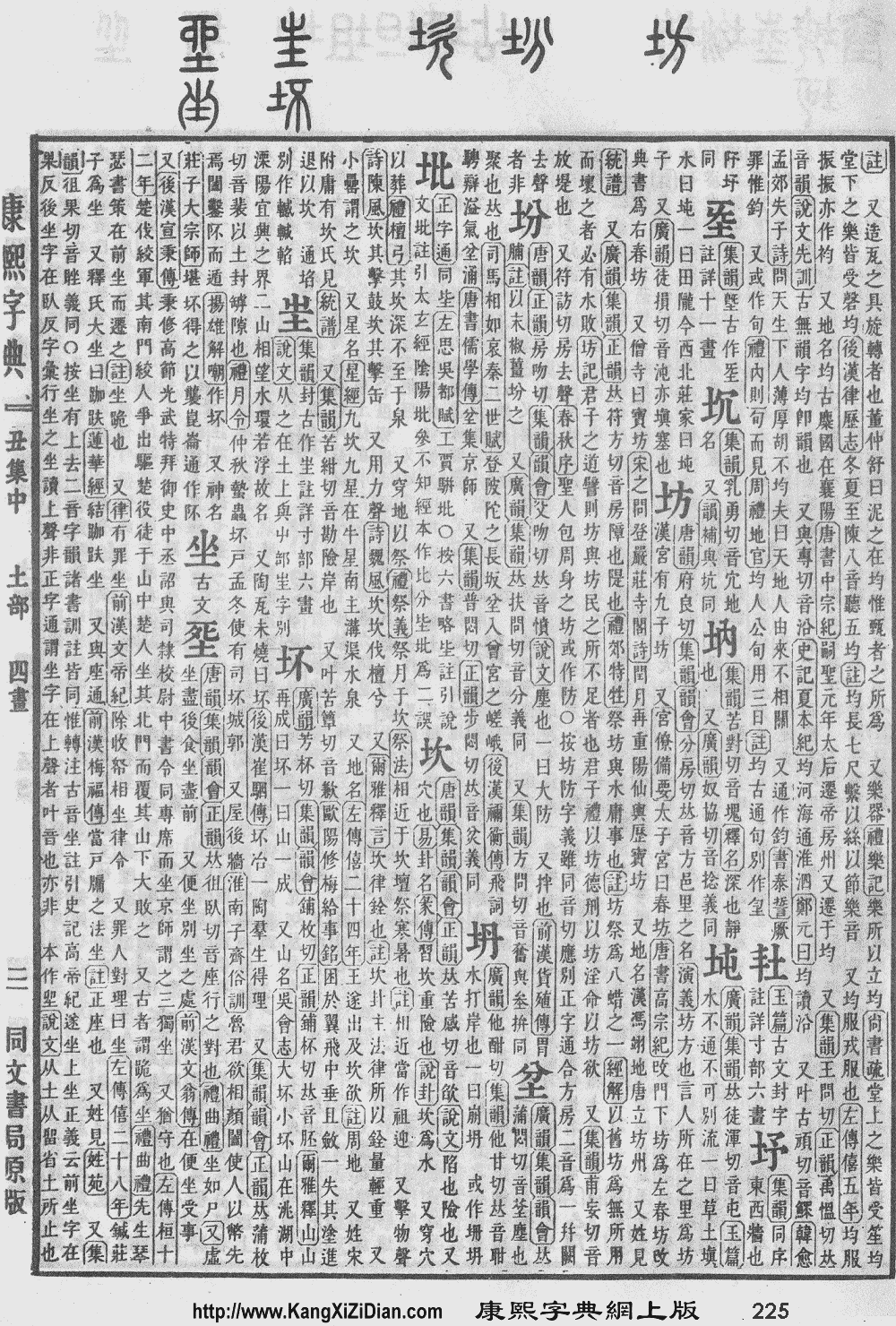
- Kangxi Dictionary: page 225, character 10
- Dai Kanwa Jiten: character 4927
- Dae Jaweon: page 460, character 3
- Hanyu Da Zidian (first edition): volume 1, page 425, character 5
- Unihan data for U+574D
Chinese
| simp. and trad. |
坍 | |
|---|---|---|
| alternative forms | 㘱 | |
Glyph origin
Characters in the same phonetic series (冉) (Zhengzhang, 2003)
Phono-semantic compound (形聲/形声, OC *n̥ʰaːm) : semantic 土 (“earth”) + phonetic 丹 (OC *taːn).
Pronunciation
Definitions
坍
- to collapse; to topple
- 只一膀子,搧在亭子柱上,只聽得刮剌剌一聲響亮,把亭子柱打折了,坍了亭子半邊。 [Written Vernacular Chinese, trad.]
- From: Shi Nai'an, Water Margin, circa 14th century CE
- Zhǐ yī bǎngzi, shān zài tíngzi zhù shàng, zhǐ tīng dé guālàlà yī shēng xiǎngliàng, bǎ tíngzi zhù dǎ zhé le, tān le tíngzi bàn biān. [Pinyin]
- (please add an English translation of this quotation)
只一膀子,搧在亭子柱上,只听得刮剌剌一声响亮,把亭子柱打折了,坍了亭子半边。 [Written Vernacular Chinese, simp.]
References
- “坍”, in 漢語多功能字庫 (Multi-function Chinese Character Database), 香港中文大學 (the Chinese University of Hong Kong), 2014–
Japanese
Kanji
坍
- This term needs a translation to English. Please help out and add a translation, then remove the text
{{rfdef}}.
Korean
Hanja
坍 (eum 담 (dam))
- This term needs a translation to English. Please help out and add a translation, then remove the text
{{rfdef}}.
Vietnamese
Han character
- This term needs a translation to English. Please help out and add a translation, then remove the text
{{rfdef}}.
References
This article is issued from Wiktionary. The text is licensed under Creative Commons - Attribution - Sharealike. Additional terms may apply for the media files.