那
See also: 哪
| ||||||||
Translingual
| Stroke order | |||
|---|---|---|---|
 | |||
| Stroke order | |||
|---|---|---|---|
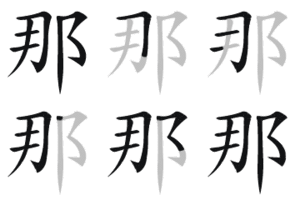 | |||
Han character
那 (Kangxi radical 163, 邑+4, 7 strokes, cangjie input 尸手弓中 (SQNL), four-corner 17527, composition ⿰𭃂阝)
References
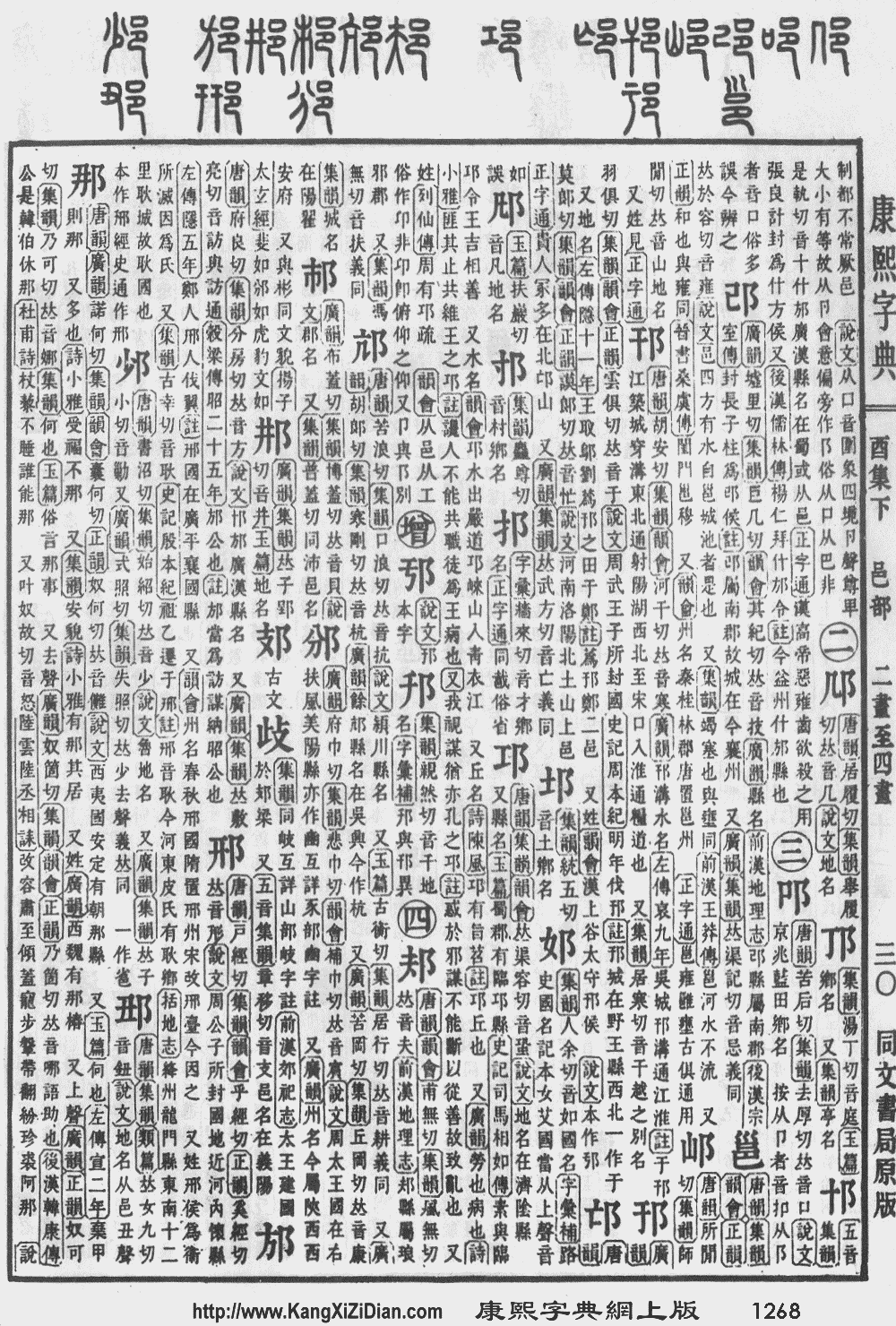
- Kangxi Dictionary: page 1268, character 30
- Dai Kanwa Jiten: character 39305
- Dae Jaweon: page 1767, character 21
- Hanyu Da Zidian (first edition): volume 6, page 3760, character 4
- Unihan data for U+90A3
Chinese
Glyph origin
| Historical forms of the character 那 |
|---|
| Shuowen Jiezi (compiled in Han) |
| Small seal script |
 |
Characters in the same phonetic series (冉) (Zhengzhang, 2003)
Phono-semantic compound (形聲/形声, OC *naːl, *naːlʔ, *naːls) : phonetic 冄 (OC *njam, *njamʔ) + semantic 邑 (“city”).
Originally the name of a state; later borrowed for a distal demonstrative.
Etymology 1
| simp. and trad. |
那 | |
|---|---|---|
| alternative forms | 𨚗 | |
Cognate with 若 (OC *njaɡ, “that”), 爾 (MC nyeX, “that”) (Norman, 1988). Also compare (Schuessler, 2007):
Pronunciation
Definitions
那
- that; those
- 那人是誰?/那人是谁? ― Nà rén shì shéi? ― Who is that person?
- 那是什麼?/那是什么? ― Nà shì shénme? ― What's that?
- 那年我將近十歲,住在四川成都郊區的百花橋。 [MSC, trad.]
- From: Dàshuǐ Guòhòu (After the Flood)
- Nà nián wǒ jiāngjìn shí suì, zhù zài Sìchuān Chéngdōu jiāoqū de Bǎihuāqiáo. [Pinyin]
- That year, I was about ten years old, living in Sichuan Province in a suburb of Chengdu city called Hundred Flowers.
那年我将近十岁,住在四川成都郊区的百花桥。 [MSC, simp.]- Antonym: 這/这
- then; in that case
- (dialectal) so; that
Synonyms
Dialectal synonyms of 那 (“that”) [map]
Compounds
- 一剎那/一刹那 (yīchànà)
- 兀那 (wùnà)
- 剎那/刹那
- 印度支那 (Yìndù-Zhīnà)
- 哈瓦那市
- 圭亞那/圭亚那 (Guīyànà)
- 安闍那/安阇那
- 密支那 (Mìzhīnà)
- 巴特那
- 布那喀
- 式叉摩那
- 打那麼/打那么
- 支那 (Zhīnà)
- 末那
- 格瑞那達/格瑞那达 (Géruìnàdá)
- 桑那浴
- 檀那 (tánnà)
- 毗盧遮那/毗卢遮那
- 波布那
- 波札那 (Bōzhánà)
- 波隆那
- 痴那
- 皮西那 (Píxīnà)
- 禪那/禅那
- 萬那杜/万那杜 (Wànnàdù)
- 納木那尼/纳木那尼 (Nàmù Nàní)
- 維那/维那 (wéinà)
- 緊那羅/紧那罗 (jǐnnàluó)
- 西那畫派/西那画派
- 規那/规那 (guīnà)
- 貝那芬托/贝那芬托
- 辛辛那提 (Xīnxīnnàtí)
- 這個那個/这个那个
- 那下
- 那不勒斯 (Nàbùlèsī)
- 那些
- 那兒/那儿 (nàr)
- 那卡西 (nàkǎxī)
- 那咱
- 那哈兒/那哈儿 (nàhār)
- 那堝兒/那埚儿
- 那壁廂/那壁厢
- 那字旁 (nàzìpáng)
- 那密比亞/那密比亚
- 那就
- 那廝/那厮 (nàsī)
- 那搭
- 那是 (nàshì)
- 那時/那时 (nàshí)
- 那更
- 那會子/那会子
- 那末 (nàme)
- 那樣/那样
- 那樁兒/那桩儿
- 那樣子/那样子
- 那溜兒/那溜儿
- 那爛陀/那烂陀
- 那瑪夏/那玛夏 (Nàmǎxià)
- 那當兒/那当儿
- 那般
- 那裡/那里 (nàlǐ)
- 那話兒/那话儿 (nàhuàr)
- 那起人
- 那達慕/那达慕 (nàdámù)
- 那頭兒/那头儿
- 那麼/那么 (nàme)
- 那麼著/那么著 (nàmezhe)
- 那麼點兒/那么点儿
- 阿那含
- 魯米那/鲁米那
- 麥地那/麦地那 (Màidìnà)
- 麼那/么那
Pronunciation
Pronunciation
Definitions
那
- (The addition of quotations indicative of this usage is being sought:) (Hokkien) more
- (Hokkien) Indicates two actions happening simultaneously; see 那……那…….
Compounds
Etymology 4
| simp. and trad. |
那 | |
|---|---|---|
| alternative forms | 𨚉 𨙻 | |
(This etymology is missing or incomplete. Please add to it, or discuss it at the Etymology scriptorium.)
Pronunciation
Definitions
那
- † many; much
- 不戢不難,受福不那。 [Pre-Classical Chinese, trad.]
- From: The Classic of Poetry, c. 11th – 7th centuries BCE, translated based on James Legge's version
- Bù jí bù nán, shòu fú bù nuó. [Pinyin]
- Are they not self-restrained? Are they not careful?
Will they not receive much happiness?
不戢不难,受福不那。 [Pre-Classical Chinese, simp.]
- † beautiful
- † calm; tranquil
- 王在在鎬,有那其居。 [Pre-Classical Chinese, trad.]
- From: The Classic of Poetry, c. 11th – 7th centuries BCE, translated based on James Legge's version
- Wáng zài zài Hào, yǒu nuó qí jū. [Pinyin]
- The king is here, here in Hao,
Dwelling in tranquillity.
王在在镐,有那其居。 [Pre-Classical Chinese, simp.]
- (historical) Nuo (a state)
- a surname
Pronunciation
Pronunciation
Compounds
- 掇那
- 那借
- 那動/那动
- 那步
- 騰那/腾那
Pronunciation
Definitions
那
Compounds
- 無那/无那
Pronunciation
Pronunciation
Etymology 10
| For pronunciation and definitions of 那 – see 㑚 (“you; etc.”). (This character is a variant form of 㑚). |
Pronunciation
References
- “那”, in 漢語多功能字庫 (Multi-function Chinese Character Database), 香港中文大學 (the Chinese University of Hong Kong), 2014–
- Dictionary of Chinese Character Variants (教育部異體字字典), A04204
Japanese
| Shinjitai | 那 | |
| Kyūjitai [1][2] |
那󠄁 那+ 󠄁?(Adobe-Japan1) |
 |
| 那󠄃 那+ 󠄃?(Hanyo-Denshi) (Moji_Joho) | ||
| The displayed kanji may be different from the image due to your environment. See here for details. | ||
Readings
From Middle Chinese 那 (MC na); compare Mandarin 那 (nuó):
From Middle Chinese 那 (MC naX); compare Mandarin 那 (nǎ):
From native Japanese roots:
Compounds
Compounds
- 伊邪那岐命 (Izanagi no Mikoto)
- 伊邪那美命 (Izanami no Mikoto)
- 一刹那 (issetsuna)
- 規那 (kina)
- 支那 (Shina)
- 耆那教 (Jaina-kyō)
- 少名毘古那神 (Sukunabikona no Kami)
- 刹那 (setsuna)
- 旦那, 檀那 (danna)
- 那智黒 (nachiguro)
- 那覇 (Naha)
- 那辺 (nahen)
- 那由他, 那由多 (nayuta)
- 那落 (naraku)
- 毘廬遮那仏 (Birushana butsu)
- 任那 (Mimana)
- 与那原 (Yonabaru)
- 廬舎那仏 (Rushana butsu)
Etymology
| Kanji in this term |
|---|
| 那 |
| な Grade: S |
| on’yomi |
Pronunciation
- IPA(key): [na̠]
References
Vietnamese
This article is issued from Wiktionary. The text is licensed under Creative Commons - Attribution - Sharealike. Additional terms may apply for the media files.