把
| ||||||||
Translingual
| Stroke order | |||
|---|---|---|---|
 | |||
Han character
把 (Kangxi radical 64, 手+4, 7 strokes, cangjie input 手日山 (QAU), four-corner 57017, composition ⿰扌巴)
References
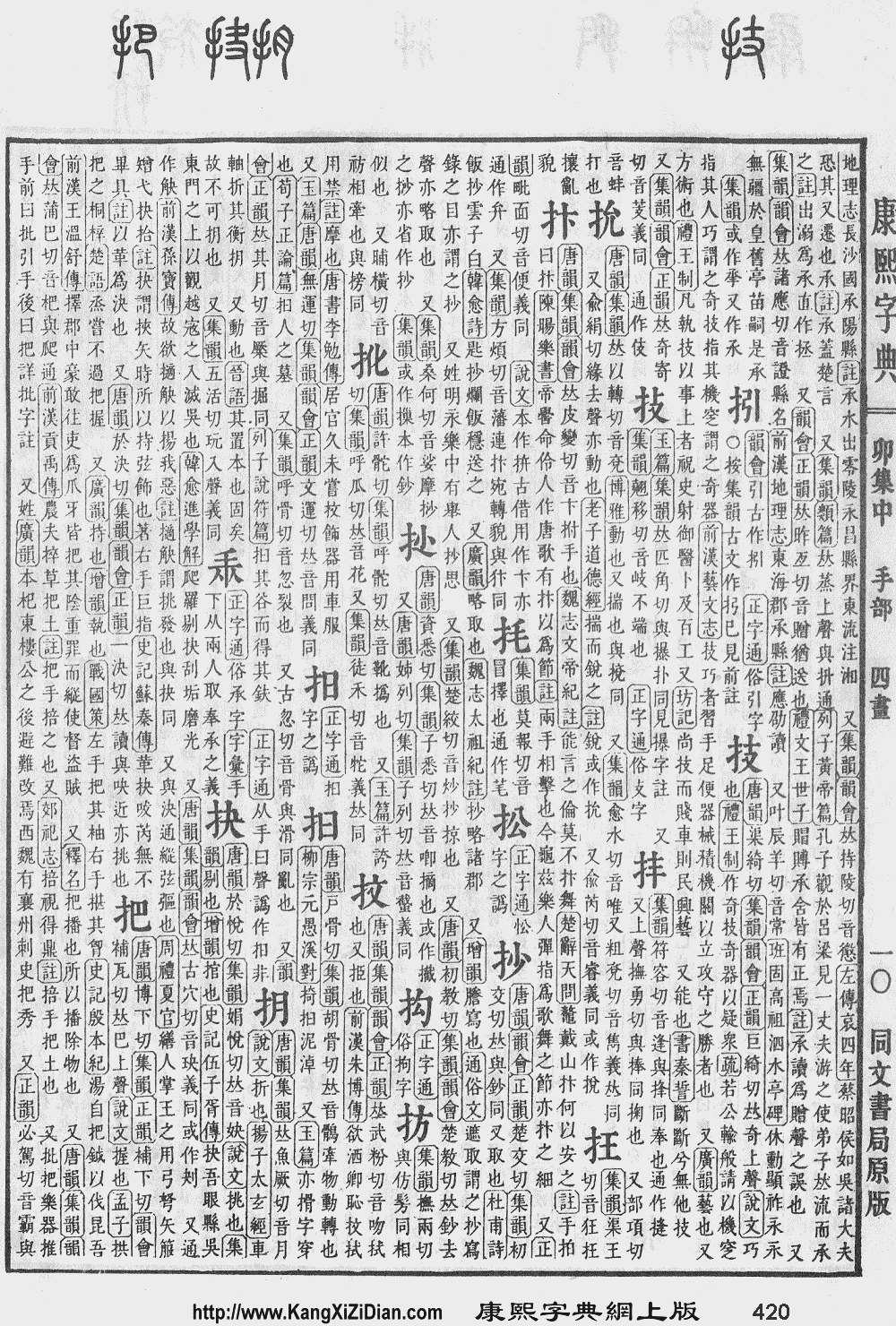
- Kangxi Dictionary: page 420, character 21
- Dai Kanwa Jiten: character 11874
- Dae Jaweon: page 768, character 1
- Hanyu Da Zidian (first edition): volume 3, page 1845, character 4
- Unihan data for U+628A
Chinese
| simp. and trad. |
把 | |
|---|---|---|
Glyph origin
Characters in the same phonetic series (巴) (Zhengzhang, 2003)
Phono-semantic compound (形聲/形声, OC *praːʔ) : semantic 扌 (“hand”) + phonetic 巴 (OC *praː).
Pronunciation 1
Definitions
把
- to hold; to grasp; to take
- 把握 ― bǎwò ― to grasp; to control; to master
- 縱有健婦把鋤犁,禾生隴畝無東西。 [Classical Chinese, trad.]
- From: 8th century, 杜甫 (Du Fu), 《兵車行》 (The Army Wagons: A Ballad); translated by Stephen Owen
- Zòng yǒu jiànfù bǎ chúlí, hé shēng lǒngmǔ wú dōngxī. [Pinyin]
- Even though there are sturdy wives to hold the hoe and plow, the grain grows on the field boundary slopes and one can’t tell east from west.
纵有健妇把锄犁,禾生陇亩无东西。 [Classical Chinese, simp.]
- to control; to dominate
- 把控 ― bǎkòng ― to control
- to guard; to have control over
- 令人傳我的號令去,著下將軍韓厥,把住府門,不搜進去的,只搜出來的。 [Written Vernacular Chinese, trad.]
- From: Yuan Dynasty, Ji Junxiang, The Orphan of Zhao
- Lìng rén chuán wǒ de hàolìng qù, zhuó xiàjiāngjūn Hán Jué, bǎ zhù fǔmén, bù sōu jìnqù de, zhǐ sōu chūlái de. [Pinyin]
- (please add an English translation of this usage example)
令人传我的号令去,着下将军韩厥,把住府门,不搜进去的,只搜出来的。 [Written Vernacular Chinese, simp.]
- (colloquial) to be close; to be near
- to hold a baby while it relieves itself
- 把尿 ― bǎniào ― to hold a baby while it urinates
- (traditional Chinese medicine) to feel (for the pulse)
- A light verb or preposition placed before the object of a sentence to allow it to be placed before the verb, giving greater flexibility in complex sentence construction.
- Used before a “subject + verb + complement” structure; to cause to; to make
- bundle; bunch
- 火把 ― huǒbǎ ― torch (stick with a flame on one end)
- handle; knob; grip (a part of an object which is held in the hand)
- stem (of a flower, leaf, fruit, etc.)
- 葉把兒/叶把儿 ― yèbàr ― stem of a leaf
- Classifier for objects that can be held using handles or knobs, such as guns, chairs, brooms, or umbrellas. ⇒ all nouns using this classifier
- 三把刀 ― sān bǎ dāo ― three knives
- 四把鉸剪/四把铰剪 [Cantonese] ― sei3 baa2 gaau3 zin2 [Jyutping] ― four pairs of scissors
- 一把刀囝 [Eastern Min, trad. and simp.]
- From: 2002, 李榮 (Li Rong), chief editor, 《現代漢語方言大詞典》 [Great Dictionary of Modern Chinese Dialects], Nanjing: Jiangsu Education Publishing House, →ISBN, page 1677
- siŏh bā dŏ̤-giāng / [suoʔ⁵ pa³³ to⁵⁵⁻⁵³ (k-)iaŋ³³] [Bàng-uâ-cê / IPA]
- a pocketknife
- 兩把掃把/两把扫把 ― liǎng bǎ sǎobǎ ― two brooms
- Classifier for handfuls of something, such as grains, soil.
- Classifier for bundles or bunches.
- Classifier for fire.
- Classifier for some abstract ideas, such as force, effort or age.
- Classifier for something done with the hand.
- Classifier for times of recreations.
- 過把癮/过把瘾 ― guò bǎ yǐn ― to satisfy a craving
- 打把麻將/打把麻将 ― dǎ bǎ májiāng ― to play mahjong
- 玩兩把牌/玩两把牌 ― wán liǎng bǎ pái ― to play card games
- 打幾把遊戲/打几把游戏 ― dǎ jǐ bǎ yóuxì ― to play video games
- 汏把浴 [Shanghainese, trad. and simp.]
- From: 2002, 李榮 (Li Rong), chief editor, 《現代漢語方言大詞典》 [Great Dictionary of Modern Chinese Dialects], Nanjing: Jiangsu Education Publishing House, →ISBN, page 1675
- 6da 5po 8yoq [Wugniu]
- to bathe
- (Xiamen and Quanzhou Hokkien) Classifier for wheeled vehicles.
- Placed after numerals or classifiers to express uncertainty; approximately
- 個把月/个把月 ― ge bǎ yuè ― approximately a month
- 十把日 [Eastern Min, trad. and simp.]
- From: 2002, 李榮 (Li Rong), chief editor, 《現代漢語方言大詞典》 [Great Dictionary of Modern Chinese Dialects], Nanjing: Jiangsu Education Publishing House, →ISBN, page 1677
- sĕk bā nĭk / [sɛiʔ⁵ pa³³ nˡiʔ⁵] [Bàng-uâ-cê / IPA]
- approximately ten days
- 隻把人 [Northern Min, trad.]
- From: 2002, 李榮 (Li Rong), chief editor, 《現代漢語方言大詞典》 [Great Dictionary of Modern Chinese Dialects], Nanjing: Jiangsu Education Publishing House, →ISBN, page 1676
- ciă bǎ nêng [Kienning Colloquial Romanized]
- several people
只把人 [Northern Min, simp.]
- (archaic or dialectal Mandarin, Gan, Xiang) to give
- 把壓歲錢/把压岁钱 [Gan] ― ba3 'ngat6 sui4 qien2 [Wiktionary] ― to give money (to children) during the Chinese New Year
- 虞家小廝又悄悄的從後門叫了一個賣草的,把他四個錢。 [Written Vernacular Chinese, trad.]
- From: Wu Jingzi, The Scholars, 1750 CE
- Yú jiā xiǎosī yòu qiāoqiāo de cóng hòumén jiào le yī ge mài cǎo de, bǎ tā sì ge qián. [Pinyin]
- (please add an English translation of this usage example)
虞家小厮又悄悄的从后门叫了一个卖草的,把他四个钱。 [Written Vernacular Chinese, simp.]
- a surname
Usage notes
- A great deal of linguistic research has been carried out regarding the grammar of the "bǎ construction".
Synonyms
- (to control):
- 主宰 (zhǔzǎi)
- 主張/主张 (zhǔzhāng) (archaic)
- 克制 (kèzhì)
- 克治 (kèzhì) (literary)
- 制禦/制御 (zhìyù) (literary)
- 制約/制约 (zhìyuē)
- 君 (jūn) (literary)
- 執掌/执掌 (zhízhǎng)
- 壓制/压制 (yāzhì)
- 局 (Zhangzhou Hokkien)
- 局限 (júxiàn)
- 左右 (zuǒyòu)
- 抑制 (yìzhì)
- 把持 (bǎchí)
- 把控 (bǎkòng)
- 把攬/把揽 (bǎlǎn)
- 抵制 (dǐzhì)
- 拘束 (jūshù)
- 按 (àn)
- 按捺 (ànnà) (usually in the negative)
- 控 (literary, or in compounds)
- 控制 (kòngzhì)
- 掌控 (zhǎngkòng)
- 掌握 (zhǎngwò)
- 提控 (tíkòng) (literary)
- 撥弄/拨弄 (bōnòng)
- 撙節/撙节 (zǔnjié)
- 操控 (cāokòng)
- 操縱/操纵 (cāozòng)
- 擺佈/摆布 (bǎibù)
- 擺治/摆治 (bǎizhì) (regional)
- 支配 (zhīpèi)
- 收斂/收敛 (shōuliǎn)
- 束 (literary, or in compounds)
- 束縛/束缚 (shùfù)
- 柄 (literary, or in compounds)
- 框 (kuàng)
- 禁錮/禁锢 (jìngù) (figurative)
- 積壓/积压 (jīyā) (figurative)
- 節制/节制 (jiézhì)
- 節撙/节撙 (Quanzhou Hokkien, Xiamen Hokkien)
- 管制 (guǎnzhì)
- 管束 (guǎnshù)
- 約束/约束 (yuēshù)
- 統御/统御 (tǒngyù) (literary)
- 統治/统治 (tǒngzhì)
- 羈束/羁束 (jīshù) (literary)
- 裁 (cái) (literary, or in compounds)
- 遏抑 (èyì) (literary)
- 鎮/镇 (zhèn)
- 限 (xiàn)
- 限乏 (Xiamen Hokkien)
- 限制 (xiànzhì)
- 駕/驾 (jià)
- 駕馭/驾驭 (jiàyù) (figurative)
- (to be close):
- 倚近 (Hokkien)
- 傍依 (bàngyī)
- 傍邊/傍边 (bàngbiān) (colloquial)
- 向邇/向迩 (xiàng'ěr) (literary)
- 挨近 (āijìn)
- 挨邊/挨边 (āibiān) (colloquial, to be close to an age or number)
- 接 (jiē)
- 接近 (jiējìn)
- 擦 (cā)
- 比鄰/比邻 (bǐlín) (literary)
- 湊/凑 (còu)
- 瀕於/濒于 (bīnyú) (of something undesirable)
- 瀕臨/濒临 (bīnlín)
- 相鄰/相邻 (xiānglín)
- 臨近/临近 (línjìn)
- 親近/亲近 (qīnjìn)
- 鄰近/邻近 (línjìn)
- 附 (fù)
- 靠近 (kàojìn)
- (light verb or preposition):
Dialectal synonyms of 把 (“particle introducing the object of the verb”) [map]
- (handle): 柄 (bǐng)
- (classifier):
Dialectal synonyms of 把 (“(classifier for knives)”) [map]
Dialectal synonyms of 把 (“(classifier for rulers)”) [map]
| Variety | Location | Words |
|---|---|---|
| Formal (Written Standard Chinese) | 把 | |
| Mandarin | Taiwan | 把, 支 |
| Cantonese | Hong Kong | 把 |
| Hakka | Miaoli (N. Sixian) | 支 |
| Hsinchu County (Zhudong; Hailu) | 支 | |
| Taichung (Dongshi; Dabu) | 支 | |
| Hsinchu County (Qionglin; Raoping) | 支 | |
| Yunlin (Lunbei; Zhao'an) | 支 | |
Dialectal synonyms of 把 (“(classifier for chairs)”) [map]
Dialectal synonyms of 輛 (“(classifier for vehicles)”) [map]
- (to give):
Dialectal synonyms of 給 (“to give”) [map]
Compounds
- 一把 (yībǎ)
- 一把子
- 一把手
- 一把抓 (yībǎzhuā)
- 一把罩
- 二把刀 (èrbǎdāo)
- 個把/个把
- 倒把 (dǎobǎ)
- 倒把鋤頭/倒把锄头
- 兩把刷子/两把刷子
- 兩把頭/两把头
- 出把戲/出把戏
- 刀把兒/刀把儿 (dāobàr)
- 力把
- 力把兒頭/力把儿头
- 加把勁/加把劲
- 劣把
- 劣把頭/劣把头
- 印把子 (yìnbàzi)
- 吊拷絣把/吊拷𰬔把
- 嘴把子
- 嘴把式
- 大把 (dàbǎ)
- 好把式
- 守把 (shǒubǎ)
- 小把戲/小把戏
- 尿尿把把
- 帶把子/带把子
- 年把
- 手巾把子
- 手把 (shǒubà)
- 手把子
- 打把勢/打把势
- 打把式
- 打把攔/打把拦
- 抓一把
- 把下
- 把上了
- 把不住
- 把不到
- 把作
- 把住 (bǎzhù)
- 把似
- 把位 (bǎwèi)
- 把來/把来 (bǎlái)
- 把做
- 把兄弟 (bǎxiōngdì)
- 把兒/把儿
- 把兒缸子/把儿缸子
- 把兒鏡子/把儿镜子
- 把勢/把势 (bǎshì)
- 把卷
- 把口 (bǎkǒu)
- 把場/把场
- 把如
- 把子
- 把守 (bǎshǒu)
- 把定 (bǎdìng)
- 把定了心
- 把定物
- 把家 (bǎjiā)
- 把弄
- 把式 (bǎshì)
- 把式匠
- 把弦兒/把弦儿
- 把戲/把戏 (bǎxì)
- 把手 (bǎshǒu)
- 把手言歡/把手言欢
- 把把
- 把持 (bǎchí)
- 把持不住
- 把持不定
- 把捉 (bǎzhuō)
- 把握 (bǎwò)
- 把攬/把揽 (bǎlǎn)
- 把斂/把敛
- 把斷/把断
- 把晤
- 把杯
- 把柄 (bǎbǐng)
- 把梢的
- 投機倒把/投机倒把 (tóujī dǎobǎ)
- 把權/把权
- 把滑
- 把牢 (bǎláo)
- 把猾
- 把玩 (bǎwán)
- 把盞/把盏 (bǎzhǎn)
- 把穩/把稳 (bǎwěn)
- 把突兒/把突儿
- 把筆/把笔
- 把素
- 把素持齋/把素持斋
- 把細/把细
- 把總/把总
- 把脈/把脉 (bǎmài)
- 把腳不住/把脚不住
- 把臂
- 把臉一板/把脸一板
- 把臂入林
- 把臂而談/把臂而谈
- 把舵 (bǎduò)
- 把色
- 把薪助火
- 把街
- 把袂 (bǎmèi)
- 把話/把话
- 把賣/把卖
- 把都兒/把都儿
- 把酒 (bǎjiǔ)
- 把錢/把钱
- 把門/把门 (bǎmén)
- 把門人/把门人
- 把關/把关 (bǎguān)
- 把頭/把头 (bǎtóu)
- 把風/把风 (bǎfēng)
- 把飯叫饑/把饭叫饥
- 把鬼
- 把麻
- 把麼/把么
- 把鼻
- 把齋/把斋 (bǎzhāi)
- 拉一把
- 拜把
- 拖把 (tuōbǎ)
- 拜把兄弟
- 拜把子 (bài bǎzi)
- 拿一把
- 拿印把兒/拿印把儿
- 拱把
- 拿把
- 拿把不住
- 持齋把素/持斋把素
- 捏把汗
- 掃把/扫把 (sàobǎ)
- 掗把/挜把
- 掌把
- 揣奸把猾
- 撈一把/捞一把
- 放刁把濫/放刁把滥
- 有把傢伙
- 有把握 (yǒu bǎwò)
- 槍把/枪把
- 武把子
- 毛團把戲/毛团把戏
- 沒把柄/没把柄
- 沒把鼻/没把鼻
- 滿把/满把
- 滿有把握/满有把握
- 火把 (huǒbǎ)
- 為頭把腦/为头把脑
- 玩把戲/玩把戏
- 瓢把子
- 盈把
- 盲人把燭/盲人把烛
- 看把戲/看把戏
- 萬把/万把
- 第一把手 (dìyībǎshǒu)
- 第二把手
- 籠驢把馬/笼驴把马
- 練把式/练把式
- 翻把
- 老把勢/老把势 (lǎobǎshi)
- 老把式
- 老把戲/老把戏 (lǎobǎxì)
- 耍把戲/耍把戏
- 腰把子
- 花把戲/花把戏
- 草把
- 話把/话把 (huàbà)
- 變把戲/变把戏
- 車把/车把 (chēbǎ)
- 車把式/车把式 (chēbǎshi)
- 都把勢/都把势
- 鎗把/枪把
- 隨驢把馬/随驴把马
- 靠把
- 順把/顺把
- 頭把兒/头把儿
- 鬼把戲/鬼把戏 (guǐbǎxì)
- 點把/点把
Pronunciation 2
Japanese
Alternative forms
Kanji
把
- This term needs a translation to English. Please help out and add a translation, then remove the text
{{rfdef}}.
Etymology
| Kanji in this term |
|---|
| 把 |
| たば Grade: S |
| kun’yomi |
(This etymology is missing or incomplete. Please add to it, or discuss it at the Etymology scriptorium.)
References
- Matsumura, Akira, editor (2006), 大辞林 [Daijirin] (in Japanese), Third edition, Tōkyō: Sanseidō, →ISBN
- NHK Broadcasting Culture Research Institute, editor (1998), NHK日本語発音アクセント辞典 [NHK Japanese Pronunciation Accent Dictionary] (in Japanese), Tōkyō: NHK Publishing, →ISBN
Korean
Etymology
From Middle Chinese 把 (MC paeX).
| Historical readings |
|---|
|
Pronunciation
- (SK Standard/Seoul) IPA(key): [pʰa̠]
- Phonetic hangul: [파]
Compounds
Compounds
- 파로 (把撈, paro)
- 파반 (把盤, paban)
- 파배 (把杯, pabae)
- 파속 (把束, pasok)
- 파수 (把守, pasu)
- 파수 (把手, pasu)
- 파악 (把握, paak)
- 파장 (把掌, pajang)
- 파절 (把截, pajeol)
- 파주 (把住, paju)
- 파지 (把持, paji)
- 파지 (把指, paji)
- 파직 (把直, pajik)
- 파착 (把捉, pachak)
- 파총 (把摠, pachong)
- 파필 (把筆, papil)
- 검파 (劍把, geompa)
- 견파 (肩把, gyeonpa)
- 공파 (拱把, gongpa)
- 도파 (刀把, dopa)
- 만파 (輓把, manpa)
- 복파 (腹把, bokpa)
- 슬파 (膝把, seulpa)
- 외파 (外把, oepa)
- 입파 (入把, ip'pa)
- 총파 (銃把, chongpa)
- 낭파초 (狼把草, nangpacho)
Vietnamese
This article is issued from Wiktionary. The text is licensed under Creative Commons - Attribution - Sharealike. Additional terms may apply for the media files.