奔
See also: 犇
| ||||||||
 | ||||||||
Translingual
Han character
奔 (Kangxi radical 37, 大+5, 8 strokes, cangjie input 大十廿 (KJT), four-corner 40444, composition ⿱大卉 or ⿱夲廾)
References
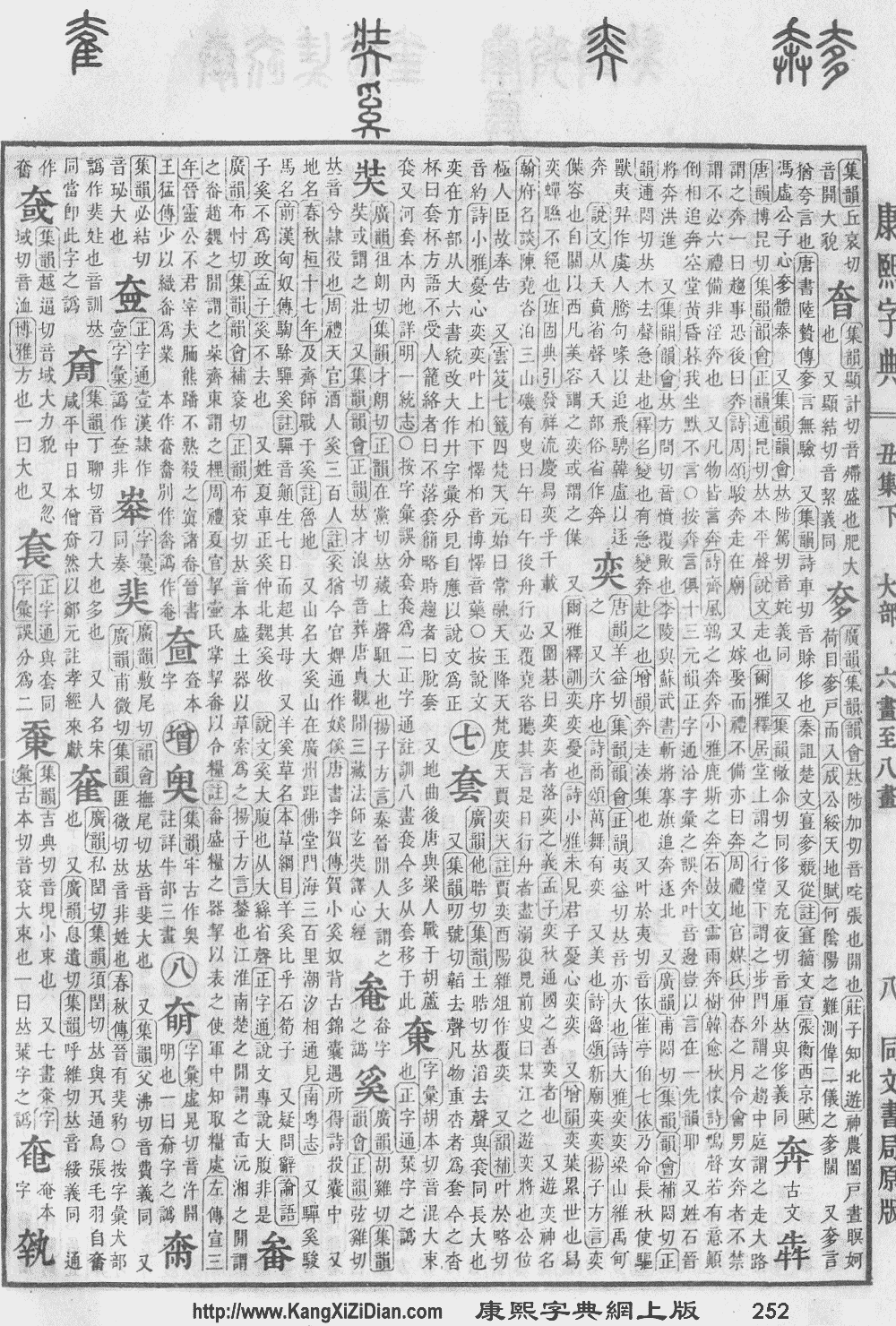
- Kangxi Dictionary: page 252, character 3
- Dai Kanwa Jiten: character 5921
- Dae Jaweon: page 513, character 4
- Hanyu Da Zidian (first edition): volume 1, page 533, character 1
- Unihan data for U+5954
- Unihan data for U+FA7F
Chinese
| simp. and trad. |
奔 | |
|---|---|---|
| alternative forms | 犇 逩 | |
Glyph origin
| Historical forms of the character 奔 | ||
|---|---|---|
| Western Zhou | Shuowen Jiezi (compiled in Han) | Liushutong (compiled in Ming) |
| Bronze inscriptions | Small seal script | Transcribed ancient scripts |
 |
 |
 |
Characters in the same phonetic series (奔) (Zhengzhang, 2003)
| Old Chinese | |
|---|---|
| 賁 | *prals, *bɯl, *pɯːn, *bɯn |
| 蟦 | *bɯl, *bɯlʔ, *bɯls |
| 膹 | *bɯlʔ, *bɯnʔ |
| 橨 | *bɯlʔ, *bɯn |
| 奔 | *pɯːn, *pɯːns |
| 錛 | *pɯːn |
| 噴 | *pʰɯːn, *pʰɯːns, *pɯns |
| 濆 | *pʰɯːn, *bɯn |
| 歕 | *pʰɯːn, *pʰɯːns |
| 獖 | *bɯːnʔ |
| 餴 | *pɯn |
| 饙 | *pɯn |
| 僨 | *pɯns |
| 墳 | *bɯn, *bɯnʔ |
| 燌 | *bɯn |
| 豶 | *bɯn |
| 羵 | *bɯn |
| 蕡 | *bɯn |
| 鐼 | *bɯn, *hmɯns |
| 馩 | *bɯn |
| 轒 | *bɯn, *bɯnʔ |
| 鼖 | *bɯn |
| 憤 | *bɯnʔ |
| 鱝 | *bɯnʔ |
Pronunciation 1
Definitions
奔
- to run fast; to rush about
- to flee; to escape
- to marry without the preliminary formalities
- rapid; hurried; hasty
- (Northern Wu, Yangzhounese) to run
- a surname
Compounds
- 乘奔御風/乘奔御风
- 倒屣奔出
- 出奔 (chūbēn)
- 到處奔走/到处奔走
- 勢如奔馬/势如奔马 (shì rú bēnmǎ)
- 匍匐奔喪/匍匐奔丧
- 各奔前程
- 各奔東西/各奔东西
- 奔勞/奔劳 (bēnláo)
- 奔北 (bēnběi)
- 奔命
- 奔喪/奔丧 (bēnsāng)
- 奔噪
- 奔忙 (bēnmáng)
- 奔揚/奔扬
- 奔放 (bēnfàng)
- 奔星
- 奔波 (bēnbō)
- 奔泉
- 奔波勞碌/奔波劳碌
- 奔流 (bēnliú)
- 奔流不息
- 奔淌
- 奔湍
- 奔潰/奔溃 (bēnkuì)
- 奔瀉/奔泻 (bēnxiè)
- 奔碌
- 奔突 (bēntū)
- 奔竄/奔窜 (bēncuàn)
- 奔競/奔竞
- 奔箭
- 奔襲/奔袭 (bēnxí)
- 奔走 (bēnzǒu)
- 奔走之友
- 奔走呼號/奔走呼号 (bēnzǒuhūháo)
- 奔走如市
- 奔走相告 (bēnzǒuxiānggào)
- 奔走逢迎
- 奔走風塵/奔走风尘
- 奔赴 (bēnfù)
- 奔跑 (bēnpǎo)
- 奔車朽索/奔车朽索
- 奔軼/奔轶
- 奔逃 (bēntáo)
- 奔逐 (bēnzhú)
- 奔逝 (bēnshì)
- 奔逸
- 奔逸絕塵/奔逸绝尘
- 奔雷
- 奔靠
- 奔馬/奔马 (bēnmǎ)
- 奔馳/奔驰 (bēnchí)
- 奔馳如電/奔驰如电
- 奔馳如雷/奔驰如雷
- 奔駛/奔驶 (bēnshǐ)
- 奔騰/奔腾 (bēnténg)
- 奔騰澎湃/奔腾澎湃
- 嫦娥奔月
- 彎奔/弯奔
- 撲奔/扑奔
- 星奔
- 有家難奔/有家难奔
- 東奔西向/东奔西向
- 東奔西撞/东奔西撞
- 東奔西竄/东奔西窜 (dōngbēnxīcuàn)
- 東奔西走/东奔西走 (dōngbēnxīzǒu)
- 東奔西跑/东奔西跑 (dōngbēnxīpǎo)
- 東奔西跳/东奔西跳
- 淫奔
- 渴驥奔泉/渴骥奔泉
- 無家可奔/无家可奔
- 狂奔 (kuángbēn)
- 狐奔鼠竄/狐奔鼠窜
- 狼奔豕突
- 狼奔鼠竄/狼奔鼠窜
- 疲於奔命/疲于奔命 (píyúbēnmìng)
- 百囊奔
- 禽奔獸遁/禽奔兽遁
- 萬馬奔騰/万马奔腾 (wànmǎbēnténg)
- 私奔 (sībēn)
- 窮猿奔林/穷猿奔林
- 罷於奔命/罢于奔命
- 裸奔 (luǒbēn)
- 豕突狼奔
- 走及奔馬/走及奔马
- 踏燕奔馬/踏燕奔马
- 追奔逐北
- 金奔巴
- 飛奔/飞奔 (fēibēn)
- 駿奔/骏奔
- 鶉之奔奔/鹑之奔奔
- 鼠攛狼奔/鼠撺狼奔
- 鼠竄狼奔/鼠窜狼奔
Synonyms
Dialectal synonyms of 跑 (“to run”) [map]
Pronunciation 2
Definitions
奔
References
- “奔”, in 漢語多功能字庫 (Multi-function Chinese Character Database), 香港中文大學 (the Chinese University of Hong Kong), 2014–
Japanese
Korean
Etymology
From Middle Chinese 奔 (MC pwon).
Vietnamese
This article is issued from Wiktionary. The text is licensed under Creative Commons - Attribution - Sharealike. Additional terms may apply for the media files.