甫
| ||||||||
Translingual
Han character
甫 (Kangxi radical 101, 用+2, 7 strokes, cangjie input 戈十月 (IJB), four-corner 53227, composition ⿻⿺十丶月)
Derived characters
References
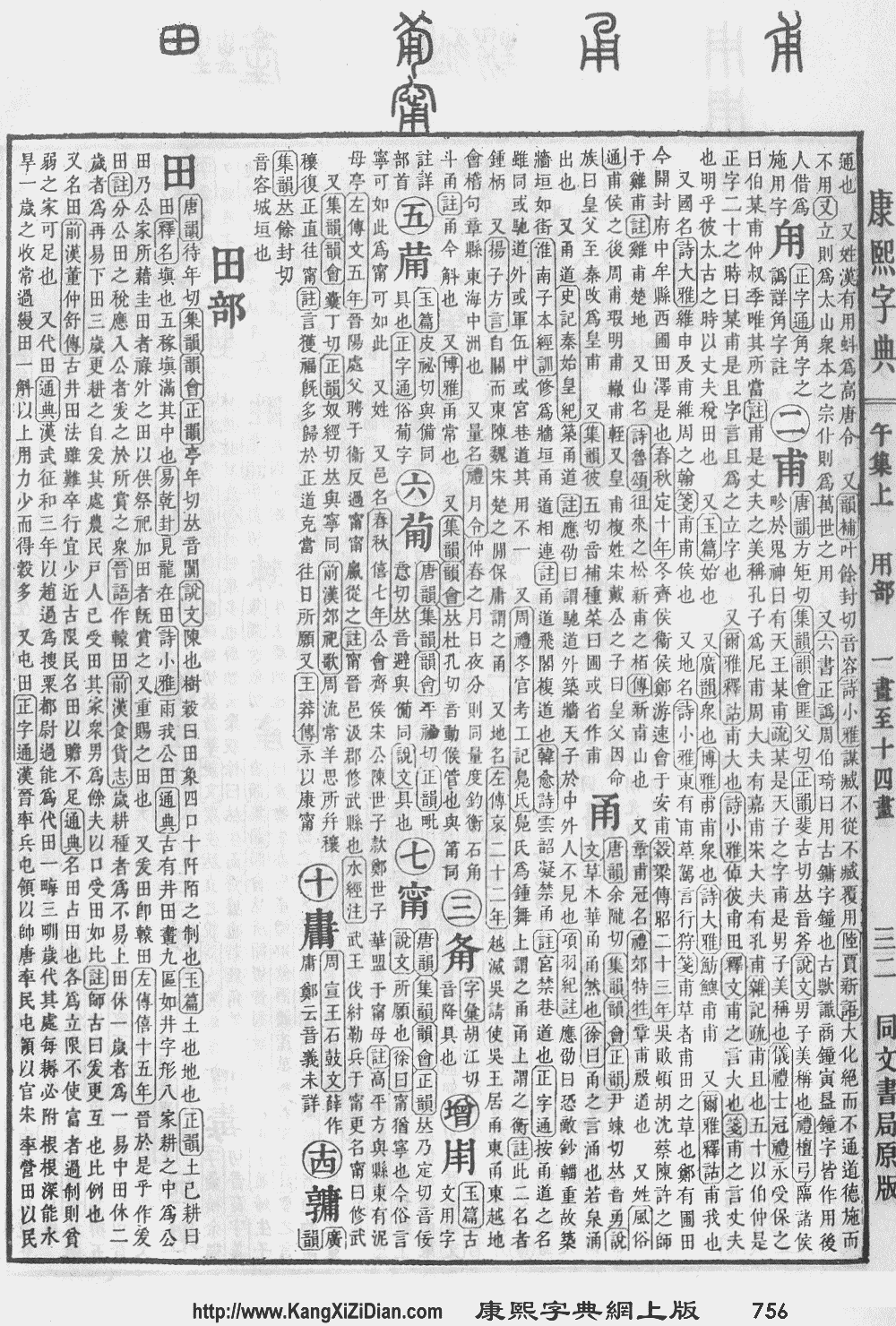
- Kangxi Dictionary: page 756, character 2
- Dai Kanwa Jiten: character 21706
- Dae Jaweon: page 1166, character 4
- Hanyu Da Zidian (first edition): volume 1, page 20, character 1
- Unihan data for U+752B
Chinese
Glyph origin
| Historical forms of the character 甫 | |||
|---|---|---|---|
| Shang | Western Zhou | Shuowen Jiezi (compiled in Han) | Liushutong (compiled in Ming) |
| Oracle bone script | Bronze inscriptions | Small seal script | Transcribed ancient scripts |
 |
 |
 |
 |
| Old Chinese | |
|---|---|
| 豧 | *pʰoːs, *pʰa, *pʰas |
| 縛 | *baːɡs, *baɡ |
| 逋 | *paː |
| 餔 | *paː, *baːs |
| 晡 | *paː |
| 庯 | *paː |
| 陠 | *paː, *pʰaː |
| 鵏 | *paː, *baːs |
| 峬 | *paː |
| 誧 | *paː, *pʰaː, *pʰaːʔ, *pʰaːs |
| 秿 | *paː, *pʰa, *baʔ |
| 鯆 | *paː, *pʰaː, *paʔ |
| 補 | *paːʔ |
| 圃 | *paːʔ, *paːs |
| 鋪 | *pʰaː, *pʰaːs, *pʰa |
| 痡 | *pʰaː, *pʰa |
| 浦 | *pʰaːʔ |
| 烳 | *pʰaːʔ |
| 溥 | *pʰaːʔ, *paːɡ |
| 悑 | *pʰaːs |
| 酺 | *baː |
| 匍 | *baː |
| 蜅 | *baː, *paʔ |
| 脯 | *baː, *paʔ |
| 葡 | *baː |
| 蒱 | *baː |
| 蒲 | *baː |
| 簿 | *baːʔ, *baːɡ |
| 捕 | *baːs |
| 哺 | *baːs |
| 簠 | *pa, *paʔ, *pʰas |
| 甫 | *paʔ |
| 黼 | *paʔ |
| 莆 | *paʔ |
| 俌 | *paʔ, *pʰaʔ |
| 郙 | *paʔ, *pʰa |
| 傅 | *paɡs |
| 搏 | *paɡs, *paːɡ, *pʰaːɡ |
| 麱 | *pʰa |
| 尃 | *pʰa |
| 榑 | *ba |
| 輔 | *baʔ |
| 鬴 | *baʔ |
| 賻 | *baɡs |
| 博 | *paːɡ |
| 髆 | *paːɡ |
| 鎛 | *paːɡ |
| 猼 | *paːɡ |
| 餺 | *paːɡ |
| 簙 | *paːɡ |
| 鑮 | *paːɡ, *baːɡ |
| 欂 | *paːɡ, *baɡ, *breːɡ |
| 蒪 | *pʰaːɡ |
| 膊 | *pʰaːɡ |
| 薄 | *baːɡ |
| 礡 | *baːɡ |
In oracle bone script, ideogrammic compound (會意/会意) : 屮 (“vegetation”) + 田 (“field”) – garden, original form of 圃.
In bronze inscriptions, the components 屮 and 田 corrupted into 父 and 用 respectively. 父 (OC *paʔ, *baʔ) became a sound component, making the character phono-semantic (形聲/形声, OC *paʔ) .
In the modern form the components have merged into a single shape.
Pronunciation
Definitions
甫
- (literary, honorific) A term of address for a man, usually as a suffix placed after a man's courtesy name.
- (honorific) courtesy name of a man
- a surname
Descendants
Etymology 2
| simp. and trad. |
甫 | |
|---|---|---|
Sino-Tibetan. Cognate with 方 (OC *paŋ, “just now”) (Pulleybank, 1962). Also compare Tibeto-Burman words for “to begin”: Proto-Kuki-Chin *pran, Jingpho hpang, Phom baŋ⁵⁵, Bahing preŋ.
Pronunciation
Compounds
- 不甫能
- 不甫能勾
- 甫爾/甫尔
- 甫當/甫当
- 甫竁
- 甫能
Etymology 3
| simp. and trad. |
甫 | |
|---|---|---|
Sino-Tibetan. Endoactive of a root *PA(ʔ) (Schuessler, 2007). Cognate with 佈 (OC *paːs, “to spread; to display; to announce”), 博 (OC *paːɡ, “wide”), 溥 (OC *pʰaːʔ, “vast; wide”), 敷 (OC *pʰa, “to lay out; to apply”), 鋪 (OC *pʰa, *pʰaː, “to spread”) (Schuessler, 2007). Also compare Proto-Kuki-Chin *phaʔ (“to spread; to stretch”).
Pronunciation
Definitions
甫
- † great
- 倬彼甫田,歲取十千。 [Pre-Classical Chinese, trad.]
- From: The Classic of Poetry, c. 11th – 7th centuries BCE, translated based on James Legge's version
- Zhuō bǐ fǔ tián, suì qǔ shí qiān. [Pinyin]
- Bright are those extensive fields,
A tenth of whose produce is annually levied.
倬彼甫田,岁取十千。 [Pre-Classical Chinese, simp.]
Compounds
- 甫甫
- 甫田
Pronunciation
Compounds
- 甫田
Etymology 5
| simp. and trad. |
甫 | |
|---|---|---|
(This etymology is missing or incomplete. Please add to it, or discuss it at the Etymology scriptorium.)
Pronunciation
Definitions
甫
- Used in place names.
Compounds
- 十八甫
- 甫里
- 甫里先生
Pronunciation
Etymology 7
| simp. and trad. |
甫 | |
|---|---|---|
| alternative forms | 悑 肏 扑 Mandarinized transcription | |
(This etymology is missing or incomplete. Please add to it, or discuss it at the Etymology scriptorium.)
Pronunciation
Synonyms
References
- “甫”, in 漢語多功能字庫 (Multi-function Chinese Character Database), 香港中文大學 (the Chinese University of Hong Kong), 2014–
- Dictionary of Chinese Character Variants (教育部異體字字典), A02630
Japanese
Korean
Hanja
甫 • (bo) (hangeul 보, revised bo, McCune–Reischauer po, Yale po)
- This term needs a translation to English. Please help out and add a translation, then remove the text
{{rfdef}}.