屈
| ||||||||
Translingual
Han character
屈 (Kangxi radical 44, 尸+5, 8 strokes, cangjie input 尸山山 (SUU), four-corner 77272, composition ⿸尸出)
References
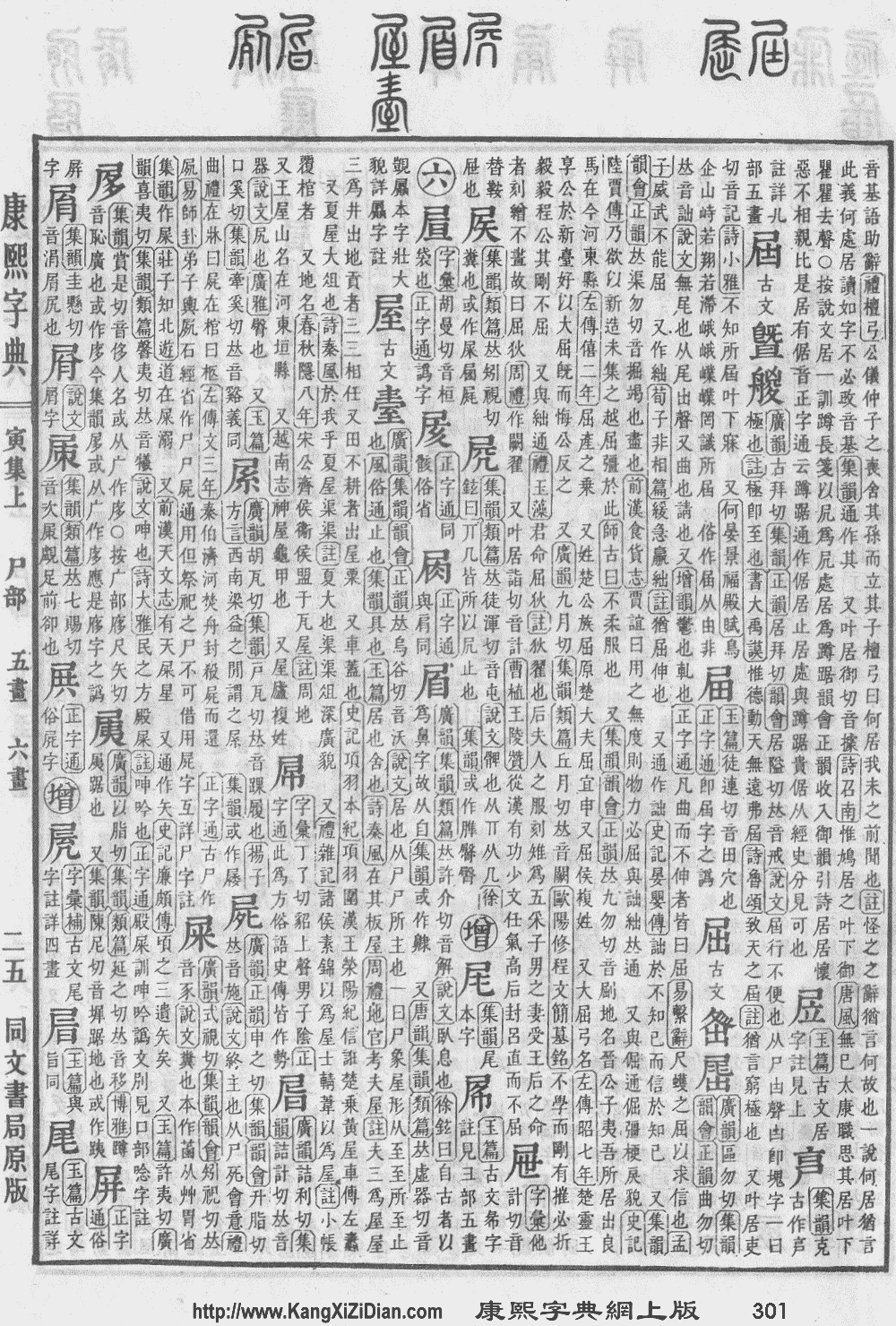
- Kangxi Dictionary: page 301, character 7
- Dai Kanwa Jiten: character 7669
- Dae Jaweon: page 597, character 14
- Hanyu Da Zidian (first edition): volume 2, page 970, character 11
- Unihan data for U+5C48
Chinese
| simp. and trad. |
屈 | |
|---|---|---|
| alternative forms | ||
Glyph origin
| Historical forms of the character 屈 | |||
|---|---|---|---|
| Western Zhou | Warring States | Shuowen Jiezi (compiled in Han) | Liushutong (compiled in Ming) |
| Bronze inscriptions | Chu slip and silk script | Small seal script | Transcribed ancient scripts |
 |
 |
 |
 |
Characters in the same phonetic series (出) (Zhengzhang, 2003)
| Old Chinese | |
|---|---|
| 聉 | *r̥ʰuːlʔ, *ŋrɯd, *ʔr'uːd, *ŋruːd |
| 贅 | *kljods |
| 祟 | *sqʰluds |
| 出 | *kʰljuds, *kʰljud |
| 茁 | *ʔl'ɯd, *skruːd, *skrod, *skrud |
| 欪 | *qʰlɯd, *l̥ʰud |
| 貀 | *ŋr'uːd |
| 袦 | *ŋr'oːd |
| 咄 | *ʔl'oːd, *ʔl'uːd |
| 柮 | *sɡloːd, *ʔl'uːd |
| 拙 | *kljod |
| 炪 | *kljod, *l̥ʰud |
| 掘 | *ɡlod, *ɡlud |
| 鈯 | *l'uːd |
| 啒 | *kluːd, *qʰluːd |
| 淈 | *kluːd, *ɡluːd |
| 窟 | *kʰluːd |
| 泏 | *kʰluːd, *ʔl'ud |
| 堀 | *kʰluːd, *ɡlud |
| 胐 | *kʰluːd |
| 窋 | *ʔl'ud |
| 絀 | *ʔl'ud |
| 黜 | *l̥ʰud |
| 屈 | *klud, *kʰlud |
| 趉 | *klud |
| 鶌 | *klud |
| 詘 | *kʰlud |
| 倔 | *ɡlud |
| 崛 | *ɡlud, *ŋɡlud |
Originally 𡲶. Phono-semantic compound (形聲/形声, OC *klud, *kʰlud) : phonetic 出 (OC *kʰljuds, *kʰljud) + semantic 尾 (“tail”). 尾 became 尸 in clerical script.
Etymology
(This etymology is missing or incomplete. Please add to it, or discuss it at the Etymology scriptorium.)
Pronunciation 1
Definitions
屈
Compounds
- 不屈 (bùqū)
- 不屈不撓/不屈不挠 (bùqūbùnáo)
- 不戰而屈人之兵/不战而屈人之兵 (bù zhàn ér qū rén zhī bīng)
- 交臂屈膝
- 以屈求伸
- 低頭屈膝/低头屈膝
- 佶屈聱牙 (jíqū'áoyá)
- 傷屈/伤屈
- 冤天屈地
- 冤屈 (yuānqū)
- 力屈勢窮/力屈势穷
- 力屈計窮/力屈计穷
- 力屈道窮/力屈道穷
- 卑躬屈節/卑躬屈节 (bēigōng-qūjié)
- 卑躬屈膝 (bēigōng-qūxī)
- 受委屈
- 受屈 (shòuqū)
- 口屈
- 叫屈 (jiàoqū)
- 含冤負屈/含冤负屈
- 喊冤叫屈
- 堅貞不屈/坚贞不屈 (jiānzhēnbùqū)
- 大屈
- 大直若屈
- 委屈
- 威武不屈
- 寧死不屈/宁死不屈 (níngsǐbùqū)
- 小屈大伸
- 尺蠖之屈
- 屈一伸萬/屈一伸万
- 屈伸 (qūshēn)
- 屈光度
- 屈原 (Qūyuán)
- 屈奇
- 屈宋
- 屈尊 (qūzūn)
- 屈尊敬賢/屈尊敬贤
- 屈就 (qūjiù)
- 屈己待人 (qūjǐ dàirén)
- 屈己從人/屈己从人
- 屈座
- 屈從/屈从 (qūcóng)
- 屈心
- 屈志
- 屈意奉承
- 屈戌
- 屈才 (qūcái)
- 屈打成招 (qūdǎchéngzhāo)
- 屈折 (qūzhé)
- 屈折語/屈折语 (qūzhéyǔ)
- 屈招
- 屈指 (qūzhǐ)
- 屈指一算 (qūzhǐyīsuàn)
- 屈指可數/屈指可数 (qūzhǐkěshǔ)
- 屈撓/屈挠 (qūnáo)
- 屈曲 (qūqū)
- 屈服 (qūfú)
- 屈枉
- 屈死
- 屈死鬼
- 屈沉
- 屈滯/屈滞
- 屈漾
- 屈節/屈节 (qūjié)
- 屈膝 (qūxī)
- 屈蛇
- 屈蟠
- 屈豔班香/屈艳班香
- 屈身 (qūshēn)
- 屈身下士
- 屈辱 (qūrǔ)
- 屈量
- 屈駕/屈驾 (qūjià)
- 情見力屈/情见力屈
- 情見勢屈/情见势屈
- 懷冤抱屈/怀冤抱屈 (huáiyuānbàoqū)
- 才過屈宋/才过屈宋
- 抱屈 (bàoqū)
- 指不勝屈/指不胜屈
- 摧志屈道
- 撞天屈
- 有屈無伸/有屈无伸
- 枉屈
- 理屈 (lǐqū)
- 理屈事窮/理屈事穷
- 理屈詞窮/理屈词穷 (lǐqūcíqióng)
- 白屈菜 (báiqūcài)
- 絕不屈服/绝不屈服
- 老屈
- 能屈能伸
- 臨難不屈/临难不屈
- 至死不屈
- 蜷屈
- 蠖屈
- 蠖屈求伸
- 衙官屈宋
- 計窮力屈/计穷力屈
- 詞窮理屈/词穷理屈 (cíqiónglǐqū)
- 詰屈/诘屈 (jiéqū)
- 詰屈聱牙/诘屈聱牙 (jíqū'áoyá)
- 誓死不屈 (shìsǐbùqū)
- 負屈/负屈
- 負屈含冤/负屈含冤
- 負屈銜冤/负屈衔冤
- 銜冤負屈/衔冤负屈
- 頑強不屈/顽强不屈
- 首屈一指 (shǒuqūyīzhǐ)
- 鳴冤叫屈/鸣冤叫屈
- 龔勝不屈/龚胜不屈
Pronunciation 2
Definitions
屈
Pronunciation 3
Japanese
Korean
Vietnamese
This article is issued from Wiktionary. The text is licensed under Creative Commons - Attribution - Sharealike. Additional terms may apply for the media files.