慁
| ||||||||
Translingual
Han character
慁 (Kangxi radical 61, 心+10, 14 strokes, cangjie input 田人心 (WOP) or 難田人心 (XWOP), four-corner 60330, composition ⿱圂心)
Derived characters
- 𦡵
References
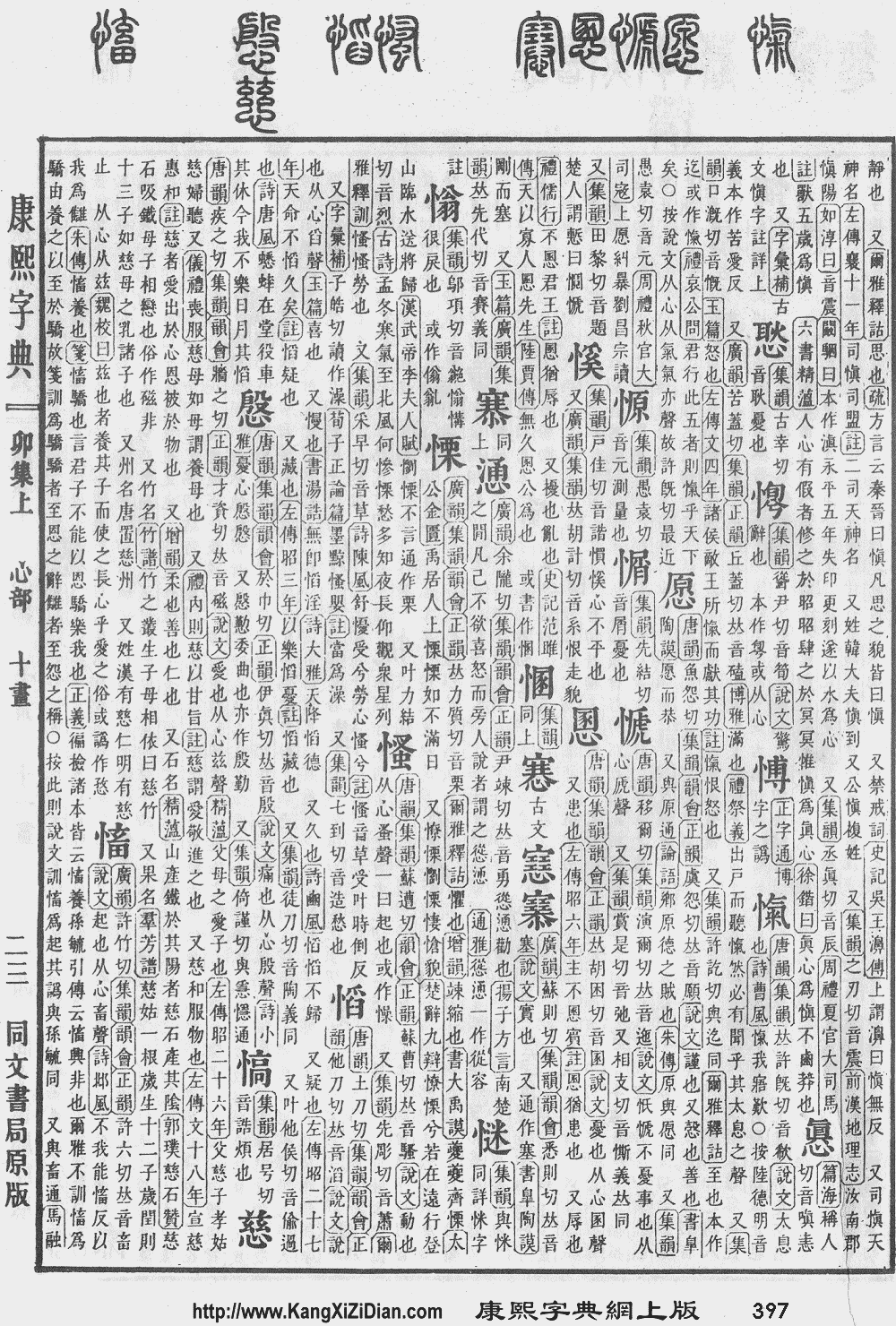
- Kangxi Dictionary: page 397, character 11
- Dai Kanwa Jiten: character 11035
- Dae Jaweon: page 736, character 7
- Hanyu Da Zidian (first edition): volume 4, page 2333, character 13
- Unihan data for U+6141
Chinese
| simp. and trad. |
慁 | |
|---|---|---|
| alternative forms | 㥵 | |
Glyph origin
Pronunciation
Definitions
慁
- to bother, trouble
- 秦王跪曰:先生!是何言也!夫秦國僻遠,寡人愚不肖,先生乃幸至此,此天以寡人慁先生,而存先王之廟也。 [Classical Chinese, trad.]
- From: Zhanguo Ce, circa 5th – 3rd centuries BCE
- Qín wáng guì yuē: Xiānshēng! Shì hé yán yě! Fú qínguó pìyuǎn, guǎrén yú bùxiào, xiānshēng nǎi xìng zhì cǐ, cǐ tiān yǐ guǎrén hùn xiānshēng, ér cún xiānwáng zhī miào yě. [Pinyin]
- The King of Qin knelt and said: Sir, why do you say this? Qin is remote, and I am ignorant and unseemly, but you have fortunately come here. This is Heaven making me trouble you, sir, preserving the temples of the previous kings.
秦王跪曰:先生!是何言也!夫秦国僻远,寡人愚不肖,先生乃幸至此,此天以寡人慁先生,而存先王之庙也。 [Classical Chinese, simp.]
Compounds
- 慁慁
Japanese
Kanji
慁
- This term needs a translation to English. Please help out and add a translation, then remove the text
{{rfdef}}.
This article is issued from Wiktionary. The text is licensed under Creative Commons - Attribution - Sharealike. Additional terms may apply for the media files.