憩
See also: 憇
| ||||||||
Translingual
Han character
憩 (Kangxi radical 61, 心+12, 16 strokes, cangjie input 竹山心 (HUP) or 難竹山心 (XHUP), four-corner 24337, composition ⿱⿰舌自心)
References
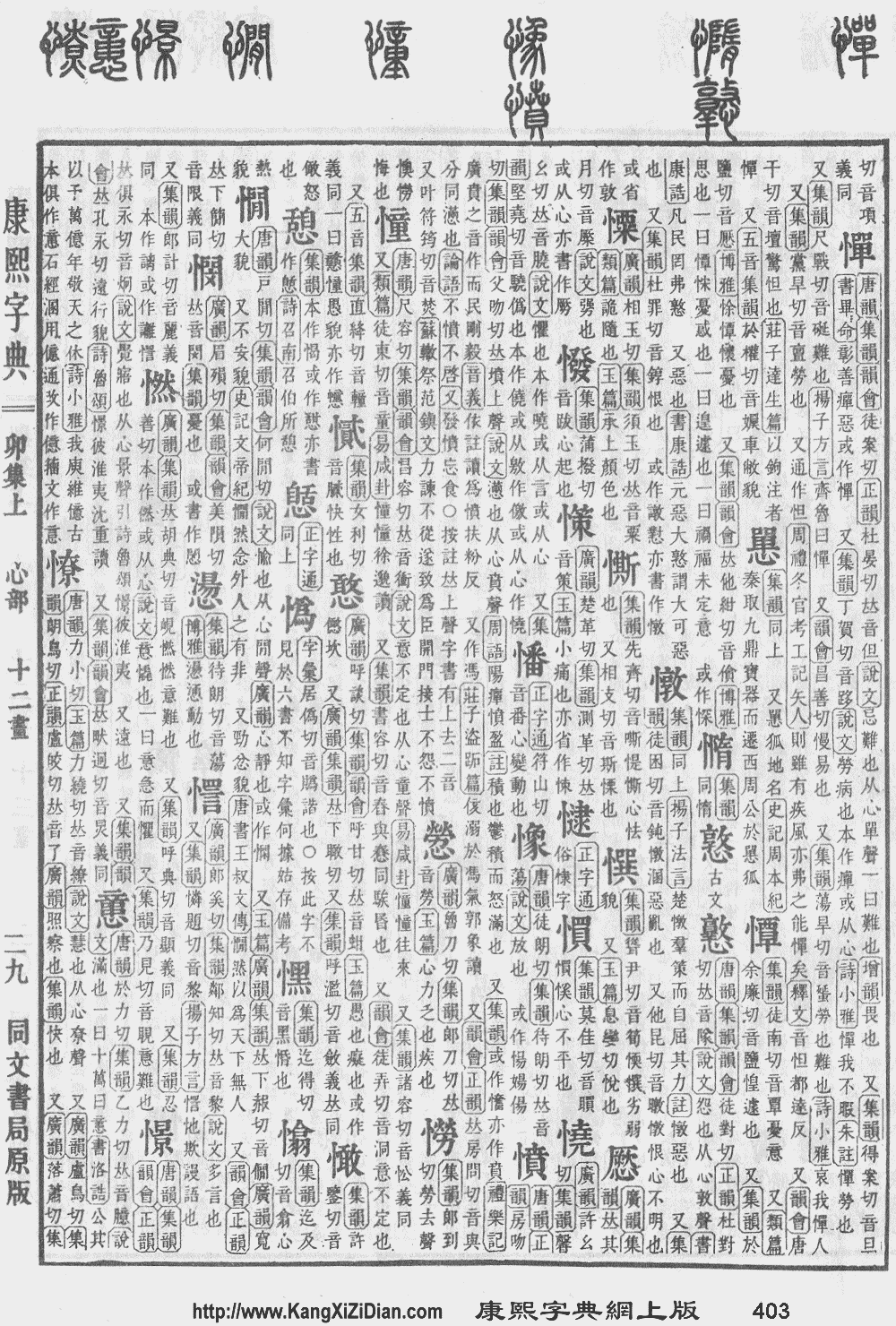
- Kangxi Dictionary: page 403, character 26
- Dai Kanwa Jiten: character 11246
- Dae Jaweon: page 743, character 28
- Hanyu Da Zidian (first edition): volume 4, page 2350, character 11
- Unihan data for U+61A9
Chinese
| trad. | 憩 | |
|---|---|---|
| simp. # | 憩 | |
| alternative forms | 憇 | |
Glyph origin
Ideogrammic compound (會意/会意) : abbreviated 恬 (“tranquil”) + 息 (“rest”). There is also the possibility that 憩 is phono-semantic (形聲/形声, OC *kʰrads) , with 𠯑 (OC *ɡroːd) as the phonetic component.
Etymology
Possibly related to 歇 (OC *qʰad) (Wang, 1982).
Pronunciation
Definitions
憩
- (literary) to rest
- 小憩 ― xiǎoqì ― to rest for a bit; to take a breather
- 一心仰望,同心禱祈,相愛共享天憩。 [MSC, trad.]
- From: 1982 [1986], translation by 羅炳良 [Daniel P.L. Law] and 王培英, 樂哉家庭 [Happy the Home When God Is There], in 《生命聖詩》 [Hymns of Life]
- Yīxīn yǎngwàng, tóngxīn dǎoqí, xiāng'ài gòngxiǎng tiān qì. [Pinyin]
- When one their wish and one their prayer And one their heav'nly rest.
一心仰望,同心祷祈,相爱共享天憩。 [MSC, simp.]
References
- “憩”, in 漢語多功能字庫 (Multi-function Chinese Character Database), 香港中文大學 (the Chinese University of Hong Kong), 2014–
Japanese
Korean
Etymology
From Middle Chinese 憩 (MC khjejH).
| Historical readings |
|---|
|
Pronunciation
- (SK Standard/Seoul) IPA(key): [ke̞(ː)]
- Phonetic hangul: [게(ː)]
- Though still prescribed in Standard Korean, most speakers in both Koreas no longer distinguish vowel length.
Vietnamese
Han character
憩: Hán Nôm readings: khệ, khị
- This term needs a translation to English. Please help out and add a translation, then remove the text
{{rfdef}}.
References
This article is issued from Wiktionary. The text is licensed under Creative Commons - Attribution - Sharealike. Additional terms may apply for the media files.