根
| ||||||||
Translingual
| Stroke order | |||
|---|---|---|---|
 | |||
Han character
根 (Kangxi radical 75, 木+6, 10 strokes, cangjie input 木日女 (DAV), four-corner 47932, composition ⿰木艮)
Derived characters
- 𬓓 𬕤 𦶠 𡏒 𬻩
References
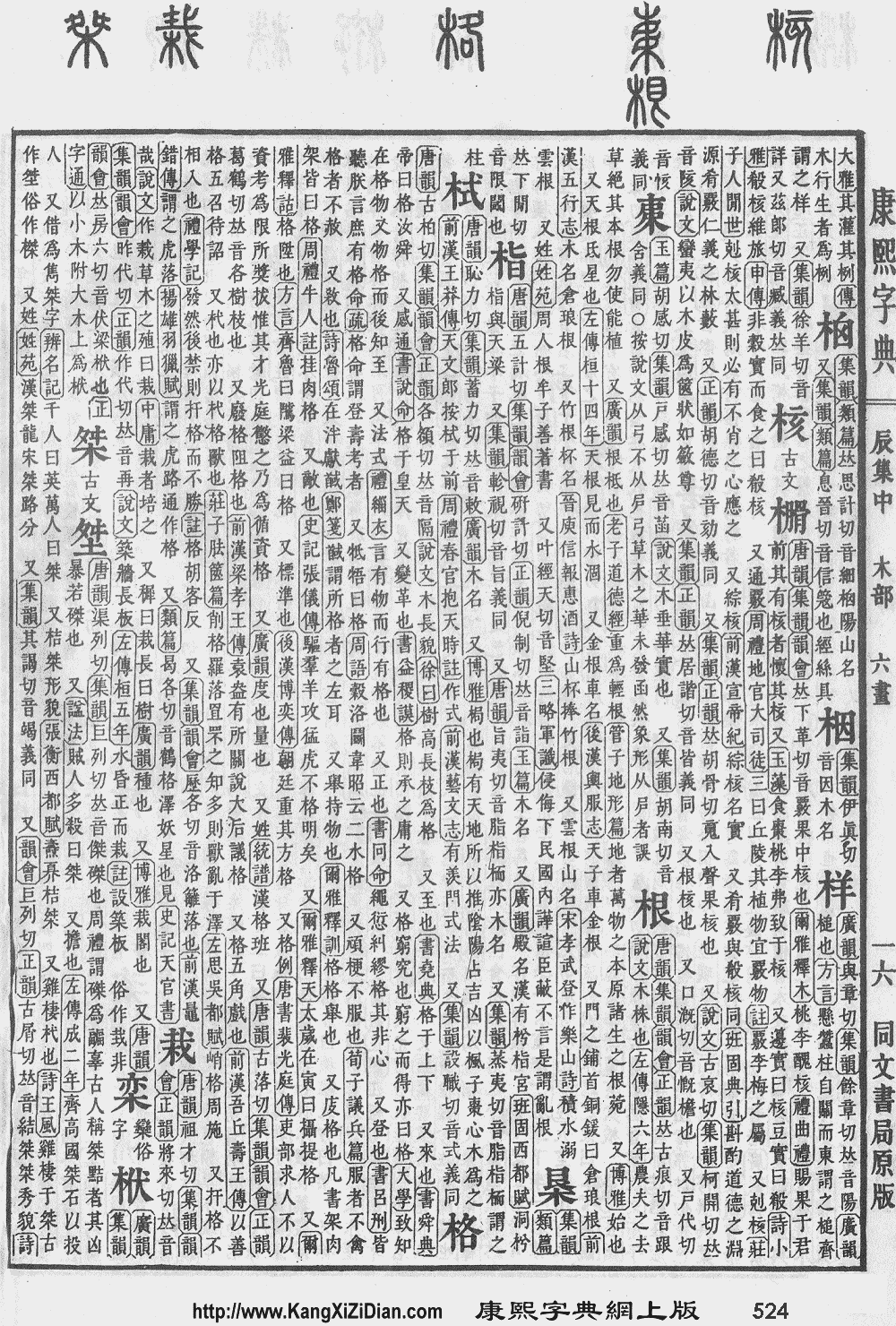
- Kangxi Dictionary: page 524, character 7
- Dai Kanwa Jiten: character 14745
- Dae Jaweon: page 912, character 9
- Hanyu Da Zidian (first edition): volume 2, page 1208, character 2
- Unihan data for U+6839
Chinese
| simp. and trad. |
根 | |
|---|---|---|
Glyph origin
| Old Chinese | |
|---|---|
| 艱 | *krɯːn |
| 齦 | *kʰrɯːnʔ, *kʰɯːnʔ, *ŋɯn |
| 眼 | *ŋrɯːnʔ |
| 蛝 | *ɡrɯːn |
| 限 | *ɡrɯːnʔ |
| 硍 | *ɡrɯːnʔ |
| 豤 | *kʰɯːnʔ, *kʰɯːnʔ, *kʰuːn |
| 詪 | *ɡlɯːnʔ, *kɯːnʔ, *kɯːns |
| 根 | *kɯːn |
| 跟 | *kɯːn |
| 珢 | *kɯːn, *kɯːns, *ŋrɯn |
| 艮 | *kɯːns |
| 茛 | *kɯːns |
| 墾 | *kʰɯːnʔ |
| 懇 | *kʰɯːnʔ |
| 垠 | *ŋɯːn, *ŋrɯn, *ŋɯn |
| 泿 | *ŋɯːn, *ŋrɯn |
| 痕 | *ɡɯːn |
| 拫 | *ɡɯːn |
| 鞎 | *ɡɯːn |
| 很 | *ɡɯːnʔ |
| 恨 | *ɡɯːns |
| 銀 | *ŋrɯn |
| 檭 | *ŋrɯn |
Phono-semantic compound (形聲/形声, OC *kɯːn) : semantic 木 + phonetic 艮 (OC *kɯːns).
Etymology
Possibly of Austroasiatic origin (Schuessler, 2007). Compare Proto-Mon-Khmer *(d)kər (“tree, plant”) (whence Proto-Vietic *kəl > Vietnamese cây, Muong câl), *d₂gəl ~ d₂g(əə)l (“trunk; stump”) (whence Khmer គល់ (kŭəl, “stump; floating log”), Proto-Monic *t(l)gəl (“stump”)).
Alternatively, Smith (2011) proposes a derivation from 荄 (OC *kɯː, “grassroot”) with redundant nominalizing suffix *-n. See 荄 for more.
Pronunciation
Definitions
根
- (botany) root (Classifier: 條/条 m)
- base; basis; foundation
- family root; ancestors
- (figurative) descendant; offspring
- source; origin
- (figurative) penis (Classifier: 條/条 m)
- (Buddhism) indriya; faculty; spiritual faculty
- (arithmetic) root
- 均方根 ― jūnfānggēn ― root mean square
- (mathematics) solution to an algebraic equation (Classifier: 個/个 m)
- (chemistry) radical
- (computing) root
- completely; from the source
- Classifier for long, slender objects, such as cigarettes, fingers, candles, ropes, and guitar strings. ⇒ all nouns using this classifier
Synonyms
- (descendant):
- 下輩/下辈 (xiàbèi)
- 仔孫/仔孙 (zai2 syun1) (Cantonese)
- 兒孫/儿孙 (érsūn)
- 囝孫/囝孙 (Min)
- 子孫/子孙 (zǐsūn)
- 子胤 (zǐyìn) (literary)
- 孫子/孙子 (literary)
- 後人/后人 (hòurén)
- 後代/后代 (hòudài)
- 後嗣/后嗣 (hòusì)
- 後生/后生 (hòushēng) (literary)
- 後裔/后裔 (hòuyì)
- 緒餘/绪余 (xùyú) (literary)
- 苗 (miáo) (literary, or in compounds)
- 遺裔/遗裔 (yíyì) (literary)
- 餘緒/余绪 (yúxù) (literary)
- (source):
- 來源/来源 (láiyuán)
- 出處/出处 (chūchù)
- 基本 (jīběn)
- 大本 (dàběn) (literary)
- 本源 (běnyuán)
- 根本 (gēnběn)
- 根源 (gēnyuán)
- 根頭/根头 (Xiamen Hokkien, Zhangzhou Hokkien)
- 泉源 (quányuán)
- 淵源/渊源 (yuānyuán)
- 源 (yuán) (literary, or in compounds)
- 源泉 (yuánquán) (figurative)
- 源頭/源头 (yuántóu) (figurative)
- 濫觴/滥觞 (lànshāng) (literary)
- 由來/由来 (yóulái)
- 起源 (qǐyuán)
- (arithmetic root): 方根 (fānggēn)
- (classifier):
Compounds
- 主根 (zhǔgēn)
- 二年根
- 二根
- 五根
- 側根/侧根
- 假根
- 六根
- 公根
- 六根清淨/六根清净
- 刨根 (páogēn)
- 刨根問底/刨根问底 (páogēnwèndǐ)
- 刨根究底 (páogēnjiūdǐ)
- 剗草除根/刬草除根
- 剪草除根
- 劣根性 (liègēnxìng)
- 卑爾根/卑尔根 (Bēi'ěrgēn)
- 叢塊根/丛块根
- 吐根
- 同根
- 吐根鹼/吐根碱
- 呼吸根
- 命根 (mìnggēn)
- 命根子 (mìnggēnzi)
- 咬定牙根
- 咬舌根
- 咬菜根
- 善根 (shàngēn)
- 嚼舌根
- 嚼菜根
- 土長根生/土长根生
- 城根
- 埋根
- 培根 (péigēn)
- 培根論/培根论
- 塊根/块根 (kuàigēn)
- 墊根兒/垫根儿
- 墊舌根/垫舌根
- 壓根兒/压根儿
- 大根腳/大根脚
- 娼根
- 存根 (cúngēn)
- 字根
- 孽根
- 安根子
- 宿根
- 密西根州
- 密西根湖
- 尋根/寻根 (xúngēn)
- 尋根問底/寻根问底
- 尋根究底/寻根究底 (xúngēnjiūdǐ)
- 屋根
- 山打根 (Shāndǎgēn)
- 山根 (shāngēn)
- 山豆根 (shāndòugēn)
- 平方根 (píngfānggēn)
- 底根兒/底根儿
- 引繩批根/引绳批根
- 引繩排根/引绳排根
- 性根
- 意根
- 慧根 (huìgēn)
- 扎根 (zhāgēn)
- 拔樹尋根/拔树寻根
- 挖牆根/挖墙根
- 挖老根
- 掌根
- 提根兒/提根儿
- 搜根剔齒/搜根剔齿
- 搜根問底/搜根问底
- 搜根究底
- 斬草除根/斩草除根 (zhǎncǎochúgēn)
- 斷根/断根 (duàngēn)
- 斷根絕種/断根绝种
- 方根 (fānggēn)
- 本根
- 板根
- 根兒/根儿 (gēnr)
- 根兒底下/根儿底下
- 根刷
- 根勘
- 根原
- 根問/根问
- 根嗣
- 根器
- 根基 (gēnjī)
- 根壓/根压
- 根壯葉茂/根壮叶茂
- 根子 (gēnzi)
- 根尋/根寻
- 根底 (gēndǐ)
- 根式 (gēnshì)
- 根性 (gēnxìng)
- 根情
- 根指數/根指数
- 根插
- 根據/根据 (gēnjù)
- 根據地/根据地 (gēnjùdì)
- 根數/根数 (gēnshù)
- 根本 (gēnběn)
- 根本法 (gēnběnfǎ)
- 根朽枝枯
- 根柢 (gēndǐ)
- 根株
- 根椽片瓦
- 根氣/根气
- 根治 (gēnzhì)
- 根深固本
- 根深柢固
- 根深蒂固 (gēnshēndìgù)
- 根深葉茂/根深叶茂
- 根源 (gēnyuán)
- 根特
- 根狀莖/根状茎
- 根生土長/根生土长
- 根由 (gēnyóu)
- 根瘤 (gēnliú)
- 根瘤菌 (gēnliújūn)
- 根究 (gēnjiū)
- 根管治療/根管治疗 (gēnguǎn zhìliáo)
- 根系
- 根絆/根绊
- 根絕/根绝 (gēnjué)
- 根緣/根缘
- 根腳/根脚 (gēnjiǎo)
- 根芽
- 根苗 (gēnmiáo)
- 根莖/根茎 (gēnjīng)
- 根菜類/根菜类 (gēncàilèi)
- 根蒂
- 根蘗繁殖
- 根號/根号 (gēnhào)
- 根詞/根词
- 根部
- 根除 (gēnchú)
- 根音
- 根頭/根头
- 業根/业根
- 槃根錯節/槃根错节 (pángēncuòjié)
- 樹倒根摧/树倒根摧
- 樹根/树根 (shùgēn)
- 歸根/归根 (guīgēn)
- 歸根究柢/归根究柢 (guīgēnjiūdǐ)
- 歸根結柢/归根结柢 (guīgēnjiédǐ)
- 氣根/气根 (qìgēn)
- 水根
- 沒根基/没根基
- 沒根藤/没根藤
- 海蔥根/海葱根
- 混嚼舌根
- 深根固本 (shēngēngùběn)
- 深根固柢
- 深根固蒂
- 游談無根/游谈无根
- 澆梅根/浇梅根
- 烏頭根/乌头根
- 無根水/无根水
- 無根無絆/无根无绊
- 無根無蒂/无根无蒂
- 無理根/无理根
- 牆根/墙根 (qiánggēn)
- 片瓦根椽
- 牙根 (yágēn)
- 牙根癢癢/牙根痒痒
- 牙根管
- 獃根
- 獃根子
- 獨根孤種/独根孤种
- 玄根
- 球根 (qiúgēn)
- 球根植物
- 瓦根基 (Wǎgēnjī)
- 甜根子草
- 生根 (shēnggēn)
- 留根
- 病根 (bìnggēn)
- 病根兒/病根儿
- 百脈根/百脉根
- 盤根問底/盘根问底
- 盤根錯節/盘根错节 (pángēncuòjié)
- 直根 (zhígēn)
- 票根 (piàogēn)
- 禍根/祸根 (huògēn)
- 窮根尋葉/穷根寻叶
- 窮根究底/穷根究底 (qiónggēnjiūdǐ)
- 立方根 (lìfānggēn)
- 箱根 (Xiānggēn)
- 結根/结根
- 翦草除根
- 老樹盤根/老树盘根
- 老花根
- 耳根 (ěrgēn)
- 耳根子
- 耳根廂/耳根厢
- 耳根清淨/耳根清净
- 耳根軟/耳根软 (ěrgēnruǎn)
- 聽牆根/听墙根
- 胚根
- 胚根鞘
- 臊根
- 舌根 (shégēn)
- 舌根音
- 舌根鼻音
- 花根
- 花根本豔/花根本艳
- 芝草無根/芝草无根
- 茅根 (máogēn)
- 草根大使
- 菌根
- 菜根
- 菜根譚/菜根谭
- 落地生根 (luòdìshēnggēn)
- 葛根 (gégēn)
- 落葉歸根/落叶归根 (luòyèguīgēn)
- 葉落歸根/叶落归根 (yèluòguīgēn)
- 蘆根/芦根 (lúgēn)
- 蘭根白芷/兰根白芷
- 見肉生根/见肉生根
- 詞根/词根 (cígēn)
- 語根/语根 (yǔgēn)
- 起根兒/起根儿
- 起根發腳/起根发脚
- 起根立地
- 跌根頭/跌根头
- 踏地知根
- 軸根系/轴根系
- 辣菜根子
- 追根究柢 (zhuīgēnjiūdǐ)
- 連根拔掉/连根拔掉
- 連根拔起/连根拔起 (liángēnbáqǐ)
- 道根
- 都根主兒/都根主儿
- 酸根
- 重根 (chónggēn)
- 鈍根/钝根
- 銀根/银根 (yíngēn)
- 錯節盤根/错节盘根
- 阿根廷 (Āgēntíng)
- 除根 (chúgēn)
- 雲根/云根
- 雷根主義/雷根主义 (léigēnzhǔyì)
- 食用根
- 高根 (gāogēn)
- 鬚根/须根
- 鼻根 (bígēn)
- 齒根/齿根 (chǐgēn)
- 龍膽根/龙胆根
References
- “根”, in 漢語多功能字庫 (Multi-function Chinese Character Database), 香港中文大學 (the Chinese University of Hong Kong), 2014–
Japanese
Compounds
Etymology 1
| Kanji in this term |
|---|
| 根 |
| ね Grade: 3 |
| kun’yomi |
From Old Japanese. First cited to the Kojiki of 712.[1]
Noun
根 • (ne)
Etymology 2
| Kanji in this term |
|---|
| 根 |
| こん Grade: 3 |
| on’yomi |
From Middle Chinese 根 (MC kon). First cited in Japanese contexts in the 法華義疏 (Hokke Gisho) dated to 615,[1] a commentary on the Buddhist Lotus Sutra that was written in Classical Chinese.
Pronunciation
Noun
根 • (kon)
- [from 615] (Buddhism) the original motive force leading to perception of something by the five senses or by thought
- [from 1477] genitals; more commonly, the male genitals
- [from 1790] perseverance, patience
- Synonym: 根気 (konki)
- [from 1889] (mathematics) a root, such as a square root (calque of English root)
References
- “根”, in 日本国語大辞典 (Nihon Kokugo Daijiten, “Nihon Kokugo Daijiten”) (in Japanese), concise edition, Tōkyō: Shogakukan, 2000
- Matsumura, Akira, editor (2006), 大辞林 [Daijirin] (in Japanese), Third edition, Tōkyō: Sanseidō, →ISBN
- NHK Broadcasting Culture Research Institute, editor (1998), NHK日本語発音アクセント辞典 [NHK Japanese Pronunciation Accent Dictionary] (in Japanese), Tōkyō: NHK Publishing, →ISBN
- Kindaichi, Kyōsuke et al., editors (1997), 新明解国語辞典 [Shin Meikai Kokugo Jiten] (in Japanese), Fifth edition, Tōkyō: Sanseidō, →ISBN
Korean
Compounds
- 根源 (근원, geunwon)