桃
| ||||||||
Translingual
Han character
桃 (Kangxi radical 75, 木+6, 10 strokes, cangjie input 木中一人 (DLMO), four-corner 42913, composition ⿰木兆)
Derived characters
- 𥰜
References
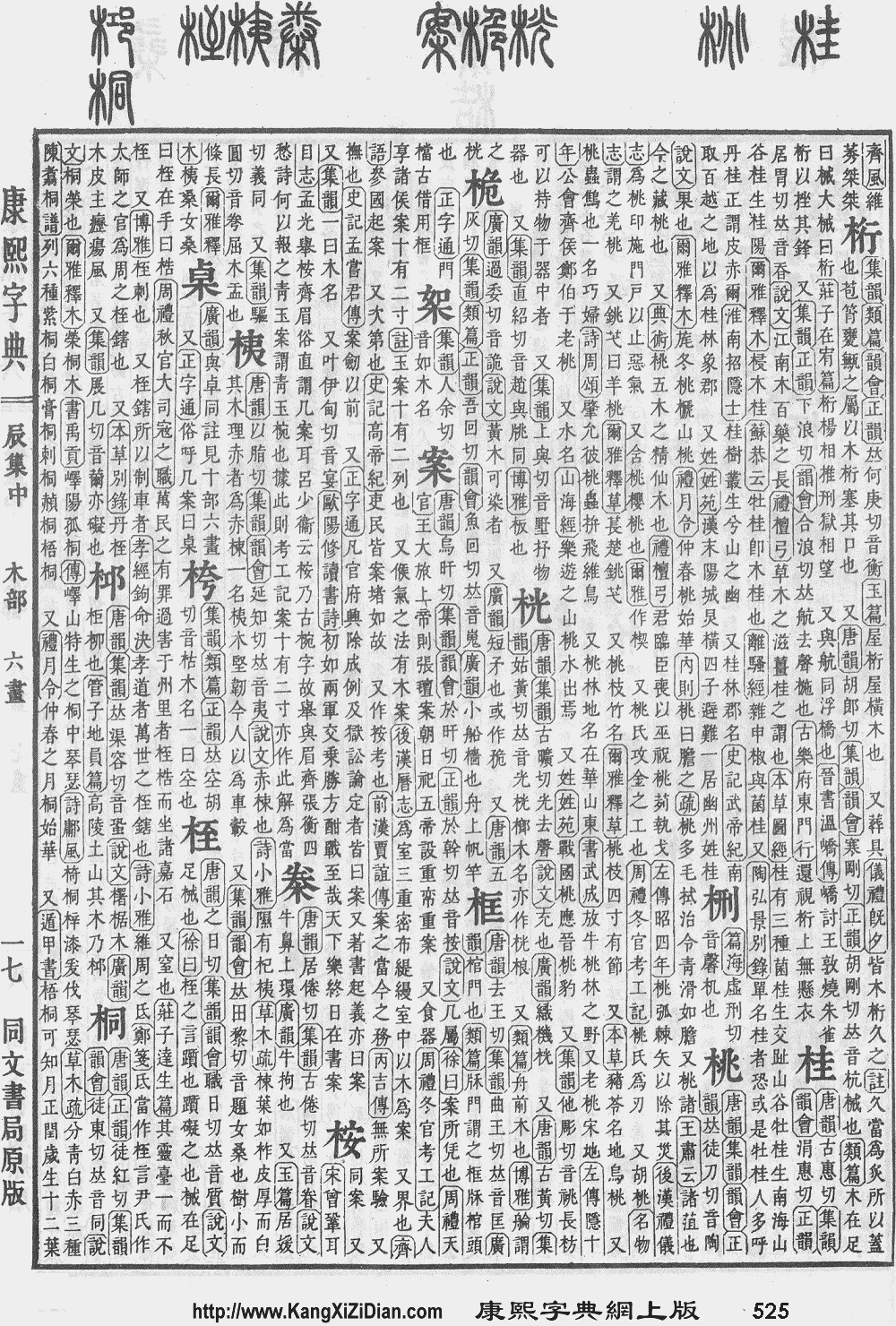
- Kangxi Dictionary: page 525, character 4
- Dai Kanwa Jiten: character 14757
- Dae Jaweon: page 913, character 8
- Hanyu Da Zidian (first edition): volume 2, page 1202, character 7
- Unihan data for U+6843
Chinese
| simp. and trad. |
桃 | |
|---|---|---|
Glyph origin
| Historical forms of the character 桃 | ||
|---|---|---|
| Warring States | Shuowen Jiezi (compiled in Han) | Liushutong (compiled in Ming) |
| Chu slip and silk script | Small seal script | Transcribed ancient scripts |
 |
 |
 |
| Old Chinese | |
|---|---|
| 挑 | *l̥ʰaːw, *l̥ʰeːw, *l'eːwʔ |
| 洮 | *l̥ʰaːw, *l'aːw, *lew |
| 桃 | *l'aːw |
| 逃 | *l'aːw |
| 咷 | *l'aːw, *l̥ʰeːws |
| 鼗 | *l'aːw |
| 鞉 | *l'aːw |
| 駣 | *l'aːw, *l'aːwʔ, *l'aːws, *l'ewʔ |
| 𣂁 | *sl̥ʰew |
| 脁 | *l̥ʰews |
| 晁 | *l'ew |
| 兆 | *l'ewʔ |
| 旐 | *l'ewʔ |
| 狣 | *l'ewʔ |
| 鮡 | *l'ewʔ, *l'eːw |
| 垗 | *l'ewʔ |
| 姚 | *lew |
| 珧 | *lew |
| 銚 | *lew, *l̥ʰeːw, *l'eːws |
| 恌 | *lew, *l̥ʰeːw |
| 烑 | *lew |
| 餆 | *lew |
| 筄 | *lews |
| 艞 | *lews |
| 佻 | *l̥ʰeːw, *l'eːw |
| 祧 | *l̥ʰeːw |
| 朓 | *l̥ʰeːw, *l̥ʰeːwʔ |
| 庣 | *l̥ʰeːw |
| 趒 | *l̥ʰeːw, *l̥ʰeːws, *l'eːw |
| 聎 | *l̥ʰeːw |
| 眺 | *l̥ʰeːws |
| 覜 | *l̥ʰeːws |
| 頫 | *l̥ʰeːws, *poʔ |
| 絩 | *l̥ʰeːws |
| 跳 | *l̥ʰeːws, *l'eːw |
| 窕 | *l'eːwʔ |
| 誂 | *l'eːwʔ |
Phono-semantic compound (形聲/形声, OC *l'aːw) : semantic 木 (“tree”) + phonetic 兆 (OC *l'ewʔ).
Etymology
Possibly borrowed from the linguistic ancestor of Proto-Hmong-Mien *glaau³ᴬ (Bodman 1980, Schuessler, 2007). The oldest-known domesticated peach stones so far have been excavated in Zhejiang, east of the Central Plain cradle of Chinese civilization.
Pronunciation
Definitions
桃
- peach tree
- 桃花 ― táohuā ― peach flower
- 桃之夭夭、灼灼其華。
- From: The Classic of Poetry, c. 11th – 7th centuries BCE, translated based on James Legge's version
- Táo zhī yāoyāo, zhuózhuó qí huá.
Zhī zǐ yúguī, yí qí shìjiā. [Pinyin] - Young and tender is the peach tree; bright and radiant shall its blossoms be.
Going to her future home is this young lady; may her house and chamber well-ordered be!
之子于歸、宜其室家。 [Classical Chinese, trad.]
桃之夭夭、灼灼其华。
之子于归、宜其室家。 [Classical Chinese, simp.]
- peach (fruit)
- peach-shaped object
- birthday
- (Xiamen and Zhangzhou Hokkien) immature poultry or livestock
- walnut
- a surname: Tao
Synonyms
- (peach):
- (walnut):
Compounds
- 世外桃源 (shìwàitáoyuán)
- 人面桃花 (rénmiàntáohuā)
- 仙桃 (xiāntáo)
- 僵李代桃
- 公門桃李/公门桃李
- 凡桃俗李
- 分桃 (fēntáo)
- 命帶桃花/命带桃花
- 園有桃/园有桃
- 土偶桃梗
- 壽桃/寿桃 (shòutáo)
- 夭桃穠李/夭桃秾李
- 夭桃襛李/夭桃𰳺李
- 夾竹桃/夹竹桃
- 妖桃
- 小胡桃 (xiǎohútáo)
- 山核桃
- 山櫻桃/山樱桃
- 扁桃 (biǎntáo)
- 扁桃腺 (biǎntáoxiàn)
- 扁桃腺炎 (biǎntáoxiàn yán)
- 打桃
- 打櫻桃/打樱桃
- 投桃報李/投桃报李 (tóutáobàolǐ)
- 斷袖分桃/断袖分桃
- 方桃譬李
- 月桃 (yuètáo)
- 木桃 (mùtáo)
- 李代桃僵 (lǐdàitáojiāng)
- 杏臉桃腮/杏脸桃腮
- 柳綠桃紅/柳绿桃红
- 桃之夭夭
- 桃人
- 桃仁 (táorén)
- 桃來李答/桃来李答
- 桃園盟/桃园盟
- 桃園結義/桃园结义 (táoyuán-jiéyì)
- 桃坪 (Táopíng)
- 桃夭 (táoyāo)
- 桃太郎 (Táotàiláng)
- 桃子 (táozi)
- 桃弧棘矢
- 桃月 (Táoyuè)
- 桃李 (táolǐ)
- 桃杌 (táowù)
- 桃李之教
- 桃李滿門/桃李满门 (táolǐmǎnmén)
- 桃李爭妍/桃李争妍
- 桃李爭輝/桃李争辉
- 桃李門牆/桃李门墙
- 桃柳爭妍/桃柳争妍
- 核桃
- 桃核雕
- 桃汛
- 桃源 (táoyuán)
- 桃源圖/桃源图
- 桃源行
- 桃灼呈祥
- 桃竹
- 桃符
- 桃紅/桃红 (táohóng)
- 桃紅柳綠/桃红柳绿
- 桃羞杏讓/桃羞杏让
- 桃腮杏臉/桃腮杏脸
- 桃膠/桃胶 (táojiāo)
- 桃色 (táosè)
- 桃色新聞/桃色新闻
- 桃色案件
- 桃色糾紛/桃色纠纷
- 桃花 (táohuā)
- 桃花人面
- 桃花劫 (táohuājié)
- 桃花妝/桃花妆
- 桃花山 (Táohuāshān)
- 桃花心木 (táohuāxīnmù)
- 桃花扇
- 桃花星
- 桃花水
- 桃花汛 (táohuāxùn)
- 桃花源 (táohuāyuán)
- 桃花源記/桃花源记
- 桃花源詩/桃花源诗
- 桃花眼
- 桃花紙/桃花纸
- 桃花薄命
- 桃花運/桃花运 (táohuāyùn)
- 桃花過渡/桃花过渡
- 桃花面
- 桃葉歌/桃叶歌
- 桃葉渡/桃叶渡
- 桃葉珊瑚/桃叶珊瑚
- 桃蚜
- 桃酥 (táosū)
- 棉桃 (miántáo)
- 楊桃/杨桃 (yángtáo)
- 櫻桃/樱桃 (yīngtáo)
- 櫻桃宴/樱桃宴
- 櫻桃小口/樱桃小口
- 毛桃
- 水蜜桃 (shuǐmìtáo)
- 油桃 (yóutáo)
- 濃桃豔李/浓桃艳李
- 獼猴桃/猕猴桃 (míhóutáo)
- 王母蟠桃
- 碧桃花下
- 紅桃/红桃 (hóngtáo)
- 羊桃 (yángtáo)
- 胡桃 (hútáo)
- 胡桃夾子/胡桃夹子 (hútáojiāzi)
- 胡桃木
- 胡桃科
- 胡桃鉗/胡桃钳
- 色豔桃李/色艳桃李
- 葦戟桃杖/苇戟桃杖
- 葡桃 (pútáo)
- 蒲桃 (pútáo)
- 蟠桃 (pántáo)
- 蟠桃會/蟠桃会
- 豔如桃李/艳如桃李
- 金絲桃/金丝桃
- 門牆桃李/门墙桃李
- 面如桃花
- 餘桃啗君/余桃啗君
- 鬼畫桃符/鬼画桃符
- 麻核桃
Descendants
- → Thai: ท้อ (tɔ́ɔ)
Japanese
Readings
Compounds
Etymology
| Kanji in this term |
|---|
| 桃 |
| もも Grade: S |
| kun’yomi |
From Old Japanese, from Proto-Japonic *momo. Mentioned in the Nihon Shoki of 720.[1]
Brought to Japan in antiquity, with pits found in prehistoric sites from the Yayoi period, 300 BCE - 300 CE. Mentioned as a food in documents from the Nara and Heian periods.[1]
Ultimate derivation unknown. Theories include the following.
- Possibly derived originally from a reduplication of 実 (Old Japanese mu, modern Japanese mi, “fruit”), from the way that peaches often grow in clusters. However, the vowel shift seems unlikely given regular Japanese phonetic shifts. In addition, most reduplicated terms in Japanese have the 頭高型 (atamadaka-gata) pitch accent pattern, starting high and falling, which differs from the 平板型 (heiban-gata) pitch accent pattern of this term.
- Possibly cognate with Old Japanese 百 (momo, “hundred; lots”). However, this also has the 頭高型 (atamadaka-gata) pitch accent pattern.
- Possibly a reduplication of 毛 (mo, “hair”), from the way that peaches are hairy. The term is spelled as 毛毛 in some ancient documents. However, 毛 was commonly used as man'yōgana for its phonetic value, in which cases its original Chinese meaning of hair is usually ignored.
None of the above possibilities seems very compelling. Given the archaeological evidence, this term probably originated before the Japanese ancestor population migrated to the Japanese archipelago.
Possibly related to 梅 (ancient mume, modern ume, “Japanese apricot, Japanese plum”).
Usage notes
As with many terms that name organisms, this term is often spelled in katakana, especially in biological contexts (where katakana is customary), as モモ.
Derived terms
- 桃色 (momoiro): pink
- 桃色鸚哥 (momoiro inko): “pink parakeet” → Eolophus roseicapillus: galah, rose-breasted cockatoo
- 桃色遊戯 (momoiro yūgi): “pink playing” → sex play
- 桃尻 (momojiri): “peach butt” → from the way that the end of a peach is often pointy, and thus difficult to place stably: somebody who is bad at horse-riding; a fidgety, restless person
- 桃園 (momozono): a peach orchard
- 桃割れ (momo ware): “split peach” → a hairstyle of Meiji and Taisho era, featuring a bun resembling a halved peach
- 桃の花の香り (momo no hana no kaori): the fragrance of peach blossoms
Idioms
- 桃栗三年柿八年 (momo kuri san nen kaki hachi nen): “peach and chestnut take three years [to bear fruit], persimmons take eight” → it often takes time to bear the fruit of one's actions
Descendants
- >? Ainu: モマ (moma, “Japanese peach, Japanese apricot”)
References
- “桃”, in 日本国語大辞典 (Nihon Kokugo Daijiten, “Nihon Kokugo Daijiten”) (in Japanese), concise edition, Tōkyō: Shogakukan, 2000
- Matsumura, Akira, editor (2006), 大辞林 [Daijirin] (in Japanese), Third edition, Tōkyō: Sanseidō, →ISBN
- NHK Broadcasting Culture Research Institute, editor (1998), NHK日本語発音アクセント辞典 [NHK Japanese Pronunciation Accent Dictionary] (in Japanese), Tōkyō: NHK Publishing, →ISBN
Korean
Okinawan
Etymology
| Kanji in this term |
|---|
| 桃 |
| むむ Grade: S |
| kun’yomi |
From Proto-Ryukyuan *momo, from Proto-Japonic *momo. Cognate with Japanese 桃 (momo).