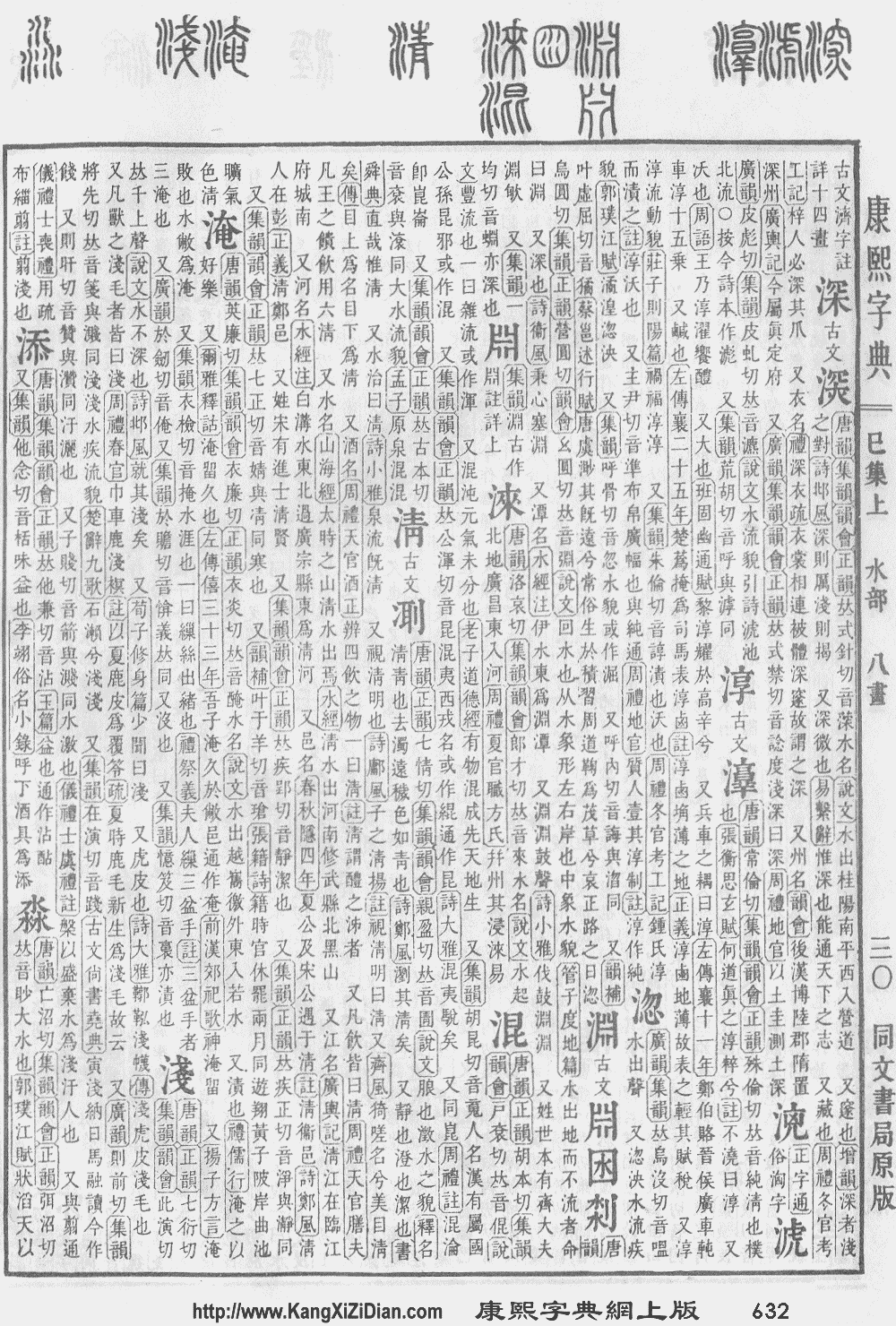
淹

淹 U+6DF9, 淹
CJK UNIFIED IDEOGRAPH-6DF9
← 淸
[U+6DF8]
CJK Unified Ideographs 淺 →
[U+6DFA]
淹 U+2F90E, 淹
CJK COMPATIBILITY IDEOGRAPH-2F90E
← 𣻑
[U+2F90D]
CJK Compatibility Ideographs Supplement 潮 →
[U+2F90F]

Translingual

Han character

淹 (Kangxi radical 85, 水+8, 11 strokes, cangjie input 水大中山 (EKLU), four-corner 34116, composition ⿰氵奄)

References

Chinese

trad. 淹
simp. # 淹
alternative forms 淊

Glyph origin

Pronunciation


Note:
  • im - vernacular;
  • iam - literary.

    Rime
    Character 淹 淹
    Reading # 1/2 2/2
    Initial (聲) 影 (34) 影 (34)
    Final (韻) 鹽 (154) 嚴 (145)
    Tone (調) Level (Ø) Departing (H)
    Openness (開合) Open Open
    Division (等) III III
    Fanqie 央炎切 於劔切
    Baxter 'jem 'jaemH
    Reconstructions
    Zhengzhang
    Shangfang
    /ʔˠiᴇm/ /ʔɨɐmH/
    Pan
    Wuyun
    /ʔᵚiɛm/ /ʔiɐmH/
    Shao
    Rongfen
    /ʔiæm/ /ʔiɐmH/
    Edwin
    Pulleyblank
    /ʔjiam/ /ʔɨamH/
    Li
    Rong
    /ʔjɛm/ /ʔiɐmH/
    Wang
    Li
    /ĭɛm/ /ĭɐmH/
    Bernard
    Karlgren
    /ʔi̯ɛm/ /ʔi̯ɐmH/
    Expected
    Mandarin
    Reflex
    yān yàn
    Expected
    Cantonese
    Reflex
    jim1 jim3
    Baxter–Sagart system 1.1 (2014)
    Character 淹
    Reading # 1/1
    Modern
    Beijing
    (Pinyin)
    yān
    Middle
    Chinese
    ‹ ʔjem ›
    Old
    Chinese
    /*ʔ(r)om/
    English submerge, soak

    Notes for Old Chinese notations in the Baxter–Sagart system:

    * Parentheses "()" indicate uncertain presence;
    * Square brackets "[]" indicate uncertain identity, e.g. *[t] as coda may in fact be *-t or *-p;
    * Angle brackets "<>" indicate infix;
    * Hyphen "-" indicates morpheme boundary;

    * Period "." indicates syllable boundary.
    Zhengzhang system (2003)
    Character 淹 淹 淹 淹
    Reading # 1/4 2/4 3/4 4/4
    No. 14336 14338 14352 14354
    Phonetic
    component
    奄 奄 奄 奄
    Rime
    group
    談 談 談 談
    Rime
    subdivision
    3 3 3 3
    Corresponding
    MC rime
    𤟟 淹 醃
    Old
    Chinese
    /*qroːm/ /*qrom/ /*qom/ /*qoms/
    Notes 手冊作淊今字 原列梵韻依王韻改釅

    Definitions

    淹

    1. to soak; to flood; to drown; to submerge
    2. (of skin) to be tingling from sweat
    3. (literary) wide; deep; thorough
    4. (literary) to stay; to stop over; to be detained
    5. (literary) to delay; to take a long time
    6. (literary) slow; sluggish

    Compounds

    • 悶淹淹/闷淹淹
    • 故淹珠玉
    • 江淹夢筆/江淹梦笔
    • 江淹夢錦/江淹梦锦
    • 江淹才盡/江淹才尽
    • 淹博
    • 淹宿
    • 淹恤
    • 淹旬曠月/淹旬旷月
    • 淹晷
    • 淹月
    • 淹死 (yānsǐ)
    • 淹殺/淹杀
    • 淹水 (yānshuǐ)
    • 淹沒/淹没 (yānmò)
    • 淹沉
    • 涵淹
    • 淹淹一息
    • 淹滅/淹灭
    • 淹滯/淹滞
    • 淹潤/淹润
    • 淹灌
    • 淹煎
    • 淹留
    • 淹纏/淹缠
    • 淹識/淹识
    • 淹貫/淹贯
    • 淹踐/淹践
    • 淹通
    • 淹雅

    Japanese

    Kanji

    淹

    (uncommon “Hyōgai” kanji)

    1. dip
    2. soak
    3. immerse
    4. stop
    5. linger

    Readings

    Korean

    Hanja

    淹 • (eom) (hangeul 엄, revised eom, McCune–Reischauer ŏm, Yale em)

    1. This term needs a translation to English. Please help out and add a translation, then remove the text {{rfdef}}.

    Vietnamese

    Han character

    淹: Hán Nôm readings: yêm, êm, im, ươm

    1. This term needs a translation to English. Please help out and add a translation, then remove the text {{rfdef}}.
    This article is issued from Wiktionary. The text is licensed under Creative Commons - Attribution - Sharealike. Additional terms may apply for the media files.