濁
See also: 浊
| ||||||||
Translingual
Han character
濁 (Kangxi radical 85, 水+13, 16 strokes, cangjie input 水田中戈 (EWLI), four-corner 36127, composition ⿰氵蜀)
Derived characters
- 𢹅, 𤅴
Related characters
References
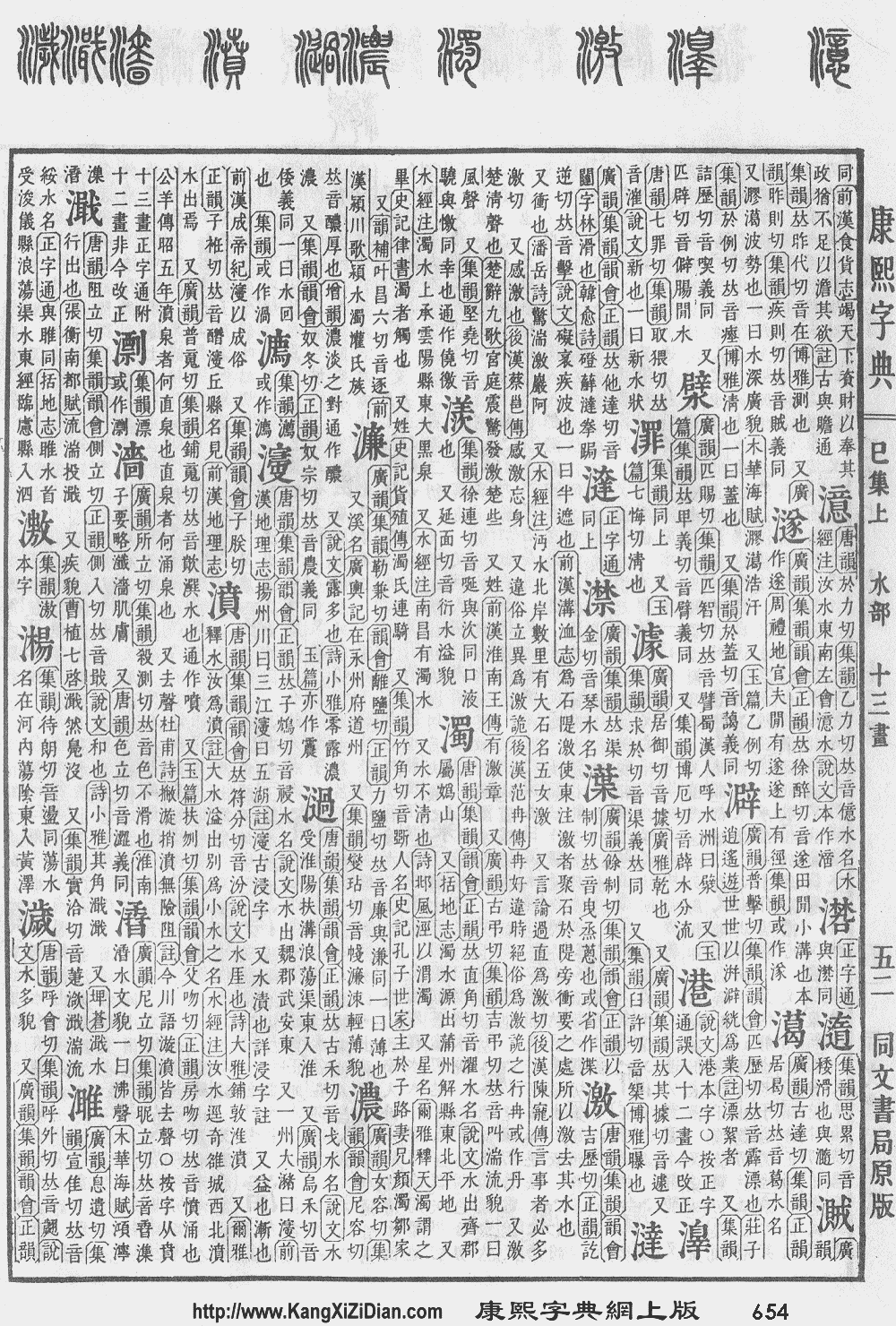
- Kangxi Dictionary: page 654, character 19
- Dai Kanwa Jiten: character 18440
- Dae Jaweon: page 1064, character 16
- Hanyu Da Zidian (first edition): volume 3, page 1758, character 3
- Unihan data for U+6FC1
Chinese
Glyph origin
| Historical forms of the character 濁 | |||
|---|---|---|---|
| Warring States | Shuowen Jiezi (compiled in Han) | Liushutong (compiled in Ming) | |
| Bronze inscriptions | Chu slip and silk script | Small seal script | Transcribed ancient scripts |
 |
 |
 |
 |
Characters in the same phonetic series (蜀) (Zhengzhang, 2003)
| Old Chinese | |
|---|---|
| 襡 | *toːʔ, *toːɡs, *doːʔ, *doːɡ, *djoɡ |
| 噣 | *toːɡs, *tuɡs, *rtoːɡ, *tjoɡ |
| 斣 | *toːɡs |
| 歜 | *sdoːmʔ, *tʰjoɡ |
| 斀 | *rtoːɡ |
| 孎 | *rtoːɡ, *toɡ |
| 濁 | *rdoːɡ |
| 鐲 | *rdoːɡ, *zroːɡ, *djoɡ |
| 鸀 | *rdoːɡ, *tjoɡ |
| 擉 | *sʰroːɡ |
| 獨 | *doːɡ |
| 髑 | *doːɡ |
| 韣 | *doːɡ, *tjoɡ, *djoɡ |
| 斸 | *toɡ |
| 钃 | *toɡ |
| 欘 | *toɡ |
| 躅 | *doɡ |
| 蠋 | *doɡ, *tjoɡ |
| 燭 | *tjoɡ |
| 囑 | *tjoɡ |
| 矚 | *tjoɡ |
| 屬 | *tjoɡ, *djoɡ |
| 属 | *tjoɡ, *djoɡ |
| 蠾 | *tjoɡ, *djoɡ |
| 觸 | *tʰjoɡ |
| 臅 | *tʰjoɡ |
| 觕 | *sʰlaː, *zlaːʔ, *tʰjoɡ |
| 蜀 | *djoɡ |
Phono-semantic compound (形聲/形声, OC *rdoːɡ) : semantic 氵 + phonetic 蜀 (OC *djoɡ).
Pronunciation
Definitions
濁
- muddy; turbid; dirty; filthy
- chaotic; disorderly
- (of voice) deep and thick
- (phonetics, of consonants) voiced
- (Cantonese) to choke; to gag
- (Mainland China Hokkien) miscellaneous and in a jumble; mixed and disorderly
- (Mainland China Hokkien, of food) nutritious but irritating causing sores or causing the start, reoccurrence, or change of an illness
- (Xiamen and Zhangzhou Hokkien) thick; dense; strong (of flavor, etc.)
Synonyms
Dialectal synonyms of 渾 (“muddy; turbid”) [map]
| Variety | Location | Words |
|---|---|---|
| Formal (Written Standard Chinese) | 渾濁, 混濁 | |
| Mandarin | Beijing | 渾 |
| Jinan | 渾 | |
| Xi'an | 溷 | |
| Wuhan | 渾 | |
| Chengdu | 渾 | |
| Yangzhou | 渾 | |
| Hefei | 渾 | |
| Cantonese | Guangzhou | 濁 |
| Hong Kong | 濁 | |
| Yangjiang | 濁 | |
| Gan | Nanchang | 渾 |
| Hakka | Meixian | 渾 |
| Jin | Taiyuan | 溷 |
| Northern Min | Jian'ou | 渾, 濁 |
| Eastern Min | Fuzhou | 渾 |
| Southern Min | Xiamen | 醪, 醪濁 |
| Zhangzhou | 醪 | |
| Chaozhou | 醪 | |
| Haikou | 醪 | |
| Wu | Suzhou | 渾 |
| Wenzhou | 渾 | |
| Xiang | Changsha | 渾 |
| Shuangfeng | 渾 | |
Compounds
- 乳濁液/乳浊液 (rǔzhuóyè)
- 五濁惡世/五浊恶世
- 凡胎濁骨/凡胎浊骨
- 十清九濁/十清九浊
- 惡濁/恶浊 (èzhuó)
- 懸濁液/悬浊液 (xuánzhuóyè)
- 揚清抑濁/扬清抑浊
- 揚清激濁/扬清激浊
- 汙濁/污浊 (wūzhuó)
- 清塵濁水/清尘浊水
- 清渭濁涇/清渭浊泾
- 清濁/清浊 (qīngzhuó)
- 淟濁/淟浊
- 混濁/混浊 (hùnzhuó)
- 清濁同流/清浊同流
- 清聖濁賢/清圣浊贤
- 渾濁/浑浊 (húnzhuó)
- 溷濁/溷浊 (hùnzhuó)
- 濁世/浊世 (zhuóshì)
- 濁母/浊母
- 濁氣/浊气
- 濁水/浊水
- 濁水溪/浊水溪 (Zhuóshuǐxī)
- 濁流/浊流 (zhuóliú)
- 濁涇清渭/浊泾清渭
- 激濁揚清/激浊扬清
- 濁物/浊物
- 濁聲/浊声
- 濁聲母/浊声母
- 濁質凡姿/浊质凡姿
- 濁酒/浊酒 (zhuójiǔ)
- 濁酒粗食/浊酒粗食 (zhuójiǔ cūshí)
- 濁醪/浊醪
- 濁音/浊音 (zhuóyīn)
- 濁骨凡胎/浊骨凡胎
- 白濁/白浊
- 稠濁/稠浊
- 紛濁/纷浊
- 舉世混濁/举世混浊 (jǔshìhǔnzhuó)
- 行濁言清/行浊言清
- 言清行濁/言清行浊
- 貪濁有狀/贪浊有状
Pronunciation
Korean
Etymology
From Middle Chinese 濁 (MC draewk). Recorded as Middle Korean 탁〮 (thák) (Yale: thak) in Hunmong Jahoe (訓蒙字會 / 훈몽자회), 1527.
Compounds
Vietnamese
This article is issued from Wiktionary. The text is licensed under Creative Commons - Attribution - Sharealike. Additional terms may apply for the media files.