理
| ||||||||
| ||||||||
Translingual
| Stroke order | |||
Hong Kong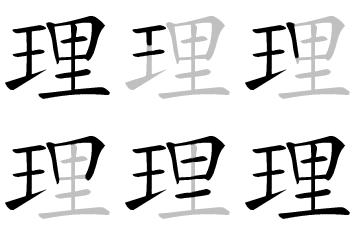 | |||
| Stroke order | |||
Japan  | |||
Han character
| Stroke order | |||
|---|---|---|---|
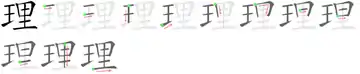 | |||
理 (Kangxi radical 96, 玉+7, 11 strokes, cangjie input 一土田土 (MGWG), four-corner 16114, composition ⿰𤣩里)
Derived characters
- 𨤰 𨤻 𫩆
References
- Kangxi Dictionary: page 733, character 4
- Dai Kanwa Jiten: character 21014
- Dae Jaweon: page 1145, character 1
- Hanyu Da Zidian (first edition): volume 2, page 1115, character 13
- Unihan data for U+7406
- Unihan data for U+F9E4

Bailang
Etymology
From Proto-Sino-Tibetan *b-r-gja. Compare Old Burmese ရျာ (rya).
Chinese
| simp. and trad. |
理 | |
|---|---|---|
Glyph origin
Characters in the same phonetic series (里) (Zhengzhang, 2003)
Phono-semantic compound (形聲/形声, OC *rɯʔ) : semantic 玉 (“jade”) + phonetic 里 (OC *rɯʔ).
According to Shuowen Jiezi, the character meant “to polish jade”. The current meaning “to order, tidy up” may be derived from it.
Etymology
- "to cut jade, to mark out (field boundaries)"
- From Proto-Sino-Tibetan *b-rəj (“draw, mark, boundary”) (STEDT; Schuessler, 2007); cognate with Apatani a-rí (“boundary”), Mizo ri (“boundary, frontier, border”), Drung bri (“to write”), Mru pri (“to scratch”), Tibetan འབྲི ('bri, “to write”), Burmese ရေး (re:, “to write”) & စာရေး (care:, “to write, clerk”). Schuessler glossed its fundamental meaning as "cut in a regular way, divide into equal sections".
- "to regulate"
- STEDT groups this sense "to cut jade, to mark out (field boundaries)"; Schuessler (2007) noted that 理 (lǐ) "to regulate" was often thought to be the same word as 理 (lǐ) "to divide into sections", as the former sense might be derived from the latter.
- "to administer"
- Probably related to 釐 (lí, “to regulate”) (Schuessler, 2007)
- "envoy, jail official, matchmaker"
- Related to 吏 (lì, “official”), 史 (shǐ, “scribe, historian”), and 使 (shì, “ambassador”)
- Possibly the same word as 理 (lǐ) "to administer".
- According to Schuessler (2007), from Austroasiatic; compare Old Khmer re (“to move, change position”) & its derivatives Old Khmer pre (“to send, order, assign, appoint, delegate, use, employ, make”), in turn related to paṃre (“to serve; service, duty; servant, delegate, representative, minister”); with Sino-Tibetan causative *s- corresponding to Khmer causative *p-..
Pronunciation
Definitions
理
- (obsolete) to cut and polish jade
- to put in order; to tidy up
- to manage; to run; to handle
- (usually in negative) to pay attention to; to care about
- (Cantonese) to concern oneself with; to interfere with
- Synonym: 管 (guǎn) (Mandarin)
- texture; grain (of wood)
- 肌理 ― jīlǐ ― skin texture
- reason; logic; truth; science
- natural science
- a surname
- (obsolete) envoy; jail-official; matchmaker
Synonyms
- (to pay attention to):
Dialectal synonyms of 理 (“to be concerned with; to pay attention to”) [map]
| Variety | Location | Words |
|---|---|---|
| Formal (Written Standard Chinese) | 理, 管, 睬, 理睬, 理會 | |
| Mandarin | Beijing | 理, 搭理, 搭咯 |
| Taiwan | 理, 管 | |
| Jinan | 理, 搭理 | |
| Xi'an | 招, 理 | |
| Wuhan | 邇, 理, 睬 | |
| Chengdu | 理, 睬 | |
| Guilin | 理 | |
| Yangzhou | 睬 | |
| Hefei | 理, 睬 | |
| Singapore | 理, 管 | |
| Cantonese | Guangzhou | 睬, 理, 騷 |
| Hong Kong | 睬, 理, 騷 | |
| Yangjiang | 理, 睬 | |
| Singapore (Guangfu) | 理 | |
| Gan | Nanchang | 理, 搭 |
| Hakka | Meixian | 睬, 唰 |
| Jin | Taiyuan | 理, 理睬 |
| Northern Min | Jian'ou | 理 |
| Eastern Min | Fuzhou | 叕, 插 |
| Southern Min | Xiamen | 插, 插趖, 插潲, 插管, 管待, 嘀厾 |
| Quanzhou | 插, 插趖, 插潲, 嘀厾 | |
| Zhangzhou | 插, 插潲, 插管, 管待 | |
| Tainan | 插, 管, 管待 | |
| Penang (Hokkien) | 插潲 | |
| Singapore (Hokkien) | 插, 插潲, 管, 插管, 甩 | |
| Manila (Hokkien) | 插, 插潲 | |
| Chaozhou | 睬 | |
| Shantou | 理 | |
| Singapore (Teochew) | 插 | |
| Zhongshan Min | Shaxi (Longdu) | 理 |
| Wu | Shanghai | 睬, 理 rare |
| Suzhou | 理, 睬 | |
| Wenzhou | 朝, 理 | |
| Xiang | Changsha | 齒 |
| Shuangfeng | 齒, 搭, 邇 | |
- 天性 (tiānxìng)
- 常性 (chángxìng)
- 性地 (xìngdì) (literary or Min Nan)
- 性子 (xìngzi)
- 性情 (xìngqíng)
- 情性 (qíngxìng) (literary)
- 本性 (běnxìng)
- 本質/本质 (běnzhì)
- 氣性/气性
- 率性 (shuàixìng) (literary)
- 癖 (Hokkien, Teochew)
- 癖鼻 (Xiamen Hokkien, Zhangzhou Hokkien)
- 秉性 (bǐngxìng)
- 稟性/禀性 (bǐngxìng)
- 稟氣/禀气 (bǐngqì) (literary)
- 素性 (sùxìng)
- 脾氣/脾气
- 腸子/肠子 (chángzi) (figurative)
- 量草 (Zhangzhou Hokkien)
Compounds
- 一貫原理/一贯原理
- 不傷天理/不伤天理
- 不可理喻 (bùkělǐyù)
- 不可理解
- 不告不理
- 不成道理
- 不明道理
- 不理 (bùlǐ)
- 不理不睬
- 不理會/不理会
- 不盡道理/不尽道理
- 不移至理
- 不講情理/不讲情理
- 不講道理/不讲道理
- 不近情理
- 不達道理/不达道理
- 事理 (shìlǐ)
- 二項定理/二项定理
- 井井有理
- 人事管理
- 人性管理
- 代理 (dàilǐ)
- 代理人 (dàilǐrén)
- 代理商 (dàilǐshāng)
- 代理戰爭/代理战争
- 以理服人 (yǐlǐfúrén)
- 付諸不理/付诸不理
- 企業管理/企业管理 (qǐyè guǎnlǐ)
- 佐理 (zuǒlǐ)
- 保健物理
- 個中道理/个中道理
- 倫理/伦理 (lúnlǐ)
- 修理 (xiūlǐ)
- 倫理學/伦理学 (lúnlǐxué)
- 倫理道德/伦理道德
- 偏差理論/偏差理论
- 側理紙/侧理纸
- 做道理
- 傷天害理/伤天害理 (shāngtiānhàilǐ)
- 入情入理 (rùqíngrùlǐ)
- 入理
- 內閣總理/内阁总理
- 公理 (gōnglǐ)
- 公開審理/公开审理
- 共同代理
- 再作道理
- 冷處理/冷处理 (lěngchǔlǐ)
- 分理
- 分肌劈理
- 前理解
- 副理
- 劈理
- 助理 (zhùlǐ)
- 務實生理/务实生理
- 勞工管理/劳工管理
- 協理/协理 (xiélǐ)
- 即事即理
- 原理 (yuánlǐ)
- 受理 (shòulǐ)
- 司理
- 合情合理 (héqínghélǐ)
- 名理
- 同理 (tónglǐ)
- 合理 (hélǐ)
- 合理化 (hélǐhuà)
- 同理心 (tónglǐxīn)
- 合理標/合理标
- 合理錯誤/合理错误 (hélǐ cuòwù)
- 告理
- 命理
- 品理
- 哲理 (zhélǐ)
- 問理/问理
- 喪天害理/丧天害理
- 因式定理 (yīnshì dìnglǐ)
- 國務總理/国务总理
- 地理 (dìlǐ)
- 地理位置 (dìlǐ wèizhì)
- 地理先生
- 地理學/地理学 (dìlǐxué)
- 地理師/地理师
- 地理景觀/地理景观
- 地理環境/地理环境
- 地理腳色/地理脚色
- 地理鬼
- 大理 (dàlǐ)
- 大理國/大理国
- 大理寺
- 大理石 (dàlǐshí)
- 大理縣/大理县
- 大理花 (dàlǐhuā)
- 大理菊
- 大理院 (dàlǐyuàn)
- 大道理 (dàdàolǐ)
- 天文地理
- 天理 (tiānlǐ)
- 天理不容 (tiānlǐbùróng)
- 天理人情
- 天理報應/天理报应
- 天理循環/天理循环
- 天理教 (Tiānlǐjiào)
- 天理昭彰
- 天理昭昭
- 天理昭然
- 天理良心
- 天理難容/天理难容 (tiānlǐnánróng)
- 奧理略/奥理略
- 妙理
- 學理/学理 (xuélǐ)
- 安理會/安理会 (Ānlǐhuì)
- 定理 (dìnglǐ)
- 家庭管理 (jiātíng guǎnlǐ)
- 家庭護理/家庭护理 (jiātíng hùlǐ)
- 審理/审理 (shěnlǐ)
- 對理/对理
- 層理/层理
- 工作倫理/工作伦理
- 常理 (chánglǐ)
- 強詞奪理/强词夺理 (qiǎngcíduólǐ)
- 影像處理/影像处理
- 待理不理
- 得理
- 循理
- 微處理機/微处理机 (wēichǔlǐjī)
- 心安理得 (xīn'ānlǐdé)
- 心理 (xīnlǐ)
- 心理作用
- 心理健康 (xīnlǐ jiànkāng)
- 心理學/心理学 (xīnlǐxué)
- 心理年齡/心理年龄 (xīnlǐ niánlíng)
- 心理建設/心理建设
- 心理戰/心理战 (xīnlǐzhàn)
- 心理治療/心理治疗 (xīnlǐ zhìliáo)
- 心理測驗/心理测验
- 心理療法/心理疗法 (xīnlǐ liáofǎ)
- 心理衛生/心理卫生 (xīnlǐ wèishēng)
- 心理變態/心理变态
- 心理醫生/心理医生 (xīnlǐ yīshēng)
- 忍心害理
- 怡情理性
- 性理學/性理学 (xìnglǐxué)
- 悖理違情/悖理违情
- 情恕理遣
- 情理 (qínglǐ)
- 情理難容/情理难容
- 愛理不理/爱理不理
- 慢條斯理/慢条斯理 (màntiáosīlǐ)
- 扇形理論/扇形理论
- 打理 (dǎlǐ)
- 批次處理/批次处理
- 按理 (ànlǐ)
- 推情準理/推情准理
- 推理 (tuīlǐ)
- 掌理
- 推理小說/推理小说
- 推理電影/推理电影
- 揆情度理
- 搭理
- 撥煩理劇/拨烦理剧
- 撥煩理難/拨烦理难
- 據理/据理
- 據理力爭/据理力争 (jùlǐlìzhēng)
- 據理而爭/据理而争
- 擘肌分理
- 攝理/摄理 (shèlǐ)
- 支理
- 數學原理/数学原理
- 整理 (zhěnglǐ)
- 數理/数理 (shùlǐ)
- 文書管理/文书管理
- 文書處理/文书处理
- 文理 (wénlǐ)
- 料理 (liàolǐ)
- 日理萬機/日理万机 (rìlǐwànjī)
- 明理 (mínglǐ)
- 春化處理/春化处理
- 昧理
- 書理/书理
- 會文切理/会文切理
- 有條有理/有条有理
- 有理 (yǒulǐ)
- 有理函數/有理函数 (yǒulǐ hánshù)
- 有理化 (yǒulǐhuà)
- 有理式 (yǒulǐshì)
- 有理數/有理数 (yǒulǐshù)
- 有理無情/有理无情
- 朱理安曆/朱理安历
- 束杖理民
- 析理
- 查理定律
- 校園倫理/校园伦理
- 核物理學/核物理学 (héwùlǐxué)
- 格物窮理/格物穷理
- 校理
- 條理/条理 (tiáolǐ)
- 梳理 (shūlǐ)
- 條理不清/条理不清
- 條理井然/条理井然
- 條理分明/条理分明
- 棄義背理/弃义背理
- 樂理/乐理 (yuèlǐ)
- 模糊理論/模糊理论
- 橫蠻無理/横蛮无理 (hèngmánwúlǐ)
- 檔案管理/档案管理
- 正理 (zhènglǐ)
- 民情物理
- 氣壯理直/气壮理直
- 汙水處理/污水处理
- 沒做道理/没做道理
- 沒天理的/没天理的
- 沒理會/没理会
- 沒理會處/没理会处
- 沒理論/没理论
- 沒道理/没道理
- 法定代理
- 治理 (zhìlǐ)
- 法理 (fǎlǐ)
- 法理學/法理学 (fǎlǐxué)
- 流理臺/流理台
- 清理 (qīnglǐ)
- 淨理/净理
- 清理門戶/清理门户
- 湊理/凑理
- 漫條斯理/漫条斯理
- 滿理/满理
- 無因管理/无因管理
- 無理/无理 (wúlǐ)
- 無理取鬧/无理取闹 (wúlǐqǔnào)
- 無理式/无理式
- 無理數/无理数 (wúlǐshù)
- 無理根/无理根
- 照理 (zhàolǐ)
- 熱處理/热处理 (rèchǔlǐ)
- 燮理陰陽/燮理阴阳
- 物理 (wùlǐ)
- 物理光學/物理光学
- 物理學/物理学 (wùlǐxué)
- 物理性質/物理性质
- 物理治療/物理治疗 (wùlǐ zhìliáo)
- 物理診斷/物理诊断
- 物理變化/物理变化 (wùlǐ biànhuà)
- 物理量 (wùlǐliàng)
- 特別助理/特别助理
- 犯法違理/犯法违理
- 玄理
- 玄關妙理/玄关妙理
- 理七
- 理不勝辭/理不胜辞
- 理不忘亂/理不忘乱
- 理亂/理乱
- 理事 (lǐshì)
- 理事會/理事会 (lǐshìhuì)
- 理事長/理事长 (lǐshìzhǎng)
- 理人 (lǐrén)
- 理出頭緒/理出头绪
- 理刑官
- 理則/理则 (lǐzé)
- 理則學/理则学
- 理化 (lǐhuà)
- 理合 (lǐhé)
- 理問/理问
- 理喻 (lǐyù)
- 理固當然/理固当然
- 理塞
- 理妝/理妆
- 理學/理学 (lǐxué)
- 理學家/理学家
- 理官
- 理家
- 理容
- 理容院
- 理屈 (lǐqū)
- 理屈事窮/理屈事穷
- 理屈詞窮/理屈词穷 (lǐqūcíqióng)
- 理工 (lǐgōng)
- 理得辭順/理得辞顺
- 理念 (lǐniàn)
- 理性 (lǐxìng)
- 理性主義/理性主义 (lǐxìng zhǔyì)
- 理性時代/理性时代
- 理性認識/理性认识
- 理想 (lǐxiǎng)
- 理想主義/理想主义 (lǐxiǎng zhǔyì)
- 理想化 (lǐxiǎnghuà)
- 理想國/理想国
- 理應/理应 (lǐyīng)
- 理所不容
- 理所必然
- 理所當然/理所当然 (lǐsuǒdāngrán)
- 理教
- 理數/理数
- 理智 (lǐzhì)
- 理書/理书
- 理會/理会 (lǐhuì)
- 理氣/理气
- 理法
- 理治 (lǐzhì)
- 理牌
- 理由 (lǐyóu)
- 理由書/理由书
- 理番通事
- 理當/理当 (lǐdāng)
- 理療/理疗 (lǐliáo)
- 理監事/理监事
- 理直 (lǐzhí)
- 理直氣壯/理直气壮 (lǐzhíqìzhuàng)
- 理睬 (lǐcǎi)
- 理短
- 理科 (lǐkē)
- 理窟
- 理紛解結/理纷解结
- 理結/理结
- 理致 (lǐzhì)
- 理茬兒/理茬儿
- 理藩院 (Lǐfānyuàn)
- 理虧/理亏 (lǐkuī)
- 理解 (lǐjiě)
- 理解力 (lǐjiělì)
- 理該/理该
- 理論/理论 (lǐlùn)
- 理論假設/理论假设
- 理論家/理论家 (lǐlùnjiā)
- 理論性/理论性 (lǐlùnxìng)
- 理識/理识
- 理財/理财 (lǐcái)
- 理賠/理赔 (lǐpéi)
- 理路 (lǐlù)
- 理過其辭/理过其辞
- 理院鵲巢/理院鹊巢
- 理障
- 理順/理顺 (lǐshùn)
- 理髮/理发 (lǐfà)
- 理髮匠/理发匠
- 理髮師/理发师 (lǐfàshī)
- 理髮師傅/理发师傅
- 理髮店/理发店 (lǐfàdiàn)
- 理髮廳/理发厅 (lǐfàtīng)
- 理鬍子/理胡子
- 理默
- 生理 (shēnglǐ)
- 生理學/生理学 (shēnglǐxué)
- 生理年齡/生理年龄 (shēnglǐ niánlíng)
- 生理時鐘/生理时钟
- 生理鹽水/生理盐水 (shēnglǐ yánshuǐ)
- 申理
- 畢氏定理/毕氏定理 (Bì-shì dìnglǐ)
- 疆理 (jiānglǐ)
- 疏理 (shūlǐ)
- 病理 (bìnglǐ)
- 病理切片
- 病理學/病理学 (bìnglǐxué)
- 病理解剖
- 盡情盡理/尽情尽理
- 目標管理/目标管理
- 直接推理
- 相應不理/相应不理
- 真理 (zhēnlǐ)
- 真理報/真理报 (Zhēnlǐbào)
- 真理大學/真理大学
- 督理
- 知情達理/知情达理
- 研幾析理/研几析理
- 社會心理/社会心理
- 神理不容
- 科學管理/科学管理
- 積理練識/积理练识
- 究理
- 窮理/穷理
- 窮理盡性/穷理尽性
- 競理/竞理
- 答理
- 節理/节理
- 管理 (guǎnlǐ)
- 管理員/管理员 (guǎnlǐyuán)
- 管理權/管理权 (guǎnlǐquán)
- 管理科學/管理科学
- 管理費/管理费 (guǎnlǐfèi)
- 系統理論/系统理论
- 紋理/纹理 (wénlǐ)
- 純粹理性/纯粹理性
- 統理/统理
- 結連理/结连理
- 經理/经理 (jīnglǐ)
- 緊張理論/紧张理论
- 綱理/纲理
- 綜理/综理
- 緝理/缉理
- 總代理/总代理
- 總理/总理 (zǒnglǐ)
- 總理衙門/总理衙门
- 總經理/总经理 (zǒngjīnglǐ)
- 置之不理 (zhìzhībùlǐ)
- 署理 (shǔlǐ)
- 義理/义理 (yìlǐ)
- 群眾心理/群众心理
- 肌理 (jīlǐ)
- 肌理豐盈/肌理丰盈
- 背理法 (bèilǐfǎ)
- 脈理/脉理
- 腠理
- 膩理/腻理
- 臥理/卧理
- 臥理淮陽/卧理淮阳
- 自有道理 (zìyǒudàolǐ)
- 自理 (zìlǐ)
- 至理 (zhìlǐ)
- 至理名言
- 藥理/药理 (yàolǐ)
- 處理/处理
- 處理品/处理品 (chǔlǐpǐn)
- 蠻不講理/蛮不讲理 (mánbùjiǎnglǐ)
- 襄理
- 言之成理 (yánzhīchénglǐ)
- 言之有理 (yánzhīyǒulǐ)
- 評理/评理 (pínglǐ)
- 詞窮理屈/词穷理屈 (cíqiónglǐqū)
- 詞窮理盡/词穷理尽
- 詞窮理絕/词穷理绝
- 說理/说理 (shuōlǐ)
- 論理/论理 (lùnlǐ)
- 調理/调理 (tiáolǐ)
- 論理學/论理学 (lùnlǐxué)
- 調理室/调理室
- 講理/讲理 (jiǎnglǐ)
- 講道理/讲道理 (jiǎng dàolǐ)
- 護理/护理 (hùlǐ)
- 護理師/护理师 (hùlǐshī)
- 讀書明理/读书明理
- 變態心理/变态心理
- 豈有此理/岂有此理 (qǐyǒucǐlǐ)
- 貝理克/贝理克
- 財務管理/财务管理 (cáiwù guǎnlǐ)
- 資料處理/资料处理
- 贊理/赞理
- 超心理學/超心理学 (chāoxīnlǐxué)
- 辦理/办理 (bànlǐ)
- 辭巧理拙/辞巧理拙
- 辭達理舉/辞达理举
- 近情近理
- 近理 (jìnlǐ)
- 逆天悖理
- 逆天背理
- 逆天違理/逆天违理
- 逆理違天/逆理违天
- 通情達理/通情达理 (tōngqíngdálǐ)
- 連理/连理 (liánlǐ)
- 通理
- 連理枝/连理枝
- 連理枝分/连理枝分
- 通達事理/通达事理
- 違天害理/违天害理
- 違天悖理/违天悖理
- 達理/达理
- 道理 (dàolǐ)
- 醫理/医理 (yīlǐ)
- 間接推理/间接推理
- 閒理會/闲理会
- 非理就終/非理就终
- 順情順理/顺情顺理
- 順理/顺理 (shùnlǐ)
- 順理成章/顺理成章 (shùnlǐchéngzhāng)
- 騁強背理/骋强背理
- 骨牌理論/骨牌理论
Japanese
Readings
Compounds
Compounds
- 学理 (gakuri)
- 楽理 (gakuri)
- 管理 (kanri)
- 棋理 (kiri)
- 義理 (giri)
- 教理 (kyōri)
- 経理 (keiri)
- 原理 (genri)
- 公理 (kōri)
- 合理 (gōri)
- 合理主義 (gōrishugi)
- 合理的 (gōriteki)
- 事理 (jiri)
- 受理 (juri)
- 修理 (shūri)
- 処理 (shori)
- 条理 (jōri)
- 審理 (shinri)
- 心理 (shinri)
- 心理学 (shinrigaku)
- 真理 (shinri)
- 推理 (suiri)
- 性理学 (seirigaku)
- 整理 (seiri)
- 生理 (seiri)
- 摂理 (setsuri)
- 総理 (sōri)
- 代理 (dairi)
- 代理人 (dairinin)
- 大理石 (dairiseki)
- 地理 (chiri)
- 地理学 (chirigaku)
- 調理 (chōri)
- 定理 (teiri)
- 哲理 (tetsuri)
- 天理 (tenri)
- 道理 (dōri)
- 肌理 (kiri)
- 非合理 (higōri)
- 不合理 (fugōri)
- 物理 (butsuri)
- 物理学 (butsurigaku)
- 文理 (bunri)
- 弁理 (benri)
- 無理 (muri)
- 無理数 (murisū)
- 有理数 (yūrisū)
- 理化 (rika)
- 理科 (rika)
- 理解 (rikai)
- 理外 (rigai)
- 理学 (rigaku)
- 理学博士 (rigakuhakushi)
- 理学療法 (rigakuryōhō)
- 理官 (rikan)
- 理気 (riki)
- 理義 (rigi)
- 理屈 (rikutsu)
- 理窟 (rikutsu)
- 理工 (rikō)
- 理債 (riseki)
- 理財 (rizai)
- 理事 (riji)
- 理実 (rijitsu)
- 理数 (risū)
- 理勢 (risei)
- 理性 (risei)
- 理想 (risō)
- 理想郷 (risōkyō)
- 理想主義 (risōshugi)
- 理知 (richi)
- 理念 (rinen)
- 理髪 (rihatsu)
- 理蛮 (riban)
- 理非 (rihi)
- 理不尽 (rifujin)
- 理法 (rihō)
- 理由 (riyū)
- 理容 (riyō)
- 理乱 (riran)
- 理路 (riro)
- 理論 (riron)
- 料理 (ryōri)
- 倫理 (rinri)
- 論理 (ronri)
Etymology 1
| Kanji in this term |
|---|
| 理 |
| り Grade: 2 |
| on’yomi |
Etymology 2
| Kanji in this term |
|---|
| 理 |
| ことわり Grade: 2 |
| kun’yomi |
| For pronunciation and definitions of 理 – see the following entry. | ||
| ||
| (This term, 理, is an alternative spelling of the above term.) |
Etymology 3
| Kanji in this term |
|---|
| 理 |
| おさむ Grade: 2 |
| nanori |
Korean
Etymology
From Middle Chinese 理 (MC liX). Recorded as Middle Korean 리〯 (lǐ) (Yale: lǐ) in Hunmong Jahoe (訓蒙字會 / 훈몽자회), 1527.
Pronunciation
- (initial position)
- (SK Standard/Seoul) IPA(key): [i(ː)]
- Phonetic hangul: [이(ː)]
- Though still prescribed in Standard Korean, most speakers in both Koreas no longer distinguish vowel length.
- (non-initial position)
- (SK Standard/Seoul) IPA(key): [ɾi]
- Phonetic hangul: [리]
Compounds
Vietnamese
Han character
理: Hán Nôm readings: lí, lẽ, nhẽ
- This term needs a translation to English. Please help out and add a translation, then remove the text
{{rfdef}}.
References
- Thiều Chửu : Hán Việt Tự Điển Hà Nội 1942
- Trần Văn Chánh: Từ Điển Hán Việt NXB Trẻ, Ho Chi Minh Ville, 1999
- Vũ Văn Kính: Đại Tự Điển Chữ Nôm, NXB Văn Nghệ, Ho Chi Minh Ville
This article is issued from Wiktionary. The text is licensed under Creative Commons - Attribution - Sharealike. Additional terms may apply for the media files.