睹
| ||||||||
Translingual
Han character
睹 (Kangxi radical 109, 目+9, 14 strokes, cangjie input 月山十大日 (BUJKA), four-corner 64060, composition ⿰目者)
References
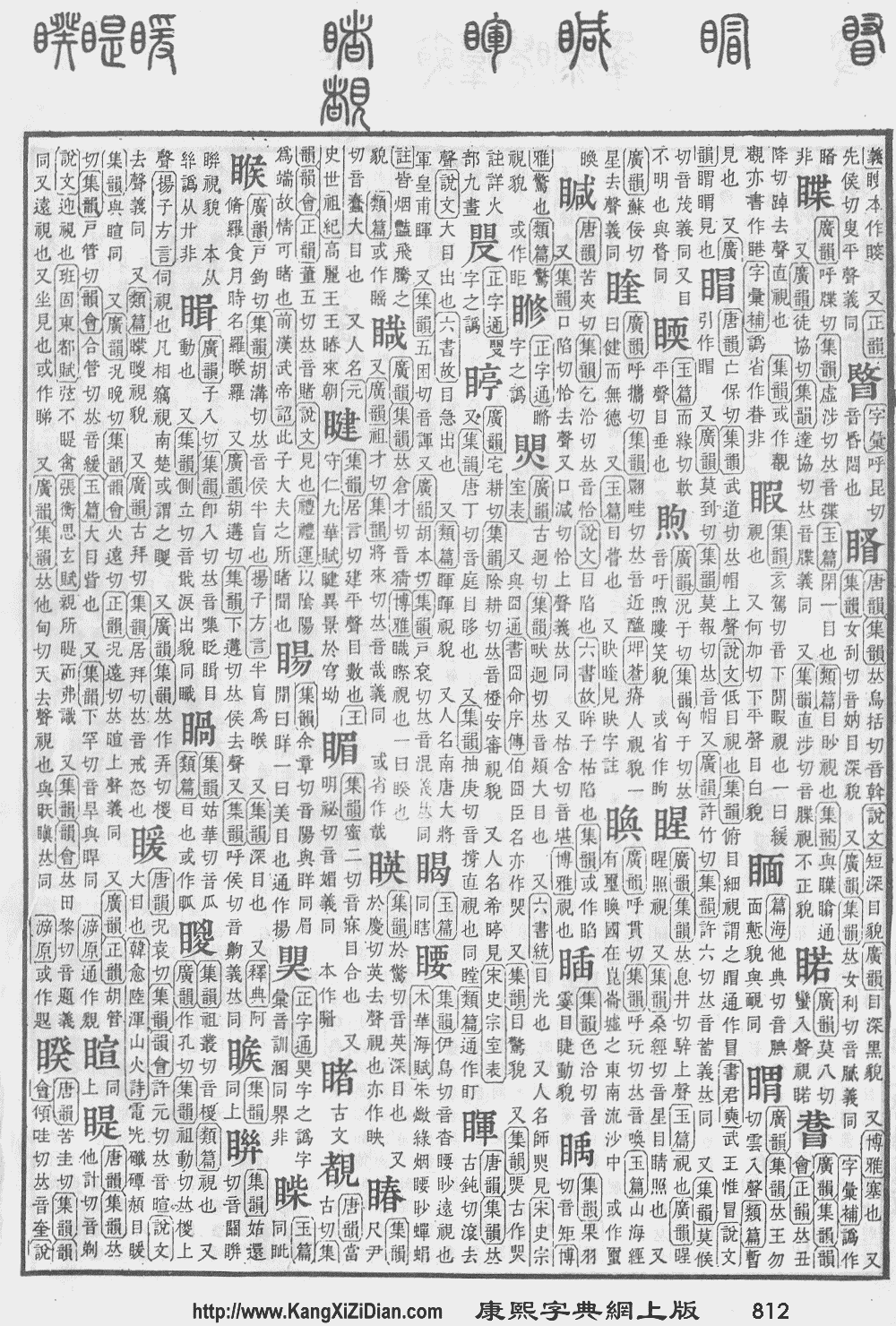
- Kangxi Dictionary: page 812, character 30
- Dai Kanwa Jiten: character 23519
- Dae Jaweon: page 1227, character 7
- Hanyu Da Zidian (first edition): volume 4, page 2494, character 3
- Unihan data for U+7779
Chinese
| simp. and trad. |
睹 | |
|---|---|---|
| alternative forms | 覩/睹 | |
Glyph origin
Characters in the same phonetic series (者) (Zhengzhang, 2003)
| Old Chinese | |
|---|---|
| 觰 | *rtaːʔ, *rtaː |
| 諸 | *tjaː, *tja |
| 者 | *tjaːʔ |
| 堵 | *tjaːʔ, *taːʔ |
| 赭 | *tjaːʔ |
| 撦 | *l̥ʰjaːʔ |
| 扯 | *tʰjaːʔ |
| 闍 | *djaː, *taː |
| 奢 | *hljaː |
| 鍺 | *toːlʔ |
| 都 | *taː |
| 醏 | *taː |
| 覩 | *taːʔ |
| 睹 | *taːʔ |
| 暏 | *taːʔ |
| 賭 | *taːʔ |
| 帾 | *taːʔ |
| 楮 | *taːʔ, *tʰaʔ |
| 屠 | *daː, *da |
| 瘏 | *daː |
| 廜 | *daː |
| 鷵 | *daː |
| 緒 | *ljaʔ |
| 豬 | *ta |
| 猪 | *ta |
| 瀦 | *ta |
| 藸 | *ta, *da |
| 櫫 | *ta |
| 褚 | *taʔ, *tʰaʔ |
| 著 | *taʔ, *tas, *da, *taɡ, *daɡ |
| 箸 | *tas, *das |
| 儲 | *da |
| 躇 | *da |
| 櫧 | *tja |
| 藷 | *tja, *djas |
| 蠩 | *tja |
| 煮 | *tjaʔ |
| 渚 | *tjaʔ |
| 煑 | *tjaʔ |
| 陼 | *tjaʔ |
| 翥 | *tjas |
| 署 | *djas |
| 薯 | *djas |
| 曙 | *djas |
| 書 | *hlja |
| 暑 | *hjaʔ |
| 鐯 | *taɡ |
| 擆 | *taɡ |
| 櫡 | *taɡ |
Phono-semantic compound (形聲/形声, OC *taːʔ) : semantic 目 + phonetic 者 (OC *tjaːʔ).
Etymology
Proposed to be cognate with Tibetan ལྟ (lta, “to look at, to see”) (LaPolla, 1994), which is derived from Proto-Bodic *l-ta-s/t (“to see, to look”) (STEDT). It has also been connected with Proto-Tai *p.taːᴬ (“eye”) (Unger, 1990).
Pronunciation
Compounds
- 一睹 (yīdǔ)
- 不睹
- 不睹事
- 不睹是
- 先睹為快/先睹为快 (xiāndǔwéikuài)
- 大睹是
- 慘不忍睹/惨不忍睹 (cǎnbùrěndǔ)
- 拔睹兒/拔睹儿
- 撥雲睹日/拨云睹日
- 有目共睹 (yǒumùgòngdǔ)
- 熟視無睹/熟视无睹 (shúshìwúdǔ)
- 目不忍睹
- 目大不睹
- 目所未睹
- 目睹 (mùdǔ)
- 目睹耳聞/目睹耳闻
- 眾目共睹/众目共睹
- 睹微知著 (dǔwēizhīzhù)
- 睹景傷情/睹景伤情
- 睹物傷情/睹物伤情
- 睹物思人 (dǔwùsīrén)
- 睹物懷人/睹物怀人
- 睹物生情
- 睹物興情/睹物兴情
- 睹物興悲/睹物兴悲
- 瞥睹
- 視若無睹/视若无睹 (shìruòwúdǔ)
- 耳聞目睹/耳闻目睹 (ěrwénmùdǔ)
- 親眼目睹/亲眼目睹
- 親睹/亲睹 (qīndǔ)
- 逆睹
- 重睹天日
Japanese
Kanji
睹
- This term needs a translation to English. Please help out and add a translation, then remove the text
{{rfdef}}.
Korean
Hanja
睹 • (do) (hangeul 도, revised do, McCune–Reischauer to, Yale to)
- This term needs a translation to English. Please help out and add a translation, then remove the text
{{rfdef}}.
Vietnamese
This article is issued from Wiktionary. The text is licensed under Creative Commons - Attribution - Sharealike. Additional terms may apply for the media files.