緒
| ||||||||
Translingual
| Traditional | 緒 |
|---|---|
| Simplified | 绪 |
| Japanese | 緒 |
| Korean | 緖 |
Han character
緒 (Kangxi radical 120, 糸+8, 14 strokes, cangjie input 女火十大日 (VFJKA), four-corner 24960, composition ⿰糹⿱耂日 or ⿰糹者)
Derived characters
- 𭳌, 𬟋
Related characters
- 緖 (Orthodox form in Kangxi dictionary, Kyūjitai in Japan, preferred form in Korea)
- 绪 (Simplified Chinese)
References
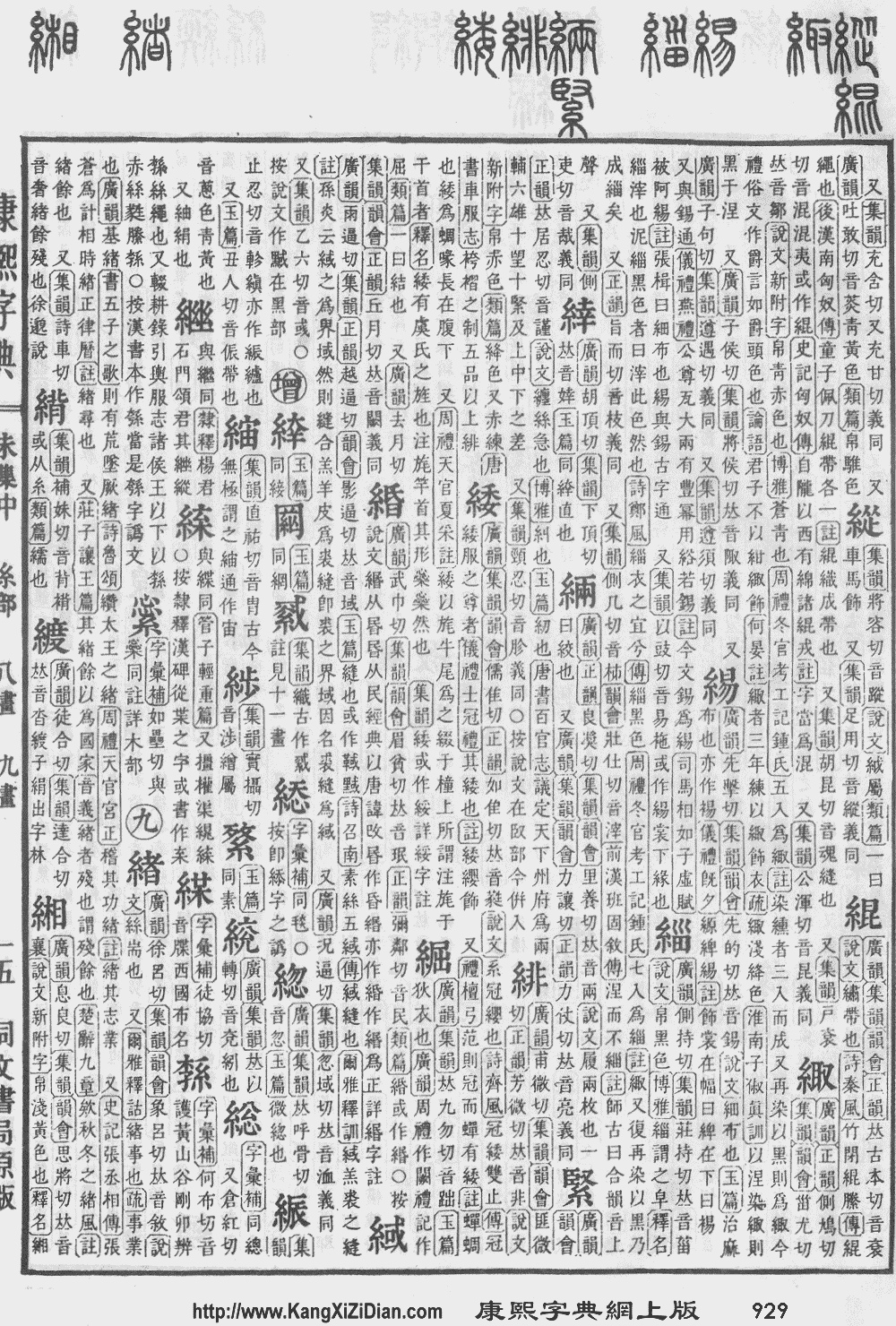
- Kangxi Dictionary: not present, would follow page 929, character 29
- Dai Kanwa Jiten: character 27632
- Dae Jaweon: page 1367, character 22
- Hanyu Da Zidian (first edition): volume 5, page 3408, character 14
- Unihan data for U+7DD2
Chinese
| trad. | 緒/緖 | |
|---|---|---|
| simp. | 绪 | |
Glyph origin
Characters in the same phonetic series (者) (Zhengzhang, 2003)
| Old Chinese | |
|---|---|
| 觰 | *rtaːʔ, *rtaː |
| 諸 | *tjaː, *tja |
| 者 | *tjaːʔ |
| 堵 | *tjaːʔ, *taːʔ |
| 赭 | *tjaːʔ |
| 撦 | *l̥ʰjaːʔ |
| 扯 | *tʰjaːʔ |
| 闍 | *djaː, *taː |
| 奢 | *hljaː |
| 鍺 | *toːlʔ |
| 都 | *taː |
| 醏 | *taː |
| 覩 | *taːʔ |
| 睹 | *taːʔ |
| 暏 | *taːʔ |
| 賭 | *taːʔ |
| 帾 | *taːʔ |
| 楮 | *taːʔ, *tʰaʔ |
| 屠 | *daː, *da |
| 瘏 | *daː |
| 廜 | *daː |
| 鷵 | *daː |
| 緒 | *ljaʔ |
| 豬 | *ta |
| 猪 | *ta |
| 瀦 | *ta |
| 藸 | *ta, *da |
| 櫫 | *ta |
| 褚 | *taʔ, *tʰaʔ |
| 著 | *taʔ, *tas, *da, *taɡ, *daɡ |
| 箸 | *tas, *das |
| 儲 | *da |
| 躇 | *da |
| 櫧 | *tja |
| 藷 | *tja, *djas |
| 蠩 | *tja |
| 煮 | *tjaʔ |
| 渚 | *tjaʔ |
| 煑 | *tjaʔ |
| 陼 | *tjaʔ |
| 翥 | *tjas |
| 署 | *djas |
| 薯 | *djas |
| 曙 | *djas |
| 書 | *hlja |
| 暑 | *hjaʔ |
| 鐯 | *taɡ |
| 擆 | *taɡ |
| 櫡 | *taɡ |
Phono-semantic compound (形聲/形声, OC *ljaʔ) : semantic 糹/纟 + phonetic 者 (OC *tjaːʔ).
Pronunciation
Definitions
緒
Compounds
- 三頭兩緒/三头两绪
- 不情不緒/不情不绪
- 元緒/元绪
- 先緒/先绪
- 光緒/光绪 (Guāngxù)
- 入緒/入绪
- 兩頭三緒/两头三绪
- 別緒/别绪 (biéxù)
- 前緒/前绪
- 千愁萬緒/千愁万绪
- 千條萬緒/千条万绪
- 千端萬緒/千端万绪
- 千緒萬端/千绪万端
- 千頭百緒/千头百绪
- 千頭萬緒/千头万绪
- 墜緒/坠绪
- 就緒/就绪 (jiùxù)
- 心緒/心绪 (xīnxù)
- 心緒如麻/心绪如麻
- 心緒恍惚/心绪恍惚
- 思緒/思绪 (sīxù)
- 恢先緒/恢先绪
- 情緒/情绪 (qíngxù)
- 情緒智商/情绪智商
- 意緒/意绪
- 愁緒/愁绪 (chóuxù)
- 愁緒如麻/愁绪如麻
- 抽緒/抽绪
- 有點頭緒/有点头绪
- 沒心沒緒/没心没绪
- 沒情沒緒/没情没绪
- 沒頭緒/没头绪
- 無情無緒/无情无绪
- 理出頭緒/理出头绪
- 祧緒/祧绪
- 萬緒千端/万绪千端
- 萬緒千頭/万绪千头
- 端緒/端绪 (duānxù)
- 紹休聖緒/绍休圣绪
- 緒戰/绪战
- 緒業/绪业
- 緒言/绪言 (xùyán)
- 緒論/绪论 (xùlùn)
- 緒風/绪风
- 緒餘/绪余 (xùyú)
- 績緒/绩绪
- 聖緒/圣绪
- 茫無頭緒/茫无头绪
- 衣冠緒餘/衣冠绪余
- 蹤緒/踪绪
- 離情別緒/离情别绪
- 頭緒/头绪 (tóuxù)
- 餘緒/余绪 (yúxù)
- 鬧情緒/闹情绪 (nào qíngxù)
- 鴻緒/鸿绪
References
- “緒”, in 漢語多功能字庫 (Multi-function Chinese Character Database), 香港中文大學 (the Chinese University of Hong Kong), 2014–
Japanese
| 緒 | |
| 緖 |
Readings
Etymology 1
| Kanji in this term |
|---|
| 緒 |
| しょ Grade: S |
| kan’on |
| Alternative spelling |
|---|
| 緖 (kyūjitai) |
(This etymology is missing or incomplete. Please add to it, or discuss it at the Etymology scriptorium.)
Pronunciation
- IPA(key): [ɕo̞]
Etymology 2
| Kanji in this term |
|---|
| 緒 |
| ちょ Grade: S |
| kan’yōon |
| Alternative spelling |
|---|
| 緖 (kyūjitai) |
(This etymology is missing or incomplete. Please add to it, or discuss it at the Etymology scriptorium.)
Pronunciation
- IPA(key): [t͡ɕo̞]
Etymology 3
| Kanji in this term |
|---|
| 緒 |
| お Grade: S |
| kun’yomi |
| Alternative spelling |
|---|
| 緖 (kyūjitai) |
(This etymology is missing or incomplete. Please add to it, or discuss it at the Etymology scriptorium.)
Pronunciation
- IPA(key): [o̞]
Korean
Vietnamese
This article is issued from Wiktionary. The text is licensed under Creative Commons - Attribution - Sharealike. Additional terms may apply for the media files.