細
See also: 细
| ||||||||
Translingual
Han character
細 (Kangxi radical 120, 糸+5, 11 strokes, cangjie input 女火田 (VFW), four-corner 26900, composition ⿰糹田)
References
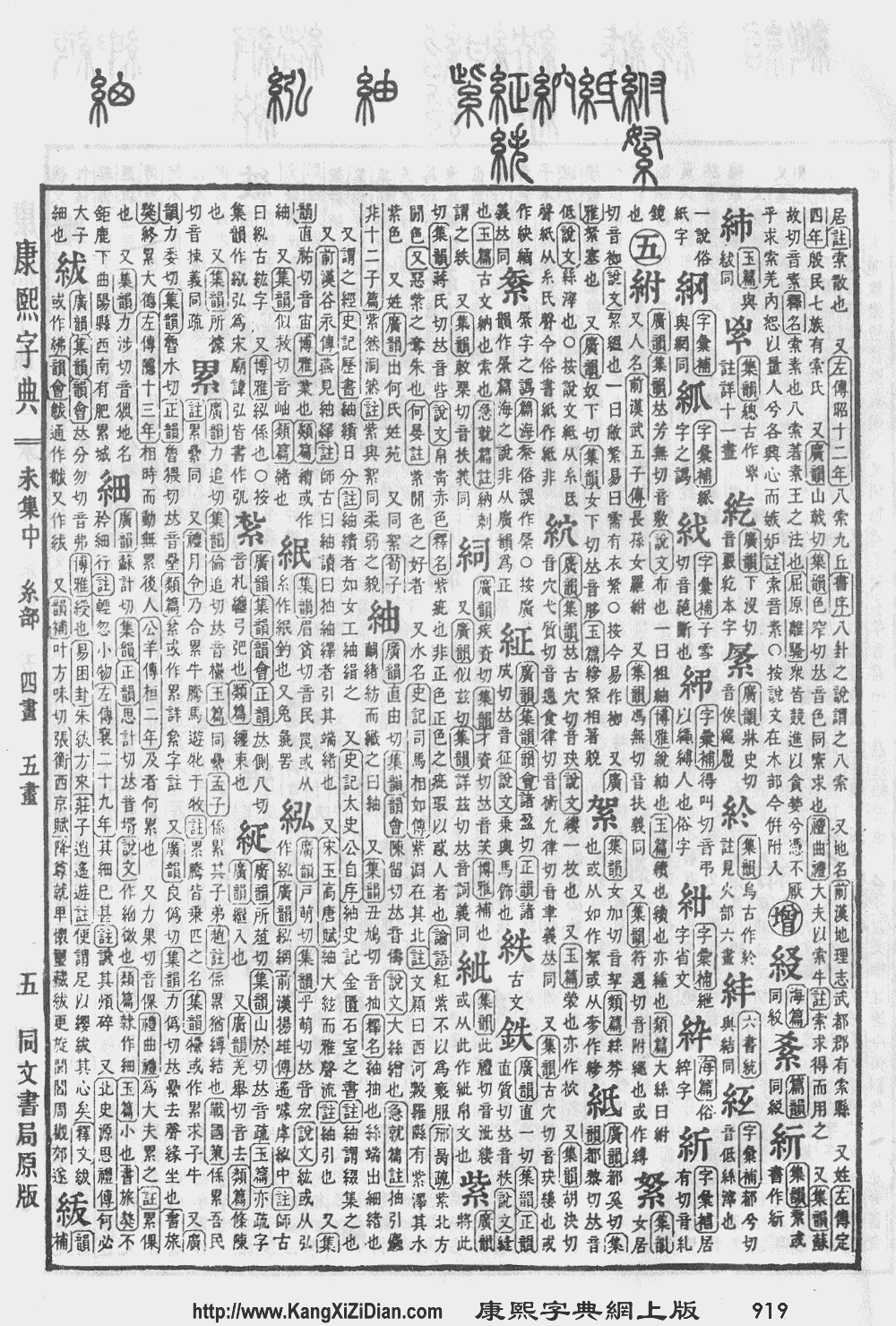
- Kangxi Dictionary: page 919, character 36
- Dai Kanwa Jiten: character 27344
- Dae Jaweon: page 1351, character 7
- Hanyu Da Zidian (first edition): volume 5, page 3380, character 5
- Unihan data for U+7D30
Chinese
| trad. | 細 | |
|---|---|---|
| simp. | 细 | |
| alternative forms | 𥿳 | |
Glyph origin
| Historical forms of the character 細 | |
|---|---|
| Shuowen Jiezi (compiled in Han) | Liushutong (compiled in Ming) |
| Small seal script | Transcribed ancient scripts |
 |
 |
Characters in the same phonetic series (囟) (Zhengzhang, 2003)
Phono-semantic compound (形聲/形声, OC *snɯːls) : semantic 糸 + phonetic 囟 (OC *snɯns). The right component is etymologically unrelated to 田 in which it was corrupted to after the Han dynasty.
Etymology
From Proto-Sino-Tibetan *z(j)əj (“little; small; tiny”) (STEDT); cognate with Jingpho zi (“small”), Tibetan ཟི (zi, “small”), Burmese သေး (se:, “small”).
Pronunciation
Definitions
細
- (literary or Cantonese, Gan, Hakka, Min) small; tiny; little
- thin; slender
- fine; delicate; exquisite
- careful; detailed; meticulous
- slowly; carefully; thoroughly; detailedly
- trifling; trivial; unimportant
- (of one's voice) soft
- frugal; sparing
- (literary or Cantonese, Hakka, Min) young; little
- (Cantonese) to be younger than
- (Hokkien) concubine
Synonyms
Dialectal synonyms of 小 (“small”) [map]
Dialectal synonyms of 細 (“thin; fine; slender”) [map]
| Variety | Location | Words |
|---|---|---|
| Classical Chinese | 細 | |
| Formal (Written Standard Chinese) | 細 | |
| Mandarin | Beijing | 細 |
| Taiwan | 細 | |
| Jinan | 細 | |
| Xi'an | 細 | |
| Wuhan | 細 | |
| Chengdu | 細 | |
| Yangzhou | 細 | |
| Hefei | 細 | |
| Singapore | 細 | |
| Cantonese | Guangzhou | 幼 |
| Hong Kong | 幼 | |
| Yangjiang | 細, 嫩 | |
| Singapore (Guangfu) | 幼 | |
| Gan | Nanchang | 細 |
| Hakka | Meixian | 幼, 細 |
| Jin | Taiyuan | 細 |
| Northern Min | Jian'ou | 細 |
| Eastern Min | Fuzhou | 杪, 幼 |
| Southern Min | Xiamen | 幼 |
| Tainan | 幼 | |
| Penang (Hokkien) | 幼 | |
| Singapore (Hokkien) | 幼 | |
| Chaozhou | 幼, 細 | |
| Wenchang | 幼 | |
| Haikou | 幼 | |
| Wu | Suzhou | 細 |
| Wenzhou | 細 | |
| Xiang | Changsha | 細 |
| Shuangfeng | 細 | |
Antonyms
Compounds
- 不守細行/不守细行
- 不拘細行/不拘细行
- 不矜細行/不矜细行
- 不護細行/不护细行
- 中亞細亞/中亚细亚 (Zhōng-Yàxìyà)
- 亞細亞洲/亚细亚洲 (yàxìyà Zhōu)
- 仔細/仔细 (zǐxì)
- 保衛細胞/保卫细胞
- 備細/备细
- 光合細菌/光合细菌
- 分細/分细
- 刺囊細胞/刺囊细胞
- 動物細胞/动物细胞
- 卵細胞/卵细胞
- 反間細作/反间细作
- 吞噬細胞/吞噬细胞 (tūnshì xìbāo)
- 呢喃細語/呢喃细语
- 和風細雨/和风细雨 (héfēngxìyǔ)
- 喁喁細語/喁喁细语
- 喃喃細語/喃喃细语
- 單眉細眼/单眉细眼
- 嗇細/啬细
- 土壤細流/土壤细流
- 大含細入/大含细入
- 奸細 (jiānxì)
- 姦細/奸细 (jiānxì)
- 嬌聲細語/娇声细语
- 子細/子细 (zǐxì)
- 子細胞/子细胞 (zǐxìbāo)
- 定睛細看/定睛细看
- 審細/审细
- 小亞細亞/小亚细亚
- 工細/工细 (gōngxì)
- 巨細/巨细 (jùxì)
- 底細/底细 (dǐxì)
- 廣夏細旃/广夏细旃
- 弄精細/弄精细
- 微細/微细 (wēixì)
- 心細/心细 (xīnxì)
- 心細如髮/心细如发
- 性細胞/性细胞
- 打細/打细
- 打細泊/打细泊
- 打細算盤/打细算盘
- 打聽細底/打听细底
- 把細/把细
- 拿粗挾細/拿粗挟细
- 挾細拿粗/挟细拿粗
- 探細人/探细人
- 斜風細雨/斜风细雨
- 施行細則/施行细则 (shīxíng xìzé)
- 末節細行/末节细行
- 枕邊細語/枕边细语 (zhěnbiān xìyǔ)
- 歸遺細君/归遗细君
- 毛細現象/毛细现象 (máoxì xiànxiàng)
- 毛細管/毛细管 (máoxìguǎn)
- 毛細管水/毛细管水
- 毛細血管/毛细血管 (máoxì xuèguǎn)
- 毛舉細事/毛举细事
- 毛舉細務/毛举细务
- 毛舉細故/毛举细故
- 漿細胞/浆细胞 (jiāngxìbāo)
- 濛濛細雨/蒙蒙细雨
- 煩細/烦细
- 瑣細/琐细 (suǒxì)
- 破骨細胞/破骨细胞 (pògǔxìbāo)
- 神經細胞/神经细胞 (shénjīng xìbāo)
- 竊竊細語/窃窃细语
- 粗中有細/粗中有细
- 粗細/粗细 (cūxì)
- 精打細算/精打细算 (jīngdǎxìsuàn)
- 精挑細選/精挑细选 (jīngtiāoxìxuǎn)
- 精細/精细 (jīngxì)
- 精細胞/精细胞 (jīngxìbāo)
- 精耕細作/精耕细作
- 精雕細刻/精雕细刻
- 精雕細琢/精雕细琢
- 精雕細鏤/精雕细镂
- 細不容髮/细不容发
- 細事/细事
- 細人/细人
- 細仗/细仗
- 細作/细作 (xìzuò)
- 細兒/细儿 (xì'ěr)
- 細利/细利
- 細別/细别
- 細則/细则 (xìzé)
- 細勻/细匀
- 細君/细君 (xìjūn)
- 細問/细问
- 細嚼/细嚼
- 細嚼慢嚥/细嚼慢咽 (xìjiáomànyàn)
- 細士/细士
- 細大不捐/细大不捐
- 細大不逾/细大不逾
- 細大無遺/细大无遗
- 細姨/细姨 (xìyí)
- 細娘/细娘
- 細嫩/细嫩 (xìnèn)
- 細字/细字 (xìzì)
- 細密/细密 (xìmì)
- 細密畫/细密画
- 細小/细小 (xìxiǎo)
- 細崽/细崽
- 細工/细工 (xìgōng)
- 細巧/细巧
- 細布/细布
- 細底/细底
- 細弱/细弱 (xìruò)
- 細微/细微 (xìwēi)
- 細微末節/细微末节 (xìwēimòjié)
- 細心/细心 (xìxīn)
- 細情/细情
- 細按/细按
- 細挑/细挑
- 細探人/细探人
- 細政/细政
- 細故/细故 (xìgù)
- 細旦/细旦
- 細曲/细曲
- 細枝末節/细枝末节 (xìzhīmòjié)
- 細柔/细柔
- 細柳/细柳
- 細查/细查
- 細柳營/细柳营
- 細樂/细乐
- 細毛/细毛 (xìmáo)
- 細毛藻/细毛藻
- 細民/细民
- 細水長流/细水长流 (xìshuǐchángliú)
- 細活/细活 (xìhuó)
- 細流/细流 (xìliú)
- 細活兒/细活儿
- 細漢/细汉 (sè-hàn) (Min Nan)
- 細潤/细润 (xìrùn)
- 細火/细火 (xìhuǒ)
- 細火兒/细火儿
- 細玩/细玩
- 細瑣/细琐
- 細瓷/细瓷
- 細疾/细疾
- 細瘦/细瘦
- 細皮嫩肉/细皮嫩肉
- 細目/细目 (xìmù)
- 細看/细看 (xìkàn)
- 細眉/细眉
- 細眯眯
- 細瞧/细瞧
- 細石器/细石器 (xìshíqì)
- 細碎/细碎 (xìsuì)
- 細磁/细磁
- 細究/细究 (xìjiū)
- 細節/细节 (xìjié)
- 細算/细算
- 細篾兒/细篾儿
- 細粒子/细粒子 (sè-lia̍p-chí) (Min Nan)
- 細糧/细粮 (xìliáng)
- 細紗/细纱
- 細紡/细纺
- 細細/细细 (xìxì)
- 細絲/细丝 (xìsī)
- 細緻/细致 (xìzhì)
- 細縷/细缕
- 細考/细考
- 細聲細氣/细声细气
- 細聽/细听 (xìtīng)
- 細胞/细胞 (xìbāo)
- 細胞分裂/细胞分裂 (xìbāo fēnliè)
- 細胞壁/细胞壁 (xìbāobì)
- 細胞學/细胞学 (xìbāoxué)
- 細胞核/细胞核 (xìbāohé)
- 細胞膜/细胞膜 (xìbāomó)
- 細胞色素/细胞色素 (xìbāo sèsù)
- 細胞質/细胞质 (xìbāozhì)
- 細胞週期/细胞周期 (xìbāo zhōuqī)
- 細胞銀行/细胞银行
- 細腰/细腰
- 細腰蜂/细腰蜂
- 細膩/细腻 (xìnì)
- 細菜/细菜
- 細菌/细菌 (xìjūn)
- 細菌學/细菌学 (xìjūnxué)
- 細菌武器/细菌武器
- 細葉山茶/细叶山茶
- 細蝶/细蝶
- 細行/细行
- 細術/细术
- 細表/细表
- 細裊裊/细袅袅
- 細訪/细访
- 細話/细话
- 細語/细语 (xìyǔ)
- 細說/细说 (xìshuō)
- 細談/细谈
- 細謹/细谨
- 細貴/细贵
- 細路/细路
- 細軟/细软 (xìruǎn)
- 細辛/细辛 (xìxīn)
- 細述/细述 (xìshù)
- 細部/细部 (xìbù)
- 細酸/细酸
- 細針密縷/细针密缕
- 細鍊/细炼
- 細長/细长 (xìcháng)
- 細雨/细雨 (xìyǔ)
- 細音/细音
- 細顆粒物/细颗粒物 (xìkēlìwù)
- 細高挑兒/细高挑儿
- 細髮/细发
- 緩步細搖/缓步细摇
- 繁細/繁细 (fánxì)
- 縷細/缕细
- 纖細/纤细 (xiānxì)
- 纖細畫/纤细画
- 纖維細胞/纤维细胞 (xiānwéixìbāo)
- 腺細胞/腺细胞
- 腦細胞/脑细胞 (nǎoxìbāo)
- 膽大心細/胆大心细
- 色質細胞/色质细胞
- 苛細/苛细
- 薄批細切/薄批细切
- 薄物細故/薄物细故 (bówùxìgù)
- 蠅頭細書/蝇头细书
- 詳細/详细 (xiángxì)
- 詳詳細細/详详细细
- 謹細/谨细
- 貴細/贵细
- 輕聲細語/轻声细语
- 辦事細則/办事细则
- 逐細/逐细
- 過細/过细 (guòxì)
- 鉅細靡遺/巨细靡遗 (jùxìmǐyí)
- 非細/非细
- 骨細胞/骨细胞 (gǔxìbāo)
References
- “細”, in 漢語多功能字庫 (Multi-function Chinese Character Database), 香港中文大學 (the Chinese University of Hong Kong), 2014–
Japanese
Readings
Vietnamese
This article is issued from Wiktionary. The text is licensed under Creative Commons - Attribution - Sharealike. Additional terms may apply for the media files.