偲
| ||||||||
Translingual
Han character
偲 (Kangxi radical 9, 人+9, 11 strokes, cangjie input 人田心 (OWP), four-corner 26230, composition ⿰亻思)
References
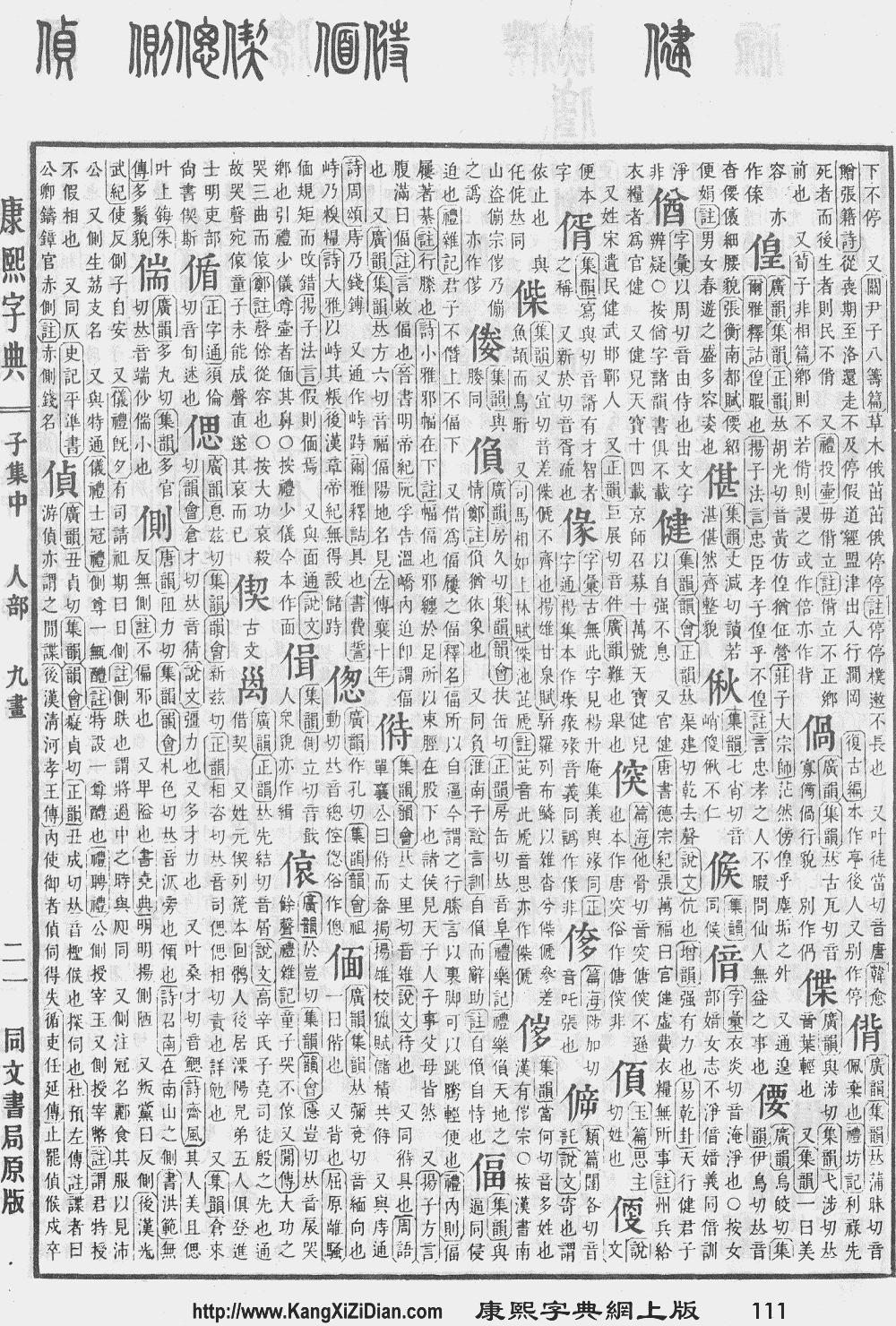
- Kangxi Dictionary: page 111, character 32
- Dai Kanwa Jiten: character 895
- Dae Jaweon: page 238, character 5
- Hanyu Da Zidian (first edition): volume 1, page 191, character 4
- Unihan data for U+5072
Chinese
| simp. and trad. |
偲 | |
|---|---|---|
Glyph origin
| Historical forms of the character 偲 | |
|---|---|
| |
|
References: Mostly from Richard Sears' Chinese Etymology site (authorisation),
|

Pronunciation 1
Compounds
- 偲偲 (sīsī)
- 切偲
- 切切偲偲
- 怡偲
Pronunciation 2
Definitions
偲
- † The meaning of this term is uncertain. Possibilities include:
- 其人美且偲 [Pre-Classical Chinese, trad. and simp.]
- From: The Classic of Poetry, c. 11th – 7th centuries BCE, translated based on James Legge's version
- qí rén měi qiě sī [Pinyin]
- Their master is admirable and able.
Compounds
- 美偲
Pronunciation 3
References
- “偲”, in 漢語多功能字庫 (Multi-function Chinese Character Database), 香港中文大學 (the Chinese University of Hong Kong), 2014–
- (Cantonese) 粵音資料集叢
Japanese
Korean
Hanja
偲 • (si) (hangeul 시, revised si, McCune–Reischauer si)
- This term needs a translation to English. Please help out and add a translation, then remove the text
{{rfdef}}.
This article is issued from Wiktionary. The text is licensed under Creative Commons - Attribution - Sharealike. Additional terms may apply for the media files.