蕪
See also: 芜
| ||||||||
Translingual
Han character
蕪 (Kangxi radical 140, 艸+12, 18 strokes, cangjie input 廿人廿火 (TOTF), four-corner 44331, composition ⿱艹無)
Derived characters
- 𦢲
References
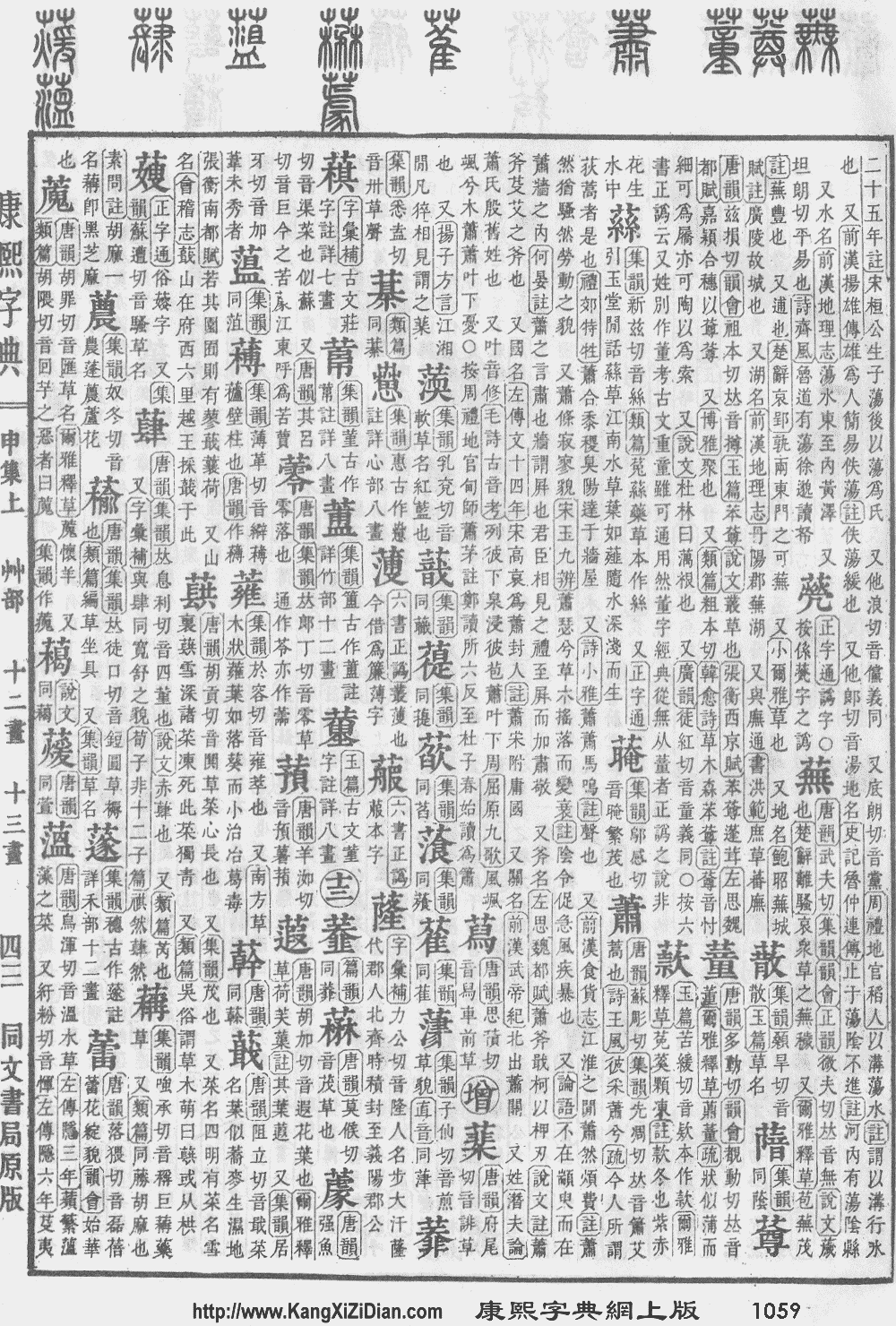
- Kangxi Dictionary: page 1059, character 2
- Dai Kanwa Jiten: character 32004
- Dae Jaweon: page 1522, character 1
- Hanyu Da Zidian (first edition): volume 5, page 3291, character 8
- Unihan data for U+856A
Chinese
| trad. | 蕪 | |
|---|---|---|
| simp. | 芜 | |

Pronunciation
Definitions
蕪 (literary or in compounds)
- full of weed; overgrown with weed [from Old Chinese]
- 曾不知夏之為丘兮,孰兩東門之可蕪? [Classical Chinese, trad.]
- From: The Verses of Chu, 4th century BCE – 2nd century CE
- Céng bù zhī xià zhī wèi qiū xī, shú liǎng dōng mén zhī kě wú? [Pinyin]
- Who would ever have known that the royal mounds would turn into hillocks, and that the two eastern gates could become overgrown with weed?
曾不知夏之为丘兮,孰两东门之可芜? [Classical Chinese, simp.]
- disused cropland; thickly-grown grassland; weed-choked land [from Old Chinese]
- (figurative) of a turgid literary style [from Middle Chinese]
Japanese
Compounds
Compounds
- 赤蕪 (akakabu)
- 蕪菁 (kabura): turnip
- 蕪菜 (kabuna), 蕪菜 (kaburana): turnip
- 蕪鮨 (kaburazushi)
- 蕪菜 (kaburana)
- 蕪無 (kaburanashi)
- 蕪引き (kaburahiki)
- 蕪骨 (kaburabone)
- 蕪蒸し (kaburamushi)
- 菊花蕪 (kikukakabu)
- 荒蕪 (kōbu)
- 小蕪 (kokabu), 小蕪菁 (kokabu)
- 聖護院蕪菁 (shōgoinkabura)
- スウェーデン蕪 (suwēdenkabu)
- 天王寺蕪 (tennōjikabura)
- 繁蕪 (hanbu)
- 蕪穢 (buai)
- 蕪稿 (bukō)
- 蕪雑 (buzatsu)
- 蕪辞 (buji)
- 蕪陋 (burō)
- 平蕪 (heibu)
- 和布蕪 (mekabu)
- 和布蕪 (mekabura)
- 緑蕪 (ryokubu): lush green grass or weeds
Etymology 1
| Kanji in this term |
|---|
| 蕪 |
| かぶ Jinmeiyō |
| kun’yomi |
Etymology 2
| Kanji in this term |
|---|
| 蕪 |
| かぶら Jinmeiyō |
| kun’yomi |
Alternative forms
References
- Matsumura, Akira, editor (2006), 大辞林 [Daijirin] (in Japanese), Third edition, Tōkyō: Sanseidō, →ISBN
- NHK Broadcasting Culture Research Institute, editor (1998), NHK日本語発音アクセント辞典 [NHK Japanese Pronunciation Accent Dictionary] (in Japanese), Tōkyō: NHK Publishing, →ISBN
Korean
Hanja
蕪 • (mu) (hangeul 무, revised mu, McCune–Reischauer mu, Yale mu)
- This term needs a translation to English. Please help out and add a translation, then remove the text
{{rfdef}}.
Vietnamese
This article is issued from Wiktionary. The text is licensed under Creative Commons - Attribution - Sharealike. Additional terms may apply for the media files.