譽
| ||||||||
Translingual
Han character
譽 (Kangxi radical 149, 言+14, 21 strokes, cangjie input 竹金卜一口 (HCYMR), four-corner 77601, composition ⿱與言)
Derived characters
- 𥗻
References
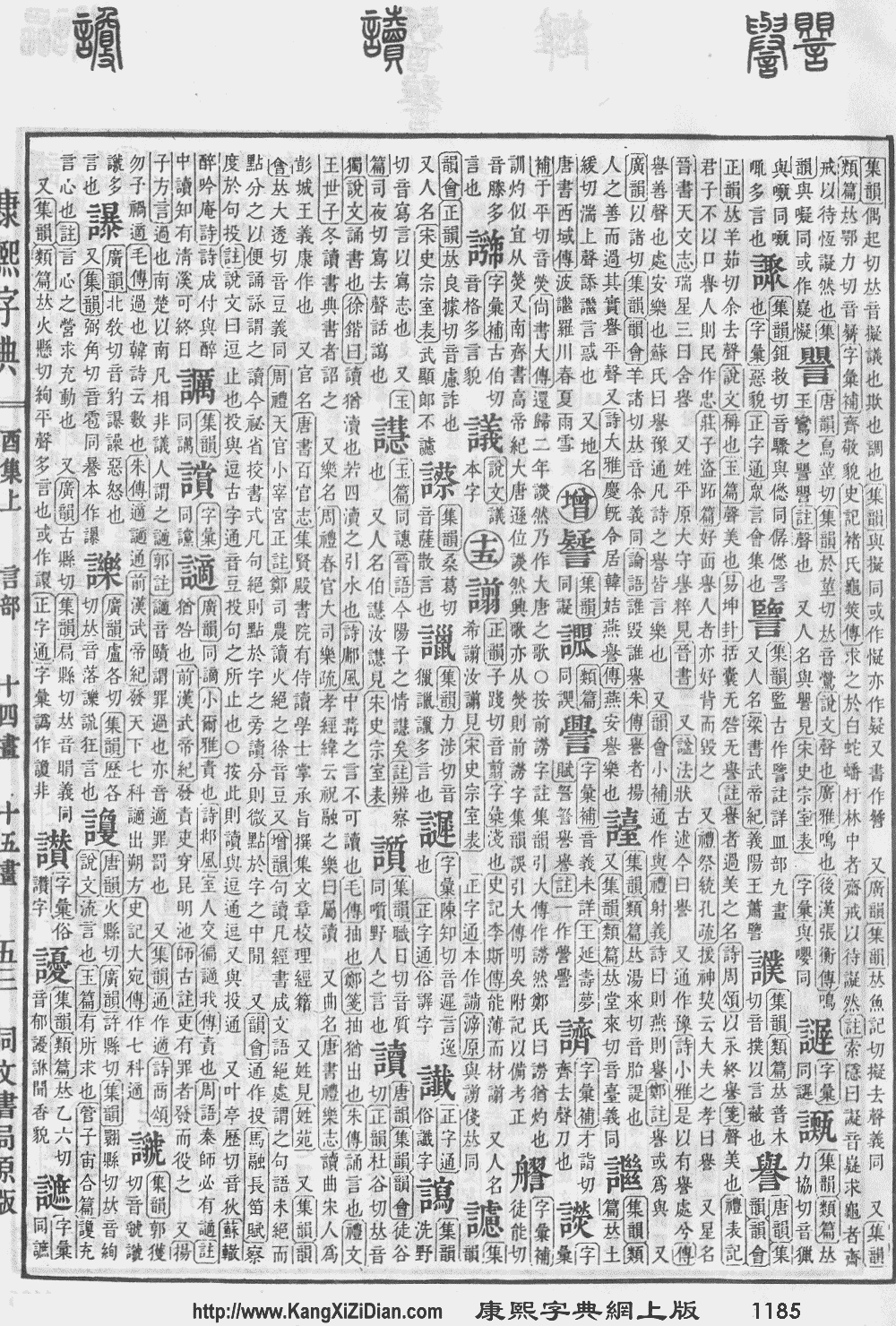
- Kangxi Dictionary: page 1185, character 7
- Dai Kanwa Jiten: character 36066
- Dae Jaweon: page 1648, character 16
- Hanyu Da Zidian (first edition): volume 6, page 4024, character 12
- Unihan data for U+8B7D
Chinese
| trad. | 譽 | |
|---|---|---|
| simp. | 誉 | |
Glyph origin
| Historical forms of the character 譽 | |
|---|---|
| Shuowen Jiezi (compiled in Han) | Liushutong (compiled in Ming) |
| Small seal script | Transcribed ancient scripts |
 |
 |
Phono-semantic compound (形聲/形声, OC *la, *las) : phonetic 與 (OC *la, *laʔ, *las) + semantic 言 (“say”).
Etymology
Both 譽 (OC *las, “renown, praise (n.)”) and 譽 (OC *la, “to praise (v.)”) are related; the latter in turn is related to 舁 (OC *la, “to shoulder, to lift”) (Schuessler, 2007).
Ultimate origin is Sino-Tibetan: compare Tibetan རླ (rla) & བླ (bla, “over, above, upper, higher, superior”) (Schuessler, 2007; Coblin, 1986).
This word family is allofamic to 揚 (OC *laŋ), its Tibeto-Burman cognates, & ancestor Proto-Sino-Tibetan *laŋ; as well as 輿 (OC *la, *las) & 舉 (OC *klaʔ) (Schuessler, 2007, see also Baxter & Sagart, 1998).
Pronunciation
Definitions
譽
- fame; reputation
- 庶幾夙夜、以永終譽。 [Pre-Classical Chinese, trad.]
- From: The Classic of Poetry, c. 11th – 7th centuries BCE, translated based on James Legge's version
- Shùjǐ sùyè, yǐ yǒng zhōng yù. [Pinyin]
- They are sure, day and night, to perpetuate their fame.
庶几夙夜、以永终誉。 [Pre-Classical Chinese, simp.]
- to praise
- 式燕且譽、好爾無射。 [Pre-Classical Chinese, trad.]
- From: The Classic of Poetry, c. 11th – 7th centuries BCE, translated based on James Legge's version
- Shì yàn qiě yù, hǎo ěr wú yì. [Pinyin]
- We will feast, and I will praise her. 'I love you, and will never be weary of you.'
式燕且誉、好尔无射。 [Pre-Classical Chinese, simp.]- 我心寫兮、是以有譽處兮。 [Pre-Classical Chinese, trad.]
- From: The Classic of Poetry, c. 11th – 7th centuries BCE, translated based on James Legge's version
- Wǒ xīn xiě xī, shìyǐ yǒu yù chù xī. [Pinyin]
- My heart is entirely satisfied. Right is it they should have praise and prosperity!
我心写兮、是以有誉处兮。 [Pre-Classical Chinese, simp.]
Compounds
- 不虞之譽/不虞之誉 (bùyúzhīyù)
- 交口稱譽/交口称誉
- 享譽/享誉 (xiǎngyù)
- 令譽/令誉
- 佳譽/佳誉
- 信譽/信誉 (xìnyù)
- 傳譽古今/传誉古今
- 名譽/名誉 (míngyù)
- 名譽掃地/名誉扫地 (míngyùsǎodì)
- 名譽校長/名誉校长
- 吊譽沽名/吊誉沽名
- 名譽職/名誉职
- 名譽領事/名誉领事 (míngyù lǐngshì)
- 商譽/商誉 (shāngyù)
- 國家榮譽/国家荣誉
- 干名采譽
- 干譽
- 延譽/延誉
- 德劭譽隆/德劭誉隆
- 德譽/德誉
- 時譽/时誉
- 校譽/校誉
- 榮譽/荣誉 (róngyù)
- 榮譽勛章/荣誉勋章
- 榮譽學位/荣誉学位
- 榮譽市民/荣誉市民
- 榮譽榜/荣誉榜 (róngyùbǎng)
- 榮譽軍人/荣誉军人 (róngyù jūnrén)
- 欺世釣譽/欺世钓誉
- 殊譽/殊誉
- 毀譽/毁誉 (huǐyù)
- 毀譽參半/毁誉参半 (huǐyùcānbàn)
- 民譽/民誉
- 沽名吊譽/沽名吊誉
- 沽名干譽
- 沽名邀譽/沽名邀誉
- 沽名釣譽/沽名钓誉 (gūmíngdiàoyù)
- 浮名虛譽/浮名虚誉
- 浮譽/浮誉
- 清譽/清誉
- 溢譽/溢誉 (yìyù)
- 無咎無譽/无咎无誉
- 盛譽/盛誉 (shèngyù)
- 眾口交譽/众口交誉
- 矯情干譽/矫情干誉
- 稱譽/称誉 (chēngyù)
- 結交延譽/结交延誉
- 美譽/美誉 (měiyù)
- 聲譽/声誉 (shēngyù)
- 聲譽鵲起/声誉鹊起
- 虛譽/虚誉
- 譽塞天下/誉塞天下
- 譽望/誉望
- 譽滿天下/誉满天下
- 譽滿寰中/誉满寰中
- 譽過其實/誉过其实
- 譽髦/誉髦
- 讚譽/赞誉 (zànyù)
- 跬譽/跬誉
- 載譽/载誉
- 過譽/过誉 (guòyù)
- 鄉曲之譽/乡曲之誉
- 釣名沽譽/钓名沽誉
- 釣譽沽名/钓誉沽名
- 雋譽/隽誉
- 面譽/面誉
- 面譽背毀/面誉背毁
- 馳譽/驰誉 (chíyù)
References
- “譽”, in 漢語多功能字庫 (Multi-function Chinese Character Database), 香港中文大學 (the Chinese University of Hong Kong), 2014–
Japanese
| 誉 | |
| 譽 |
Kanji
(uncommon “Hyōgai” kanji, kyūjitai kanji, shinjitai form 誉)
- This term needs a translation to English. Please help out and add a translation, then remove the text
{{rfdef}}.
Korean
Hanja
譽 • (ye) (hangeul 예, revised ye, McCune–Reischauer ye, Yale yey)
- This term needs a translation to English. Please help out and add a translation, then remove the text
{{rfdef}}.