跛
| ||||||||
Translingual
Han character
跛 (Kangxi radical 157, 足+5, 12 strokes, cangjie input 口一木竹水 (RMDHE), four-corner 64147, composition ⿰𧾷皮)
Derived characters
- 𭊱, 𮜈, 𮆎
References
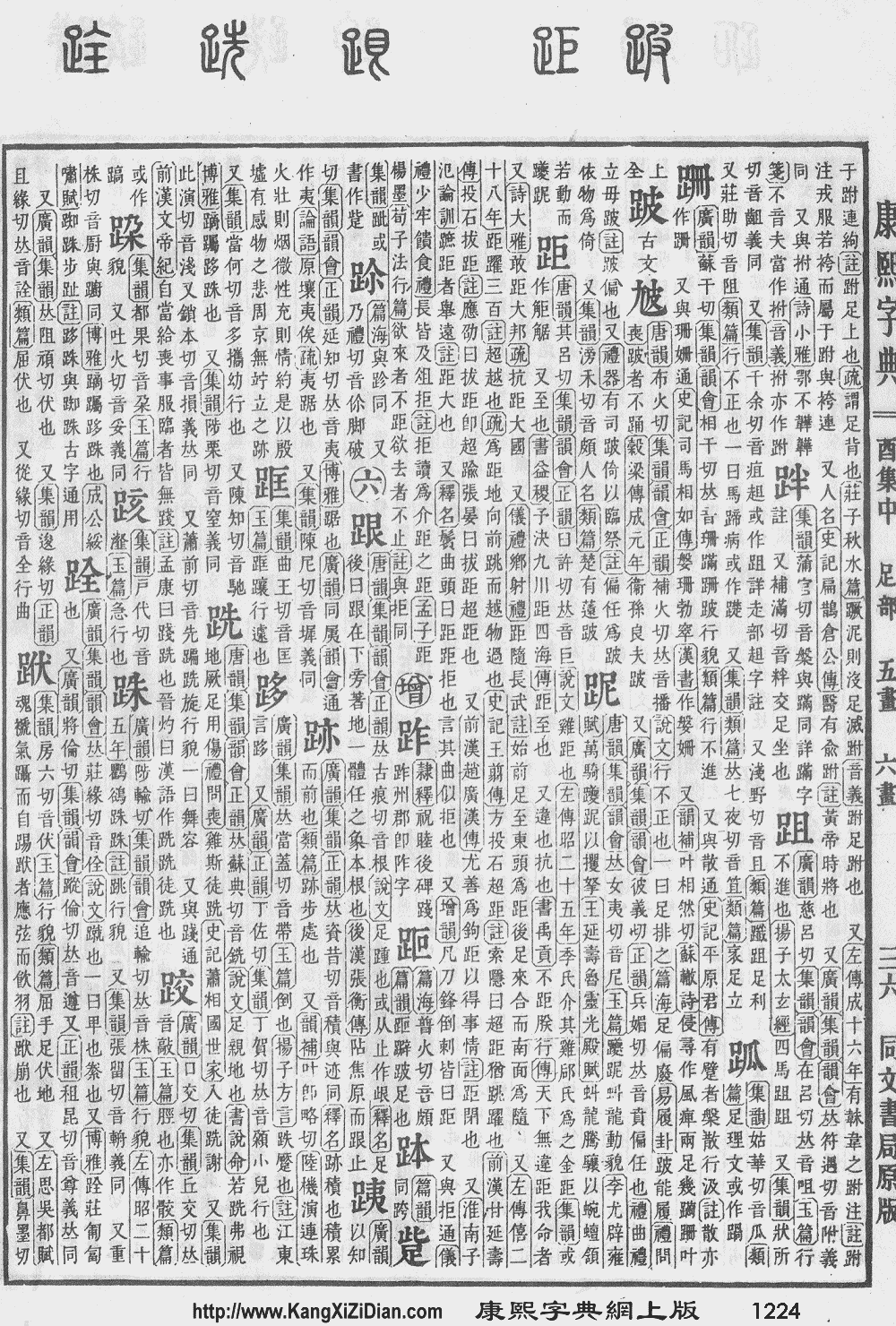
- Kangxi Dictionary: page 1224, character 5
- Dai Kanwa Jiten: character 37479
- Dae Jaweon: page 1695, character 29
- Hanyu Da Zidian (first edition): volume 6, page 3699, character 4
- Unihan data for U+8DDB
Chinese
| simp. and trad. |
跛 | |
|---|---|---|
| alternative forms | 㝿 𤿑 𨈵 | |
Glyph origin
Characters in the same phonetic series (皮) (Zhengzhang, 2003)
| Old Chinese | |
|---|---|
| 陂 | *pral, *prals |
| 詖 | *pral, *prals |
| 彼 | *pralʔ |
| 柀 | *pralʔ |
| 佊 | *pralʔ, *prals |
| 貱 | *prals |
| 跛 | *prals, *paːlʔ |
| 披 | *pʰral, *pʰralʔ |
| 鈹 | *pʰral |
| 帔 | *pʰral, *pʰrals |
| 鮍 | *pʰral |
| 耚 | *pʰral |
| 狓 | *pʰral |
| 翍 | *pʰral |
| 旇 | *pʰral, *brals |
| 秛 | *pʰral, *pʰrals |
| 紴 | *pʰralʔ, *paːl |
| 皮 | *bral |
| 疲 | *bral |
| 被 | *bralʔ, *brals |
| 髲 | *brals |
| 鞁 | *brals |
| 骳 | *mbralʔ |
| 波 | *paːl |
| 碆 | *paːl, *baːl |
| 菠 | *paːl |
| 簸 | *paːlʔ, *paːls |
| 駊 | *paːlʔ, *pʰaːlʔ |
| 頗 | *pʰaːl, *pʰaːlʔ, *pʰaːls |
| 坡 | *pʰaːl |
| 玻 | *pʰaːl |
| 破 | *pʰaːls |
| 婆 | *baːl |
| 蔢 | *baːl |
Phono-semantic compound (形聲/形声, OC *prals, *paːlʔ) : semantic 足 (“foot”) + phonetic 皮 (OC *bral).
Etymology 1
From Proto-Sino-Tibetan *(p/b)aːj (“lame; limp; askew”); compare Proto-Kuki-Chin *ɓa(a)j ~ *pa(a)j (“lame; limp”), Burmese ဖဲ (hpai:, “to avoid”), ဖယ် (hpai, “to push aside”), ပယ် (pai, “to reject”) (STEDT; Schuessler, 2007; Hill, 2014).
Colloquial readings in some southern varieties preserve the Old Chinese rime (Schuessler, 2007); the colloquial word is written as 𨃅 in Southwestern Mandarin and Xiang.
Pronunciation
Synonyms
- 瘸 (qué)
Compounds
Pronunciation
Definitions
跛
- This term needs a translation to English. Please help out and add a translation, then remove the text
{{rfdef}}.
Compounds
- 跛倚
- 跛立
- 跛立箕坐
References
- “跛”, in 漢語多功能字庫 (Multi-function Chinese Character Database), 香港中文大學 (the Chinese University of Hong Kong), 2014–
- “Query for 跛”, in 臺灣閩南語常用詞辭典 [Dictionary of Frequently-Used Taiwan Minnan] (overall work in Hokkien and Mandarin), Ministry of Education, R.O.C., 2023.
Japanese
Readings
From Middle Chinese 跛 (MC paX); compare Mandarin 跛 (bǒ):
From Middle Chinese 跛 (MC pjeH); compare Mandarin 跛 (bì):
From native Japanese roots:
Korean
This article is issued from Wiktionary. The text is licensed under Creative Commons - Attribution - Sharealike. Additional terms may apply for the media files.