辯
See also: 辩
| ||||||||
Translingual
| Traditional | 辯 |
|---|---|
| Shinjitai | 弁 |
| Simplified | 辩 |
Han character
辯 (Kangxi radical 160, 辛+14, 21 strokes, cangjie input 卜十卜口十 (YJYRJ), four-corner 00441, composition ⿲辛訁辛)
Derived characters
- 𡅼, 𨐾, 䉸
References
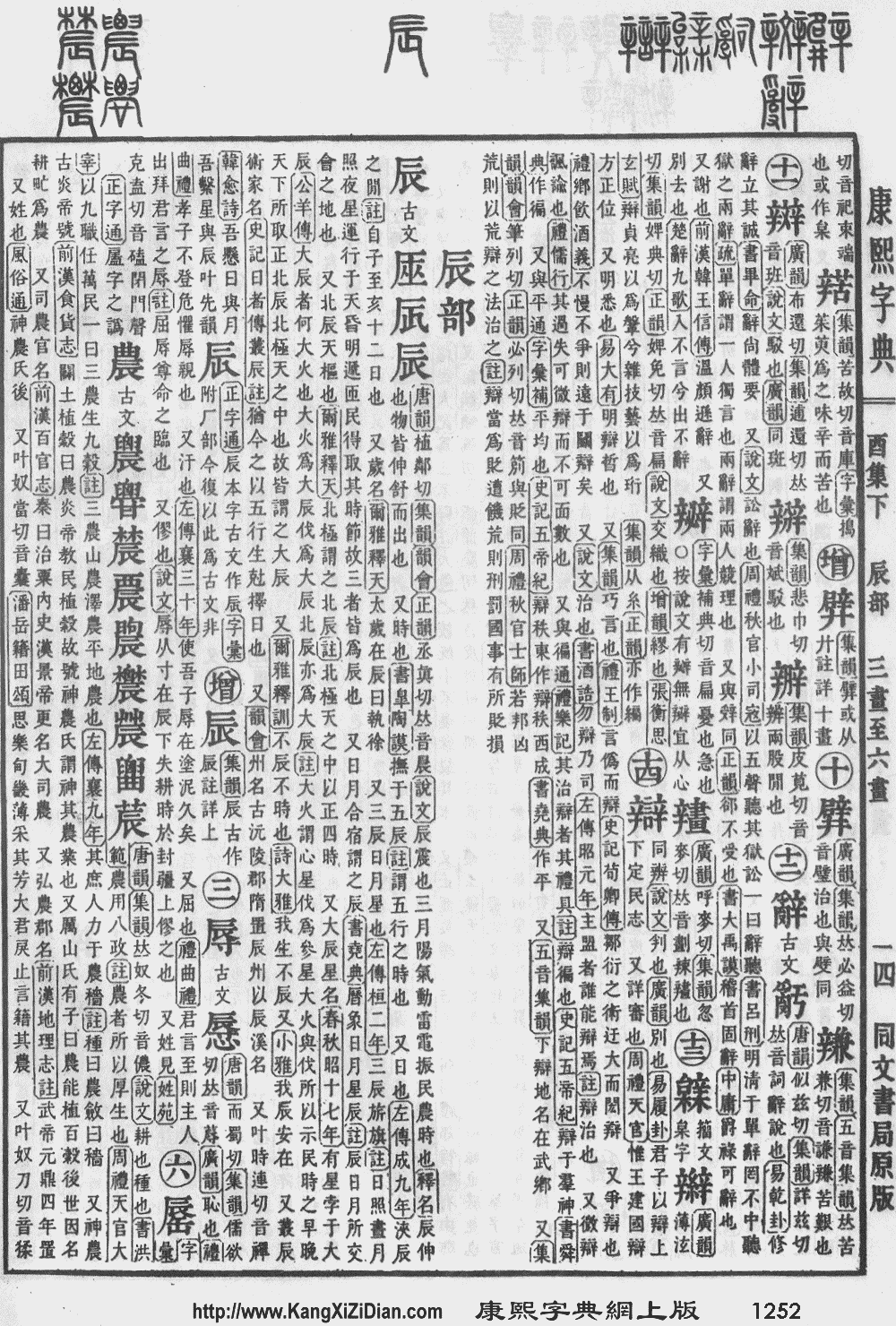
- Kangxi Dictionary: page 1252, character 14
- Dai Kanwa Jiten: character 38677
- Dae Jaweon: page 1732, character 10
- Hanyu Da Zidian (first edition): volume 6, page 4045, character 1
- Unihan data for U+8FAF
Chinese
| trad. | 辯 | |
|---|---|---|
| simp. | 辩 | |
| 2nd round simp. | 弁 | |
| alternative forms | ||
Glyph origin
Characters in the same phonetic series (辡) (Zhengzhang, 2003)
Phono-semantic compound (形聲/形声, OC *brenʔ) : phonetic 辡 (OC *prenʔ, *brenʔ) + semantic 言 (“say”).
Etymology
Cognate with 辨 (OC *breːns, *brenʔ, “to distinguish”).
Pronunciation
Definitions
辯
- to debate; to argue; to discuss
- † Alternative form of 辨 (“to distinguish; to differentiate”)
- 上天下澤,履,君子以辯上下,安民志。 [Pre-Classical Chinese, trad.]
- From: I Ching, 11th – 8th century BCE
- Shàng tiān xià zé, lǚ, jūnzǐ yǐ biàn shàngxià, ān mínzhì. [Pinyin]
- (The trigram representing) the sky above, and below it (that representing the waters of) a marsh, form Lu. The superior man, in accordance with this, discriminates between high and low, and gives settlement to the aims of the people.
上天下泽,履,君子以辩上下,安民志。 [Pre-Classical Chinese, simp.]
Compounds
- 主辯/主辩
- 九辯/九辩
- 伏辯/伏辩
- 佹辯/佹辩
- 分辯/分辩 (fēnbiàn)
- 助辯/助辩
- 口辯/口辩 (kǒubiàn)
- 名辯/名辩
- 大辯不言/大辩不言
- 大辯若訥/大辩若讷
- 好辯/好辩
- 宏辯/宏辩
- 巧言舌辯/巧言舌辩
- 巧辯/巧辩 (qiǎobiàn)
- 強制辯護/强制辩护
- 強辯/强辩 (qiǎngbiàn)
- 折辯/折辩
- 抗辯/抗辩 (kàngbiàn)
- 拆辯/拆辩
- 攔詞抵辯/拦词抵辩
- 服辯/服辩
- 滔滔雄辯/滔滔雄辩
- 激辯/激辩
- 無可置辯/无可置辩
- 無庸置辯/无庸置辩
- 爭辯/争辩 (zhēngbiàn)
- 狡辯/狡辩 (jiǎobiàn)
- 申辯/申辩 (shēnbiàn)
- 百口莫辯/百口莫辩 (bǎikǒumòbiàn)
- 百喙莫辯/百喙莫辩 (bǎihuìmòbiàn)
- 百辭莫辯/百辞莫辩
- 真理越辯越明/真理越辩越明 (zhēnlǐ yuèbiànyuèmíng)
- 答辯/答辩 (dábiàn)
- 答辯書/答辩书
- 米鹽博辯/米盐博辩
- 結辯/结辩
- 置辯/置辩 (zhìbiàn)
- 聲辯/声辩 (shēngbiàn)
- 能言善辯/能言善辩 (néngyánshànbiàn)
- 能言舌辯/能言舌辩
- 舌辯之士/舌辩之士
- 言詞辯論/言词辩论
- 誇辯/夸辩
- 詭辯/诡辩 (guǐbiàn)
- 詭辯學派/诡辩学派
- 論辯/论辩
- 辯人/辩人
- 辯冤/辩冤
- 辯口利舌/辩口利舌
- 辯口利辭/辩口利辞
- 辯圃學林/辩圃学林
- 辯士/辩士 (biànshì)
- 辯惠/辩惠
- 辯才/辩才 (biàncái)
- 辯才無礙/辩才无碍 (biàncáiwú'ài)
- 辯捷/辩捷
- 辯析/辩析
- 辯白/辩白 (biànbái)
- 辯知閎達/辩知闳达
- 辯稱/辩称 (biànchēng)
- 辯給/辩给
- 辯解/辩解 (biànjiě)
- 辯誣/辩诬 (biànwū)
- 辯說/辩说
- 辯論/辩论 (biànlùn)
- 辯論會/辩论会 (biànlùnhuì)
- 辯論術/辩论术
- 辯證/辩证 (biànzhèng)
- 辯證法/辩证法 (biànzhèngfǎ)
- 辯證邏輯/辩证逻辑 (biànzhèng luójí)
- 辯護/辩护 (biànhù)
- 辯護人/辩护人 (biànhùrén)
- 辯賴/辩赖
- 辯贍/辩赡
- 辯難/辩难 (biànnàn)
- 辯章/辩章
- 辯駁/辩驳 (biànbó)
- 辯鬥/辩斗
- 雄辯/雄辩 (xióngbiàn)
- 雄辯滔滔/雄辩滔滔 (xióngbiàntāotāo)
- 雄辯高談/雄辩高谈
- 飛辯/飞辩
- 馳辯/驰辩
- 高談雄辯/高谈雄辩
References
- “辯”, in 漢語多功能字庫 (Multi-function Chinese Character Database), 香港中文大學 (the Chinese University of Hong Kong), 2014–
Korean
Etymology
From Middle Chinese 辯 (MC bjenX).
| Historical readings |
|---|
|
Pronunciation
- (SK Standard/Seoul) IPA(key): [pjɘ(ː)n]
- Phonetic hangul: [변(ː)]
- Though still prescribed in Standard Korean, most speakers in both Koreas no longer distinguish vowel length.
Compounds
Vietnamese
This article is issued from Wiktionary. The text is licensed under Creative Commons - Attribution - Sharealike. Additional terms may apply for the media files.