逝
| ||||||||
Translingual
Han character
逝 (Kangxi radical 162, 辵+7, 11 strokes in traditional Chinese and Korean, 10 strokes in mainland China and Japanese, cangjie input 卜手竹中 (YQHL), four-corner 32302, composition ⿺辶折)
Derived characters
- 𭊅, 𩻔
References
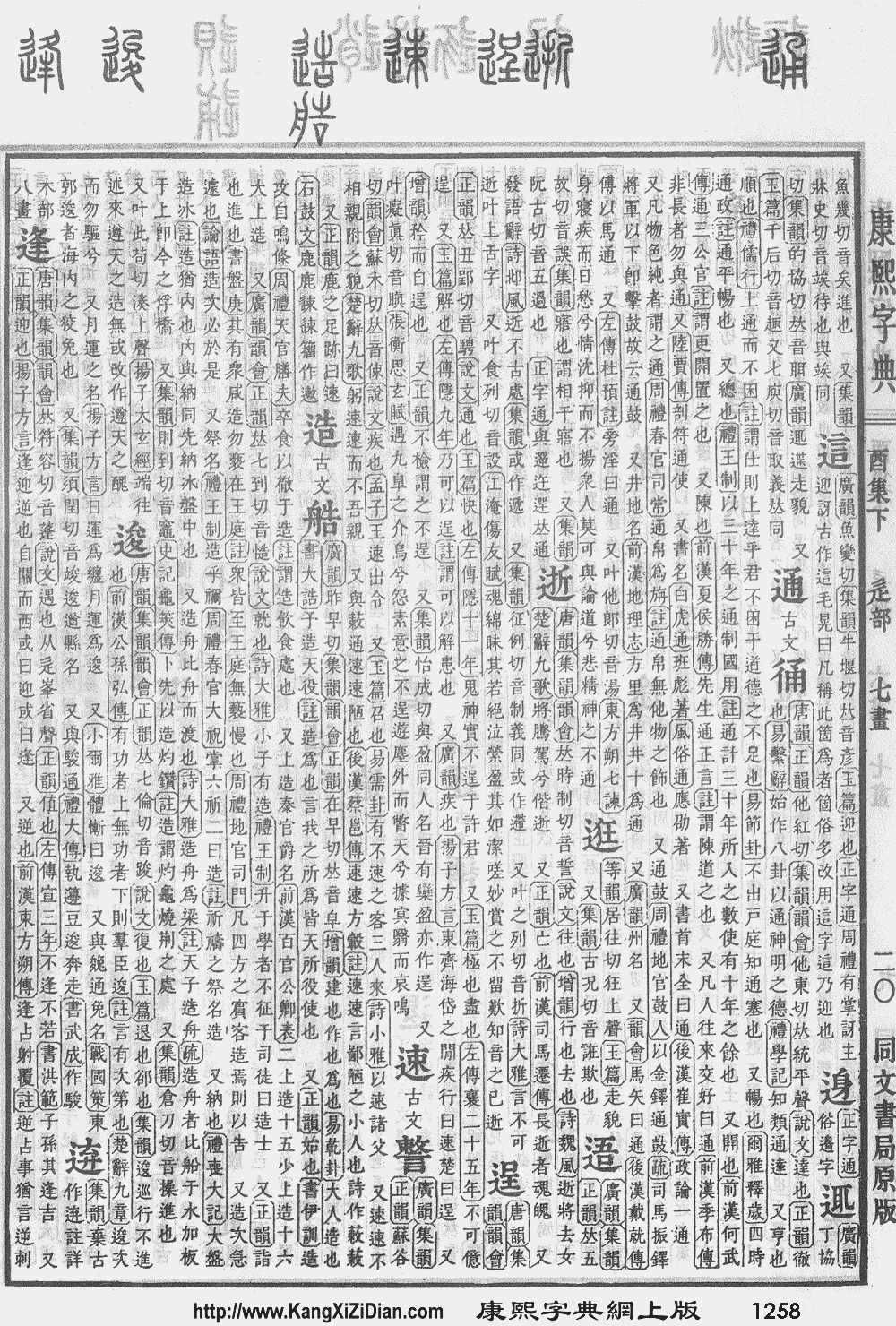
- Kangxi Dictionary: page 1258, character 8
- Dai Kanwa Jiten: character 38895
- Dae Jaweon: page 1746, character 2
- Hanyu Da Zidian (first edition): volume 6, page 3835, character 8
- Unihan data for U+901D
Chinese
| trad. | 逝 | |
|---|---|---|
| simp. # | 逝 | |
Glyph origin
| Historical forms of the character 逝 |
|---|
| Shuowen Jiezi (compiled in Han) |
| Small seal script |
 |
Characters in the same phonetic series (折) (Zhengzhang, 2003)
Phono-semantic compound (形聲/形声, OC *ɦljeds) : semantic 辵 (“walking”) + phonetic 折 (OC *l'eːl, *ʔljed, *ɦljed)
Pronunciation
Definitions
逝
- to flow
- 滾滾長江東逝水,浪花淘盡英雄。 [Classical Chinese, trad.]
- From: 14th Century, Yang Shen, The Immortals by the River, line 1
- Gǔngǔn Cháng Jiāng dōng shì shuǐ, lànghuā táo jìn yīngxióng. [Pinyin]
- Dinning and spinning Changjiang's waters eastward flow; its sprays drowning each and every hero.
滚滚长江东逝水,浪花淘尽英雄。 [Classical Chinese, simp.]- 二川并逝,俱為一水, [Classical Chinese, trad.]
- From: Li Daoyuan, Commentary on the Water Classic, 386-534 CE
- èr chuān bìng shì, jù wèi yī shuǐ, [Pinyin]
- The two creeks flow side-by-side then merge into one brook,
二川并逝,俱为一水, [Classical Chinese, simp.]
- to pass; to leave; to go off
- to pass away; to die
- (literary) Sentence-initial exclamatory particle.
- (Southern Min) Classifier for journeys or occasions.
- Alternative form of 誓 (shì, “to vow”)
Compounds
References
- “Entry #7927”, in 臺灣閩南語常用詞辭典 [Dictionary of Frequently-Used Taiwan Minnan] (overall work in Mandarin and Hokkien), Ministry of Education, R.O.C., 2023.
Japanese
| Shinjitai | 逝 | |
| Kyūjitai [1] |
逝󠄁 逝+ 󠄁?(Adobe-Japan1) |
 |
| 逝󠄃 逝+ 󠄃?(Hanyo-Denshi) (Moji_Joho) | ||
| The displayed kanji may be different from the image due to your environment. See here for details. | ||
Readings
References
- “逝”, in 漢字ぺディア (Kanjipedia) (in Japanese), 日本漢字能力検定協会, 2015–2024
Korean
Hanja
逝 • (seo) (hangeul 서, revised seo, McCune–Reischauer sŏ, Yale se)
- This term needs a translation to English. Please help out and add a translation, then remove the text
{{rfdef}}.
Vietnamese
This article is issued from Wiktionary. The text is licensed under Creative Commons - Attribution - Sharealike. Additional terms may apply for the media files.