亶
| ||||||||
Translingual
| Stroke order | |||
 | |||
Han character
亶 (Kangxi radical 8, 亠+11, 13 strokes, cangjie input 卜田口一 (YWRM), four-corner 00106, composition ⿱㐭旦)
Derived characters
References
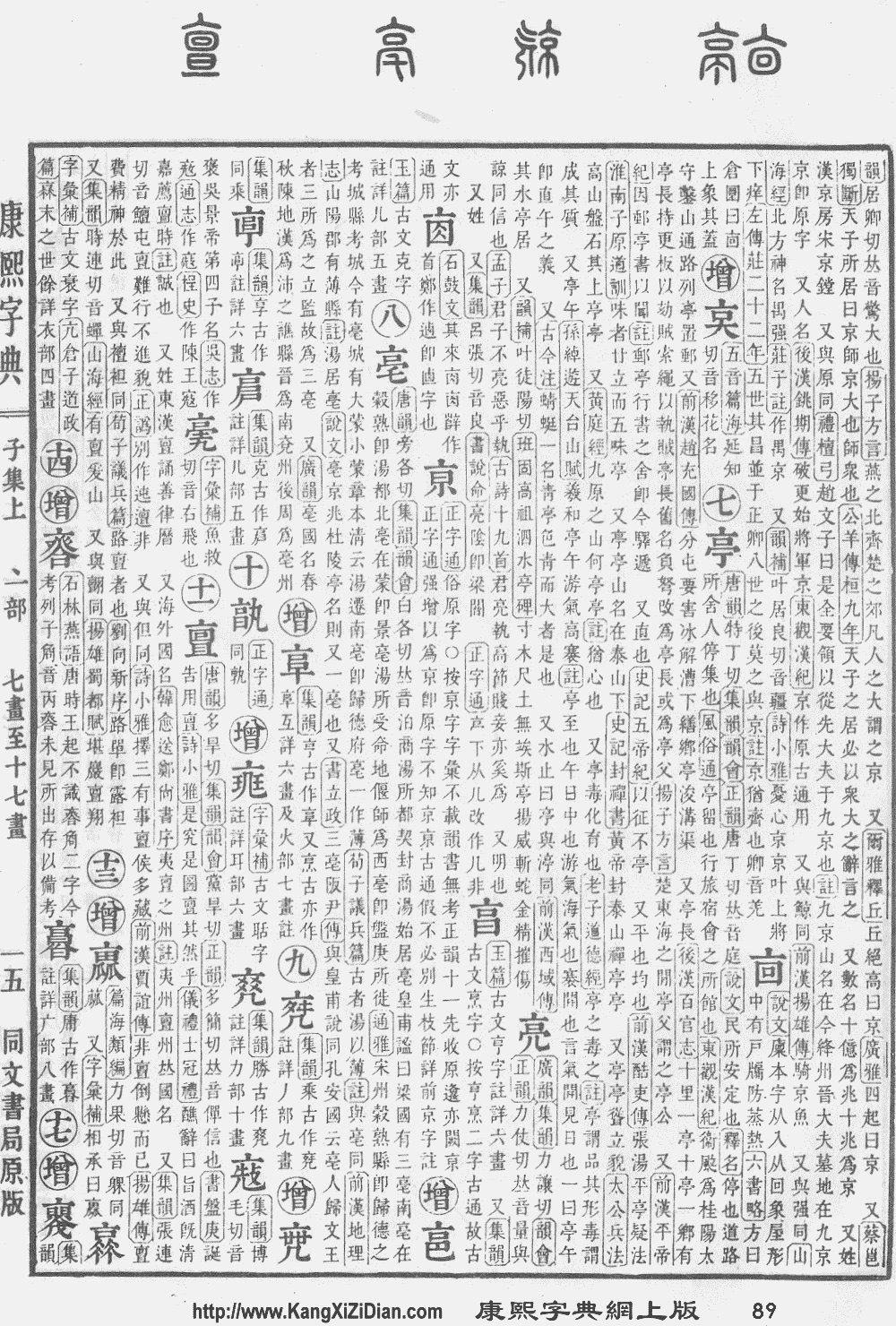
- Kangxi Dictionary: page 89, character 20
- Dai Kanwa Jiten: character 328
- Hanyu Da Zidian (first edition): volume 1, page 291, character 6
- Unihan data for U+4EB6
Chinese
| simp. and trad. |
亶 | |
|---|---|---|
Glyph origin
| Historical forms of the character 亶 | |||||||||
|---|---|---|---|---|---|---|---|---|---|
| Shang | Western Zhou | Shuowen Jiezi (compiled in Han) | Liushutong (compiled in Ming) | ||||||
| Oracle bone script | Bronze inscriptions | Small seal script | Transcribed ancient scripts | ||||||
 |
 |
 |
 | ||||||
|||
|
References: Mostly from Richard Sears' Chinese Etymology site (authorisation),
| |||||||||


Characters in the same phonetic series (旦) (Zhengzhang, 2003)
| Old Chinese | |
|---|---|
| 皽 | *tjaʀ, *tanʔ, *tjanʔ |
| 担 | *taːnʔ |
| 胆 | *daːn, *daːn |
| 疸 | *taːnʔ, *taːns |
| 觛 | *taːnʔ, *taːns, *daːnʔ |
| 亶 | *taːnʔ |
| 嬗 | *taːnʔ, *tʰaːn, *djans |
| 笪 | *taːnʔ, *taːns, *taːd |
| 狚 | *taːnʔ, *taːns, *taːd |
| 旦 | *taːns |
| 鴠 | *taːns |
| 譠 | *tʰaːn, *rteːn |
| 坦 | *tʰaːnʔ |
| 但 | *daːn, *daːnʔ, *daːns |
| 檀 | *daːn |
| 壇 | *daːn |
| 儃 | *daːn, *djan |
| 驙 | *daːn, *tan |
| 袒 | *daːnʔ, *rdeːns |
| 襢 | *daːnʔ, *tanʔ, *tans |
| 繵 | *daːnʔ |
| 膻 | *daːnʔ |
| 澶 | *daːns, *djan |
| 邅 | *tan, *danʔ, *dans |
| 鱣 | *tan |
| 饘 | *tjan, *tjanʔ |
| 旜 | *tjan |
| 氈 | *tjan |
| 鸇 | *tjan |
| 顫 | *tjans |
| 蟺 | *djanʔ |
| 擅 | *djans |
| 羶 | *hljan |
| 呾 | *taːd, *ʔraːd |
| 怛 | *taːd |
| 妲 | *taːd |
| 靼 | *taːd, *tjad |
| 炟 | *taːd |
Phono-semantic compound (形聲/形声, OC *taːnʔ) : semantic 㐭 + phonetic 旦 (OC *taːns), originally a ideogrammic compound (會意/会意) : 㐭 (“granary”) + 虫 (“insect”) (Li Xueqin, 2012).
Pronunciation
Definitions
亶
Pronunciation
Pronunciation
References
- “亶”, in 漢語多功能字庫 (Multi-function Chinese Character Database), 香港中文大學 (the Chinese University of Hong Kong), 2014–
- (Min Nan) Taiwan Min Nan Common Words Dictionary (臺灣閩南語常用詞辭典)
- 諸橋轍次 (Morohashi Tetsuji), chief ed. 大漢和辞典 (Dai Kan-Wa Jiten, “Comprehensive Chinese–Japanese Dictionary”). 13 vols. 1955–1960. Revised and enlarged ed. 1984–1986. Tokyo: Taishukan.
Japanese
Kanji
亶
- This term needs a translation to English. Please help out and add a translation, then remove the text
{{rfdef}}.
Korean
This article is issued from Wiktionary. The text is licensed under Creative Commons - Attribution - Sharealike. Additional terms may apply for the media files.