但
| ||||||||
Translingual
| Stroke order | |||
|---|---|---|---|
 | |||
| Stroke order | |||
|---|---|---|---|
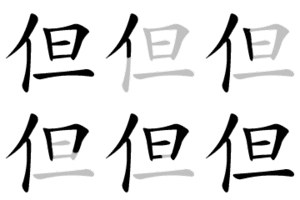 | |||
Han character
但 (Kangxi radical 9, 人+5, 7 strokes, cangjie input 人日一 (OAM), four-corner 26210, composition ⿰亻旦)
Derived characters
- 𭈂, 𢭱, 𣵤, 𨧝, 𩊹, 亱, 𮏈, 𮃿, 𨵀, 𠜬
References
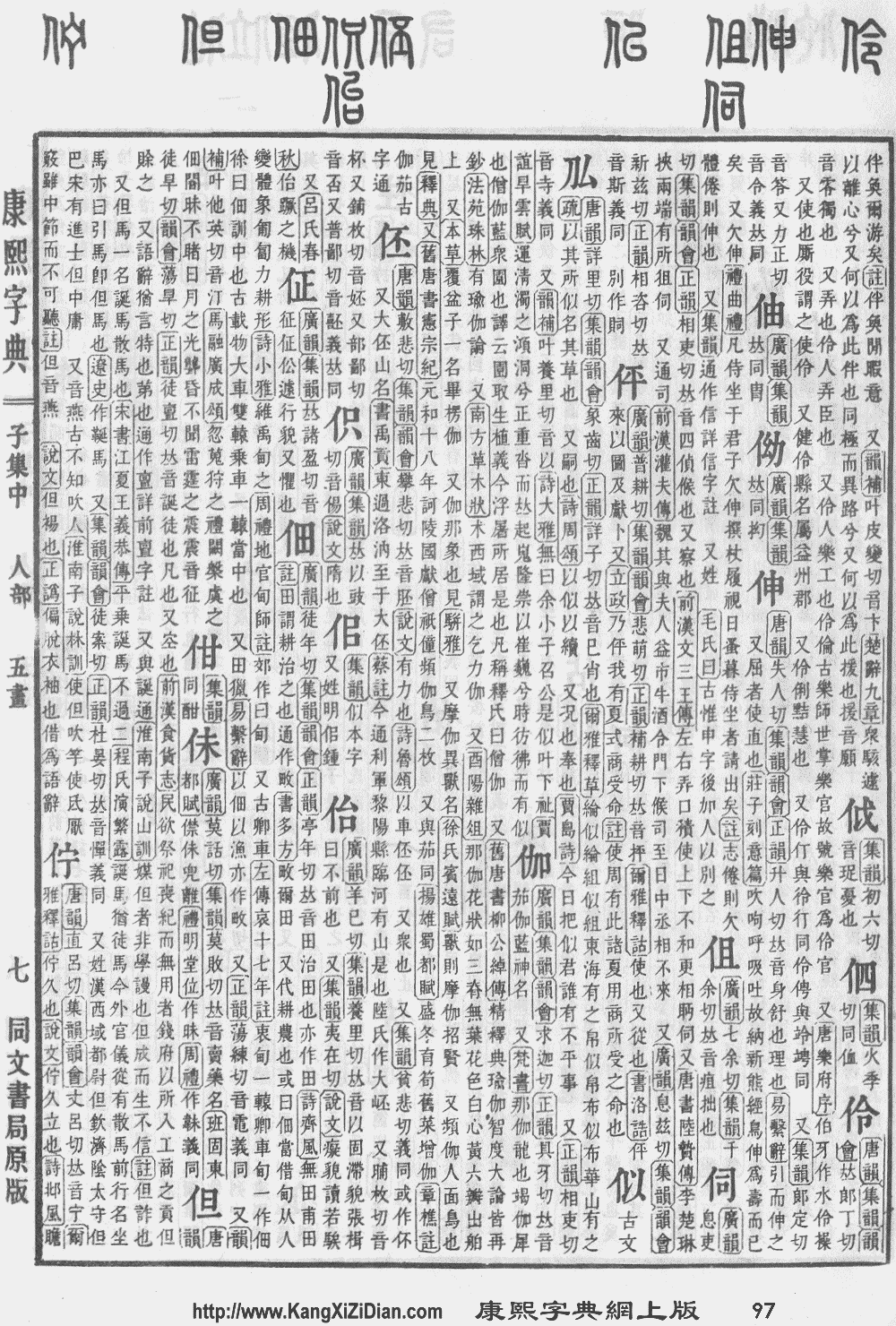
- Kangxi Dictionary: page 97, character 21
- Dai Kanwa Jiten: character 495
- Dae Jaweon: page 206, character 10
- Hanyu Da Zidian (first edition): volume 1, page 132, character 4
- Unihan data for U+4F46
Chinese
| simp. and trad. |
但 | |
|---|---|---|
Glyph origin
| Historical forms of the character 但 | ||||
|---|---|---|---|---|
| ||||
|
References: Mostly from Richard Sears' Chinese Etymology site (authorisation),
|


Characters in the same phonetic series (旦) (Zhengzhang, 2003)
| Old Chinese | |
|---|---|
| 皽 | *tjaʀ, *tanʔ, *tjanʔ |
| 担 | *taːnʔ |
| 胆 | *daːn, *daːn |
| 疸 | *taːnʔ, *taːns |
| 觛 | *taːnʔ, *taːns, *daːnʔ |
| 亶 | *taːnʔ |
| 嬗 | *taːnʔ, *tʰaːn, *djans |
| 笪 | *taːnʔ, *taːns, *taːd |
| 狚 | *taːnʔ, *taːns, *taːd |
| 旦 | *taːns |
| 鴠 | *taːns |
| 譠 | *tʰaːn, *rteːn |
| 坦 | *tʰaːnʔ |
| 但 | *daːn, *daːnʔ, *daːns |
| 檀 | *daːn |
| 壇 | *daːn |
| 儃 | *daːn, *djan |
| 驙 | *daːn, *tan |
| 袒 | *daːnʔ, *rdeːns |
| 襢 | *daːnʔ, *tanʔ, *tans |
| 繵 | *daːnʔ |
| 膻 | *daːnʔ |
| 澶 | *daːns, *djan |
| 邅 | *tan, *danʔ, *dans |
| 鱣 | *tan |
| 饘 | *tjan, *tjanʔ |
| 旜 | *tjan |
| 氈 | *tjan |
| 鸇 | *tjan |
| 顫 | *tjans |
| 蟺 | *djanʔ |
| 擅 | *djans |
| 羶 | *hljan |
| 呾 | *taːd, *ʔraːd |
| 怛 | *taːd |
| 妲 | *taːd |
| 靼 | *taːd, *tjad |
| 炟 | *taːd |
Phono-semantic compound (形聲/形声, OC *daːn, *daːnʔ, *daːns) : semantic 亻 + phonetic 旦 (OC *taːns).
Etymology
From Proto-Sino-Tibetan *(d/t)a(n/j) (“single; one; whole; only”). Cognate with 單 (OC *taːn, “single”).
Pronunciation
Definitions
但
Synonyms
Dialectal synonyms of 但是 (“but; however”) [map]
- (Dan): (Catholicism) 丹 (dān)
Japanese
Etymology 1
| Kanji in this term |
|---|
| 但 |
| ただ Grade: S |
| kun’yomi |
| For pronunciation and definitions of 但 – see the following entry. | ||
| ||
| (This term, 但, is an alternative spelling of the above term.) |
Etymology 2
| Kanji in this term |
|---|
| 但 |
| Grade: S |
| kun’yomi |
Korean
Vietnamese
References
- Trần (1999).
- Bonet (1899).
- Hồ (1976).
- Nguyễn et al. (2009).
This article is issued from Wiktionary. The text is licensed under Creative Commons - Attribution - Sharealike. Additional terms may apply for the media files.