坦
| ||||||||
Translingual
Han character
坦 (Kangxi radical 32, 土+5, 8 strokes, cangjie input 土日一 (GAM), four-corner 46110, composition ⿰土旦)
Derived characters
- 𢯟, 𥂯
Further reading
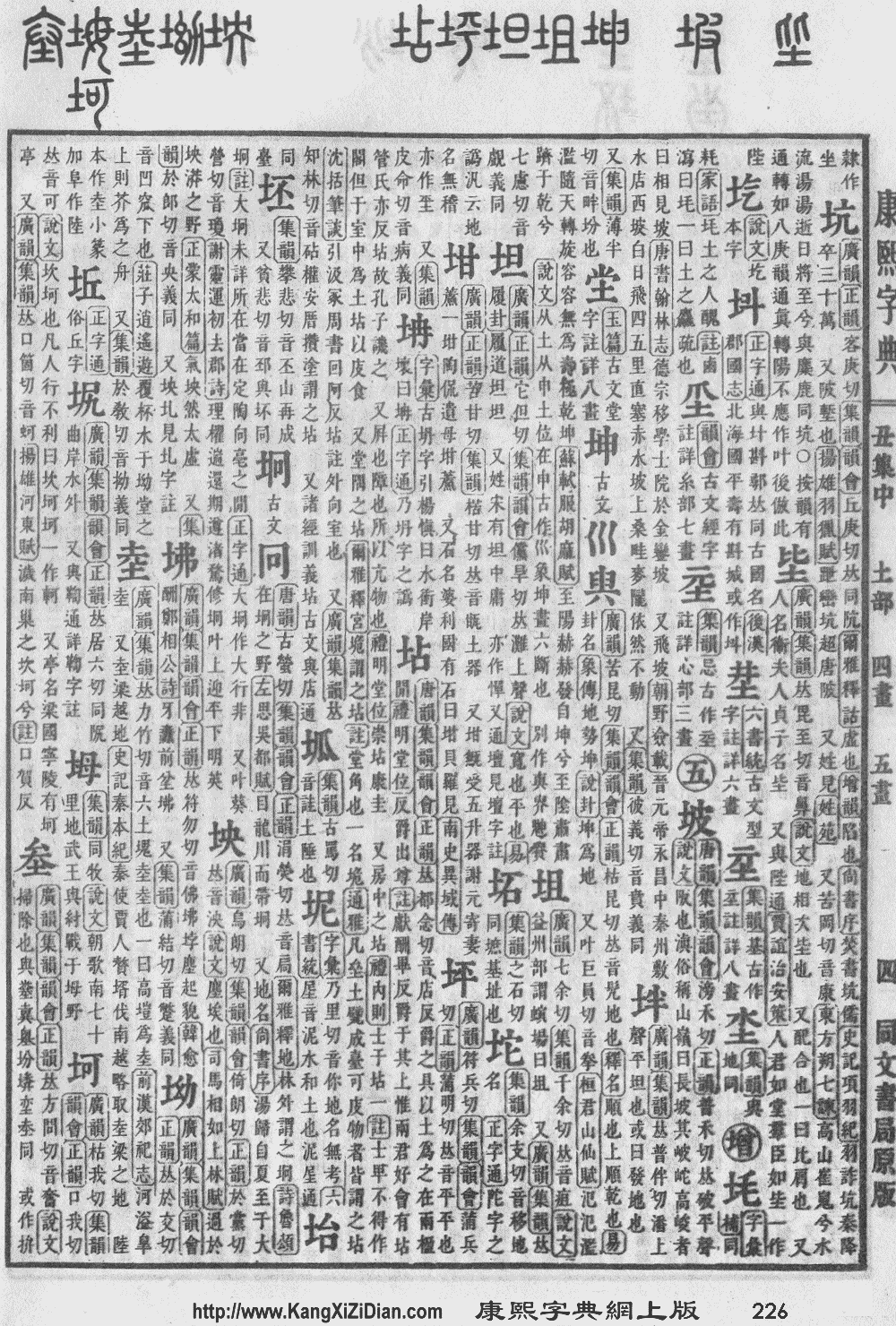
- Kangxi Dictionary: page 226, character 18
- Dai Kanwa Jiten: character 4971
- Dae Jaweon: page 461, character 30
- Hanyu Da Zidian (first edition): volume 1, page 431, character 3
- Unihan data for U+5766
Chinese
| simp. and trad. |
坦 | |
|---|---|---|
| alternative forms | 憻 | |
Glyph origin
Characters in the same phonetic series (旦) (Zhengzhang, 2003)
| Old Chinese | |
|---|---|
| 皽 | *tjaʀ, *tanʔ, *tjanʔ |
| 担 | *taːnʔ |
| 胆 | *daːn, *daːn |
| 疸 | *taːnʔ, *taːns |
| 觛 | *taːnʔ, *taːns, *daːnʔ |
| 亶 | *taːnʔ |
| 嬗 | *taːnʔ, *tʰaːn, *djans |
| 笪 | *taːnʔ, *taːns, *taːd |
| 狚 | *taːnʔ, *taːns, *taːd |
| 旦 | *taːns |
| 鴠 | *taːns |
| 譠 | *tʰaːn, *rteːn |
| 坦 | *tʰaːnʔ |
| 但 | *daːn, *daːnʔ, *daːns |
| 檀 | *daːn |
| 壇 | *daːn |
| 儃 | *daːn, *djan |
| 驙 | *daːn, *tan |
| 袒 | *daːnʔ, *rdeːns |
| 襢 | *daːnʔ, *tanʔ, *tans |
| 繵 | *daːnʔ |
| 膻 | *daːnʔ |
| 澶 | *daːns, *djan |
| 邅 | *tan, *danʔ, *dans |
| 鱣 | *tan |
| 饘 | *tjan, *tjanʔ |
| 旜 | *tjan |
| 氈 | *tjan |
| 鸇 | *tjan |
| 顫 | *tjans |
| 蟺 | *djanʔ |
| 擅 | *djans |
| 羶 | *hljan |
| 呾 | *taːd, *ʔraːd |
| 怛 | *taːd |
| 妲 | *taːd |
| 靼 | *taːd, *tjad |
| 炟 | *taːd |
Phono-semantic compound (形聲/形声, OC *tʰaːnʔ) : semantic 土 (“earth”) + phonetic 旦 (OC *taːns)
Pronunciation
Definitions
坦
- ⁜ flat; level; wide
- 平坦 ― píngtǎn ― level
- ⁜ calm; open-hearted; at ease
- 坦然 ― tǎnrán ― calm
- 子曰:「君子坦蕩蕩,小人長戚戚。」 [Classical Chinese, trad.]
- From: The Analects of Confucius, c. 475 – 221 BCE, translated based on James Legge's version
- Zǐ yuē: “Jūnzǐ tǎn dàngdàng, xiǎorén cháng qīqī.” [Pinyin]
- The Master said, "The superior man is satisfied and composed; the mean man is always full of distress."
子曰:「君子坦荡荡,小人长戚戚。」 [Classical Chinese, simp.]
- ⁜ honest; frank
- † to reveal; to expose
- a surname
Compounds
- 不舒坦
- 令坦
- 伊斯坦堡 (Yīsītǎnbǎo)
- 伯恩斯坦 (Bó'ēnsītǎn)
- 佩斯坦
- 博斯坦 (Bósītǎn)
- 反坦克炮
- 坦克 (tǎnkè)
- 坦克兵
- 坦克車/坦克车 (tǎnkèchē)
- 坦坦
- 坦坦蕩蕩/坦坦荡荡
- 坦塗/坦涂
- 坦夷
- 坦尚尼亞/坦尚尼亚 (Tǎnshàngníyà)
- 坦平 (tǎnpíng)
- 坦懷/坦怀
- 坦承 (tǎnchéng)
- 坦易
- 坦然 (tǎnrán)
- 坦率 (tǎnshuài)
- 坦白 (tǎnbái)
- 坦直
- 坦緩/坦缓
- 坦腹
- 坦腹東床/坦腹东床
- 坦蕩/坦荡 (tǎndàng)
- 坦蕩蕩/坦荡荡
- 坦言 (tǎnyán)
- 坦誠/坦诚 (tǎnchéng)
- 坦迤
- 坦途 (tǎntú)
- 坦露
- 墩闊坦/墩阔坦 (Dūnkuòtǎn)
- 小坦山 (Xiǎotǎnshān)
- 巴力斯坦 (Bālìsītǎn)
- 巴勒斯坦 (Bālèsītǎn)
- 巴基斯坦 (Bājīsītǎn)
- 平坦 (píngtǎn)
- 平坦大路
- 平坦寬闊/平坦宽阔
- 愛因斯坦/爱因斯坦 (Àiyīnsītǎn)
- 斯坦因
- 斯坦貝克/斯坦贝克
- 曼哈坦島/曼哈坦岛
- 東坦蕭然/东坦萧然
- 東床坦腹/东床坦腹
- 泰坦族
- 波茨坦 (Bōcítǎn)
- 興都斯坦/兴都斯坦 (Xīngdūsītǎn)
- 舒坦
- 襟懷坦白/襟怀坦白 (jīnhuáitǎnbái)
References
- “坦”, in 漢語多功能字庫 (Multi-function Chinese Character Database), 香港中文大學 (the Chinese University of Hong Kong), 2014–
Japanese
Readings
Korean
Etymology
From Middle Chinese 坦 (MC thanX).
Vietnamese
Han character
坦: Hán Việt readings: thản (
坦: Nôm readings: đứt[1][2][3][6][4][5][7], đất[1][2][3][4][5][7], đắt[2][3][6][4][5][7], thản[2][6][4], đác[1], đởn[1], thán[1], đắn[2], đật[3], ngẩn[3], thưỡn[3]
Derived terms
Derived terms
- 坦然 (thản nhiên)
- 平坦 (bình thản)
Glyph origin
Phono-semantic compound (形聲/形声) : semantic 土 (“earth”) + phonetic 怛 (đát). The 旦 element is a simplified form of 怛.
References
- Nguyễn (2014).
- Nguyễn et al. (2009).
- Trần (2004).
- Bonet (1899).
- Génibrel (1898).
- Hồ (1976).
- Taberd & Pigneau de Béhaine (1838).
This article is issued from Wiktionary. The text is licensed under Creative Commons - Attribution - Sharealike. Additional terms may apply for the media files.