極
See also: 极
| ||||||||
Translingual
Han character
極 (Kangxi radical 75, 木+8, 12 strokes, cangjie input 木一水一 (DMEM) or 木弓水一 (DNEM), four-corner 41914, composition ⿰木亟)
Derived characters
- 𤺷, 𦽯, 𨅰, 𮔼
References
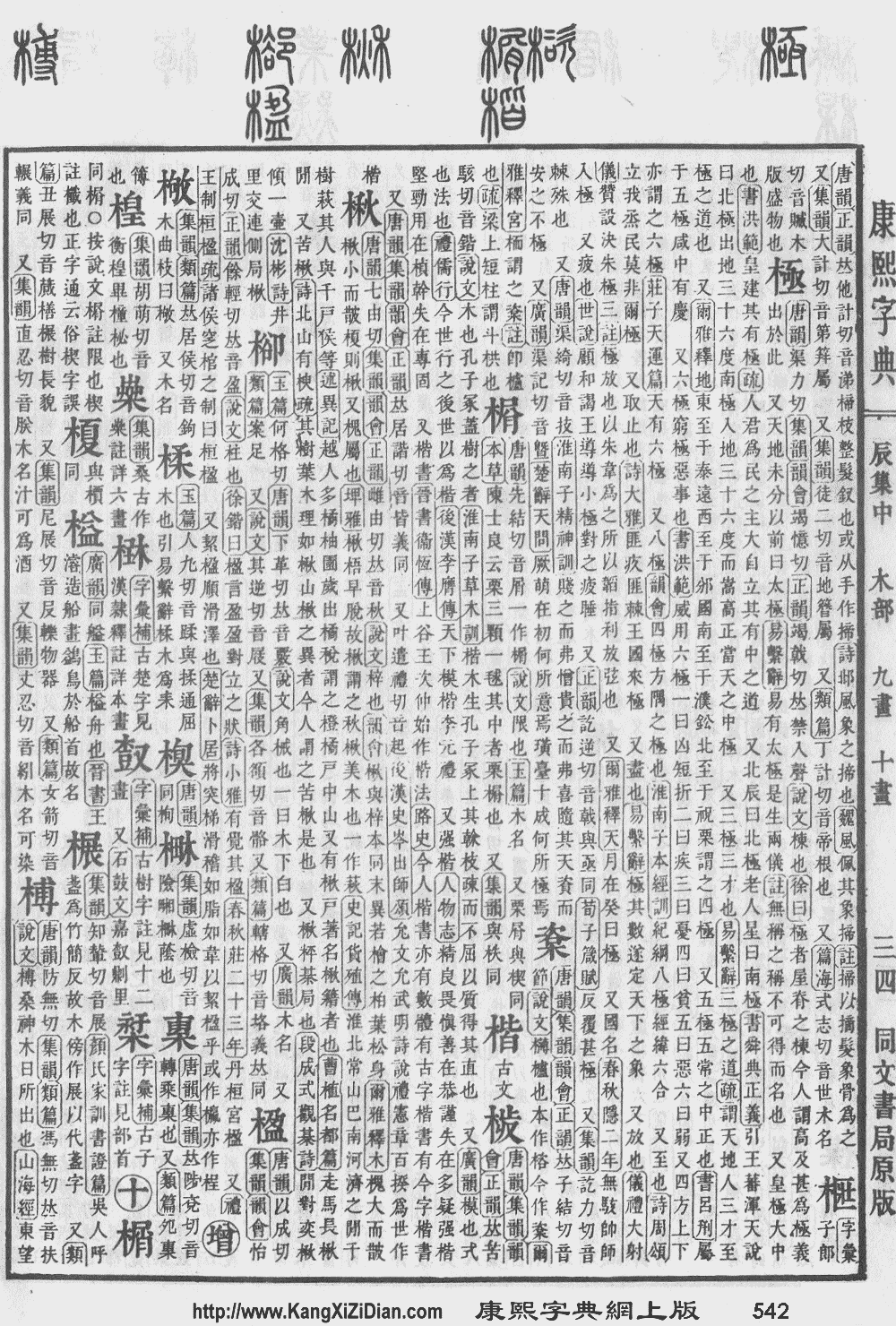
- Kangxi Dictionary: page 542, character 2
- Dai Kanwa Jiten: character 15181
- Dae Jaweon: page 929, character 7
- Hanyu Da Zidian (first edition): volume 2, page 1240, character 10
- Unihan data for U+6975
Chinese
| trad. | 極 | |
|---|---|---|
| simp. | 极* | |
Glyph origin
| Historical forms of the character 極 |
|---|
| Spring and Autumn |
| Bronze inscriptions |
 |
Characters in the same phonetic series (茍) (Zhengzhang, 2003)
Phono-semantic compound (形聲/形声, OC *ɡɯɡ) : semantic 木 (“tree, wood”) + phonetic 亟 (OC *kʰɯɡs, *kɯɡ) – originally meaning a crossbeam rafter.
Etymology
From Proto-Sino-Tibetan *kak (“expensive; at its peak”) (STEDT). Cognate with 亟 (OC *kɯɡ, “urgent”), 殛 (OC *kɯɡ, “to kill”) (Schuessler, 2007).
Pronunciation 1
Definitions
極
- † ridgepole; ridgepiece
- † highest position; top rank
- † throne; seat of state
- † highest point; top; peak
- extremity; limit; end; utmost point
- extreme; of the highest degree; utmost; furthest; final
- extremely; exceedingly; very
- (Cantonese) at great length; exceedingly
- (Cantonese) at most
- † highest norm; highest standard
- (Wu) to be anxious; to worry; to disturb oneself
- (Wu) to fear
- (Wu) to deny a wrongdoing; to cheat
- 賴極皮/赖极皮 [Shanghainese] ― 6la-jiq-bi [Wugniu] ― cheater in games (who e.g. objects to losing, being thrown out of the game, or who denies having cheated)
- (geography, physics) pole
- (astronomy) Polaris
- quindecillion (1048)
- † to reach (the limit or standard)
- † to exhaust; to do one's utmost
- † to study deeply; to examine deeply
- † Alternative form of 殛 (jí, “to punish”)
Compounds
- 三極/三极
- 不極/不极
- 不極不反/不极不反
- 亂極則平/乱极则平
- 二極管/二极管 (èrjíguǎn)
- 二極體/二极体 (èrjítǐ)
- 何極/何极
- 位極人臣/位极人臣 (wèijírénchén)
- 偏極光/偏极光
- 偏極光鏡/偏极光镜
- 兩極/两极 (liǎngjí)
- 兩極化/两极化
- 兩極觀點/两极观点
- 八極/八极 (bājí)
- 八極拳/八极拳 (bājíquán)
- 六極/六极
- 剝極必復/剥极必复
- 勃極烈/勃极烈
- 勢窮力極/势穷力极
- 北極/北极 (Běijí)
- 北極光/北极光 (běijíguāng)
- 北極凍原/北极冻原
- 北極圈/北极圈 (Běijíquān)
- 北極地區/北极地区
- 北極星/北极星 (Běijíxīng)
- 北極海/北极海 (Běijíhǎi)
- 北極熊/北极熊 (běijíxióng)
- 北極犬/北极犬
- 北極狐/北极狐 (Běijíhú)
- 北極鋒/北极锋
- 北極鯨/北极鲸
- 南北極/南北极
- 南極/南极 (Nánjí)
- 南極仙翁/南极仙翁
- 南極呈祥/南极呈祥
- 南極圈/南极圈 (Nánjíquān)
- 南極地區/南极地区
- 南極大陸/南极大陆 (Nánjí Dàlù)
- 南極星沉/南极星沉
- 南極星輝/南极星辉
- 南極洲/南极洲 (Nánjízhōu)
- 南極騰輝/南极腾辉
- 名垂罔極/名垂罔极
- 否極必泰/否极必泰
- 否極泰來/否极泰来 (pǐjítàilái)
- 否極生泰/否极生泰
- 喜極而泣/喜极而泣 (xǐjí'érqì)
- 四極/四极
- 地極/地极 (dìjí)
- 坤極/坤极
- 垓極/垓极
- 基極/基极 (jījí)
- 太極/太极 (tàijí)
- 太極劍/太极剑
- 太極圖/太极图 (tàijítú)
- 太極圖說/太极图说
- 太極拳/太极拳 (tàijíquán)
- 奇冤極枉/奇冤极枉
- 宸極/宸极
- 峻極/峻极
- 底極/底极
- 建極/建极
- 弓極/弓极
- 御極/御极 (yùjí)
- 打太極/打太极 (dǎ tàijí)
- 打太極拳/打太极拳 (dǎ tàijíquán)
- 拱極星/拱极星
- 指極星/指极星
- 握手極歡/握手极欢
- 撒極/撒极
- 斗極
- 昊天罔極/昊天罔极 (hàotiānwǎngjí)
- 有極/有极 (yǒují)
- 柵極/栅极
- 極便當/极便当
- 極光/极光 (jíguāng)
- 極其/极其 (jíqí)
- 極冠/极冠
- 極切瞻韓/极切瞻韩
- 極刑/极刑 (jíxíng)
- 極力/极力 (jílì)
- 極化/极化 (jíhuà)
- 極口/极口
- 極品/极品 (jípǐn)
- 極圈/极圈 (jíquān)
- 極地/极地 (jídì)
- 極地氣候/极地气候
- 極坐標/极坐标 (jízuòbiāo)
- 極婺聯輝/极婺联辉
- 極子/极子 (jízǐ)
- 極峰/极峰
- 極度/极度 (jídù)
- 極板/极板
- 極樂/极乐 (jílè)
- 極樂世界/极乐世界 (jílè shìjiè)
- 極樂鳥/极乐鸟 (jílèniǎo)
- 極權/极权 (jíquán)
- 極權主義/极权主义 (jíquán zhǔyì)
- 極權國家/极权国家
- 極權政治/极权政治
- 極深研幾/极深研几
- 極目/极目 (jímù)
- 極短篇/极短篇
- 極端/极端 (jíduān)
- 極端分子/极端分子 (jíduān fènzǐ)
- 極致/极致 (jízhì)
- 極色/极色
- 極處/极处
- 極選/极选
- 極量/极量
- 極鋒/极锋
- 極限/极限 (jíxiàn)
- 極限強度/极限强度
- 極限體育/极限体育
- 極頭麻化/极头麻化
- 極體/极体 (jítǐ)
- 極點/极点 (jídiǎn)
- 樂不可極/乐不可极
- 樂極則悲/乐极则悲
- 樂極忘形/乐极忘形
- 樂極悲來/乐极悲来
- 樂極悲生/乐极悲生
- 樂極生悲/乐极生悲 (lèjíshēngbēi)
- 正極/正极 (zhèngjí)
- 殫思極慮/殚思极虑
- 殫精極思/殚精极思
- 殫精極慮/殚精极虑
- 民極/民极
- 沒極奈何/没极奈何
- 泰極而否/泰极而否
- 消極/消极 (xiāojí)
- 消極論/消极论
- 深思極慮/深思极虑
- 無極/无极 (wújí)
- 物極則衰/物极则衰
- 物極必反/物极必反 (wùjíbìfǎn)
- 痛毀極詆/痛毁极诋
- 登峰造極/登峰造极 (dēngfēngzàojí)
- 發極/发极
- 登極/登极 (dēngjí)
- 皇極/皇极
- 皇極數/皇极数
- 盛極一時/盛极一时 (shèngjíyīshí)
- 盛極必衰/盛极必衰
- 盡態極妍/尽态极妍
- 直言極諫/直言极谏
- 磁北極/磁北极
- 磁南極/磁南极
- 磁極/磁极 (cíjí)
- 積極/积极 (jījí)
- 積極分子/积极分子 (jījí fènzǐ)
- 積極性/积极性 (jījíxìng)
- 窮兵極武/穷兵极武
- 窮凶惡極/穷凶恶极
- 窮凶極惡/穷凶极恶 (qióngxiōngjí'è)
- 窮凶極虐/穷凶极虐
- 窮天極地/穷天极地
- 窮奢極侈/穷奢极侈
- 窮奢極欲/穷奢极欲
- 窮妙極巧/穷妙极巧
- 窮富極貴/穷富极贵
- 窮工極巧/穷工极巧
- 窮幽極微/穷幽极微
- 窮形極狀/穷形极状
- 窮本極源/穷本极源
- 窮極/穷极
- 窮極其妙/穷极其妙
- 窮極則變/穷极则变
- 窮極無聊/穷极无聊
- 窮極要妙/穷极要妙
- 窮貴極富/穷贵极富
- 終極/终极 (zhōngjí)
- 繼天立極/继天立极
- 罔極/罔极 (wǎngjí)
- 罔極之恩/罔极之恩
- 罪大惡極/罪大恶极 (zuìdà'èjí)
- 至愚極陋/至愚极陋
- 至極/至极 (zhìjí)
- 衍極/衍极
- 西極/西极
- 親極反疏/亲极反疏
- 計窮力極/计穷力极
- 計窮慮極/计穷虑极
- 負極/负极 (fùjí)
- 貴極人臣/贵极人臣
- 賴極皮/赖极皮
- 踐極/践极
- 造天立極/造天立极
- 造極登峰/造极登峰
- 陰極/阴极 (yīnjí)
- 陰極射線/阴极射线 (yīnjí shèxiàn)
- 陽極/阳极 (yángjí)
- 隆極/隆极
- 陽極射線/阳极射线
- 電極/电极 (diànjí)
- 靜極思動/静极思动
- 高官極品/高官极品
See also
| Chinese numerals | ||||||||||||
|---|---|---|---|---|---|---|---|---|---|---|---|---|
| 104 | 108 | 1012 | 1016 | 1020 | 1024 | 1028 | 1032 | 1036 | 1040 | 1044 | 1048 | |
| 萬/万 (wàn) | 億/亿 (yì) | 兆 (zhào) (Taiwan) | 京 (jīng) (Taiwan) | 垓 (gāi) | 秭 (zǐ) | 穰 (ráng) | 溝/沟 (gōu) | 澗/涧 (jiàn) | 正 (zhèng) | 載/载 (zài) | 極/极 (jí) | |
| 萬億/万亿 (wànyì) (Mainland China) |
億億/亿亿 (Mainland China) | |||||||||||
Pronunciation 2
Pronunciation 3
References
- “極”, in 漢語多功能字庫 (Multi-function Chinese Character Database), 香港中文大學 (the Chinese University of Hong Kong), 2014–
Japanese
Readings
Compounds
Etymology 1
| Kanji in this term |
|---|
| 極 |
| ごく Grade: 4 |
| goon |
Adverb
極 • (goku)
Usage notes
This word is usually written in hiragana.
Etymology 2
| Kanji in this term |
|---|
| 極 |
| きょく Grade: 4 |
| kan’on |
Korean
Etymology
From Middle Chinese 極 (MC gik). Recorded as Middle Korean 극 (kuk) (Yale: kuk) in Hunmong Jahoe (訓蒙字會 / 훈몽자회), 1527.
Compounds
Compounds
- 극도 (極度, geukdo, “maximum”)
- 극동 (極東, geukdong, “the Far East”)
- 극심 (極甚, geuksim, “severity”)
- 극우 (極右, geugu, “far right, ultraright”)
- 극좌 (極左, geukjwa, “far left, ultraleft”)
- 극치 (極致, geukchi, “peak”)
- 극한 (極限, geukhan, “limit; maximum”)
- 극호 (極好, geukho, “extremely liking”)
- 남극 (南極, namgeuk, “south pole”)
- 북극 (北極, bukgeuk, “north pole”)
- 적극 (積極, jeokgeuk, “activity”)
- 지극 (至極, jigeuk, “the height of”)
- 태극 (太極, taegeuk, “tai chi”)
Vietnamese
This article is issued from Wiktionary. The text is licensed under Creative Commons - Attribution - Sharealike. Additional terms may apply for the media files.