克
| ||||||||
Translingual
Han character
| Stroke order | |||
|---|---|---|---|
 | |||
克 (Kangxi radical 10, 儿+5, 7 strokes, cangjie input 十口竹山 (JRHU), four-corner 40216, composition ⿱古儿 or ⿱十兄)
Derived characters
References
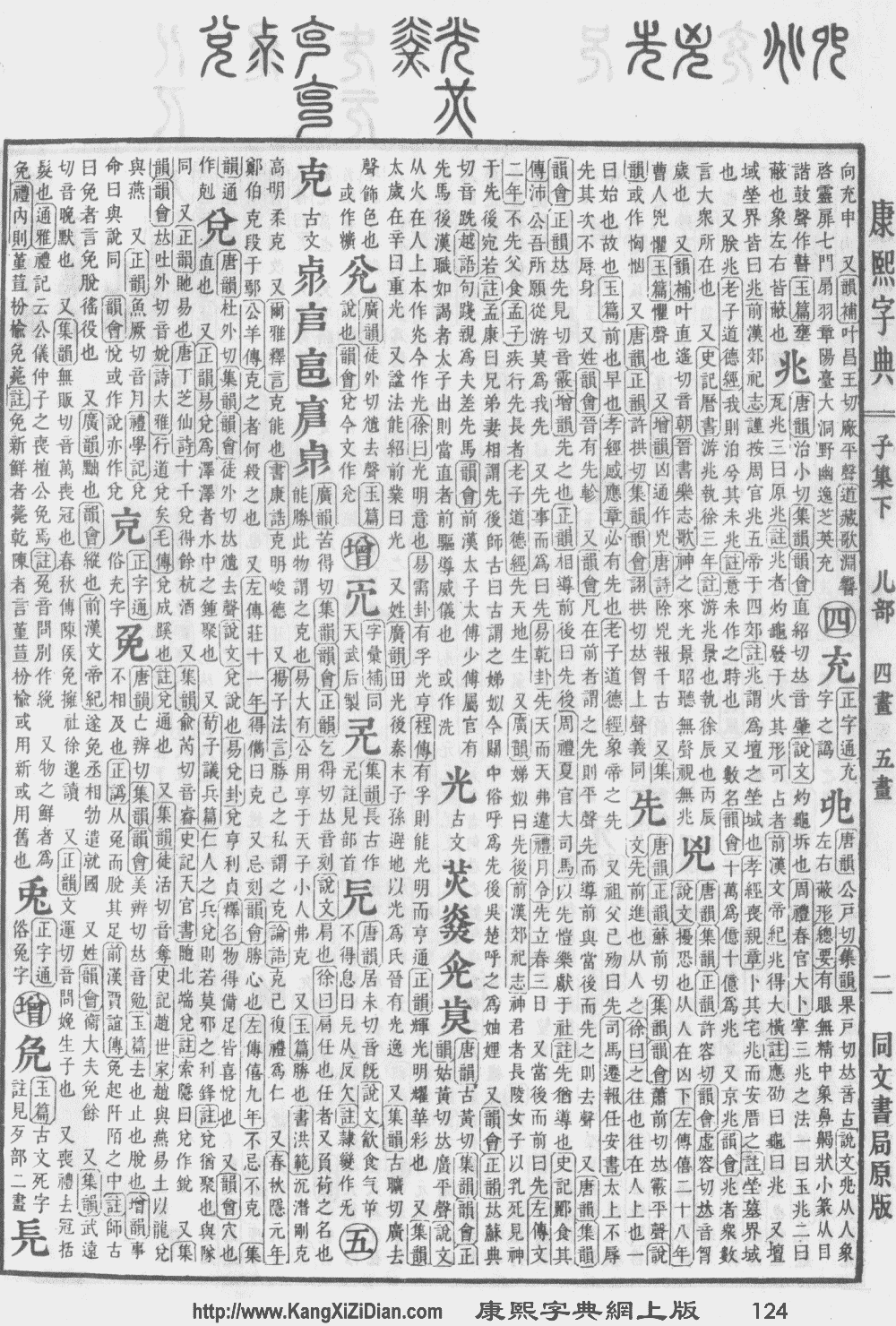
- Kangxi Dictionary: page 124, character 15
- Dai Kanwa Jiten: character 1355
- Dae Jaweon: page 263, character 4
- Hanyu Da Zidian (first edition): volume 1, page 269, character 4
- Unihan data for U+514B
Chinese
Glyph origin
| Historical forms of the character 克 | |||||||||||||||||||||||||||||||||||||||||||||||||||||||||||||||||||||||||||||||||||||||||||||
|---|---|---|---|---|---|---|---|---|---|---|---|---|---|---|---|---|---|---|---|---|---|---|---|---|---|---|---|---|---|---|---|---|---|---|---|---|---|---|---|---|---|---|---|---|---|---|---|---|---|---|---|---|---|---|---|---|---|---|---|---|---|---|---|---|---|---|---|---|---|---|---|---|---|---|---|---|---|---|---|---|---|---|---|---|---|---|---|---|---|---|---|---|---|
| Shang | Western Zhou | Shuowen Jiezi (compiled in Han) | Liushutong (compiled in Ming) | ||||||||||||||||||||||||||||||||||||||||||||||||||||||||||||||||||||||||||||||||||||||||||
| Oracle bone script | Bronze inscriptions | Small seal script | Transcribed ancient scripts | ||||||||||||||||||||||||||||||||||||||||||||||||||||||||||||||||||||||||||||||||||||||||||
 |
 |
 |
 | ||||||||||||||||||||||||||||||||||||||||||||||||||||||||||||||||||||||||||||||||||||||||||
|||
|
References: Mostly from Richard Sears' Chinese Etymology site (authorisation),
| |||||||||||||||||||||||||||||||||||||||||||||||||||||||||||||||||||||||||||||||||||||||||||||


Ideogrammic compound (會意/会意) : a battle helmet 由 and a pelt 皮 – "to defeat; to vanquish". Alternatively, pictogram (象形) : a person 卩 carrying something 由 over their shoulders – "to shoulder; to be competent".
Also Simplified from 剋.
Pronunciation
Definitions
克
- (literary) to be able to
- 靡不有初,鮮克有終。 [Pre-Classical Chinese, trad.]
- From: The Classic of Poetry, c. 11th – 7th centuries BCE, translated based on James Legge's version
- Mǐ bù yǒu chū, xiǎn kè yǒu zhōng. [Pinyin]
- All are [good] at first,
But few prove themselves to be so at the last.
靡不有初,鲜克有终。 [Pre-Classical Chinese, simp.]
- to defeat; to vanquish; to conquer
- 夏,五月,鄭伯克段于鄢。 [Classical Chinese, trad.]
- From: Commentary of Zuo, c. 4th century BCE, translation from Zuozhuan: Commentary on the "Spring and Autumn Annals" (2017), by Stephen Durrant, Wai-yee Li and David Schaberg
- Xià, wǔyuè, Zhèng Bó kè Duàn yú Yān. [Pinyin]
- In summer, in the fifth month, the Liege of Zheng overcame Duan (Gongshu Duan) at Yan.
夏,五月,郑伯克段于鄢。 [Classical Chinese, simp.]
- to subdue; to restrain
- 克制 ― kèzhì ― to restrain
- 克己復禮為仁。一日克己復禮,天下歸仁焉。 [Classical Chinese, trad.]
- From: The Analects of Confucius, c. 475 – 221 BCE, translated based on James Legge's version
- Kèjǐfùlǐ wéi rén. Yīrì kèjǐfùlǐ, tiānxià guī rén yān. [Pinyin]
- To subdue one's self and return to propriety, is perfect virtue. If a man can for one day subdue himself and return to propriety, all under heaven will ascribe perfect virtue to him.
克己复礼为仁。一日克己复礼,天下归仁焉。 [Classical Chinese, simp.]
- to digest
- 克食 ― kèshí ― to aid digestion
- to set (a time limit)
- 克日 ― kèrì ― to set a date
- (dialectal) Pronunciation spelling of 去.
- gram (g)
- a Tibetan unit of volume or dry measure
- a Tibetan unit of land area
See also
Usage notes
It is commonly used to transcribe the /k/ sound in words of foreign languages not immediately followed by a vowel, e.g. 傑克/杰克 (Jiékè, “Jack”), 法蘭克福/法兰克福 (Fǎlánkèfú, “Frankfurt”), 克羅地亞/克罗地亚 (Kèluódìyà, “Croatia”), etc..
Compounds
- 不克 (bùkè)
- 也克先拜巴扎 (Yěkèxiān Bàibāzhā)
- 亞科瑞克/亚科瑞克 (yàkēruìkè)
- 以少克眾/以少克众
- 以柔克剛/以柔克刚
- 以眾克寡/以众克寡
- 休克 (xiūkè)
- 伊拉克 (Yīlākè)
- 何以克當/何以克当
- 伯克 (bókè)
- 伯克來/伯克来
- 伯克制度
- 依力克其 (Yīlìkèqí)
- 依吞布拉克 (Yītūnbùlākè)
- 傑克/杰克 (Jiékè)
- 傑克南瓜燈/杰克南瓜灯 (jiékè-nánguādēng)
- 克什克騰/克什克腾
- 克來汀症/克来汀症
- 克儉克勤/克俭克勤
- 克克拉去考勒 (Kèkèlāqùkǎolè)
- 克分子
- 克列牙
- 克利夫蘭/克利夫兰 (Kèlìfūlán)
- 克制 (kèzhì)
- 克勒特
- 克勤克儉/克勤克俭 (kèqínkèjiǎn)
- 克原子
- 克孜勒蘇/克孜勒苏 (Kèzīlèsū)
- 克孜爾/克孜尔 (Kèzī'ěr)
- 克定
- 克家
- 克家子
- 克寧/克宁
- 克州 (Kèzhōu)
- 克己 (kèjǐ)
- 克己主義/克己主义 (kèjǐ zhǔyì)
- 克己奉公 (kèjǐfènggōng)
- 克己復禮/克己复礼 (kèjǐfùlǐ)
- 克復/克复 (kèfù)
- 克拉 (kèlā)
- 克拉瑪依/克拉玛依 (Kèlāmǎyī)
- 克捷 (kèjié)
- 克敦孝行
- 克敵/克敌 (kèdí)
- 克敵制勝/克敌制胜 (kèdízhìshèng)
- 克日 (kèrì)
- 克明 (kèmíng)
- 克服 (kèfú)
- 克朗 (kèlǎng)
- 克柔
- 克汗
- 克當量/克当量
- 克盡厥職/克尽厥职
- 克盡己職/克尽己职
- 克紹箕裘/克绍箕裘
- 克絲鉗子/克丝钳子
- 克繩祖武/克绳祖武
- 克諧/克谐
- 克讓/克让
- 克里姆林宮 (Kèlǐmǔlín gōng)
- 克里特 (kèlǐtè)
- 克里陽 (Kèlǐyáng)
- 克里雅 (Kèlǐyǎ)
- 克隆斯臺/克隆斯台
- 克難/克难
- 克難運動/克难运动
- 克雷因
- 克順克卑/克顺克卑
- 克魯倫河/克鲁伦河
- 公克 (gōngkè)
- 共克時艱/共克时艰 (gòngkèshíjiān)
- 別伊克/别伊克 (Biéyīkè)
- 剛克/刚克
- 力克 (lìkè)
- 加依提勒克 (Jiāyītílèkè)
- 努克 (Nǔkè)
- 努瓦克肖特 (Nǔwǎkèxiàotè)
- 勒克司
- 博克達山/博克达山
- 反坦克炮
- 史撥尼克/史拨尼克 (si2 but6 nei4 hak1)
- 吐木秀克 (Tǔmùxiùkè)
- 吉爾庫克/吉尔库克
- 呼圖克圖/呼图克图 (hūtúkètú)
- 哈薩克文/哈萨克文
- 哈薩克族/哈萨克族
- 哈薩克語/哈萨克语
- 哥薩克/哥萨克 (gēsàkè)
- 喀拉克爾/喀拉克尔 (Kālākè'ěr)
- 喀瓦克 (Kāwǎkè)
- 噶大克
- 圖木舒克/图木舒克 (Túmùshūkè)
- 圖格里克 (túgélǐkè)
- 坦克 (tǎnkè)
- 坦克兵
- 坦克車/坦克车 (tǎnkèchē)
- 塔克拉瑪干 (Tǎkèlāmǎgān)
- 塔吉克 (Tǎjíkè)
- 塔吉克族 (Tǎjíkèzú)
- 壓克力/压克力 (yākèlì)
- 多米尼克 (Duōmǐníkè)
- 央塔克 (Yāngtǎkè)
- 夸克 (kuākè)
- 夾克/夹克 (jiākè)
- 奧依亞依拉克/奥依亚依拉克 (Àoyīyà Yīlākè)
- 奧依托格拉克/奥依托格拉克 (Àoyītuō Gélākè)
- 奧克蘭/奥克兰 (Àokèlán)
- 奧林匹克/奥林匹克 (àolínpǐkè)
- 威克島/威克岛 (Wēikè Dǎo)
- 孟什維克/孟什维克 (mèngshíwéikè)
- 安克拉治 (Ānkèlāzhì)
- 巧克力 (qiǎokèlì)
- 巴斯克人
- 巴格艾日克 (Bāgé'àirìkè)
- 巴貝克/巴贝克
- 布魯克斯/布鲁克斯
- 布魯克林/布鲁克林 (Bùlǔkèlín)
- 庫拉木勒克/库拉木勒克 (Kùlāmùlèkè)
- 康克爾/康克尔 (Kāngkè'ěr)
- 龐克/庞克 (pángkè)
- 龐克頭/庞克头
- 復禮克己/复礼克己
- 快克 (kuàikè)
- 恰克圖/恰克图 (Qiàkètú)
- 愛克斯光/爱克斯光 (àikèsī guāng)
- 戰無不克/战无不克
- 托克扎克 (Tuōkèzhākè)
- 托克遜/托克逊 (Tuōkèxùn)
- 拷克機/拷克机
- 掊克
- 捷克 (Jiékè)
- 捷克斯洛伐克 (Jiékèsīluòfákè)
- 搭克露
- 撲克/扑克 (pūkè)
- 撲克牌/扑克牌
- 撲克臉/扑克脸 (pūkèliǎn)
- 攻克 (gōngkè)
- 攻無不克/攻无不克
- 斯也克 (Sīyěkè)
- 斯普特尼克 (sīpǔtèníkè)
- 斯芬克士
- 普恰克其 (Pǔqiàkèqí)
- 柔克
- 柯克亞/柯克亚 (Kēkèyà)
- 柯爾克孜/柯尔克孜 (kē'ěrkèzī)
- 柔能克剛/柔能克刚
- 格但斯克 (Gédànsīkè)
- 歐佩克/欧佩克 (Ōupèikè)
- 歐克/欧克 (ōukè)
- 毫克 (háokè)
- 氣克斗牛
- 沙克疫苗
- 沉漸剛克/沉渐刚克
- 沉潛剛克/沉潜刚克
- 泰坦尼克 (Tàitǎnníkè)
- 泰納克/泰纳克 (Tàinàkè)
- 法蘭克福/法兰克福 (Fǎlánkèfú)
- 派克 (pàikè)
- 溫克/温克
- 烏克蘭/乌克兰 (Wūkèlán)
- 烏魯克恰提/乌鲁克恰提 (Wūlǔkèqiàtí)
- 烏魯克薩依/乌鲁克萨依 (Wūlǔkèsàyī)
- 班克斯島/班克斯岛
- 科克亞/科克亚 (Kēkèyà)
- 科克鐵熱克/科克铁热克 (Kēkètiěrèkè)
- 立克次體/立克次体 (lìkècì-tǐ)
- 符拉迪沃斯托克 (Fúlādíwòsītuōkè)
- 約克夏/约克夏
- 約克夏豬/约克夏猪 (yuēkèxià zhū)
- 罕艾日克 (Hǎn'àirìkè)
- 羅克斯普林/罗克斯普林 (Luókèsīpǔlín)
- 羅曼蒂克/罗曼蒂克 (luómàndìkè)
- 色也克 (Sèyěkè)
- 艾薩克/艾萨克 (Àisàkè)
- 茄克 (jiākè)
- 若克雅 (Ruòkèyǎ)
- 英艾日克 (Yīng'àirìkè)
- 莫三比克 (Mòsānbǐkè)
- 莫曼斯克
- 萊克多巴胺/莱克多巴胺 (láikèduōbā'àn)
- 葉亦克/叶亦克 (Yèyìkè)
- 蓋孜力克/盖孜力克 (Gàizīlìkè)
- 薩克斯風/萨克斯风 (sàkèsīfēng)
- 薩克管/萨克管 (sàkèguǎn)
- 薩克號/萨克号
- 薩勒吾則克/萨勒吾则克 (Sàlèwúzékè)
- 虎克定律
- 虎克黨/虎克党
- 說家克計/说家克计
- 謙克/谦克
- 速克達/速克达 (sùkèdá)
- 達克龍/达克龙
- 邦貝克/邦贝克 (Bāngbèikè)
- 鄂溫克族/鄂温克族 (Èwēnkèzú)
- 金馬克/金马克
- 錫克教/锡克教 (xīkèjiào)
- 鐵干里克 (Tiěgānlǐkè)
- 鐵木里克 (Tiěmùlǐkè)
- 鐵熱克/铁热克 (Tiěrèkè)
- 阿克塞 (Ākèsài)
- 阿克塞哈薩克族自治縣/阿克塞哈萨克族自治县 (Ākèsài Hāsàkèzú Zìzhìxiàn)
- 阿克托海 (Ākètuōhǎi)
- 阿克提坎墩 (Ākètíkǎndūn)
- 阿克薩拉依/阿克萨拉依 (Ākèsàlāyī)
- 阿克蘇/阿克苏 (Ākèsū)
- 阿克賽欽/阿克赛钦 (Ākèsàiqīn)
- 阿克陶 (Ākètáo)
- 阿其克 (Āqíkè)
- 雅庫次克/雅库次克
- 頂夸克 (dǐngkuākè)
- 馬克/马克 (mǎkè)
- 馬克杯/马克杯 (mǎkèbēi)
- 馬賽克/马赛克 (mǎsàikè)
- 魁北克 (Kuíběikè)
- 麥克風/麦克风 (màikèfēng)
- 黑克索斯
Pronunciation
Etymology 3
| For pronunciation and definitions of 克 – see 剋 (“to counteract; to work against; to conflict; etc.”). (This character is the simplified and variant traditional form of 剋). |
Notes:
|