違
See also: 违
| ||||||||
Translingual
Han character
違 (Kangxi radical 162, 辵+9, 13 strokes in traditional Chinese and Japanese, 12 strokes in mainland China, cangjie input 卜木一手 (YDMQ), four-corner 34304, composition ⿺辶韋)
Derived characters
- 𮉏
References
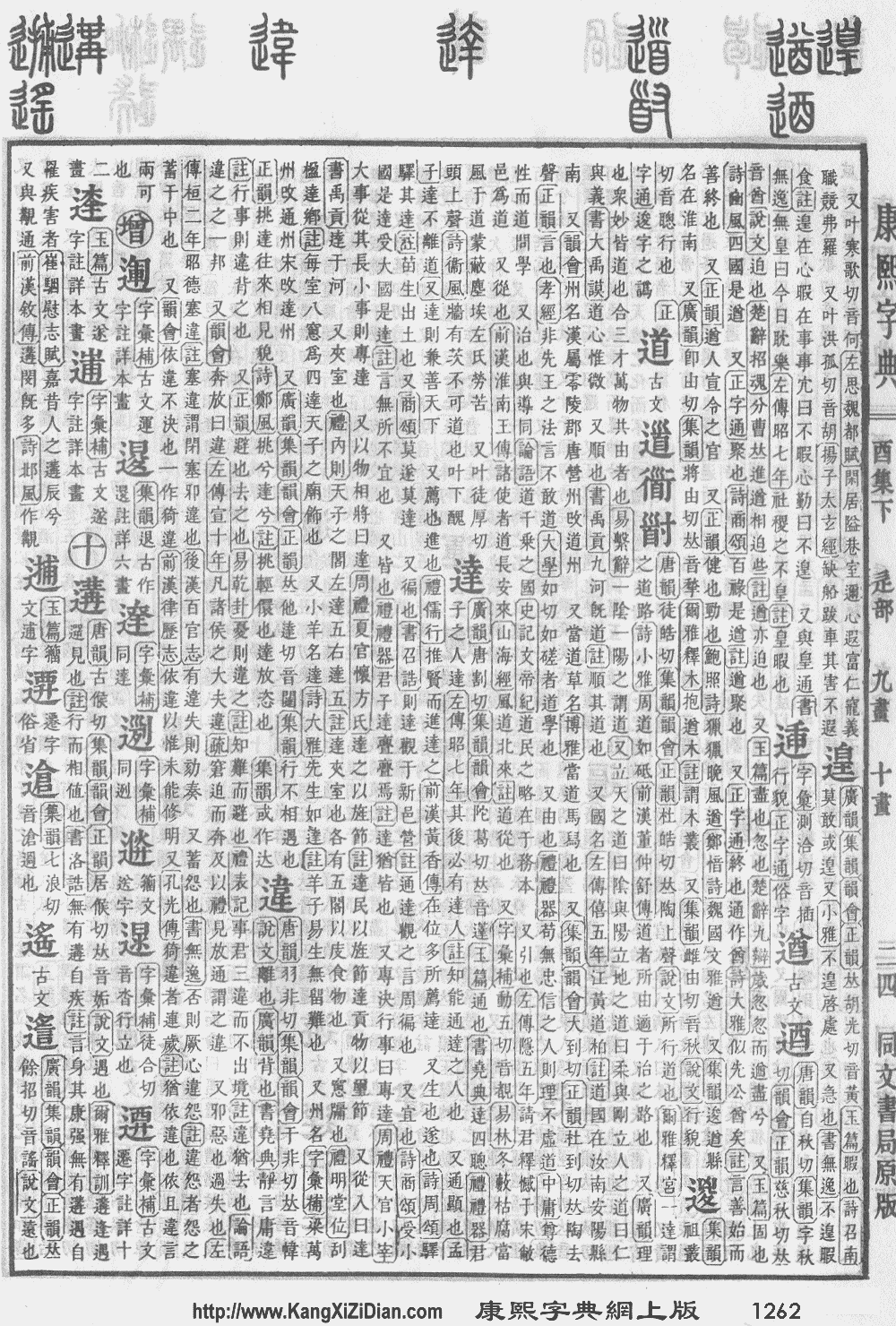
- Kangxi Dictionary: page 1262, character 11
- Dai Kanwa Jiten: character 39067
- Dae Jaweon: page 1756, character 3
- Hanyu Da Zidian (first edition): volume 6, page 3868, character 4
- Unihan data for U+9055
Chinese
| trad. | 違 | |
|---|---|---|
| simp. | 违 | |
Glyph origin
Characters in the same phonetic series (韋) (Zhengzhang, 2003)
Phono-semantic compound (形聲/形声, OC *ɢʷɯl) : semantic 辶 + phonetic 韋 (OC *ɢʷɯl).
Pronunciation
Definitions
違
- to disobey, to violate
- † to leave; to depart; to go away from
- 何斯違斯,莫敢遑息? [Pre-Classical Chinese, trad.]
- From: The Classic of Poetry, c. 11th – 7th centuries BCE, translated based on James Legge's version
- Hé sī wéi sī, mò gǎn huáng xī? [Pinyin]
- How was it he went away from this, not daring to take a little rest?
何斯违斯,莫敢遑息? [Pre-Classical Chinese, simp.]
- † to be separated by (a distance of); to be apart by
- † to dodge; to avoid
Compounds
- 不得有違/不得有违
- 不違/不违
- 不違農時/不违农时 (bùwéinóngshí)
- 久違/久违 (jiǔwéi)
- 久違顏範/久违颜范
- 乖違/乖违
- 事與願違/事与愿违 (shìyǔyuànwéi)
- 依違/依违
- 依違兩可/依违两可
- 南北睽違/南北睽违
- 多違/多违
- 實質違建/实质违建
- 尤違/尤违
- 弼違/弼违
- 德音莫違/德音莫违
- 悖理違情/悖理违情
- 暌違/暌违 (kuíwéi)
- 犯法違理/犯法违理
- 玉體違和/玉体违和
- 相違/相违 (xiāngwéi)
- 睽違/睽违 (kuíwéi)
- 程序違建/程序违建
- 糾繆繩違/纠缪绳违
- 負心違願/负心违愿
- 貴體違和/贵体违和
- 辟違 (pìwéi)
- 逆天違理/逆天违理
- 逆理違天/逆理违天
- 違世遁俗/违世遁俗
- 違令/违令 (wéilìng)
- 違例/违例 (wéilì)
- 違信背約/违信背约
- 違利赴名/违利赴名
- 違反/违反 (wéifǎn)
- 違和/违和 (wéihé)
- 違命/违命
- 違天害理/违天害理
- 違天悖理/违天悖理
- 違害就利/违害就利
- 違建/违建 (wéijiàn)
- 違強陵弱/违强陵弱
- 違心/违心 (wéixīn)
- 違心之言/违心之言
- 違心之論/违心之论
- 違恩負義/违恩负义
- 違憲/违宪 (wéixiàn)
- 違抗/违抗 (wéikàng)
- 違拗/违拗 (wéi'ào)
- 違旨/违旨
- 違時絕俗/违时绝俗
- 違法/违法 (wéifǎ)
- 違法亂紀/违法乱纪 (wéifǎluànjì)
- 違犯/违犯 (wéifàn)
- 違礙/违碍 (wéi'ài)
- 違禁/违禁 (wéijìn)
- 違禁品/违禁品 (wéijìnpǐn)
- 違約/违约 (wéiyuē)
- 違紀/违纪 (wéijì)
- 違約交割/违约交割
- 違紀參選/违纪参选
- 違約金/违约金 (wéiyuējīn)
- 違背/违背 (wéibèi)
- 違規/违规 (wéiguī)
- 違言/违言
- 違誤/违误 (wéiwù)
- 違警/违警
- 違警罰法/违警罚法
- 違越/违越
- 違逆/违逆 (wéinì)
- 違章建築/违章建筑
- 陽奉陰違/阳奉阴违 (yángfèngyīnwéi)
- 陽順陰違/阳顺阴违
- 隱不違親/隐不违亲
References
- “違”, in 漢語多功能字庫 (Multi-function Chinese Character Database), 香港中文大學 (the Chinese University of Hong Kong), 2014–
Japanese
| Shinjitai | 違 |  |
| Kyūjitai [1] |
違󠄂 違+ 󠄂?(Adobe-Japan1) |
 |
| 違󠄅 違+ 󠄅?(Hanyo-Denshi) (Moji_Joho) | ||
| The displayed kanji may be different from the image due to your environment. See here for details. | ||
Kanji
違
- to differ, to vary
- to be incorrect, to make a mistake
- to run counter to, to go against, to defy
Readings
Pronunciation
- IPA(key): [i]
Derived terms
References
- “違”, in 漢字ぺディア (Kanjipedia) (in Japanese), 日本漢字能力検定協会, 2015–2024
Korean
Hanja
違 • (wi) (hangeul 위, revised wi, McCune–Reischauer wi, Yale wi)
- This term needs a translation to English. Please help out and add a translation, then remove the text
{{rfdef}}.
Vietnamese
This article is issued from Wiktionary. The text is licensed under Creative Commons - Attribution - Sharealike. Additional terms may apply for the media files.