恐
| ||||||||
Translingual
Han character
恐 (Kangxi radical 61, 心+6, 10 strokes, cangjie input 一弓心 (MNP) or 難一弓心 (XMNP), four-corner 17331, composition ⿱⿰工凡心(GJKV) or ⿱⿰工⿹⺄㐅心(HT))
Derived characters
- 𠺱, 𢟈, 𦃵, 𫻐, 𦶐, 𮅱
References
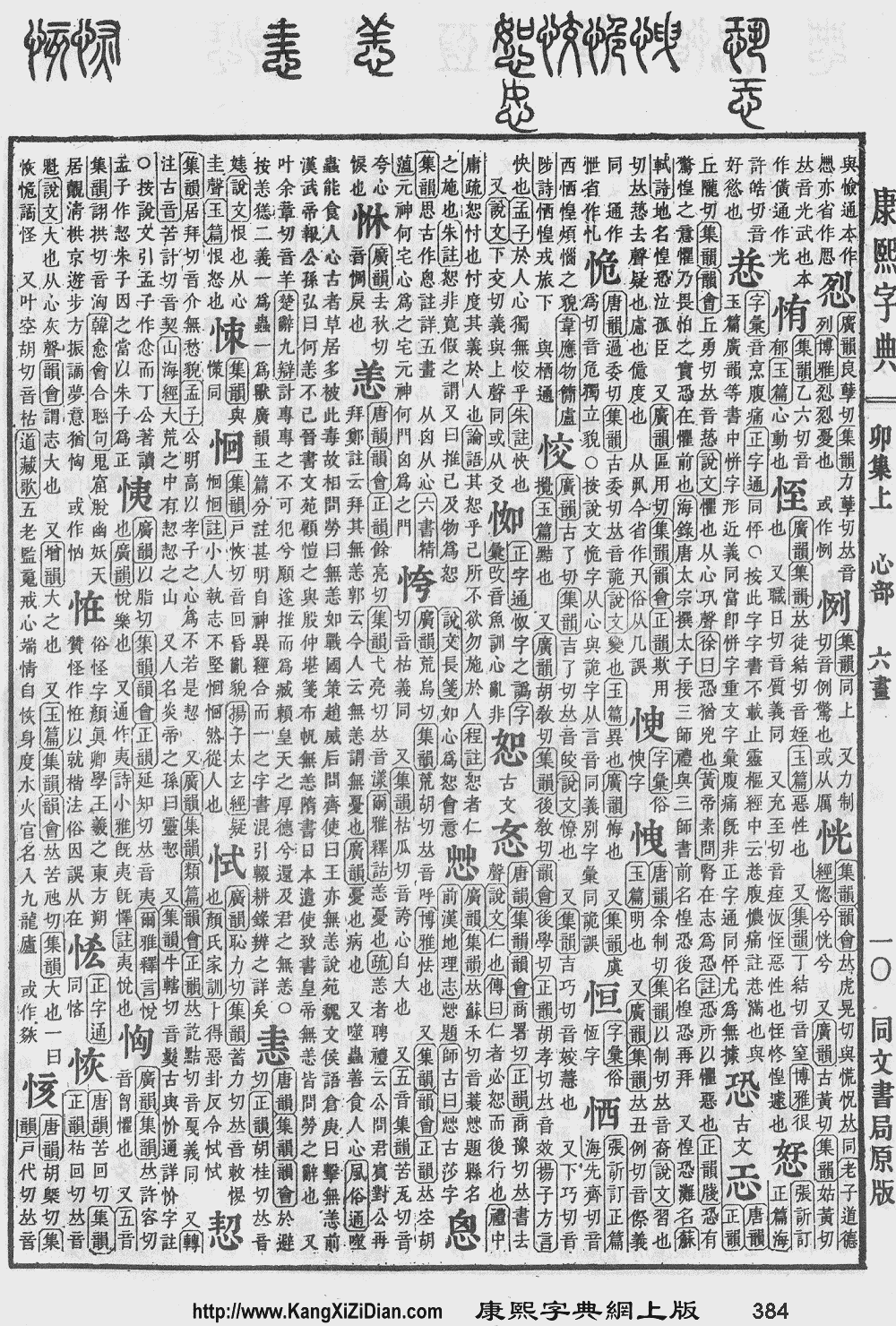
- Kangxi Dictionary: page 384, character 8
- Dai Kanwa Jiten: character 10552
- Dae Jaweon: page 714, character 25
- Hanyu Da Zidian (first edition): volume 4, page 2289, character 8
- Unihan data for U+6050
Chinese
| trad. | 恐 | |
|---|---|---|
| simp. # | 恐 | |
| alternative forms | ||
Glyph origin
Characters in the same phonetic series (工) (Zhengzhang, 2003)
| Old Chinese | |
|---|---|
| 缸 | *kroːŋ, *ɡroːŋ |
| 篢 | *kluːmʔ, *koːŋ |
| 贑 | *kluːmʔ |
| 涳 | *ŋr'oːŋ, *kʰroːŋ, *kʰoːŋ |
| 江 | *kroːŋ |
| 肛 | *kroːŋ, *qʰroːŋ |
| 扛 | *kroːŋ |
| 杠 | *kroːŋ |
| 豇 | *kroːŋ |
| 茳 | *kroːŋ |
| 釭 | *kroːŋ, *koːŋ, *kuːŋ |
| 矼 | *kroːŋ |
| 玒 | *kroːŋ, *koːŋ |
| 虹 | *kroːŋs, *koːŋs, *ɡoːŋ |
| 腔 | *kʰroːŋ |
| 崆 | *kʰroːŋ, *kʰoːŋ |
| 羫 | *kʰroːŋ |
| 控 | *kʰroːŋ, *kʰoːŋs |
| 椌 | *kʰroːŋ, *kʰoːŋ |
| 悾 | *kʰroːŋ, *kʰoːŋ, *kʰoːŋs |
| 跫 | *kʰroːŋ, *kʰoŋ, *ɡoŋ |
| 啌 | *qʰroːŋ |
| 谾 | *qʰroːŋ, *qʰoːŋ |
| 舡 | *qʰroːŋ |
| 缻 | *ɡroːŋ |
| 項 | *ɡroːŋʔ |
| 屸 | *ɡ·roːŋ |
| 功 | *koːŋ |
| 工 | *koːŋ |
| 疘 | *koːŋ |
| 魟 | *koːŋ, *qʰoːŋ, *ɡoːŋ |
| 攻 | *koːŋ, *kuːŋ |
| 愩 | *koːŋ |
| 碽 | *koːŋ |
| 貢 | *koːŋs |
| 羾 | *koːŋs |
| 空 | *kʰoːŋ, *kʰoːŋs |
| 箜 | *kʰoːŋ |
| 硿 | *kʰoːŋ |
| 埪 | *kʰoːŋ |
| 鵼 | *kʰoːŋ |
| 倥 | *kʰoːŋ, *kʰoːŋʔ, *kʰoːŋs |
| 鞚 | *kʰoːŋs |
| 叿 | *qʰoːŋ |
| 嗊 | *qʰoːŋʔ |
| 訌 | *ɡoːŋ |
| 紅 | *ɡoːŋ |
| 仜 | *ɡoːŋ |
| 葒 | *ɡoːŋ |
| 渱 | *ɡoːŋ |
| 鴻 | *ɡoːŋ, *ɡoːŋʔ |
| 汞 | *ɡoːŋʔ |
| 澒 | *ɡoːŋʔ |
| 鞏 | *koŋʔ |
| 巩 | *koŋʔ |
| 銎 | *kʰoŋ, *qʰoŋ |
| 恐 | *kʰoŋʔ, *kʰoŋs |
| 蛩 | *ɡoŋ |
| 筇 | *ɡoŋ |
| 桏 | *ɡoŋ |
| 邛 | *ɡoŋ |
In the Shuowen Jiezi appears as phono-semantic compound (形聲/形声, OC *kʰoŋʔ, *kʰoŋs) : phonetic 𢀜 () + semantic 心 (“heart”). The modern form can be interpreted as phono-semantic compound (形聲/形声, OC *kʰoŋʔ, *kʰoŋs) : phonetic 巩 (OC *koŋʔ) + semantic 心 (“heart”)
Pronunciation
Compounds
- 唯恐 (wéikǒng)
- 唯恐不及
- 恐嚇/恐吓 (kǒnghè)
- 恐後爭先/恐后争先 (kǒnghòuzhēngxiān)
- 恐怖 (kǒngbù)
- 恐怕 (kǒngpà)
- 恐怖主義/恐怖主义 (kǒngbùzhǔyì)
- 恐怖分子 (kǒngbùfènzǐ)
- 恐怖小說/恐怖小说
- 恐怖片兒/恐怖片儿
- 恐恐然
- 恐惶 (kǒnghuáng)
- 恐惶悚懼/恐惶悚惧 (kǒnghuángsǒngjù)
- 恐慌 (kǒnghuāng)
- 恐慌症 (kǒnghuāngzhèng)
- 恐憂/恐忧 (kǒngyōu)
- 恐慮/恐虑 (kǒnglǜ)
- 恐懼/恐惧 (kǒngjù)
- 恐水病 (kǒngshuǐbìng)
- 恐變症/恐变症
- 恐鳥/恐鸟 (kǒngniǎo)
- 恐龍/恐龙 (kǒnglóng)
- 惟恐 (wéikǒng)
- 惜恐
- 惶恐 (huángkǒng)
- 惴恐
- 惶恐不安 (huángkǒngbù'ān)
- 擔驚受恐/担惊受恐 (dānjīngshòukǒng)
- 有恃無恐/有恃无恐 (yǒushìwúkǒng)
- 深恐
- 爭先恐後/争先恐后 (zhēngxiānkǒnghòu)
- 猶恐/犹恐 (yóukǒng)
- 生恐
- 皇恐灘/皇恐滩 (Huángkǒng Tān)
- 紅色恐怖/红色恐怖 (hóngsè kǒngbù)
- 經濟恐慌/经济恐慌 (jīngjì kǒnghuāng)
- 臨死不恐/临死不恐 (línsǐbùkǒng)
- 臨難不恐/临难不恐 (línnànbùkǒng)
- 誠恐/诚恐 (chéngkǒng)
- 誠恐誠惶/诚恐诚惶 (chéngkǒngchénghuáng)
- 誠惶誠恐/诚惶诚恐 (chénghuángchéngkǒng)
- 震恐 (zhènkǒng)
- 驚恐/惊恐 (jīngkǒng)
- 驚恐萬分/惊恐万分
References
- “恐”, in 漢語多功能字庫 (Multi-function Chinese Character Database), 香港中文大學 (the Chinese University of Hong Kong), 2014–
Japanese
Readings
Korean
Etymology
(This etymology is missing or incomplete. Please add to it, or discuss it at the Etymology scriptorium. Particularly: “Middle Korean readings, if any”)
Pronunciation
- (SK Standard/Seoul) IPA(key): [ko̞ŋ]
- Phonetic hangul: [공]
Vietnamese
This article is issued from Wiktionary. The text is licensed under Creative Commons - Attribution - Sharealike. Additional terms may apply for the media files.