腔
| ||||||||
Translingual
Han character
腔 (Kangxi radical 130, 肉+8, 12 strokes, cangjie input 月十金一 (BJCM), four-corner 73211, composition ⿰⺼空)
Derived characters
- 𨭏, 𨭒
References
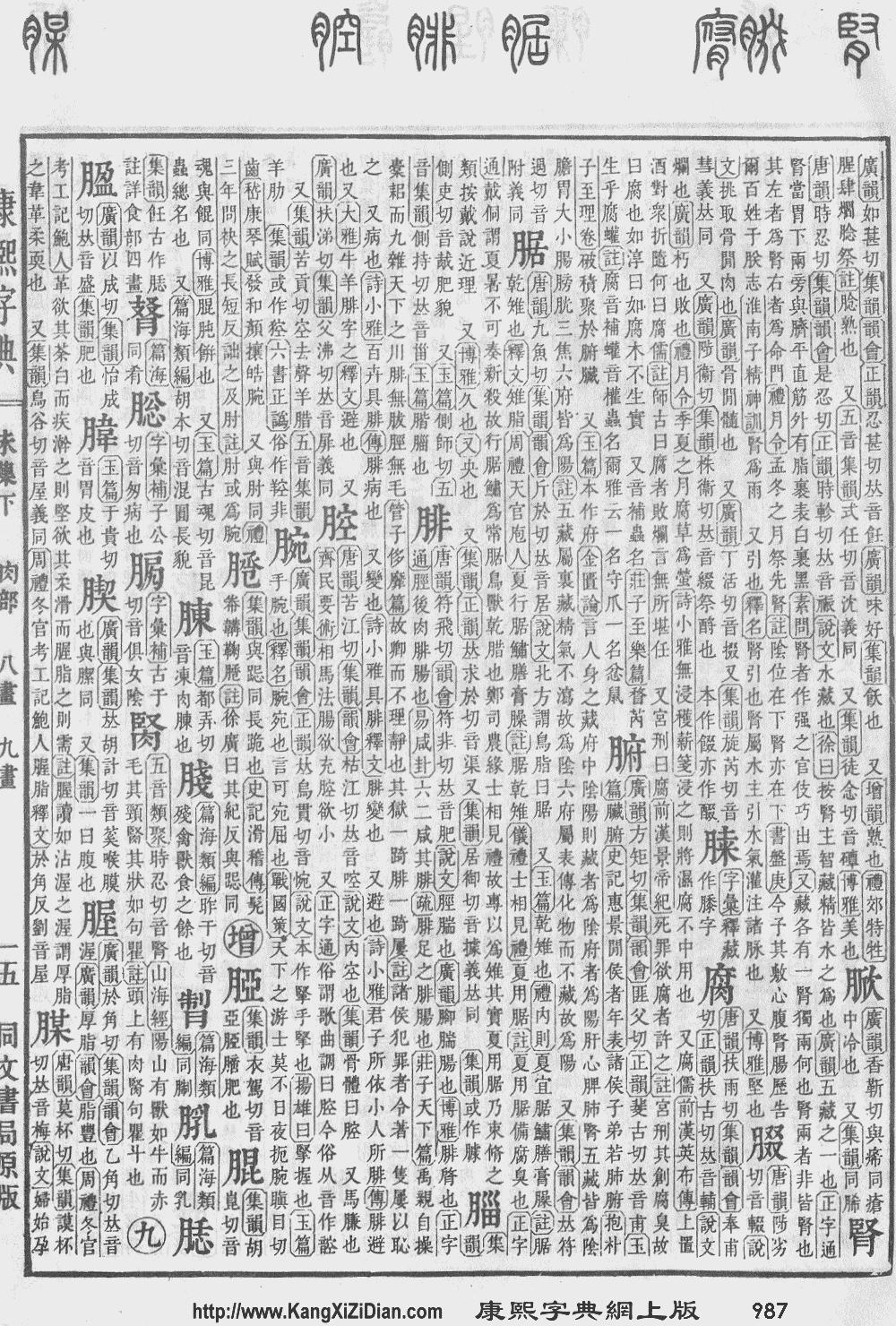
- Kangxi Dictionary: page 987, character 10
- Dai Kanwa Jiten: character 29630
- Dae Jaweon: page 1439, character 20
- Hanyu Da Zidian (first edition): volume 3, page 2092, character 3
- Unihan data for U+8154
Chinese
| trad. | 腔 | |
|---|---|---|
| simp. # | 腔 | |
| alternative forms | 𤟄 | |
Glyph origin
Characters in the same phonetic series (工) (Zhengzhang, 2003)
| Old Chinese | |
|---|---|
| 缸 | *kroːŋ, *ɡroːŋ |
| 篢 | *kluːmʔ, *koːŋ |
| 贑 | *kluːmʔ |
| 涳 | *ŋr'oːŋ, *kʰroːŋ, *kʰoːŋ |
| 江 | *kroːŋ |
| 肛 | *kroːŋ, *qʰroːŋ |
| 扛 | *kroːŋ |
| 杠 | *kroːŋ |
| 豇 | *kroːŋ |
| 茳 | *kroːŋ |
| 釭 | *kroːŋ, *koːŋ, *kuːŋ |
| 矼 | *kroːŋ |
| 玒 | *kroːŋ, *koːŋ |
| 虹 | *kroːŋs, *koːŋs, *ɡoːŋ |
| 腔 | *kʰroːŋ |
| 崆 | *kʰroːŋ, *kʰoːŋ |
| 羫 | *kʰroːŋ |
| 控 | *kʰroːŋ, *kʰoːŋs |
| 椌 | *kʰroːŋ, *kʰoːŋ |
| 悾 | *kʰroːŋ, *kʰoːŋ, *kʰoːŋs |
| 跫 | *kʰroːŋ, *kʰoŋ, *ɡoŋ |
| 啌 | *qʰroːŋ |
| 谾 | *qʰroːŋ, *qʰoːŋ |
| 舡 | *qʰroːŋ |
| 缻 | *ɡroːŋ |
| 項 | *ɡroːŋʔ |
| 屸 | *ɡ·roːŋ |
| 功 | *koːŋ |
| 工 | *koːŋ |
| 疘 | *koːŋ |
| 魟 | *koːŋ, *qʰoːŋ, *ɡoːŋ |
| 攻 | *koːŋ, *kuːŋ |
| 愩 | *koːŋ |
| 碽 | *koːŋ |
| 貢 | *koːŋs |
| 羾 | *koːŋs |
| 空 | *kʰoːŋ, *kʰoːŋs |
| 箜 | *kʰoːŋ |
| 硿 | *kʰoːŋ |
| 埪 | *kʰoːŋ |
| 鵼 | *kʰoːŋ |
| 倥 | *kʰoːŋ, *kʰoːŋʔ, *kʰoːŋs |
| 鞚 | *kʰoːŋs |
| 叿 | *qʰoːŋ |
| 嗊 | *qʰoːŋʔ |
| 訌 | *ɡoːŋ |
| 紅 | *ɡoːŋ |
| 仜 | *ɡoːŋ |
| 葒 | *ɡoːŋ |
| 渱 | *ɡoːŋ |
| 鴻 | *ɡoːŋ, *ɡoːŋʔ |
| 汞 | *ɡoːŋʔ |
| 澒 | *ɡoːŋʔ |
| 鞏 | *koŋʔ |
| 巩 | *koŋʔ |
| 銎 | *kʰoŋ, *qʰoŋ |
| 恐 | *kʰoŋʔ, *kʰoŋs |
| 蛩 | *ɡoŋ |
| 筇 | *ɡoŋ |
| 桏 | *ɡoŋ |
| 邛 | *ɡoŋ |
Ideogrammic compound (會意/会意) and phono-semantic compound (形聲/形声, OC *kʰroːŋ) : semantic 肉 (“meat; flesh”) + phonetic 空 (OC *kʰoːŋ, *kʰoːŋs, “empty; hollow”).
Etymology
Cognate with 空 (OC *kʰoːŋ, *kʰoːŋs, “empty; hollow”) (Wang, 1982).
This etymology is incomplete. You can help Wiktionary by elaborating on the origins of this term.
Pronunciation
Definitions
腔
Synonyms
- (speech):
- (dialect, language):
Dialectal synonyms of 話 (“-ese, suffix used to indicate a (spoken) language variety”) [map]
Compounds
- 一腔
- 一腔火
- 一腔熱血/一腔热血
- 不對腔板/不对腔板
- 不搭腔
- 不答腔
- 京腔 (jīngqiāng)
- 做腔
- 做腔作勢/做腔作势
- 內腔/内腔 (nèiqiāng)
- 冒涼腔/冒凉腔
- 副鼻腔炎 (fùbíqiāngyán)
- 南腔北調/南腔北调 (nánqiāngběidiào)
- 口腔 (kǒuqiāng)
- 口腔期
- 口腔癌 (kǒuqiāng'ái)
- 口腔黏膜
- 吹腔 (chuīqiāng)
- 唱腔 (chàngqiāng)
- 喬腔/乔腔
- 土腔 (tǔqiāng)
- 大腔當/大腔当
- 妝腔/妆腔
- 娘娘腔 (niángniangqiāng)
- 字正腔圓/字正腔圆 (zìzhèngqiāngyuán)
- 官腔 (guānqiāng)
- 宜黃腔/宜黄腔
- 崑山腔/昆山腔 (kūnshānqiāng)
- 崑腔/昆腔 (kūnqiāng)
- 幫腔/帮腔 (bāngqiāng)
- 弄腔調/弄腔调
- 弋陽腔/弋阳腔 (yìyángqiāng)
- 怪腔怪調/怪腔怪调
- 打官腔 (dǎ guānqiāng)
- 扭腔
- 拍老腔兒/拍老腔儿
- 拖腔
- 拉魂腔
- 拿腔作勢/拿腔作势
- 拿腔拿調/拿腔拿调
- 拿著腔兒/拿著腔儿
- 搭腔 (dāqiāng)
- 改腔兒/改腔儿
- 新腔
- 本地腔 (Běndìqiāng)
- 板腔體/板腔体 (bǎnqiāngtǐ)
- 柳腔
- 梆子腔 (bāngziqiāng)
- 氣腔/气腔
- 油腔滑調/油腔滑调 (yóuqiānghuádiào)
- 消化腔
- 海鹽腔/海盐腔 (hǎiyánqiāng)
- 滿腔/满腔 (mǎnqiāng)
- 滿腔怒火/满腔怒火
- 滿腔熱忱/满腔热忱 (mǎnqiāngrèchén)
- 滿腔熱情/满腔热情 (mǎnqiāngrèqíng)
- 滿腔熱血/满腔热血
- 疙瘩腔
- 癆病腔子/痨病腔子
- 皮黃腔/皮黄腔
- 盆腔 (pénqiāng)
- 碗碗腔
- 秦腔 (Qínqiāng)
- 答腔
- 管腔 (guǎnqiāng)
- 翻腔
- 耍花腔 (shuǎhuāqiāng)
- 聲腔/声腔 (shēngqiāng)
- 胸腔 (xiōngqiāng)
- 腔子
- 腔腸動物/腔肠动物 (qiāngcháng dòngwù)
- 腔調/腔调 (qiāngdiào)
- 腔韻/腔韵
- 腹側體腔/腹侧体腔
- 腹腔 (fùqiāng)
- 腹腔懷孕/腹腔怀孕
- 花腔 (huāqiāng)
- 行腔
- 裝腔作勢/装腔作势 (zhuāngqiāngzuòshì)
- 裝腔作態/装腔作态
- 野調無腔/野调无腔
- 開腔/开腔 (kāiqiāng)
- 陳腔濫調/陈腔滥调 (chénqiānglàndiào)
- 顱腔/颅腔 (lúqiāng)
- 骨盆腔
- 體腔/体腔 (tǐqiāng)
- 髓腔 (suǐqiāng)
- 高腔
- 黃腔/黄腔 (huángqiāng)
- 黃腔兒/黄腔儿
- 鼻腔 (bíqiāng)
- 齒髓腔/齿髓腔
References
- “腔”, in 漢語多功能字庫 (Multi-function Chinese Character Database), 香港中文大學 (the Chinese University of Hong Kong), 2014–
Japanese
| Shinjitai | 腔 | |
| Kyūjitai [1] |
腔󠄁 腔+ 󠄁?(Adobe-Japan1) |
 |
| 腔󠄃 腔+ 󠄃?(Hanyo-Denshi) (Moji_Joho) | ||
| The displayed kanji may be different from the image due to your environment. See here for details. | ||
Usage notes
The くう reading is favoured especially by medical professionals. こう is the most common on'yomi for a kanji to have, whereas くう is one of the least common, so the homophony difference is vast. Furthermore, the 空 component of this kanji is usually read as くう.
References
- “腔”, in 漢字ぺディア (Kanjipedia) (in Japanese), 日本漢字能力検定協会, 2015–2024
Korean
Etymology
From Middle Chinese 腔 (MC khaewng).
| Historical readings |
|---|
|
Pronunciation
- (SK Standard/Seoul) IPA(key): [ka̠ŋ]
- Phonetic hangul: [강]
Compounds
Vietnamese
This article is issued from Wiktionary. The text is licensed under Creative Commons - Attribution - Sharealike. Additional terms may apply for the media files.