項
| ||||||||
| ||||||||
Translingual
| Stroke order | |||
|---|---|---|---|
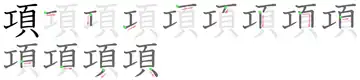 | |||
Han character
項 (Kangxi radical 181, 頁+3, 12 strokes, cangjie input 一一月金 (MMBC), four-corner 11186, composition ⿰工頁)
References
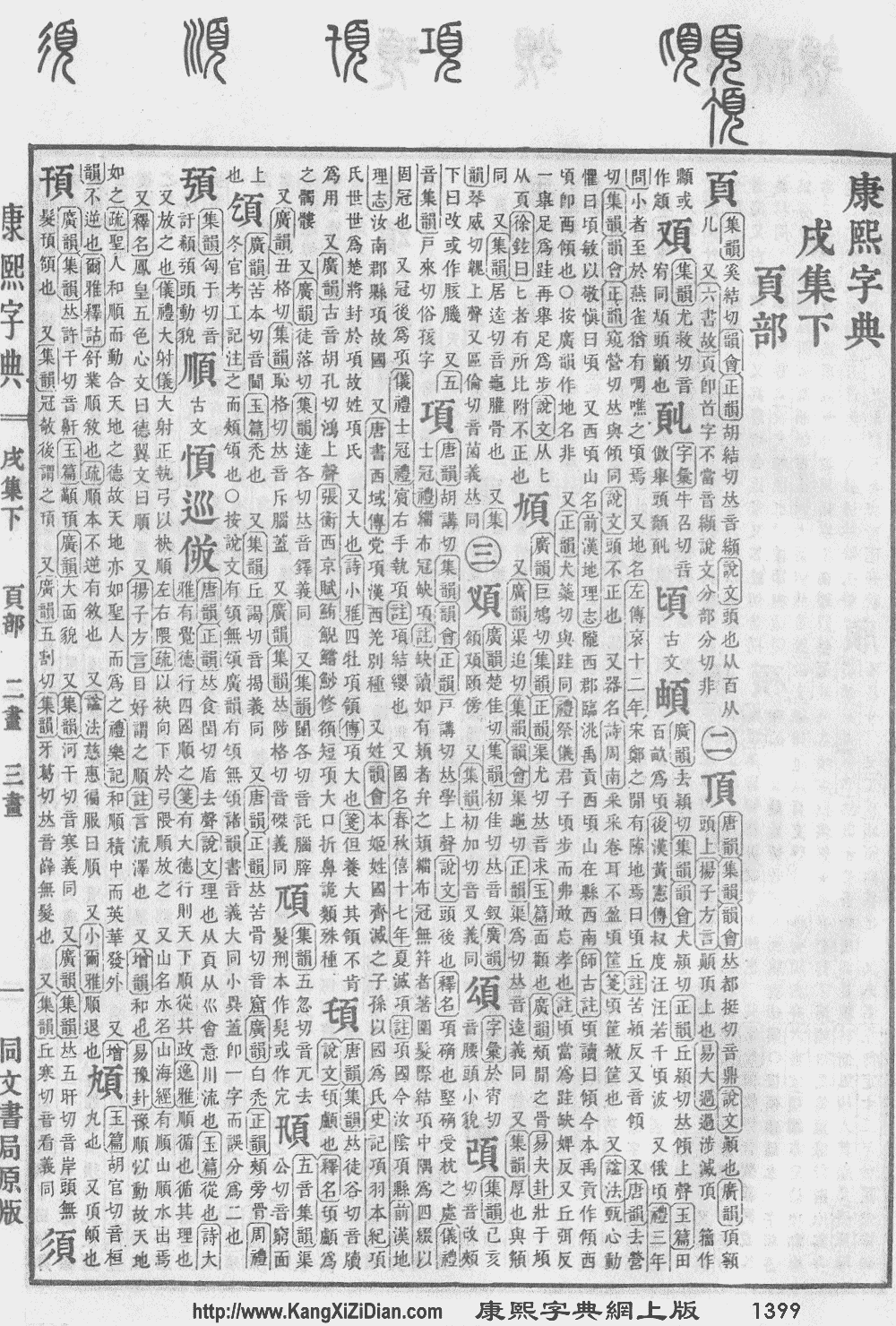
- Kangxi Dictionary: page 1399, character 11
- Dai Kanwa Jiten: character 43343
- Dae Jaweon: page 1915, character 16
- Hanyu Da Zidian (first edition): volume 7, page 4356, character 9
- Unihan data for U+9805
Chinese
| trad. | 項 | |
|---|---|---|
| simp. | 项 | |
Glyph origin
Characters in the same phonetic series (工) (Zhengzhang, 2003)
| Old Chinese | |
|---|---|
| 缸 | *kroːŋ, *ɡroːŋ |
| 篢 | *kluːmʔ, *koːŋ |
| 贑 | *kluːmʔ |
| 涳 | *ŋr'oːŋ, *kʰroːŋ, *kʰoːŋ |
| 江 | *kroːŋ |
| 肛 | *kroːŋ, *qʰroːŋ |
| 扛 | *kroːŋ |
| 杠 | *kroːŋ |
| 豇 | *kroːŋ |
| 茳 | *kroːŋ |
| 釭 | *kroːŋ, *koːŋ, *kuːŋ |
| 矼 | *kroːŋ |
| 玒 | *kroːŋ, *koːŋ |
| 虹 | *kroːŋs, *koːŋs, *ɡoːŋ |
| 腔 | *kʰroːŋ |
| 崆 | *kʰroːŋ, *kʰoːŋ |
| 羫 | *kʰroːŋ |
| 控 | *kʰroːŋ, *kʰoːŋs |
| 椌 | *kʰroːŋ, *kʰoːŋ |
| 悾 | *kʰroːŋ, *kʰoːŋ, *kʰoːŋs |
| 跫 | *kʰroːŋ, *kʰoŋ, *ɡoŋ |
| 啌 | *qʰroːŋ |
| 谾 | *qʰroːŋ, *qʰoːŋ |
| 舡 | *qʰroːŋ |
| 缻 | *ɡroːŋ |
| 項 | *ɡroːŋʔ |
| 屸 | *ɡ·roːŋ |
| 功 | *koːŋ |
| 工 | *koːŋ |
| 疘 | *koːŋ |
| 魟 | *koːŋ, *qʰoːŋ, *ɡoːŋ |
| 攻 | *koːŋ, *kuːŋ |
| 愩 | *koːŋ |
| 碽 | *koːŋ |
| 貢 | *koːŋs |
| 羾 | *koːŋs |
| 空 | *kʰoːŋ, *kʰoːŋs |
| 箜 | *kʰoːŋ |
| 硿 | *kʰoːŋ |
| 埪 | *kʰoːŋ |
| 鵼 | *kʰoːŋ |
| 倥 | *kʰoːŋ, *kʰoːŋʔ, *kʰoːŋs |
| 鞚 | *kʰoːŋs |
| 叿 | *qʰoːŋ |
| 嗊 | *qʰoːŋʔ |
| 訌 | *ɡoːŋ |
| 紅 | *ɡoːŋ |
| 仜 | *ɡoːŋ |
| 葒 | *ɡoːŋ |
| 渱 | *ɡoːŋ |
| 鴻 | *ɡoːŋ, *ɡoːŋʔ |
| 汞 | *ɡoːŋʔ |
| 澒 | *ɡoːŋʔ |
| 鞏 | *koŋʔ |
| 巩 | *koŋʔ |
| 銎 | *kʰoŋ, *qʰoŋ |
| 恐 | *kʰoŋʔ, *kʰoŋs |
| 蛩 | *ɡoŋ |
| 筇 | *ɡoŋ |
| 桏 | *ɡoŋ |
| 邛 | *ɡoŋ |
Phono-semantic compound (形聲/形声, OC *ɡroːŋʔ) : phonetic 工 (OC *koːŋ) + semantic 頁 (“head”).
Pronunciation
Definitions
項
Synonyms
- (neck):
Dialectal synonyms of 脖子 (“neck”) [map]
Compounds
- 七項運動/七项运动
- 事項/事项 (shìxiàng)
- 二項定理/二项定理
- 二項式/二项式 (èrxiàngshì)
- 代為說項/代为说项
- 党項 (Dǎngxiàng)
- 冷項/冷项
- 出項/出项
- 前項/前项
- 十項全能/十项全能 (shíxiàng quánnéng)
- 十項運動/十项运动
- 吃大項/吃大项
- 各項/各项 (gèxiàng)
- 名項/名项
- 單項/单项 (dānxiàng)
- 單項式/单项式 (dānxiàngshì)
- 外項/外项
- 大頭項/大头项
- 套項/套项
- 帑項/帑项
- 弱項/弱项 (ruòxiàng)
- 強項/强项 (qiángxiàng)
- 後項/后项
- 扭項/扭项
- 扭頭瞥項/扭头瞥项
- 抱頭縮項/抱头缩项
- 望其肩項/望其肩项
- 望其項背/望其项背 (wàngqíxiàngbèi)
- 末項/末项 (mòxiàng)
- 槁項黃馘/槁项黄馘
- 款項/款项 (kuǎnxiàng)
- 正項/正项
- 用項/用项
- 移項/移项 (yíxiàng)
- 緊用項/紧用项
- 缺項/缺项
- 義項/义项 (yìxiàng)
- 脖項/脖项
- 花項/花项
- 虎項金鈴/虎项金铃
- 要項/要项
- 說項/说项 (shuōxiàng)
- 逢人說項/逢人说项
- 進項/进项 (jìnxiàng)
- 選項/选项 (xuǎnxiàng)
- 邏輯常項/逻辑常项
- 鐵人三項/铁人三项 (tiěrén sān xiàng)
- 長項/长项 (chángxiàng)
- 雞項/鸡项
- 雜項/杂项 (záxiàng)
- 難望項背/难望项背
- 項別騅/项别骓
- 項圈/项圈 (xiàngquān)
- 項攏/项拢 (hāng-láng)
- 項牌/项牌
- 項目/项目 (xiàngmù)
- 項背相望/项背相望
- 項莊舞劍/项庄舞剑
- 項鋪/项铺 (Xiàngpù)
- 項鏈/项链 (xiàngliàn)
- 項領/项领
- 頭項/头项
- 頸項/颈项 (jǐngxiàng)
- 鵝項椅/鹅项椅
Further reading
- “Entry #9246”, in 臺灣閩南語常用詞辭典 [Dictionary of Frequently-Used Taiwan Minnan] (overall work in Mandarin and Hokkien), Ministry of Education, R.O.C., 2023.
Japanese
Etymology 1
| Kanji in this term |
|---|
| 項 |
| うなじ Grade: S |
| kun’yomi |
| For pronunciation and definitions of 項 – see the following entry. | ||
| ||
| (This term, 項, is an alternative spelling of the above term.) |
Etymology 2
| Kanji in this term |
|---|
| 項 |
| うな Grade: S |
| kun’yomi |
| For pronunciation and definitions of 項 – see the following entry. | ||
| ||
| (This term, 項, is an alternative spelling of the above term.) |
References
- Matsumura, Akira, editor (2006), 大辞林 [Daijirin] (in Japanese), Third edition, Tōkyō: Sanseidō, →ISBN
Korean
Etymology
From Middle Chinese 項 (MC haewngX).
| Historical Readings | ||
|---|---|---|
| Dongguk Jeongun Reading | ||
| Dongguk Jeongun, 1448 | ᅘᅡᇰ〯 (Yale: hhǎng) | |
| Middle Korean | ||
| Text | Eumhun | |
| Gloss (hun) | Reading | |
| Hunmong Jahoe, 1527 | 목 (Yale: mwòk) | 하ᇰ〯 (Yale: hǎng) |
Pronunciation
- (SK Standard/Seoul) IPA(key): [ha̠(ː)ŋ]
- Phonetic hangul: [항(ː)]
- Though still prescribed in Standard Korean, most speakers in both Koreas no longer distinguish vowel length.
Compounds
Vietnamese
This article is issued from Wiktionary. The text is licensed under Creative Commons - Attribution - Sharealike. Additional terms may apply for the media files.