拖
See also: 拕
| ||||||||
Translingual
Han character
拖 (Kangxi radical 64, 手+5, 8 strokes, cangjie input 手人心木 (QOPD), four-corner 58012, composition ⿰扌㐌)
References
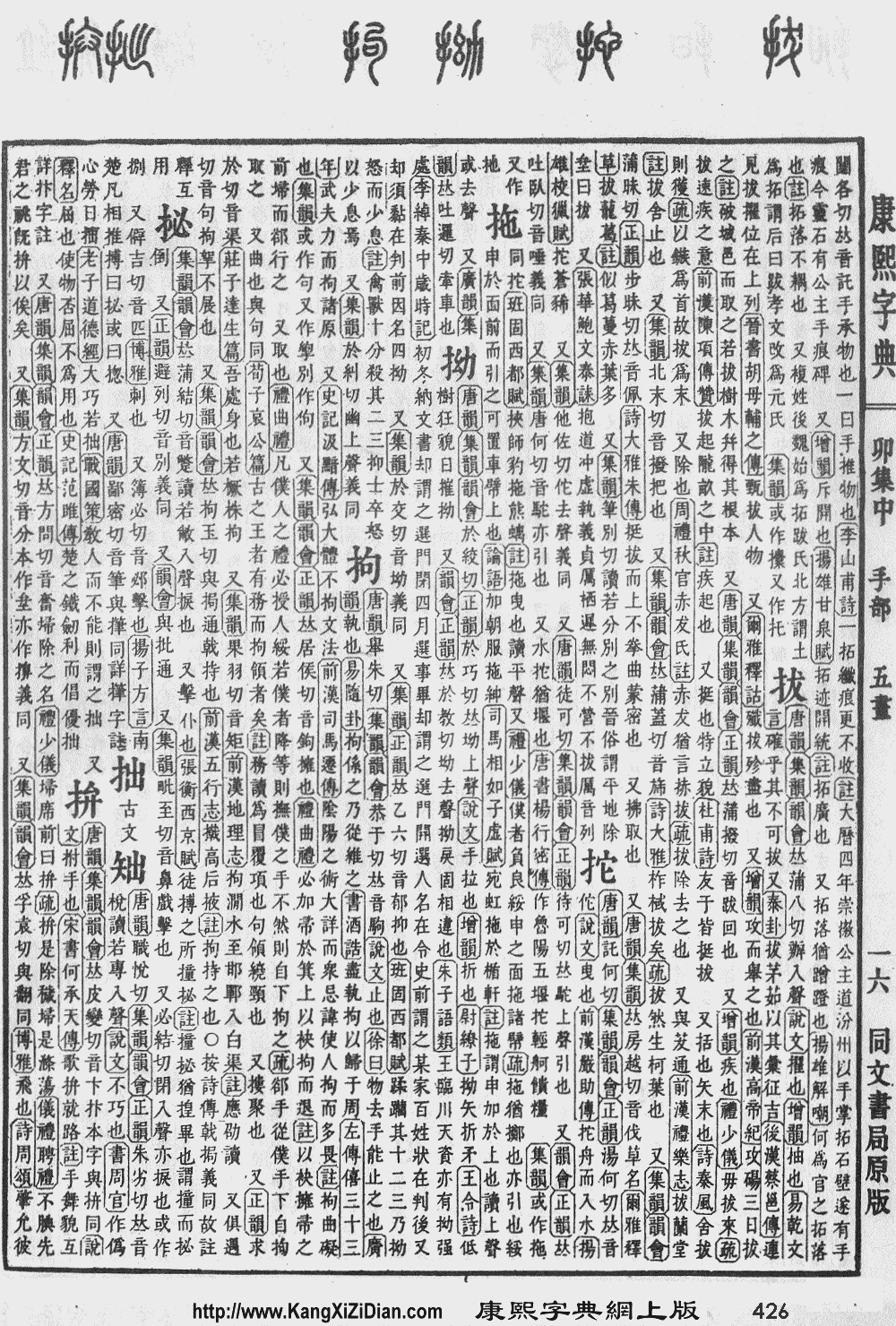
- Kangxi Dictionary: page 426, character 3
- Dai Kanwa Jiten: character 11961
- Dae Jaweon: page 774, character 5
- Hanyu Da Zidian (first edition): volume 3, page 1853, character 8
- Unihan data for U+62D6
Chinese
| trad. | 拖 | |
|---|---|---|
| simp. # | 拖 | |
| alternative forms | 拕/拖 扡 | |
Glyph origin
Characters in the same phonetic series (也) (Zhengzhang, 2003)
| Old Chinese | |
|---|---|
| 他 | *l̥ʰaːl |
| 拖 | *l̥ʰaːl, *l̥ʰaːls |
| 駞 | *l'aːl |
| 池 | *l'aːl, *l'al |
| 灺 | *ljalʔ |
| 鍦 | *ɦljaːl, *hljal, *hljals |
| 虵 | *ɦljal, *laːlʔ, *lal |
| 也 | *laːlʔ |
| 忚 | *hleːl |
| 髢 | *l'eːls |
| 杝 | *l̥ʰalʔ, *l'alʔ, *lal |
| 肔 | *l̥ʰalʔ, *lalʔ |
| 馳 | *l'al |
| 阤 | *l'alʔ, *hljalʔ |
| 施 | *hljal, *hljals |
| 絁 | *hljal |
| 葹 | *hljal |
| 弛 | *hljalʔ |
| 箷 | *lal |
| 衪 | *lel, *lalʔ |
| 暆 | *lel |
| 迆 | *lal, *lalʔ |
| 酏 | *lal, *lalʔ |
| 匜 | *lal, *lalʔ |
| 迤 | *lalʔ |
| 扡 | *lalʔ |
| 崺 | *lalʔ |
| 貤 | *lals, *ɦljels, *lels |
| 地 | *l'els |
Variant form of 拕/拖 (tuō), phono-semantic compound (形聲/形声, OC *l̥ʰaːl, *l̥ʰaːls) : semantic 手 + phonetic 它 (OC *l̥ʰaːl).
Pronunciation
Definitions
拖
- to drag; to tow; to haul
- to mop
- 拖地 ― tuōdì ― to mop the floor
- to droop; to dangle; to hang down; to sag
- to hold hands
- to delay; to put off; to procrastinate; to adjourn; to defer; to prolong
- to sustain (a sound)
- to pin down; to tie up; to check (e.g. the enemy forces); to encumber
- Short for 拖鞋 (tuōxié, “flip-flops; slippers”).
- (Cantonese, slang) fight
- a surname: Tuo
Synonyms
- (to drag):
- (to droop):
- (to delay):
- 展緩/展缓 (zhǎnhuǎn)
- 延宕 (yándàng) (literary)
- 延延 (Hokkien)
- 延後/延后 (yánhòu)
- 延期 (yánqī)
- 延緩/延缓 (yánhuǎn)
- 延誤/延误 (yánwù)
- 延遲/延迟 (yánchí)
- 拖宕 (tuōdàng)
- 拖延 (tuōyán)
- 拖拉 (tuōlā)
- 拖磨 (tuōmó) (literary)
- 拖逗 (tuōdòu) (literary)
- 挨 (ái)
- 挨延 (Hokkien)
- 挨稽 (Hokkien)
- 挨臺/挨台 (ngai2 tai2) (Sichuanese)
- 推宕 (tuīdàng) (literary)
- 捱延 (Hokkien)
- 推延 (tuīyán)
- 捱稽 (Hokkien)
- 推遲/推迟 (tuīchí)
- 暫緩/暂缓 (zànhuǎn)
- 稽延 (jīyán) (literary)
- 緩/缓 (huǎn)
- 耗 (regional)
- 耽延 (dānyán)
- 耽擱/耽搁
- 耽誤/耽误
- 貽誤/贻误 (yíwù)
- 遷延/迁延 (qiānyán) (literary)
- 遲延/迟延 (chíyán)
- 遲滯/迟滞 (chízhì)
- 順延/顺延 (shùnyán)
Compounds
- 一窩一拖/一窝一拖
- 七拖八欠
- 兜拖
- 帶水拖泥/带水拖泥
- 懷金拖紫/怀金拖紫
- 手拖
- 拖下水
- 拖人落水
- 拖兒帶女/拖儿带女
- 拖刀計/拖刀计
- 拖吊
- 拖吊車/拖吊车 (tuōdiàochē)
- 拖地 (tuōdì)
- 拖地膽/拖地胆
- 拖地錦/拖地锦
- 拖垮 (tuōkuǎ)
- 拖天掃地/拖天扫地
- 拖字訣/拖字诀 (tuōzìjué)
- 拖尾巴
- 拖帶/拖带
- 拖床
- 拖延 (tuōyán)
- 拖後腿/拖后腿 (tuō hòutuǐ)
- 拖把 (tuōbǎ)
- 拖扯
- 拍拖 (pāituō)
- 拖拉 (tuōlā)
- 拖拖拉拉
- 拖拖棲棲/拖拖栖栖
- 拖拉機/拖拉机 (tuōlājī)
- 拖拽
- 拖掛/拖挂 (tuōguà)
- 拖曳 (tuōyè)
- 拖曳傘/拖曳伞
- 拖曳機/拖曳机
- 拖枝馬遠/拖枝马远
- 拖欠 (tuōqiàn)
- 拖步
- 拖沓 (tuōtà)
- 拖泥帶水/拖泥带水 (tuōnídàishuǐ)
- 拖油瓶 (tuōyóupíng)
- 拖漢精/拖汉精
- 拖牢洞
- 拖狗皮
- 拖班
- 拖男帶女/拖男带女
- 拖男挈女
- 拖男挾女/拖男挟女
- 拖磨 (tuōmó)
- 拖空子
- 拖累 (tuōlěi)
- 拖紫垂青
- 拖網/拖网 (tuōwǎng)
- 拖翻
- 拖腔
- 拖船 (tuōchuán)
- 拖車/拖车 (tuōchē)
- 拖輪/拖轮
- 拖逗 (tuōdòu)
- 拖鉤/拖钩
- 拖鎗拽棒/拖枪拽棒
- 拖鞋 (tuōxié)
- 拖駁/拖驳
- 拖麻拽布
- 拽布拖麻
- 拽象拖犀
- 推拖
- 橫拖倒拽/横拖倒拽
- 歹戲拖棚/歹戏拖棚
- 毛裡拖氈/毛里拖毡
- 氈上拖毛/毡上拖毛
- 沓拖
- 珥金拖紫
- 生拖死拽
- 磨拖
- 紆青拖紫/纡青拖紫
- 腰金拖紫
- 連拖帶拉/连拖带拉
- 連拖帶拽/连拖带拽
Japanese
Kanji
拖
- This term needs a translation to English. Please help out and add a translation, then remove the text
{{rfdef}}.
Vietnamese
This article is issued from Wiktionary. The text is licensed under Creative Commons - Attribution - Sharealike. Additional terms may apply for the media files.