收
See also: 収
| ||||||||
Translingual
| Japanese | 収 |
|---|---|
| Simplified | 收 |
| Traditional | 收 |
| Stroke order | |||
|---|---|---|---|
 | |||
Han character
收 (Kangxi radical 66, 攴+2, 6 strokes, cangjie input 女中人大 (VLOK), four-corner 28740, composition ⿰丩攵)
References
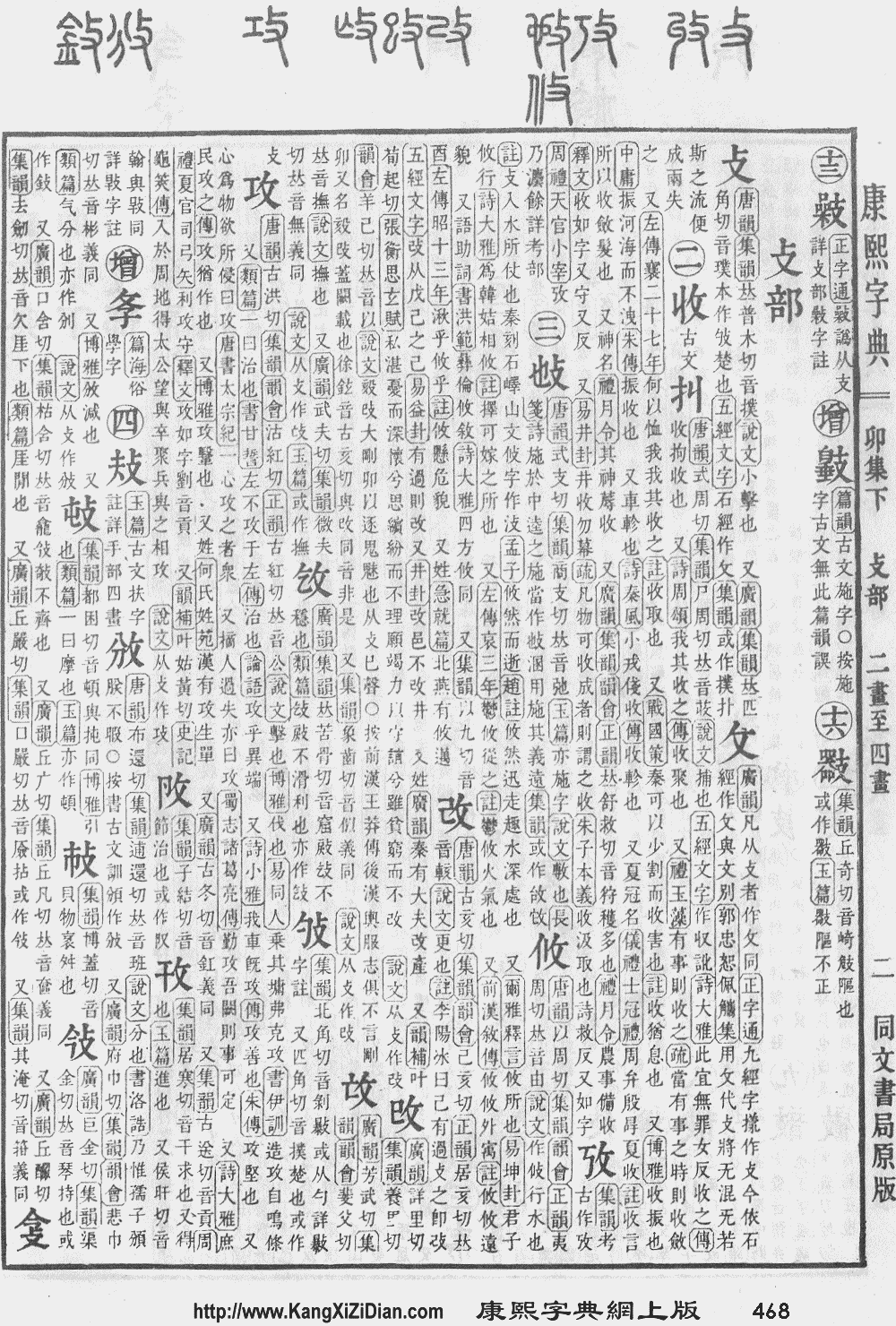
- Kangxi Dictionary: page 468, character 6
- Dai Kanwa Jiten: character 13110
- Dae Jaweon: page 815, character 35
- Hanyu Da Zidian (first edition): volume 2, page 1448, character 2
- Unihan data for U+6536
Chinese
| simp. and trad. |
收 | |
|---|---|---|
| alternative forms | 収 敊 | |
Glyph origin
| Historical forms of the character 收 | ||
|---|---|---|
| Warring States | Shuowen Jiezi (compiled in Han) | Liushutong (compiled in Ming) |
| Qin slip script | Small seal script | Transcribed ancient scripts |
 |
 |
 |
Characters in the same phonetic series (丩) (Zhengzhang, 2003)
Phono-semantic compound (形聲/形声, OC *qʰljɯw, *qʰljɯws) : semantic 攴 + phonetic 丩 (OC *kɯw, *krɯw) – to arrest.
Pronunciation
Definitions
收
- to arrest; to detain
- to receive; to be given
- to accept; to take in; to admit into
- to accept
- to put something away
- to collect; to gather
- Short for 收購/收购 (shōugòu); to buy; to purchase
- to harvest; to reap
- to stop; to put an end to
- to restrain; to control
- to withdraw; to take back
- (colloquial) to finish (someone); to make (someone) a possession of oneself
- (Cantonese, of shops) to close
- (Cantonese) Short for 收皮.
- (Cantonese) to punish
Compounds
- 一攬包收/一揽包收
- 不可收拾 (bùkě-shōushí)
- 了收
- 代收 (dàishōu)
- 低收入
- 低收入戶/低收入户
- 保留徵收/保留征收
- 俱收並蓄/俱收并蓄
- 內收/内收 (nèishōu)
- 公共收入
- 公用徵收/公用征收
- 兼收並蓄/兼收并蓄 (jiānshōubìngxù)
- 利息收入
- 創收/创收 (chuàngshōu)
- 區段徵收/区段征收
- 反水不收
- 名利兼收
- 名利雙收/名利双收 (mínglìshuāngshōu)
- 吸收 (xīshōu)
- 吸收劑量/吸收剂量
- 吸收口
- 回收 (huíshōu)
- 國際收支/国际收支
- 土地徵收/土地征收
- 坐收漁利/坐收渔利 (zuòshōuyúlì)
- 垃圾回收 (lājī huíshōu)
- 夜不收
- 大豐收/大丰收
- 好收場/好收场
- 官收官兌/官收官兑
- 實收/实收 (shíshōu)
- 帶罪徵收/带罪征收
- 征收 (zhēngshōu)
- 徵收/征收 (zhēngshōu)
- 應收帳款/应收帐款 (yīngshōu zhàngkuǎn)
- 應收票據/应收票据
- 截收
- 招收 (zhāoshōu)
- 拘收
- 採收/采收 (cǎishōu)
- 接收 (jiēshōu)
- 搶收/抢收 (qiǎngshōu)
- 收下
- 收介
- 收件 (shōujiàn)
- 收伏 (shōufú)
- 收件人 (shōujiànrén)
- 收件匣 (shōujiànxiá)
- 收入 (shōurù)
- 收兵 (shōubīng)
- 收割 (shōugē)
- 收受 (shōushòu)
- 收取 (shōuqǔ)
- 收口 (shōukǒu)
- 收回 (shōuhuí)
- 收回成命
- 收因結果/收因结果
- 收執/收执
- 收執聯/收执联
- 收場/收场 (shōuchǎng)
- 收報機/收报机
- 收容 (shōuróng)
- 收容所 (shōuróngsuǒ)
- 收小的
- 收尾 (shōuwěi)
- 收屍/收尸 (shōushī)
- 收工 (shōugōng)
- 收市 (shōushì)
- 收帳/收帐 (shōuzhàng)
- 收復/收复 (shōufù)
- 收心 (shōuxīn)
- 收心操
- 收恤
- 收成 (shōuchéng)
- 收手 (shōushǒu)
- 收押 (shōuyā)
- 收拍
- 收拾
- 收捉
- 收播
- 收撮
- 收據/收据 (shōujù)
- 收攏/收拢 (shōulǒng)
- 收攤/收摊 (shōutān)
- 收攬/收揽
- 收攬人心/收揽人心 (shōulǎnrénxīn)
- 收支 (shōuzhī)
- 收支平衡
- 收放自如
- 收效 (shōuxiào)
- 收救
- 收斂/收敛 (shōuliǎn)
- 收斂劑/收敛剂
- 收文
- 收方
- 收服 (shōufú)
- 收束 (shōushù)
- 收條/收条 (shōutiáo)
- 收檢/收检
- 收款 (shōukuǎn)
- 收歸/收归 (shōuguī)
- 收歸國有/收归国有
- 收殮/收殓 (shōuliàn)
- 收殺/收杀
- 收煞
- 收獲/收获 (shōuhuò)
- 收生 (shōushēng)
- 收生婆 (shōushēngpó)
- 收用
- 收留 (shōuliú)
- 收發/收发 (shōufā)
- 收益 (shōuyì)
- 收益稅/收益税
- 收監/收监 (shōujiān)
- 收盤/收盘 (shōupán)
- 收看 (shōukàn)
- 收視/收视 (shōushì)
- 收視反聽/收视反听
- 收視率/收视率 (shōushìlǜ)
- 收科
- 收租 (shōuzū)
- 收穫/收获 (shōuhuò)
- 收筆/收笔 (shōubǐ)
- 收管
- 收納/收纳 (shōunà)
- 收緊/收紧 (shōujǐn)
- 收編/收编 (shōubiān)
- 收縮/收缩 (shōusuō)
- 收繳/收缴 (shōujiǎo)
- 收羅/收罗 (shōuluó)
- 收聲/收声
- 收聽/收听 (shōutīng)
- 收腳/收脚
- 收藏 (shōucáng)
- 收藏家 (shōucángjiā)
- 收計/收计
- 收訖/收讫 (shōuqì)
- 收責/收责
- 收貯/收贮
- 收買/收买 (shōumǎi)
- 收費/收费 (shōufèi)
- 收費站/收费站 (shōufèizhàn)
- 收賄/收贿
- 收賞/收赏
- 收購/收购 (shōugòu)
- 收軍點將/收军点将
- 收銀機/收银机 (shōuyínjī)
- 收錄/收录 (shōulù)
- 收錄音機/收录音机
- 收集 (shōují)
- 收音 (shōuyīn)
- 收音機/收音机 (shōuyīnjī)
- 收領/收领
- 收養/收养 (shōuyǎng)
- 收驚/收惊
- 查收 (cháshōu)
- 欠收
- 歉收 (qiànshōu)
- 歲收/岁收 (suìshōu)
- 水旱不收
- 水覆難收/水覆难收
- 沒收/没收 (mòshōu)
- 沒收煞/没收煞
- 浮收
- 溢收
- 潑水難收/泼水难收
- 照價收買/照价收买
- 照單全收/照单全收
- 照收
- 營收/营收 (yíngshōu)
- 營業收入/营业收入
- 矜糾收繚/矜纠收缭
- 秋收 (qiūshōu)
- 秋收冬藏
- 稅收/税收 (shuìshōu)
- 管收
- 簽收/签收 (qiānshōu)
- 統收統支/统收统支
- 結果收因/结果收因
- 罷收/罢收
- 美不勝收/美不胜收 (měibùshèngshōu)
- 美滿收場/美满收场
- 臺收/台收
- 草率收兵 (cǎoshuàishōubīng)
- 蓐收
- 覆水難收/覆水难收 (fùshuǐnánshōu)
- 見好就收/见好就收 (jiàn hǎo jiù shōu)
- 討收管/讨收管
- 豐收/丰收 (fēngshōu)
- 貿易收支/贸易收支
- 資源回收/资源回收
- 賞收/赏收
- 超收 (chāoshōu)
- 雨散雲收/雨散云收
- 雲收雨散/云收雨散
- 雲收霧散/云收雾散
- 驗收/验收 (yànshōu)
- 鳴金收兵/鸣金收兵
- 點收/点收 (diǎnshōu)
Descendants
- → Thai: ซิว (siu)
Korean
Compounds
- 수거 (收去, sugeo, “taking back”)
- 회수 (回收, hoesu, “recovery; calling in”)
Vietnamese
This article is issued from Wiktionary. The text is licensed under Creative Commons - Attribution - Sharealike. Additional terms may apply for the media files.