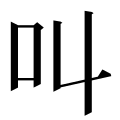
叫
See also: 매
| ||||||||
 | ||||||||
Translingual
| Traditional | 叫 |
|---|---|
| Simplified | 叫 |
| Japanese | 叫 |
| Korean | 叫 |
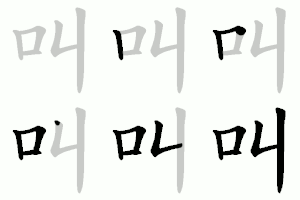
| Stroke order | |||
|---|---|---|---|
 | |||
| Stroke order | |||
|---|---|---|---|
 | |||
Han character
叫 (Kangxi radical 30, 口+2 in Chinese, 口+3 in Japanese, 5 strokes in Chinese, 6 strokes in Japanese, cangjie input 口女中 (RVL), four-corner 64000, composition ⿰口丩)
Derived characters
- 𢫃, 𣐲, 𣌺, 𨦀, 䆗
References
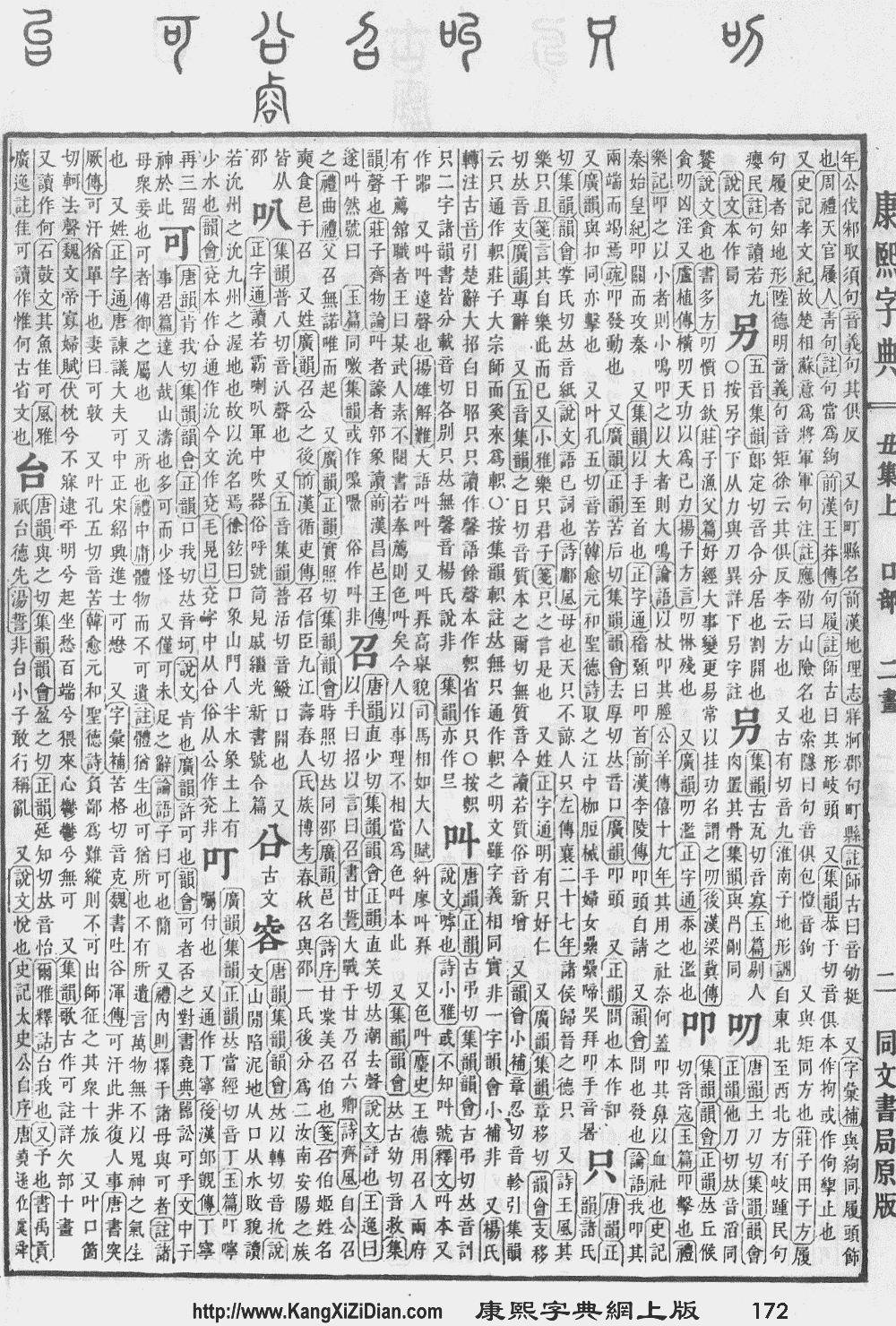
- Kangxi Dictionary: page 172, character 6
- Dai Kanwa Jiten: character 3240
- Dae Jaweon: page 383, character 2
- Hanyu Da Zidian (first edition): volume 1, page 573, character 2
- Unihan data for U+53EB
- Unihan data for U+2F839
Chinese
| simp. and trad. |
叫 | |
|---|---|---|
| alternative forms | ||
Glyph origin
| Historical forms of the character 叫 |
|---|
| Shuowen Jiezi (compiled in Han) |
| Small seal script |
 |
Characters in the same phonetic series (丩) (Zhengzhang, 2003)
Phono-semantic compound (形聲/形声, OC *kiːws) : semantic 口 (“mouth”) + phonetic 丩 (OC *kɯw, *krɯw).
Pronunciation
Definitions
叫
- to be called
- to call; to name
- to call (someone)
- to yell; to shout
- to hail; to greet
- (ditransitive) to ask; to order
- This term needs a translation to English. Please help out and add a translation, then remove the text
{{rfdef}}. - to hire; to call (a taxi); to order (in a restaurant, in a shop)
- (dialectal) to cry; to weep
- used in a passive sentence to introduce the agent; by
- (Northern Wu) Suffix used to form adverbs from reduplicated monosyllabic adjectives or verbs.
- 慢慢叫 [Northern Wu] ― slowly
- 迓迓叫 [Shanghainese] ― 1ia-ia-ciau [Wugniu] ― stealthingly
- 好好叫上課/好好叫上课 [Shanghainese] ― 5hau-hau-ciau 6zaon-khu [Wugniu] ― to attend a class properly
Usage notes
- (to call, to be called): When used for a person, 叫 is generally followed by one's given name or full name, as in English.
Synonyms
Dialectal synonyms of 叫做 (“to be called; to be known as; to be named”) [map]
| Variety | Location | Words |
|---|---|---|
| Formal (Written Standard Chinese) | 叫做, 叫作, 叫, 稱為, 稱做, 稱作, 名叫, 名為 | |
| Mandarin | Taiwan | 叫做, 叫 |
| Singapore | 叫 | |
| Cantonese | Guangzhou | 叫做 |
| Hong Kong | 叫做, 叫 | |
| Taishan | 喊做 | |
| Kaiping (Chikan) | 喊做 | |
| Singapore (Guangfu) | 叫 | |
| Hakka | Meixian | 喊做 |
| Xingning | 喊做 | |
| Huizhou (Huicheng Bendihua) | 喊做, 安做 | |
| Wuhua (Meilin) | 喊 | |
| Miaoli (N. Sixian) | 喊做, 安到 | |
| Pingtung (Neipu; S. Sixian) | 喊做, 安到 | |
| Hsinchu County (Zhudong; Hailu) | 喊做, 安到 | |
| Taichung (Dongshi; Dabu) | 喊做, 安到, 安做, 安著 | |
| Hsinchu County (Qionglin; Raoping) | 喊做, 安到 | |
| Yunlin (Lunbei; Zhao'an) | 喊做, 號做 | |
| Southern Min | Xiamen | 號做 |
| Quanzhou | 號做 | |
| Zhangzhou | 號做 | |
| Tainan | 號做, 叫做 | |
| Penang (Hokkien) | 叫做 | |
| Singapore (Hokkien) | 號做, 叫, 叫做 | |
| Manila (Hokkien) | 叫做, 名做 | |
| Shantou | 叫做 | |
| Shantou (Chaoyang) | 叫做 | |
| Wu | Shanghai | 叫, 叫做 |
| Ningbo | 謳, 謳做 | |
| Xiang | Changsha | 喊做 |
Dialectal synonyms of 喊 (“to shout; to yell”) [map]
Dialectal synonyms of 哭 (“to cry; to weep”) [map]
Dialectal synonyms of 被 (“by”) [map]
Compounds
- 不叫
- 亂叫/乱叫
- 人歡馬叫/人欢马叫 (rénhuānmǎjiào)
- 刮刮叫
- 叫二排局
- 叫做 (jiàozuò)
- 叫停 (jiàotíng)
- 叫價/叫价 (jiàojià)
- 叫化 (jiàohuā)
- 叫化子 (jiàohuāzi)
- 叫化子雞/叫化子鸡
- 叫吃
- 叫名
- 叫名頭/叫名头
- 叫吼
- 叫哥哥
- 叫喊 (jiàohǎn)
- 叫喚/叫唤 (jiàohuàn)
- 叫嚷 (jiàorǎng)
- 叫囂/叫嚣 (jiàoxiāo)
- 叫好 (jiàohǎo)
- 叫子 (jiàozi)
- 叫字號/叫字号
- 叫局
- 叫屈 (jiàoqū)
- 叫座 (jiàozuò)
- 叫板 (jiàobǎn)
- 叫條子/叫条子
- 叫渴
- 叫絕/叫绝 (jiàojué)
- 叫罵/叫骂 (jiàomà)
- 叫聒
- 叫聲/叫声 (jiàoshēng)
- 叫花子 (jiàohuāzi)
- 叫苦 (jiàokǔ)
- 叫苦不迭 (jiàokǔbùdié)
- 叫苦連天/叫苦连天 (jiàokǔliántiān)
- 叫菜
- 叫號/叫号
- 叫街
- 叫賣/叫卖 (jiàomài)
- 叫車/叫车 (jiàochē)
- 叫醒 (jiàoxǐng)
- 叫醒服務/叫醒服务
- 叫門/叫门
- 叫陣/叫阵 (jiàozhèn)
- 叫頭/叫头
- 叫驢/叫驴 (jiàolǘ)
- 叫魂
- 吼叫 (hǒujiào)
- 呼叫 (hūjiào)
- 呼叫器 (hūjiàoqì)
- 呼名叫陣/呼名叫阵
- 呱呱叫 (guāguājiào)
- 呼紅叫六/呼红叫六
- 哇哇叫
- 唱叫
- 唱叫揚疾/唱叫扬疾
- 喊七叫八
- 喊冤叫屈
- 喊叫 (hǎnjiào)
- 啼叫 (tíjiào)
- 喜鵲叫吉/喜鹊叫吉
- 嘶叫 (sījiào)
- 嚷叫
- 大呼小叫 (dàhūxiǎojiào)
- 大喊大叫 (dàhǎndàjiào)
- 大嚷大叫
- 尖叫 (jiānjiào)
- 念曲叫曲
- 慘叫/惨叫 (cǎnjiào)
- 把飯叫饑/把饭叫饥
- 拍手叫好
- 拍案叫妙
- 拍案叫絕/拍案叫绝 (pāi'ànjiàojué)
- 括括叫
- 洋叫
- 漫天叫價/漫天叫价
- 狼嗥鬼叫 (lángháoguǐjiào)
- 狼號鬼叫/狼号鬼叫
- 相叫
- 羅成叫關/罗成叫关
- 聒聒叫
- 聲叫聲應/声叫声应
- 謾罵叫囂/谩骂叫嚣
- 鍋叫門開/锅叫门开
- 隳突叫號/隳突叫号
- 鳴冤叫屈/鸣冤叫屈
- 鳴叫/鸣叫 (míngjiào)
References
- “叫”, in 漢語多功能字庫 (Multi-function Chinese Character Database), 香港中文大學 (the Chinese University of Hong Kong), 2014–
- “Entry #1412”, in 臺灣閩南語常用詞辭典 [Dictionary of Frequently-Used Taiwan Minnan] (overall work in Mandarin and Hokkien), Ministry of Education, R.O.C., 2023.
Japanese
Kanji
叫
Readings
Etymology
| Kanji in this term |
|---|
| 叫 |
| きょう Grade: S |
| on’yomi |
From Middle Chinese 叫 (MC kewH), compare modern Min Nan kiò.
Pronunciation
- IPA(key): [kʲo̞ː]
Vietnamese
Han character
叫: Hán Việt readings: khiếu[1][2][3]
叫: Nôm readings: kêu[1][2][3][4], kíu[4]
- This term needs a translation to English. Please help out and add a translation, then remove the text
{{rfdef}}.
Compounds
- 叫奈 (khiếu nại)
References
- Nguyễn (2014).
- Nguyễn et al. (2009).
- Trần (2004).
- Hồ (1976).
This article is issued from Wiktionary. The text is licensed under Creative Commons - Attribution - Sharealike. Additional terms may apply for the media files.