薰
See also: 薫
| ||||||||
Translingual
Han character
薰 (Kangxi radical 140, 艸+14, 20 strokes, cangjie input 廿竹土火 (THGF), four-corner 44331, composition ⿱艹熏)
References
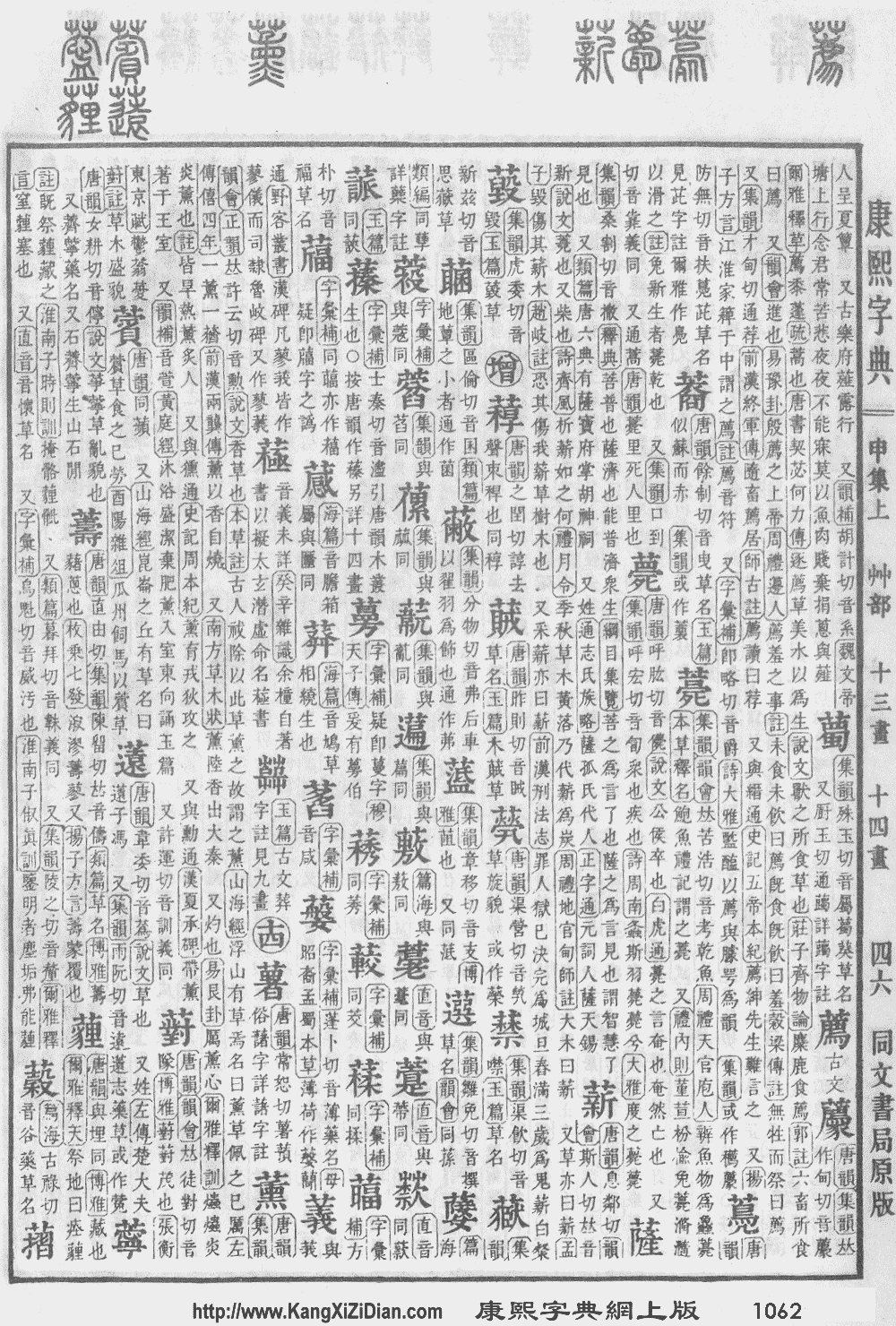
- Kangxi Dictionary: page 1062, character 46
- Dai Kanwa Jiten: character 32192
- Dae Jaweon: page 1527, character 23
- Hanyu Da Zidian (first edition): volume 5, page 3313, character 14
- Unihan data for U+85B0
Chinese
| trad. | 薰 | |
|---|---|---|
| simp. # | 薰 | |
| alternative forms | 薫 蘍 | |
Glyph origin
Characters in the same phonetic series (熏) (Zhengzhang, 2003)
Phono-semantic compound (形聲/形声, OC *qʰun, *qʰuns) : semantic 艹 + phonetic 熏 (OC *qʰun).
Pronunciation
Definitions
薰
- fragrance of flowers
- coumarou, tonka bean
- (Min) cigarette; smoke (Classifier: 支 mn)
- 我已經決定欲做一个善良的歹囝 薰莫閣食酒袂閣焦 [Taiwanese Hokkien, trad.]
- From: 2018, 茄子蛋 (EggPlantEgg), 《浪流連》 (“Waves Wandering”)
- Góa í-keng koat-tēng beh chòe chi̍t ê siān-liông ê pháiⁿ-kiáⁿ, Hun mài koh chia̍h chiú bōe koh ta [Pe̍h-ōe-jī]
- I have decided to be a good-hearted hooligan, no more smoking or drinking again.
我已经决定欲做一个善良的歹囝 薰莫阁食酒袂阁焦 [Taiwanese Hokkien, simp.]
- to smoke
- See also: 熏
- to cauterize
Synonyms
Dialectal synonyms of 香煙 (“cigarette”) [map]
Compounds
References
- “薰”, in 漢語多功能字庫 (Multi-function Chinese Character Database), 香港中文大學 (the Chinese University of Hong Kong), 2014–
Korean
Etymology
(This etymology is missing or incomplete. Please add to it, or discuss it at the Etymology scriptorium. Particularly: “Middle Korean readings, if any”)
Pronunciation
- (SK Standard/Seoul) IPA(key): [ɸʷun]
- Phonetic hangul: [훈]
Hanja
Wikisource 薰 • (hun) (hangeul 훈, revised hun, McCune–Reischauer hun, Yale hwun)
- This term needs a translation to English. Please help out and add a translation, then remove the text
{{rfdef}}.
Vietnamese
Han character
薰: Hán Nôm readings: huân
- This term needs a translation to English. Please help out and add a translation, then remove the text
{{rfdef}}.
This article is issued from Wiktionary. The text is licensed under Creative Commons - Attribution - Sharealike. Additional terms may apply for the media files.