這
| ||||||||
Translingual
| Stroke order | |||
|---|---|---|---|
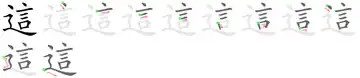 | |||
| Stroke order | |||
|---|---|---|---|
 | |||
Han character
這 (Kangxi radical 162, 辵+7, 10 strokes, cangjie input 卜卜一口 (YYMR), four-corner 30306, composition ⿺辶言)
Derived characters
- 𥳅 𬰊 𰫲 𰫎 𰧟 𤡖
References
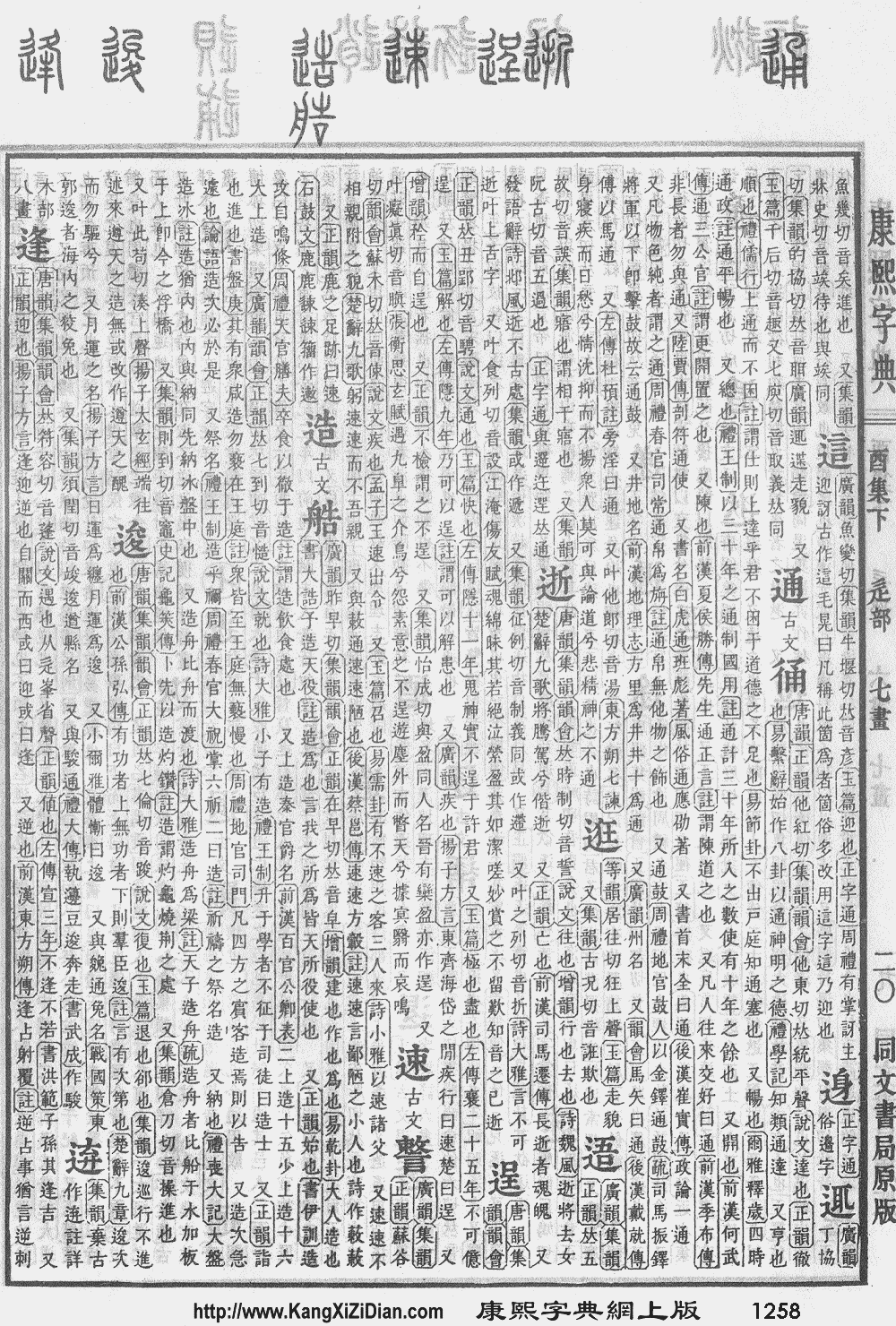
- Kangxi Dictionary: page 1258, character 1
- Dai Kanwa Jiten: character 38889
- Dae Jaweon: page 1743, character 15
- Hanyu Da Zidian (first edition): volume 6, page 3844, character 5
- Unihan data for U+9019
Chinese
Glyph origin
Phono-semantic compound (形聲/形声, OC *ŋrans) : semantic 辶 (“walk”) + phonetic 言 (OC *ŋan).
The character was originally a verb meaning “to meet”, whose modern pronunciation is yàn. It was later borrowed for the proximal demonstrative “this/here”, by a confusion in medieval handwriting with 遮 (zhē, “this”).
Etymology 1
| trad. | 這 | |
|---|---|---|
| simp. | 这 | |
| alternative forms | ||
First attested in the Tang dynasty; etymology unclear. Proposed etymologies:
Pronunciation
Definitions
這
Synonyms
Antonyms
- 那 (nà, “that, those”)
Compounds
- 如此這般/如此这般
- 得這/得这
- 的這/的这
- 這下/这下 (zhèxià)
- 這下子/这下子
- 這些/这些
- 這些個/这些个
- 這些兒/这些儿
- 這些子/这些子
- 這些時/这些时
- 這們/这们
- 這個/这个
- 這個擋口/这个挡口
- 這個當兒/这个当儿
- 這個那個/这个那个
- 這兒/这儿 (zhèr)
- 這兩天/这两天
- 這其間/这其间
- 這口氣/这口气
- 這向/这向
- 這咱/这咱 (zhèzan)
- 這回/这回
- 這回事/这回事
- 這坨兒/这坨儿
- 這堝兒/这埚儿
- 這堝兒裏/这埚儿里
- 這堝裏/这埚里
- 這塊/这块
- 這塊兒/这块儿
- 這壁/这壁
- 這壁廂/这壁厢
- 這天/这天
- 這家子/这家子
- 這山望著那山高/这山望着那山高 (zhè shān wàng zhe nà shān gāo)
- 這干
- 這年/这年
- 這廂/这厢
- 這廝/这厮 (zhèsī)
- 這忽兒/这忽儿
- 這搭/这搭 (zhèdā)
- 這搭兒/这搭儿 (zhèdār)
- 這搭裏/这搭里
- 這早晚/这早晚 (zhè zǎowǎn)
- 這早晚兒/这早晚儿 (zhè zǎowǎr)
- 這時候/这时候
- 這會/这会
- 這會兒/这会儿
- 這會子/这会子
- 這末/这末
- 這樣/这样
- 這樣一來/这样一来 (zhèyàngyīlái)
- 這次/这次
- 這步田地/这步田地
- 這每/这每
- 這注
- 這溜兒/这溜儿
- 這畔/这畔
- 這番/这番
- 這當兒/这当儿
- 這疙疸/这疙疸
- 這的/这的 (zhède)
- 這的是/这的是
- 這程子/这程子
- 這等/这等 (zhèděng)
- 這筆帳/这笔帐
- 這等樣/这等样
- 這箇/这个
- 這般/这般 (zhèbān)
- 這般個/这般个
- 這般如此/这般如此
- 這般樣/这般样
- 這般說來/这般说来
- 這般這般/这般这般
- 這荅/这荅
- 這號事/这号事
- 這蚤晚/这蚤晚
- 這行子/这行子
- 這裡/这里 (zhèlǐ)
- 這裏/这里 (zhèlǐ)
- 這輩子/这辈子
- 這邊/这边
- 這邊廂/这边厢
- 這陀兒/这陀儿
- 這陣/这阵 (zhèzhèn)
- 這陣兒/这阵儿 (zhèzhènr)
- 這陣子/这阵子
- 這頭/这头
- 這馬/这马 (chit-má) (Min Nan)
- 這麼/这么
- 這麼些/这么些 (zhèmexiē)
- 這麽些/这么些
- 這麼個/这么个
- 這麼樣/这么样 (zhèmeyàng)
- 這麼着/这么着
- 這麼著/这么着 (zhèmezhe)
- 這麼說/这么说
- 這麼點/这么点 (zhèmediǎn)
- 這麼點兒/这么点儿 (zhèmediǎnr)
- 這點/这点
Etymology 2
| trad. | 這 | |
|---|---|---|
| simp. | 这 | |
Original meaning of this character. It is part of the 迎 (OC *ŋaŋ, *ŋraŋs, “to face, to meet”) word family; see there for more.
Pronunciation
Japanese
Readings
From Middle Chinese 這 (MC ngjenH, “to receive”):
Korean
Etymology 1
From Middle Chinese; compare Mandarin 這/这 (zhè).
Pronunciation
- (SK Standard/Seoul) IPA(key): [t͡ɕɘ(ː)]
- Phonetic hangul: [저(ː)]
- Though still prescribed in Standard Korean, most speakers in both Koreas no longer distinguish vowel length.
Usage notes
- The original meaning is "this". In certain words, it has been conflated with native Korean 저 (jeo, “that”).
Compounds
Etymology 2
From Middle Chinese 這 (MC ngjenH).
Pronunciation
- (SK Standard/Seoul) IPA(key): [ɘ(ː)n]
- Phonetic hangul: [언(ː)]
- Though still prescribed in Standard Korean, most speakers in both Koreas no longer distinguish vowel length.
Usage notes
- Used only in the reading of Classical Chinese; no Korean word appears to use this hanja.
Middle Korean
Glyph origin
Simplified from 邊 (“edge”), used as hungaja for similarly pronounced ᄀᆞᆺ〯 (kǒs, “edge”).
Usage notes
- Probably only found as reduplicated 這這, Idu spelling of the adverb 갓갓 (kàs-kàs, “of each kind”).