仄
| ||||||||
Translingual
| Stroke order | |||
 | |||
Han character
仄 (Kangxi radical 9, 人+2, 4 strokes, cangjie input 一人 (MO), four-corner 71280, composition ⿸厂人)
References
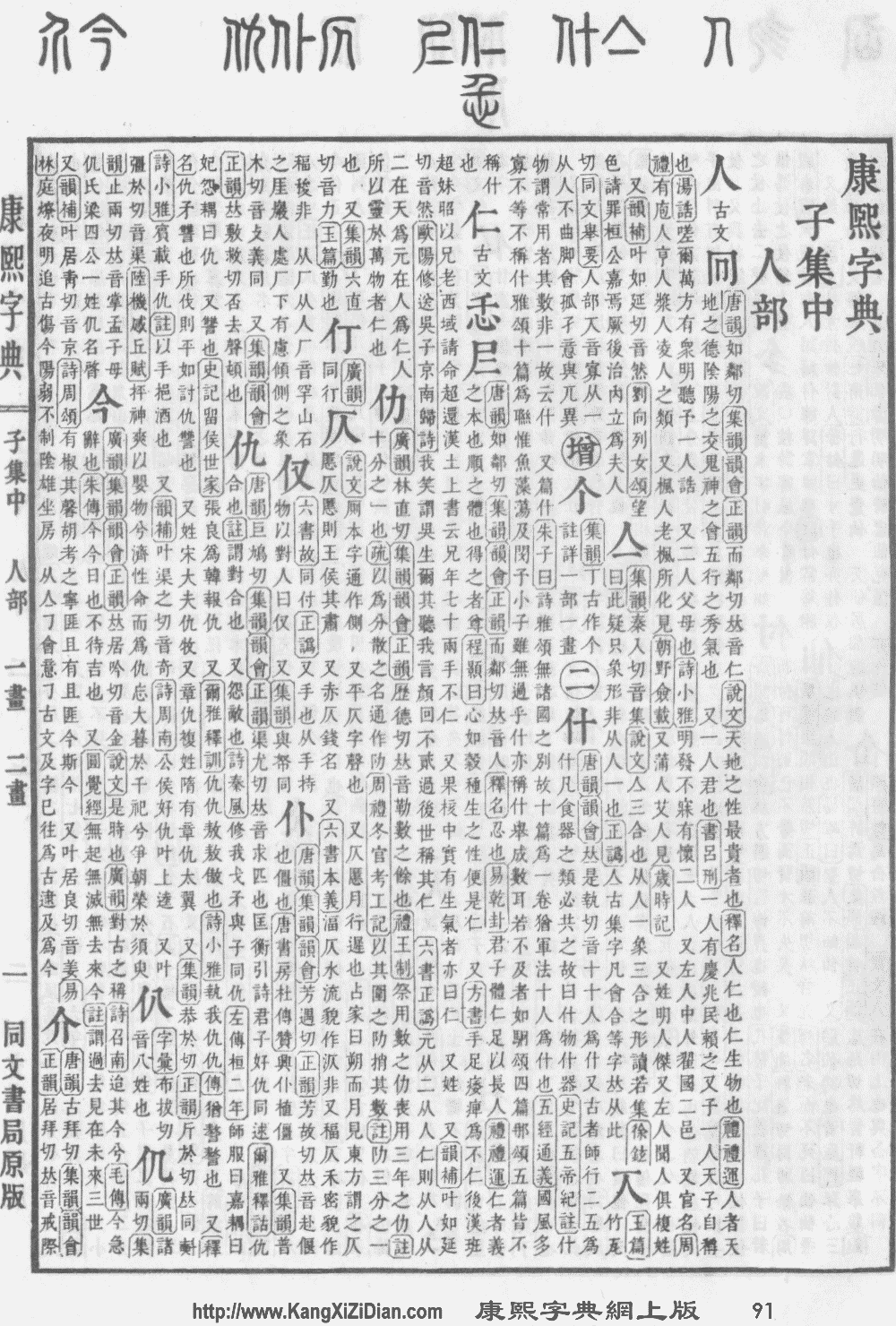
- Kangxi Dictionary: page 91, character 12
- Dai Kanwa Jiten: character 352
- Dae Jaweon: page 193, character 4
- Hanyu Da Zidian (first edition): volume 1, page 103, character 7
- Unihan data for U+4EC4
Chinese
Glyph origin
| Historical forms of the character 仄 | |
|---|---|
| |
|
References: Mostly from Richard Sears' Chinese Etymology site (authorisation),
|

Phono-semantic compound (形聲/形声, OC *ʔsrɯɡ) and ideogrammic compound (會意/会意) : semantic 厂 (“cliff”) + phonetic 夨 (OC *ʔsrɯɡ, “man with crooked head”) – "oblique, slanted"
Pronunciation
Definitions
仄
Compounds
See also
| The tones (of Chinese) in Mandarin · 聲調/声调 (shēngdiào) (layout · text) | ||||||||||
|---|---|---|---|---|---|---|---|---|---|---|
| 平仄 (píngzè) | 平 (píng) 平聲/平声 (píngshēng) |
仄 (zè) 仄聲/仄声 (zèshēng) | ||||||||
| 平上去入 (píngshǎngqùrù) 四聲/四声 (sìshēng) |
平 (píng) 平聲/平声 (píngshēng) |
上 (shǎng) 上聲/上声 (shǎngshēng) |
去 (qù) 去聲/去声 (qùshēng) |
入 (rù) 入聲/入声 (rùshēng) | ||||||
| 標調方法/标调方法 (biāodiào fāngfǎ) 標調法/标调法 |
四角標調法/四角标调法 | ꜀◌ | ꜂◌ | ◌꜄ | ◌꜆ | |||||
| [Term?] | ◌〪 | ◌〫 | ◌〬 | ◌〭 | ||||||
| 傍點/傍点 | ∅ | ◌〮 | ◌〯 | ∅ | ||||||
| 四聲八調/四声八调 | 陰平/阴平 (yīnpíng) | 陽平/阳平 (yángpíng) | 陰上/阴上 (yīnshǎng) | 陽上/阳上 (yángshǎng) | 陰去/阴去 (yīnqù) | 陽去/阳去 (yángqù) | 陰入/阴入 (yīnrù) | 陽入/阳入 (yángrù) | ||
| 陰/阴 (yīn) | 陽/阳 (yáng) | |||||||||
| 標調方法/标调方法 (biāodiào fāngfǎ) 標調法/标调法 |
四角標調法/四角标调法 | ꜀◌ | ꜁◌ | ꜂◌ | ꜃◌ | ◌꜄ | ◌꜅ | ◌꜆ | ◌꜇ | |
| The tones (of Standard Mandarin) in Mandarin · 聲調/声调 (shēngdiào) (layout · text) | ||||||||||
|---|---|---|---|---|---|---|---|---|---|---|
| 四聲/四声 (sìshēng) | 陰平/阴平 (yīnpíng) 一聲/一声 |
陽平/阳平 (yángpíng) 二聲/二声 (èrshēng) |
上聲/上声 (shǎngshēng) 三聲/三声 (sānshēng) |
去聲/去声 (qùshēng) 四聲/四声 (sìshēng) |
輕聲/轻声 (qīngshēng) | |||||
| SI prefix | ||
|---|---|---|
| Last | Next | |
| 阿 | 介/仄 | 攸/幺 |
Pronunciation
Noun
仄
Synonyms
Dialectal synonyms of 支票 (“cheque”) [map]
| Variety | Location | Words |
|---|---|---|
| Formal (Written Standard Chinese) | 支票 | |
| Mandarin | Taiwan | 支票 |
| Singapore | 支票 | |
| Cantonese | Guangzhou | 支票, 則紙 |
| Hong Kong | 支票, cheque | |
| Hakka | Miaoli (N. Sixian) | 支票 |
| Pingtung (Neipu; S. Sixian) | 支票 | |
| Hsinchu County (Zhudong; Hailu) | 支票 | |
| Taichung (Dongshi; Dabu) | 支票 | |
| Hsinchu County (Qionglin; Raoping) | 支票 | |
| Yunlin (Lunbei; Zhao'an) | 支票, 錢票 | |
| Southern Min | Xiamen | 支票 |
| Quanzhou | 支票 | |
| Zhangzhou | 支票 | |
| Kaohsiung (Dalinpu, Siaogang) | 支票, 手形 | |
| Tainan (Anping) | 支票, 手形 | |
| Penang (Hokkien) | cheque | |
| Manila (Hokkien) | cheque, 支票 | |
| Wu | Hangzhou | 支票 |
Japanese
Readings
Korean
Hanja
仄 (eum 측 (cheuk))
- This term needs a translation to English. Please help out and add a translation, then remove the text
{{rfdef}}.
Vietnamese
This article is issued from Wiktionary. The text is licensed under Creative Commons - Attribution - Sharealike. Additional terms may apply for the media files.