侮
| ||||||||
 | ||||||||
 | ||||||||
Translingual
Han character
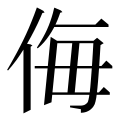
侮 (Kangxi radical 9, 人+7 in Chinese, 人+6 in Japanese, 9 strokes in Chinese, 8 strokes in Japanese, cangjie input 人人田卜 (OOWY), four-corner 28257, composition ⿰亻每(GHTKV) or ⿰亻毎(J))
References
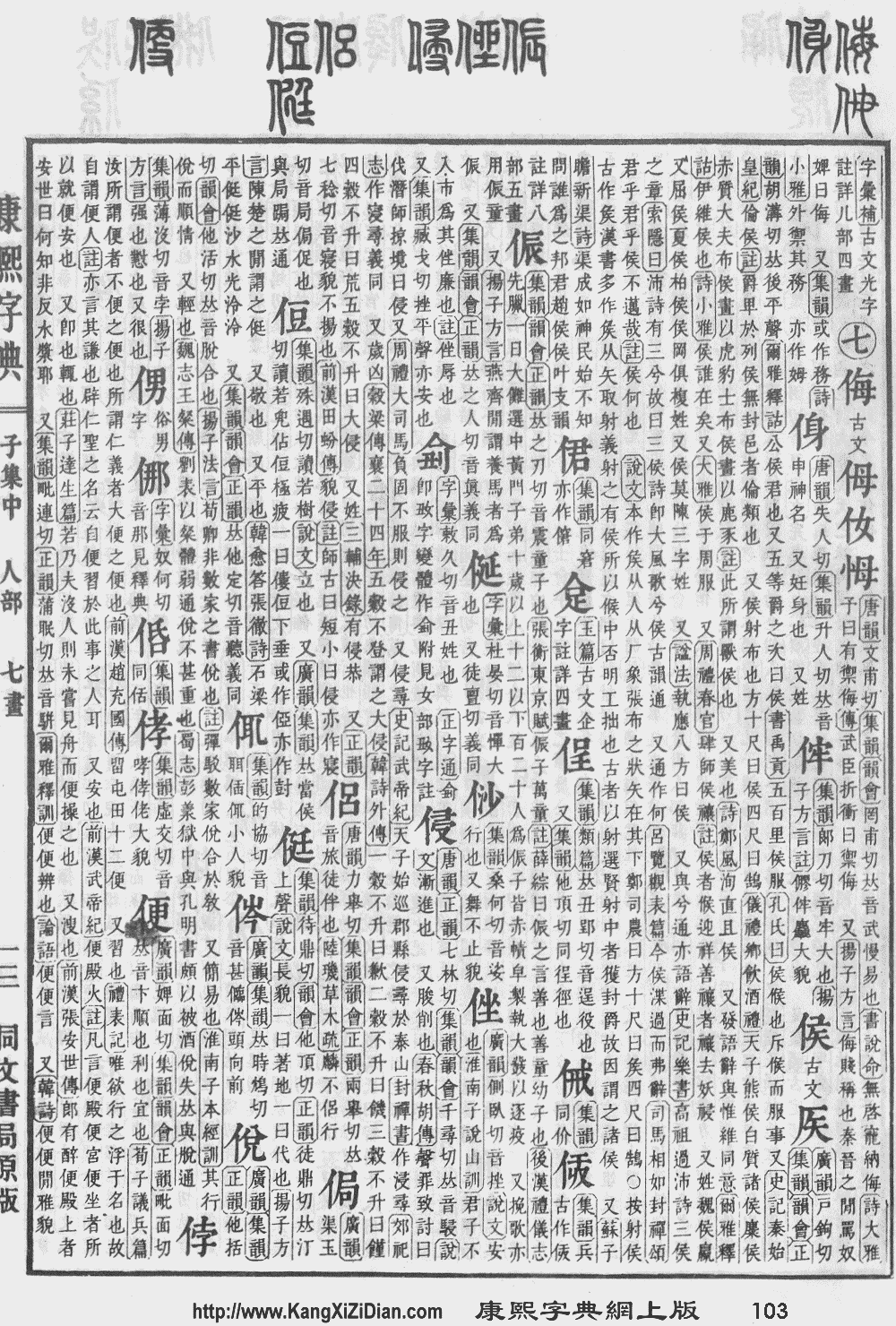
- Kangxi Dictionary: page 103, character 1
- Dai Kanwa Jiten: character 629
- Dae Jaweon: page 218, character 17
- Hanyu Da Zidian (first edition): volume 1, page 163, character 1
- Unihan data for U+4FAE
- Unihan data for U+FA30
- Unihan data for U+2F805
Chinese
| simp. and trad. |
侮 | |
|---|---|---|
| alternative forms | 㑄 ancient 㚢 ancient 𠆸 | |
Glyph origin
| Historical forms of the character 侮 | ||||||||||
|---|---|---|---|---|---|---|---|---|---|---|
| ||||||||||
|
References: Mostly from Richard Sears' Chinese Etymology site (authorisation),
|


Phono-semantic compound (形聲/形声) : semantic 人 (“person”) + phonetic 每 (OC *mɯːʔ).
Pronunciation
Definitions
侮
- to insult; to ridicule; to disgrace
- 陛下慢而侮人,項羽仁而愛人。然陛下使人攻城略地,所降下者因以予之,與天下同利也。 [Classical Chinese, trad.]
- From: The Records of the Grand Historian, by Sima Qian, c. 91 BCE
- Bìxià màn ér wǔ rén, Xiàng Yǔ rén ér ài rén. Rán bìxià shǐ rén gōng chéng lüè dì, suǒ jiàngxià zhě yīn yǐ yǔ zhī, yǔ tiānxià tóng lì yě. [Pinyin]
- Your Majesty is arrogant and insults others; Xiang Yu was benevolent and loved others. But when Your Majesty sent people to attack fortresses and seize lands, Your Majesty granted them what they had conquered. Your Majesty shared your profits with the world.
陛下慢而侮人,项羽仁而爱人。然陛下使人攻城略地,所降下者因以予之,与天下同利也。 [Classical Chinese, simp.]
Compounds
References
- “侮”, in 漢語多功能字庫 (Multi-function Chinese Character Database), 香港中文大學 (the Chinese University of Hong Kong), 2014–
Japanese
| Shinjitai | 侮 | |
| Kyūjitai [1] |
侮 侮or 侮+ ︀? |
|
| 侮󠄁 侮+ 󠄁?(Adobe-Japan1) | ||
| 侮󠄃 侮+ 󠄃?(Hanyo-Denshi) (Moji_Joho) | ||
| The displayed kanji may be different from the image due to your environment. See here for details. | ||
Readings
References
- “侮”, in 漢字ぺディア (Kanjipedia) (in Japanese), 日本漢字能力検定協会, 2015–2024
Vietnamese
Han character
侮: Hán Nôm readings: vũ, vụ, vẫu, vỗi, vậu
- This term needs a translation to English. Please help out and add a translation, then remove the text
{{rfdef}}.
References
This article is issued from Wiktionary. The text is licensed under Creative Commons - Attribution - Sharealike. Additional terms may apply for the media files.